
Reviewed · THAILAND NATIONAL PARK TOURS
Phuket Elephant Nature Reserve Ethical Sanctuary
Phuket Elephant Nature Reserve puts elephant welfare ahead of entertainment. You watch rescued elephants move freely through jungle areas and around water ponds, prepare food with the mahouts, and learn why riding, bathing, and forced contact can harm them. The half-day visit also includes a Thai cooking session and lunch.
I like the hands-off approach, which lets you see elephants behaving more naturally, and I like the practical lessons, especially the vitamin-ball preparation and dung-recycling center. The main consideration is that you will not touch, bathe, or feed an elephant directly, so anyone expecting a petting-style encounter should choose a different activity.
Key points to know before booking
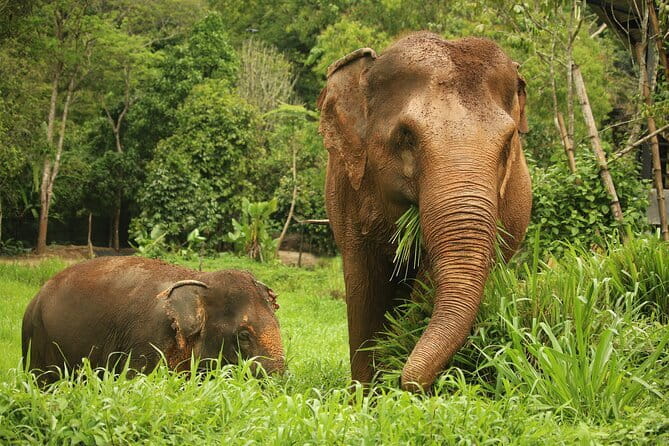
- Elephants set the pace: You observe them in open jungle areas and around natural ponds rather than directing their movements.
- No touching or bathing: The sanctuary keeps physical contact off the schedule, including the popular bath-time photo opportunity.
- Food preparation is hands-off: You help make vitamin balls and prepare fruit, but food is not given directly from your hand.
- The half-day option includes Thai food: A cooking demonstration and lunch add a useful local-food lesson to the elephant visit.
- The visit teaches conservation in plain terms: You learn how elephant dung is reused and why certain tourist activities are harmful.
- Plan your own transport: Transfers are not included, though the reserve is near public transportation.
An elephant visit built around watching, not performing
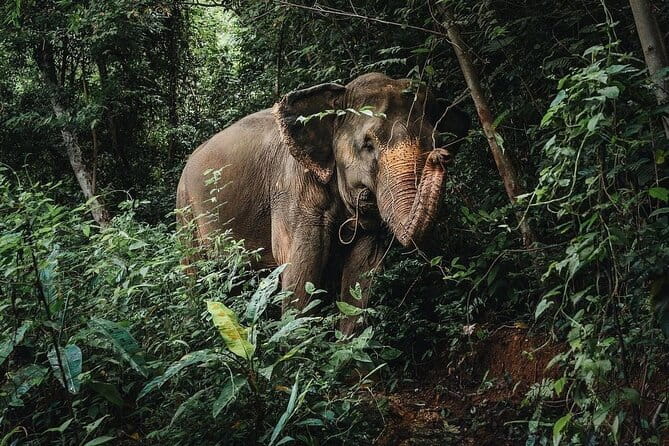
The central idea here is simple: the elephants are not there to perform for you. They are rescued animals, many of whom grew up around people and cannot live fully independently in the wild. The reserve gives them room to move, while mahouts and staff follow their routines rather than forcing a show.
That changes the mood of the visit. You are not lining up for a ride, waiting for an elephant to paint, or posing beside one in a bath. Instead, you watch several elephants from a respectful distance as they walk, eat, rest, and use the water areas. The exact number you see can vary, but past visits have included four or five elephants.
I find this a better fit for anyone who wants to support responsible care rather than collect a close-contact photograph. You still get good views and plenty of chances to take pictures, but the animal remains the focus, not the souvenir image.
The approach also gives the guide room to explain elephant behavior. Guides such as Tom, Steve, and Dong have been praised for making the visit clear and engaging, though your guide may be someone else. The teaching is not an afterthought. It helps you understand why an elephant that appears calm during a bath or ride may still be responding to training, restraint, or stress.
More Wildlife and Elephant Encounters in Thailand:
- Phuket: Elephant Nature Reserve Entry Ticket and Guided Tour
★ 4.9 · 223 reviews - Hua Hin: Kui Buri National Park Wild Elephant Watching
★ 4.4 · 139 reviews - Miami: Everglades National Park Airboat Tour & Wildlife Show
★ 4.5 · 7,296 reviews
What the 3.5-hour half-day program includes
Your half-day begins with a briefing and introduction. This is where the rules make sense: no riding, no bathing, no touching, and no direct hand feeding. The sanctuary uses a hands-off approach even while bringing you close enough to observe and help prepare food.
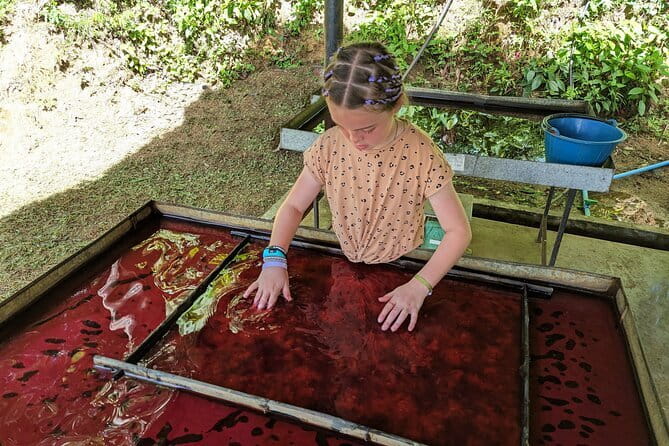
You then prepare food for the elephants with the mahouts. One hands-on task is making vitamin balls, while another may involve chopping or preparing fruit. The work is simple, but it gives you a clearer idea of the daily care these animals need. You are not simply handed a snack to offer for a quick photograph.
The mahouts are important here. They handle the practical care and stay with the elephants while you watch. Their role is not to make the elephants perform tricks. It is to guide and monitor them while allowing as much free movement as possible.
After food preparation, you observe elephants in the jungle area. This is the part to take slowly. Elephants may be moving, eating, or standing quietly, and the experience is better when you accept that you cannot control the timing. Bring your camera, but do not expect every animal to look at you on cue.
The natural water ponds and other water features provide another viewing area. Elephants can approach and use these spaces without being pushed into a bath for the benefit of the group. That distinction matters. You get the pleasure of watching an elephant near water without making the animal part of a staged activity.
The education portion ties the visit together. You learn about the sanctuary’s rescued elephants, their care, and the wider problem of elephant tourism that relies on riding or forced interaction. The strongest part of this lesson is that it gives you a way to judge other elephant activities during the rest of your time in Thailand.
The dung-recycling center is more useful than it sounds
The elephant dung recycling center may not sound like the headline attraction, but it is one of the most memorable stops. Elephants produce a great deal of waste, and the sanctuary shows how that material can be reused instead of treated as something to discard.
This stop makes the sanctuary’s daily work feel more complete. Caring for elephants is not only about feeding them or providing open space. It also involves water, waste, food, cleaning, staff, and steady operating costs. A short lesson on dung recycling helps you see the practical systems behind the animal care.
The recycling center is included in the half-day program. If you book a shorter visit, check exactly what is included before paying, since the supplied details identify dung recycling and vitamin-ball making as half-day features.
Thai cooking turns the visit into a fuller morning or afternoon

The half-day program includes a Thai cooking demonstration and lunch. You learn to prepare a Thai dish, then eat the food made during the session. This is a useful addition if you want more than a short elephant stop, and it gives the experience a local-food element without requiring a separate cooking class.
The cooking lesson usually comes at the beginning of the half-day program, with lunch following the demonstration. One past schedule started at 1 p.m., with the first hour devoted to cooking and the meal afterward. Exact timing can vary, so use the time shown on your confirmation.
I like this part for families and mixed groups. Someone in your party may be fascinated by elephants, while someone else is more interested in Thai food. The cooking class gives both interests a place in the same outing. Children can also take part in a simple food activity before heading outside to observe the elephants.
The cooking class does make the program longer and less focused. If you only want elephant viewing, the 90-minute option may suit you better. Several experiences describe the shorter visit as enough time for a meaningful look at the elephants, especially in Phuket’s heat and humidity.
More National Park Tours in Thailand:
- Chiang Mai: Doi Inthanon National Park Eco-Friendly Tour
★ 4.6 · 6,667 reviews - Doi Inthanon Waterfall and Royal Project Chiang Mai
★ 5.0 · 1,735 reviews - From Bangkok: Khao Yai National Park Small-Group Day Trip
★ 4.5 · 704 reviews - Chiang Mai: Doi Inthanon National Park and Pha Dok Siew Trek
★ 4.5 · 527 reviews
Choosing between 90 minutes and the half-day visit
The advertised experience lasts about 3 hours and 30 minutes, and that is the option with the cooking class, lunch, dung-recycling lesson, and vitamin-ball activity. The supplied details also refer to a 90-minute tour, so the reserve appears to offer more than one format.
Choose the shorter visit if you want a focused elephant education session, have a packed Phuket schedule, or find hot weather tiring. A 90-minute visit can be enough to prepare food, observe elephants, and hear the main ethical message without turning the outing into a full half-day commitment.
Choose the half-day program if you want the fuller picture. You receive more than extra viewing time: the Thai cooking session, lunch, dung recycling, and vitamin balls add context and variety. Families with children aged around eight and eleven have found the half-day format especially useful because it gives the children clear activities and an understandable lesson about animal welfare.
The heat is worth taking seriously. Phuket can be hot and humid, and one account found 90 minutes to be the ideal length for that reason. I would choose light clothing, comfortable shoes, a hat, and sunglasses. Bring your own refillable water bottle, since a water refill station is available. Water is included, but carrying a bottle makes the day easier.
What the $39.11 price delivers
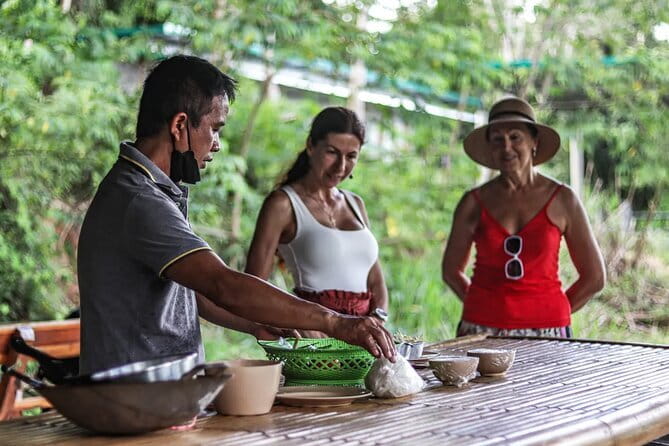
At $39.11 per person, the price is reasonable if you use the half-day program. The fee covers admission, a guide, insurance, water, the elephant observation, food preparation, and, for the half-day version, the Thai cooking class and lunch.
The value is not based on how many minutes you spend touching an elephant. In fact, touching is not allowed. The value comes from supporting a sanctuary that uses a less exploitative model, while receiving an educational visit, food activity, and meal.
That makes the price easier to justify for someone who wants their money to support daily elephant care. The sanctuary still has to pay for food, staff, medical attention, land, and maintenance. Your visit contributes to that work, though no tour fee can guarantee a particular outcome for every elephant.
If your goal is only a quick look, the shorter option may offer better value for your schedule. If you want cooking, lunch, and the recycling lesson, the extra time and cost of the half-day program make more sense.
Getting there and preparing for the conditions
Transport is not included, so you need to arrange your own way to the reserve. The site is near public transportation, but the supplied details do not specify a pickup service or a particular route. Check your booking confirmation carefully and allow time to reach the meeting point.
A few visitors have arrived late because of canceled or delayed transport and still received help from the staff. That is encouraging, but you should not rely on flexibility. The cancellation terms allow a full refund only when you cancel at least 24 hours before the start time. Changes or cancellations within 24 hours are not accepted for a refund.
Wear comfortable shoes. The visit includes jungle observation and movement between different parts of the reserve, so beach sandals may be less useful than secure footwear. A hat and sunglasses are sensible, and a refillable bottle is specifically worth bringing.
The reserve has clean bathrooms and a gift shop, according to the supplied details. Service animals are allowed, and most people can take part. If you have a specific mobility, medical, or access concern, confirm it before booking because the general participation guidance does not describe every surface or route.
Why the hands-off rules matter

At first, no touching or hand feeding may sound like less of an experience. In practice, those limits are the point. Elephants do not need to be handled by a stream of strangers to make your visit worthwhile.
The sanctuary lets you prepare food without placing your hand in an elephant’s mouth. You see the result of your work while keeping a safer boundary. You also avoid encouraging the kind of behavior that makes elephants appear tame and always available for human contact.
The same goes for bathing. Water scenes are attractive, but an elephant should not be washed, scrubbed, or directed simply because people want a photograph. Here, you can observe the animals around natural ponds without making bathing part of the program.
This is also a good lesson for children. The visit explains that an animal can look calm and friendly while still needing space. That message is more useful than a brief cuddle and a photograph, especially if your family plans to visit other animal attractions in Thailand.
Who will enjoy this sanctuary most
I would recommend this experience to you if you want an ethical elephant encounter, prefer observation to performance, or want a clear explanation of how tourism affects elephants. It also suits families, couples, first-time visitors to Phuket, and anyone who wants a half-day activity with both animals and food.
The half-day version is a good choice for people who enjoy learning by doing. You make vitamin balls, help prepare food, watch the elephants eat, learn about dung recycling, then cook and eat a Thai meal.
You may be disappointed if your main goal is to touch an elephant, bathe with one, or hand over fruit directly. Those activities are not permitted here, by design. You should also consider the heat, the lack of included transport, and the possibility that the elephants may not behave exactly as you hope for a photograph.
Should you book the Phuket Elephant Nature Reserve?
Book it if you want to see rescued elephants in a setting where their welfare comes before close contact. The strongest reasons are the free-roaming approach, the clear education about harmful elephant tourism, and the practical activities that support the sanctuary’s work without turning the animals into props.
Choose the half-day program at $39.11 if you want the cooking class, lunch, vitamin balls, and dung-recycling center. Choose a shorter option if you have limited time or worry that three and a half hours in Phuket’s heat will be tiring.
This is not the place for a bath or a cuddle. It is a place to watch, learn, prepare food, and leave with a better idea of what responsible elephant tourism should look like.
FAQ
How long does the experience last?
The half-day program lasts approximately 3 hours and 30 minutes. A 90-minute option is also referred to in the supplied experience details, so check which duration you select.
What can I do with the elephants?
You can observe and photograph them, help prepare their food, and make vitamin balls with the mahouts. The approach is hands-off.
Can I touch the elephants?
No. Touching the elephants is not permitted.
Can I bathe with the elephants?
No. Bathing with the elephants is not part of this ethical sanctuary experience.
Can I feed an elephant directly from my hand?
No. You help prepare food and watch the elephants eat, but direct hand feeding is not permitted.
Is a Thai cooking class included?
Yes, the half-day program includes a Thai cooking demonstration and lunch made during the session.
Is lunch included?
Yes, lunch is included with the half-day program.
Is elephant dung recycling included?
Yes, the elephant dung recycling center is included in the half-day program.
Is transportation included?
No. You need to arrange your own transport to the reserve. The site is near public transportation.
Can I cancel for a full refund?
Yes, if you cancel at least 24 hours before the experience start time. Cancellations or changes made less than 24 hours before the start time are not eligible for a refund.
Newest park tours we have reviewed in Thailand
- Chiang Mai: Doi Inthanon National Park & Waterfall Day Tour★ 4.8 · 124 reviews
- Private Tour Pha Chor Canyon & Doi Inthanon National Park★ 5.0 · 23 reviews
- Doi Inthanon National Park Private Tour – Full Day★ 5.0 · 65 reviews
- Doi Inthanon National park and 2 hours hiking with private tour★ 5.0 · 12 reviews
- Private Tour 2 Difference Trails Trekking at Doi Inthanon National Park★ 5.0 · 19 reviews
- Exploring Phang Nga Bay national park with Lunch and Dinner★ 5.0 · 48 reviews
- Krabi: Khao Sok National Park & Cheow Lan Lake Boat Tour★ 5.0 · 4 reviews
- Surat Thani: Khao Sok National Park Chiew Larn Lake Cruise★ 3.8 · 25 reviews
Thailand National Park Tours, compared.
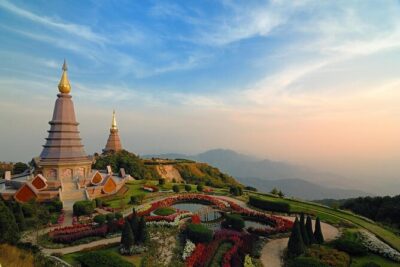
Doi Inthanon Waterfall and Royal Project Chiang Mai
Read our review →
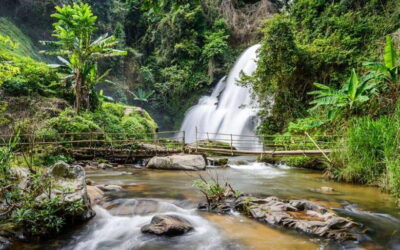
Doi Inthanon National Park and Pha Dok Siew Trek
Read our review →
Khao Yai National Park Full-Day From Bangkok – Including Ticket
Read our review →
Doi Inthanon National Park, Waterfall & Royal Project Day Tour From Chiang Mai
Read our review →

Lists this park day appears in