
Reviewed · NATIONAL PARKS
Bukhansan National Park: The Summit Course
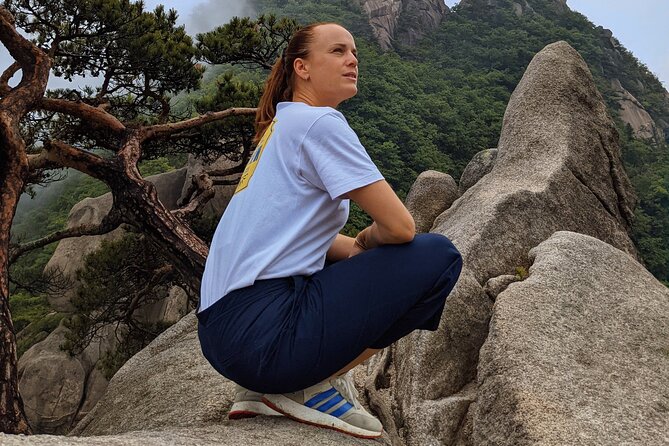
Seoul’s highest point is reached by a short route with a serious climb. The Bukhansan Summit Course takes you to Baek-un-dae at 836 meters, gaining about 600 meters in only 2.1 kilometers. It is not a gentle nature walk, but the steep ascent gets you to the top faster than the usual six-hour route.
I like the careful pace and the focus on safety from guides Koa and Sam. I also like the optional tofu meal afterward, which gives the morning a satisfying local finish. The catch is simple: this hike demands moderate fitness, puts real strain on your knees, and includes a steep rope-assisted section that can feel exposed.
Key Points
- A fast route to Seoul’s highest summit: Reach Baek-un-dae in about four and a half hours instead of the usual six.
- 600 meters of climbing in 2.1 kilometers: Expect a sustained uphill workout, roughly comparable to climbing 200 floors of stairs.
- A 20 to 30 minute rope section: The final climb involves angles of about 25 to 45 degrees and can be skipped if heights make you uncomfortable.
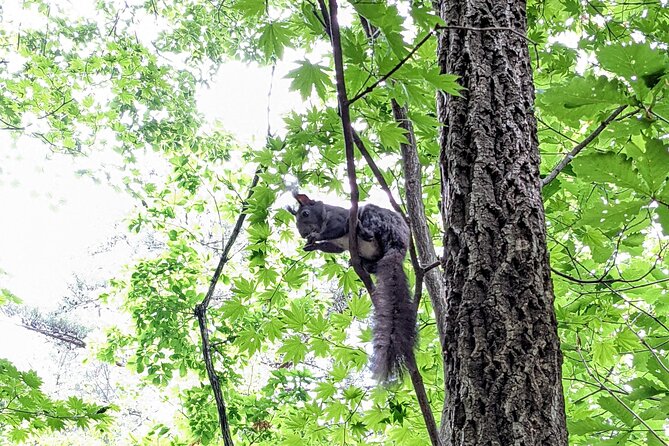
- A safety-focused guided outing: Koa and Sam lead the route and adjust their attention to the group.
- Optional handmade tofu lunch: Pay separately for a meal costing about 9,000 to 15,000 KRW, with meat, vegetarian, and vegan-friendly choices.
- Early start near public transportation: Meet at Bukhansan UiSeoul at 8:00 am, with the outing ending back at the meeting point.
Why This Bukhansan Route Is Worth Your Morning
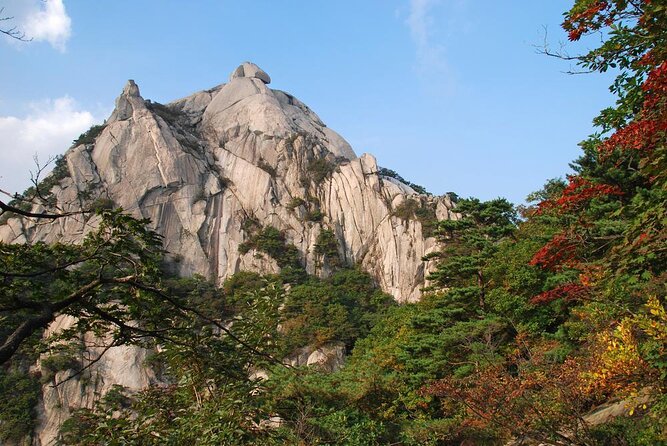
Bukhansan National Park sits right on Seoul’s edge, yet the hike quickly leaves the city behind. The appeal is not only the summit view. You get a clear sense of Korea’s changing seasons, solid mountain exercise, and a real outdoor challenge without spending a full day away from Seoul.
The route is designed to save time. The usual climb to Baek-un-dae takes about six hours, while this version aims for roughly four hours of hiking within an approximately four-and-a-half-hour activity. That is useful if you have only a short stay in Seoul or want to keep your afternoon free.
The time saving comes from steepness, not magic. You climb 600 meters over 2.1 kilometers, so the route heads upward quickly. I would think of it as a compact mountain workout rather than a relaxed stroll through a park.
At the top, Baek-un-dae gives you the main reward: broad views from Seoul’s highest peak. The climb is the price of admission, and the people who enjoy it most are those who already feel comfortable with sustained uphill walking.
More National Park Tours in the world:
- Miami: Everglades National Park Airboat Tour & Wildlife Show
★ 4.5 · 7,296 reviews - Chiang Mai: Doi Inthanon National Park Eco-Friendly Tour
★ 4.6 · 6,667 reviews - Clear Kayak Tour of Shell Key Preserve and Tampa Bay Area
★ 5.0 · 5,800 reviews
Meeting at 8:00 am at Bukhansan UiSeoul
The experience begins at Bukhansan UiSeoul at 8:00 am. The meeting point is near public transportation, which makes the start practical for a morning outing, although you should allow enough time to arrive before the group moves out.
An early start matters here. Bukhansan is one of Seoul’s most visited mountains, and a morning departure gives you a better chance to enjoy the route before the day feels too far along. The early hour also leaves room for the optional meal and a free afternoon afterward.
The group can include up to 20 people. That is not a private hike, but the guides can still give useful attention to the group, particularly when the pace changes on the steep sections. Several outings have had smaller groups, which can make the experience feel more personal, but you should book with the stated maximum in mind.
Wear proper hiking shoes and bring enough water for a steep four-hour outing. The provided details do not specify a required equipment list, so do not expect a full gear package. Hiking poles are available only by advance arrangement and at an extra cost. They are not considered necessary for most people, but they may help if your knees are sensitive.
The First 2.1 Kilometers: Short Distance, Serious Climbing
The most important fact about this route is the ratio between distance and height. You gain 600 meters in only 2.1 kilometers, or about 2,000 feet in 1.3 miles. That is a very steep average climb.
The stated uphill section usually takes 100 to 120 minutes. Your pace will depend on fitness, rest breaks, and the group, but you should expect the ascent to feel continuous. The comparison to 200 floors of stairs is useful. It tells you far more than the mileage does.
I like this kind of route when I want a strong outdoor experience without losing an entire day. You reach the mountain’s main prize quickly. The drawback is that the compact route gives your legs less time to settle into an easy rhythm. If you are not used to hills, the first part may feel harder than the distance suggests.
The guides’ role matters most here. A good mountain leader keeps a group moving without turning the climb into a race. Koa is described as flexible and attentive to the group, and the experience places safety first. That is important on a route where a fast pace can tempt people to push too hard.
Take short breaks before you are completely exhausted. The route includes a more technical upper section, and you will enjoy it more if you reach that point with some energy left.
Baek-un-dae and the Rope-Assisted Summit Climb
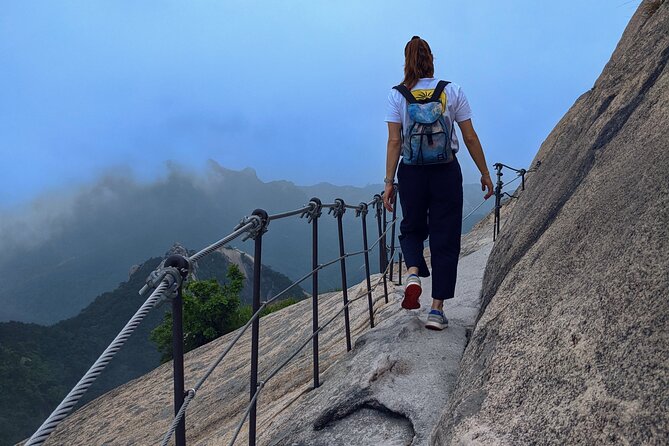
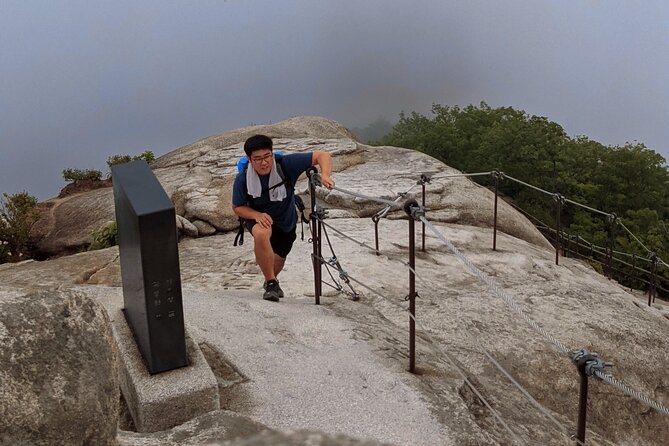
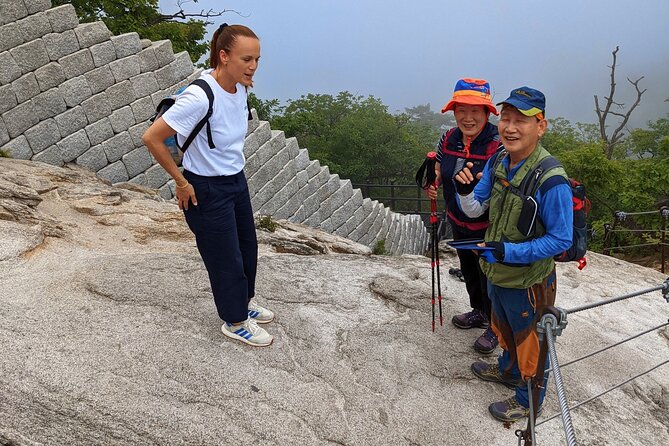
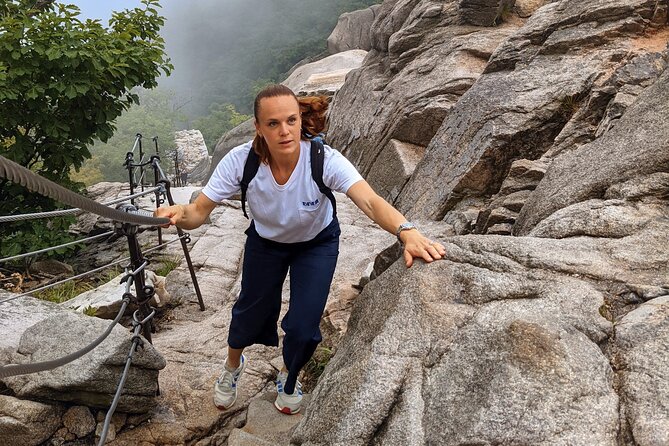
The final approach to Baek-un-dae is the most demanding part of the outing. For about 20 to 30 minutes, the route includes climbing at angles of roughly 25 to 45 degrees, with ropes available for support.
This is not rock climbing in the technical sense described here, but it is more than ordinary hill walking. You will use your hands, watch your footing, and pay attention to the slope. The ropes provide assistance, yet they do not remove the physical challenge or the feeling of height.
If you are comfortable with steep mountain paths, this section is likely to be the highlight. It adds a sense of achievement that a simple paved walk cannot provide. If you have a fear of heights, you can take a break and avoid this portion. That choice means giving up the summit itself, but there is no reason to force a section that makes you unsafe or miserable.
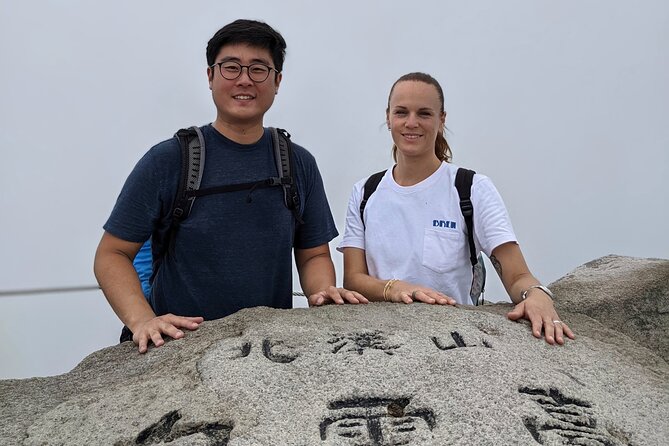
The summit is Baek-un-dae, the highest peak in Seoul at 836 meters. The view is the payoff for the vertical work. The exact visibility will depend on weather, but the setting gives you a striking contrast between Seoul’s urban reach and the mountain park surrounding it.
This is also the point where sturdy footwear and careful attention matter most. The tour information does not promise technical equipment beyond the ropes on the route, so you should arrive prepared for a steep outdoor hike rather than a guided sightseeing walk.
Same region, a different park day:
- Tenerife: Teide National Park Sunset & Stargazing Tour
★ 4.2 · 3,812 reviews - Discover Rocky Mountain National Park
★ 5.0 · 3,419 reviews - Mt. Rainier National Park Highlights Tour
★ 5.0 · 3,156 reviews - Grand Canyon National Park South Rim Bus Tour from Las Vegas
★ 4.5 · 3,071 reviews
Coming Down: Easier Than Going Up, but Not Easy on the Knees
The return journey brings the total activity to about four and a half hours. Descending is often less tiring for the lungs, but it can be harder on knees and balance, especially after a steep climb.
This is the main reason the experience is not recommended for people with knee problems. Hiking poles may help some people, but they must be requested in advance and rented for an added cost. Do not wait until the meeting point to ask for them.
The return to Bukhansan UiSeoul keeps the logistics simple. You finish where you began, rather than needing to arrange a separate pickup from another part of the park. That is useful after a demanding climb, when a complicated end point is the last thing you want.
The overall timing also works well for a Seoul itinerary. You begin early, finish around midday, and can then eat, rest, or continue sightseeing. The route does not require giving up an entire day, but it does require giving the morning your full attention.
The Optional Tofu Lunch at 9,000 to 15,000 KRW
After the hike, you can join an optional meal at a restaurant specializing in tofu dishes. The tofu is made from scratch, and the meal can include meat as well as vegetarian and vegan-friendly choices.
The cost is separate from the tour and runs about 9,000 to 15,000 KRW per person. That is a reasonable range for a local meal, especially after several hours of uphill and downhill walking. I like this option because it keeps the experience tied to Korean food rather than sending you straight back into a generic city lunch.
You do not have to join the meal, so the choice depends on your schedule and appetite. If you need to reach another appointment, skip it. If you want a relaxed finish and a chance to recover over warm food, it is a worthwhile addition.
The lunch also softens the athletic nature of the outing. Without it, the experience is mainly a climb with transport details around it. With it, the morning has a clearer cultural finish, though the food is still optional and not included in the $64.89 price.
What the $64.89 Price Really Covers
At $64.89 per person, this is not the cheapest way to walk in Bukhansan. You can visit a national park without paying for a guide. The value here is in route selection, group leadership, safety attention, and the convenience of a direct summit plan.
The route saves about two hours compared with the regular six-hour approach. That matters if your Seoul schedule is tight. You are also paying for someone to manage the route while you focus on walking, pacing, and the steep summit section.
The price does not include lunch or hiking poles. Those extra costs are clear and manageable, but they should be part of your budget. The mobile ticket is convenient, and confirmation is provided at booking.
I would consider the price fair for a visitor who wants to reach Seoul’s highest peak but does not want to plan the route alone. It is less compelling if you are an experienced local hiker who already knows Bukhansan and prefers to walk independently.
Who Should Book This Summit Course
This outing suits you if you have moderate fitness and some hiking experience. You do not need to be an expert climber, but you should be able to handle two hours of steep climbing followed by a rope-assisted upper section and a long descent.
It is especially good for:
- People who want a serious half-day outdoor activity in Seoul
- Hikers who value a fast route to a major summit
- Visitors who want views and seasonal mountain scenery near the city
- Anyone who prefers a guide for route choice and safety
- People who enjoy finishing a hike with a local meal
It is a poor match if you want a gentle walk, dislike steep slopes, have knee issues, or feel very uncomfortable with heights. The summit section can be avoided, but avoiding it means stopping short of Baek-un-dae.
The strong fit is someone with a hiking background who wants a memorable morning, not someone hoping for an easy escape into nature.
Weather, Cancellations, and Practical Planning
This activity requires good weather. If poor weather causes cancellation, you will be offered another date or a full refund. That policy gives you some protection for safety-related cancellation.
Your own cancellation is different. The booking is non-refundable and cannot be changed for any reason, so check your Seoul schedule carefully before committing. The early start, steep route, and weather requirement all make advance planning worthwhile.
The experience is offered in a group of up to 20 people and ends at the original meeting point. Since the activity is near public transportation, the basic start and finish are straightforward. Lunch and pole rental are the two main optional costs to consider.
I would also leave some flexibility after the hike. Four and a half hours is the approximate duration, and a steep mountain route is not the place to schedule an important appointment immediately afterward.
Should You Book the Bukhansan Summit Course?
Book it if you want Seoul’s highest summit and are ready for a real climb. The fast route, safety-minded guidance from Koa and Sam, rope-supported summit section, and optional handmade tofu meal create a strong half-day package.
Skip it if your knees are unreliable, you have little hiking experience, or you want a calm park walk. The $64.89 price pays for guidance and efficiency, not luxury. For a fit visitor who values time and wants a genuine mountain challenge close to Seoul, that is a sensible trade.
FAQ
Where does the Bukhansan Summit Course begin?
The activity begins at Bukhansan UiSeoul in South Korea.
What time does the hike start?
The scheduled start time is 8:00 am.
How long does the experience last?
The activity takes approximately 4 hours and 30 minutes.
What peak does the hike reach?
The route reaches Baek-un-dae, the highest peak in Seoul, at 836 meters or 2,743 feet.
How steep is the main climb?
The route gains about 600 meters in elevation over 2.1 kilometers. The uphill portion normally takes around 100 to 120 minutes.
Is there a rope section?
Yes. The Baek-un-dae summit section includes about 20 to 30 minutes of climbing at roughly 25 to 45 degree angles, with ropes for assistance.
Can I skip the rope-assisted section?
Yes. If you have a fear of heights, you can take a break and avoid this part of the climb.
Are hiking poles included?
No. Hiking poles can be rented for an additional cost, but you must request them in advance.
Is lunch included?
No. Lunch is optional and paid for separately. The expected cost is about 9,000 to 15,000 KRW per person.
Is the hike suitable for people with knee problems?
The activity is not recommended for people with knee issues. It requires moderate physical fitness and includes a steep ascent and descent.
How many people can join the group?
The maximum group size is 20 people.
What happens if bad weather cancels the hike?
If poor weather causes the activity to be canceled, you can choose another date or receive a full refund.
Newest park tours we have reviewed in the world
- Nairobi National Park –Adventure at City’s Edge Free PickUp★ 4.9 · 8 reviews
- 3D2N Mai Chau – Pu Luong from rice valley to nature reserve★ 4.5 · 11 reviews
- From Banff: Snowshoeing Tour in Kootenay National Park★ 4.9 · 37 reviews
- 5Hrs Nairobi National Park MorningEvening Gamedrive 4×4 Van★ 4.2 · 6 reviews
- 3-Hour Shared Game Drive in Pilanesberg National Park★ 4.7 · 38 reviews
- 3 Nights 4 Days Chitwan National Park with Tower Night Stay★ 5.0 · 4 reviews
- 3 Days Victoria Falls and Full day Chobe National Park★ 3.2 · 3 reviews
- 3-days safari from Dar-es-Salaam to Mikumi National Park★ 5.0 · 8 reviews