
Reviewed · NATIONAL PARKS
Bukhansan National Park- The Summit Course
Bukhansan’s summit route gives you a serious mountain day without leaving Seoul. You climb 600 meters in elevation over only 2.1 kilometers, then use ropes on the final rocky section to reach Baek-un-dae, the city’s highest point. It is not a gentle park stroll, but the route is trimmed to about four hours instead of the usual six.
I like the early start, which helps you beat the later crowds, and I like having guide Koa handle the route and pace. The optional tofu lunch is another strong touch: it turns a hard climb into a more local Korean food experience. The catch is simple: this hike is steeper than the word moderate may suggest, especially for anyone with weak knees, limited fitness, or a fear of heights.
Key points to know before you book
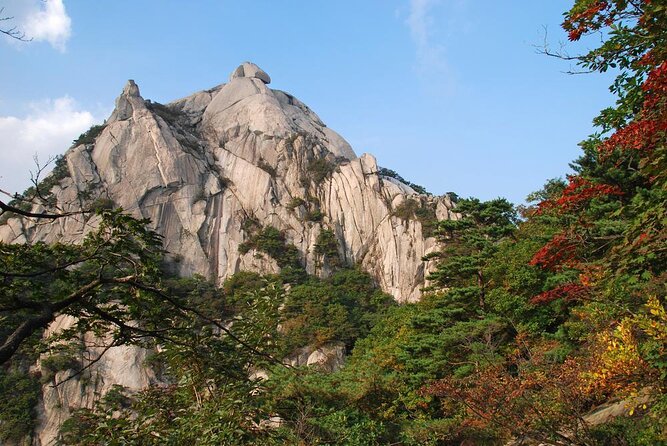
- Reach Seoul’s highest point: Baek-un-dae rises to 836 meters, or 2,743 feet.
- Expect a steep climb: The main ascent gains 600 meters over 2.1 kilometers and takes about 100 to 120 minutes.
- Use ropes near the summit: The final 20 to 30 minutes include 25 to 45-degree climbing on rocky ground.
- Start early at Bukhansan Ui Station: Meet Koa outside Exit 2 and be ready to leave at 8:15 a.m.
- Finish with optional local food: A handmade tofu restaurant offers lunch for about 9,000 to 15,000 KRW.
- Borrow useful equipment: Crampons and hiking poles are available at about one-third of the way up.
Why Bukhansan’s summit is worth the effort
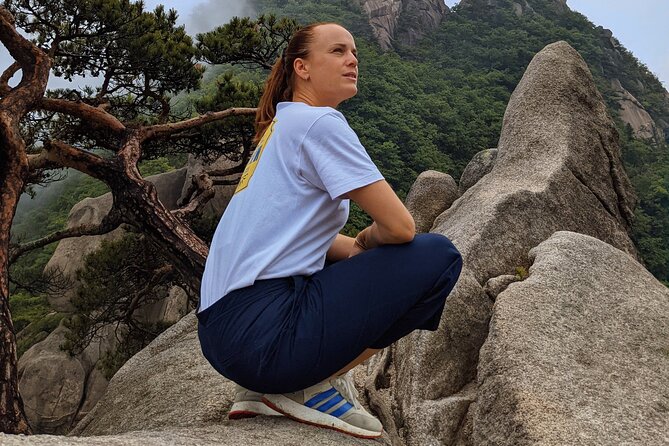
Bukhansan National Park sits on the edge of Seoul, making it unusual among major city attractions. You can spend the morning surrounded by rock, trees, and mountain air, then be back at the same subway meeting point after the hike.
The main prize is Baek-un-dae. At 836 meters, it is the highest peak in Seoul. The summit itself is not reached by a smooth paved path. You will climb over rocky ground, follow a marked route, and use fixed ropes during the steepest section. That physical work is exactly what makes the summit feel earned.
I like this route for people who want more than a scenic walk. You get a proper uphill challenge, but the outing remains short enough to fit into a busy Seoul schedule. The stated duration is 4.5 hours, with the hiking portion often completed in around four hours. The group returns to the original meeting point.
The price is $67 per person. That is more than entering a public park and hiking independently, but you are paying for a guide who handles route decisions, keeps the group moving, and helps with a mountain that requires real care. First aid supplies, bug spray, and a rain coat when needed are included. Water is not included, though you can buy it at a convenience store near the start.
More National Park Tours in the world:
- Miami: Everglades National Park Airboat Tour & Wildlife Show
★ 4.5 · 7,296 reviews - Chiang Mai: Doi Inthanon National Park Eco-Friendly Tour
★ 4.6 · 6,667 reviews - Clear Kayak Tour of Shell Key Preserve and Tampa Bay Area
★ 5.0 · 5,800 reviews
The early meeting at Bukhansan Ui Station
The tour begins outside Exit 2 of Bukhansan Ui Station. This detail matters because there is another station called Bukhansan Bogungmun. They are not the same meeting point, so check your route carefully the night before with Naver Map.
The group leaves at 8:15 a.m. sharp. The guide can wait only 15 minutes for late arrivals, and the instruction is worth taking seriously. Seoul’s subway system is useful, but a wrong exit or a delayed transfer can quickly turn into a missed tour.
An early meeting also improves the day on the mountain. The route becomes busier later, and starting in the morning gives you a better chance of climbing before the heaviest flow of hikers. It also leaves time for lunch and a return to central Seoul afterward, though the exact pace depends on the group.
Guide Koa leads in English. The most useful part of his role is not just explaining the route. He sets a manageable pace, gives advice for moving up and down the rock, checks on the group, and helps keep the experience social. The small-group setting also gives you a better chance to speak with people from different countries than you would on a large coach outing.
The first climb: short distance, serious gain
The route is designed around efficiency. Rather than spending six hours on a longer approach, you take a shorter way up that reaches the summit in roughly four hours of hiking.
The numbers tell you what to expect. You gain about 600 meters, or 2,000 feet, in elevation over only 2.1 kilometers, or 1.3 miles. The uphill portion normally takes 100 to 120 minutes. That is a sharp climb, roughly comparable to going up about 200 floors of stairs.
You should arrive with a moderate level of fitness. You do not need to be an elite hiker, but you should be comfortable with prolonged uphill walking and uneven ground. The difficulty comes less from the distance than from the steep grade. Take the description seriously if your knees are troublesome or if you rarely exercise.
The guide can adjust how the group moves, and the route follows the same way down. That makes the outing more forgiving than a long point-to-point trek. If you need to stop, you can rest, and the guide can meet you on the way back down. Still, stopping does not turn the climb into an easy walk. You need enough stamina to make a genuine attempt at the ascent.
At roughly one-third of the way up, you can borrow hiking poles and crampons. Crampons are especially relevant when conditions require them, though the information provided does not promise that they will be needed on every departure. Hiking poles can help with balance and reduce some strain on the descent.
Baek-un-dae and the rope-assisted summit section
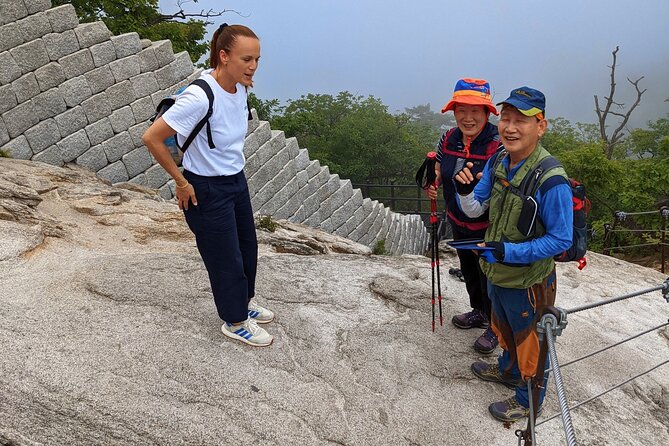
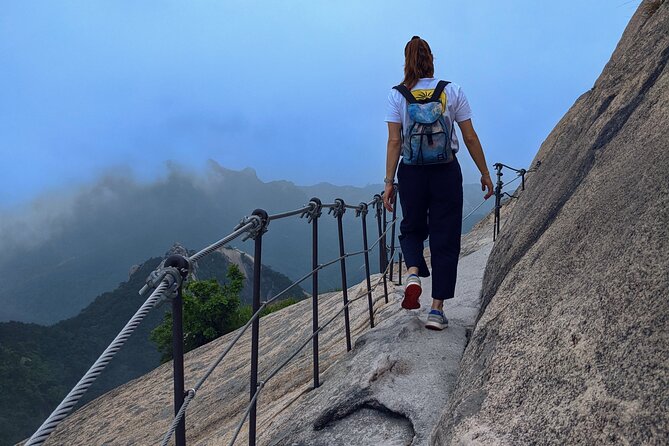
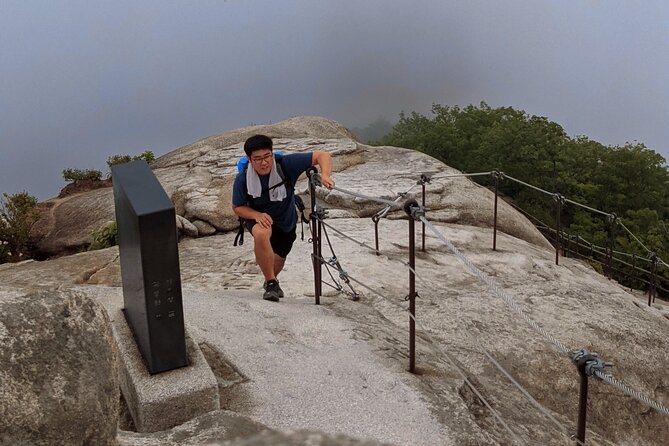
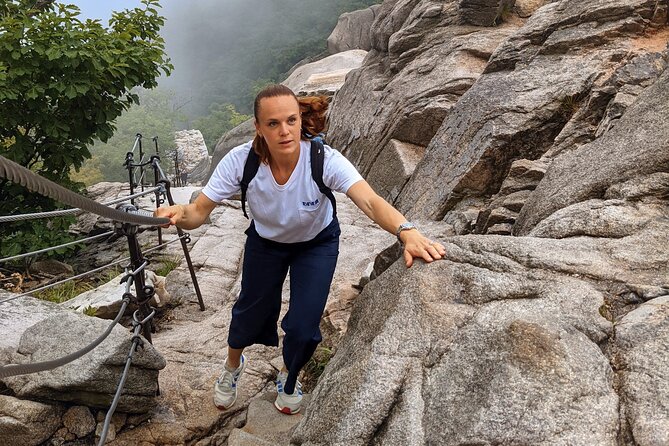
The final part is the section to understand before booking. Reaching Baek-un-dae requires about 20 to 30 minutes of climbing on slopes angled around 25 to 45 degrees. Ropes assist you throughout this section, but the terrain remains rocky and exposed enough to feel serious.
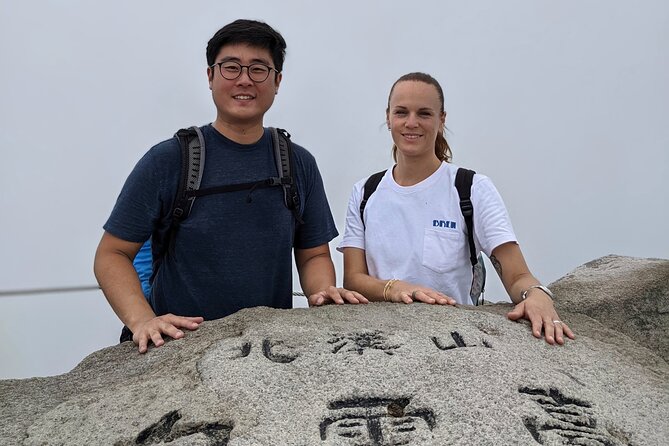
If you enjoy a physical challenge, this is likely the most memorable part of the tour. You use your hands, focus on each step, and work your way toward the summit. The reward is the feeling of standing on Seoul’s highest peak after a demanding climb.
If you are afraid of heights, you can skip this section and take a break. That option is helpful, but it also means you will not reach Baek-un-dae. The guide can continue with others and meet you on the way back, so you are not forced to attempt a section that makes you uncomfortable.
The descent deserves respect. Downhill movement on rock can be harder on the knees than the ascent, and tired legs make slips more likely. Use the ropes as instructed, keep your pace controlled, and follow the guide’s advice. This is one reason the tour has practical value: you are not left to work out the safest route by yourself.
Same region, a different park day:
- Tenerife: Teide National Park Sunset & Stargazing Tour
★ 4.2 · 3,812 reviews - Discover Rocky Mountain National Park
★ 5.0 · 3,419 reviews - Mt. Rainier National Park Highlights Tour
★ 5.0 · 3,156 reviews - Grand Canyon National Park South Rim Bus Tour from Las Vegas
★ 4.5 · 3,071 reviews
Views, effort, and the character of the park
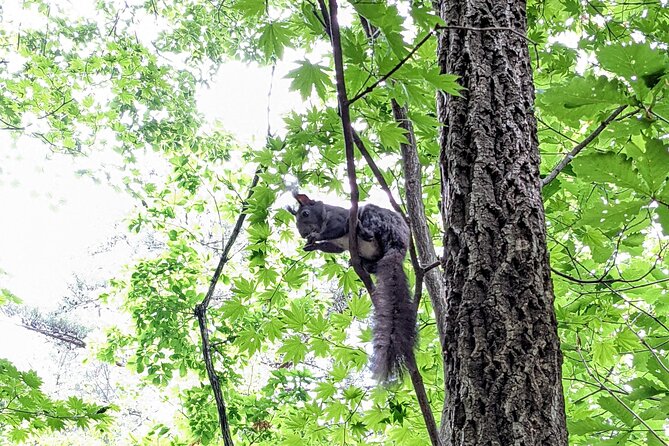
The appeal of Bukhansan is the contrast between city access and mountain terrain. You are close to Seoul, yet the route gives you a clear break from streets and buildings. The experience is active rather than passive, and the views become part of a reward you work toward.
The park attracts many hikers, especially later in the day. An early start helps, but you should not expect complete solitude. The social side can be part of the fun. One of the strongest features of this tour is the chance to meet other hikers while working through the same challenge.
Koa’s style also matters. He is described as energetic, humorous, and good at remembering people’s names. He makes an effort to speak with each person in the group, which is useful on a climb where long stretches can otherwise feel quiet or tiring. A guide who keeps conversation going can make the uphill minutes pass more easily.
That said, a friendly guide cannot remove the physical demands. The route is sometimes described as moderate, but that label needs context. In Korean hiking terms, moderate can still mean steep, rocky, and strenuous. Treat this as an active half-day excursion, not a casual sightseeing trip.
The optional tofu lunch after the hike
After the climb, you may have time to eat at a restaurant specializing in tofu dishes. Lunch costs about 9,000 to 15,000 KRW and is paid directly by you.
The tofu is made from scratch, which gives the meal a stronger local character than a standard fast lunch near a tourist attraction. You can also order meat, and the meal works for vegan and vegetarian diners. The restaurant choice adds value because it connects the mountain outing with Korean food rather than ending the day at the station.
Lunch is optional, and the tour information makes clear that it depends on time. Do not book this experience expecting a guaranteed long restaurant meal after the summit. If the hike runs late or the group needs more time on the mountain, the food stop may not fit.
For many people, though, this is the right finish. After a steep climb, a warm meal and a chance to sit with the group can make the outing feel complete. The mention of makgeolli with lunch also points to a relaxed post-hike atmosphere, but you should treat any drink as an individual choice after strenuous activity.
What to bring and how to prepare
Bring water from the convenience store at the beginning. The tour does not include water, and the short route does not mean you will be finished quickly once you add rest stops, the summit section, and the descent.
Wear proper hiking shoes with reliable grip. The provided information does not list footwear rental, so do not plan on ordinary city sneakers for the rocky sections. Comfortable athletic clothing, sun protection, and a small day bag are sensible choices, though the tour description does not specify a packing list beyond the included supplies.
Check the forecast before leaving. A rain coat may be provided if needed, but wet rock can make the rope section more difficult. Bug spray and a first aid kit are available, which is reassuring, but they are support items, not a replacement for careful preparation.
Your most important preparation is route planning to the station. Use Naver Map the night before, locate Exit 2, and leave enough time for transfers. The 15-minute late-arrival limit is strict because the group needs to start climbing on schedule.
Who should book this summit course
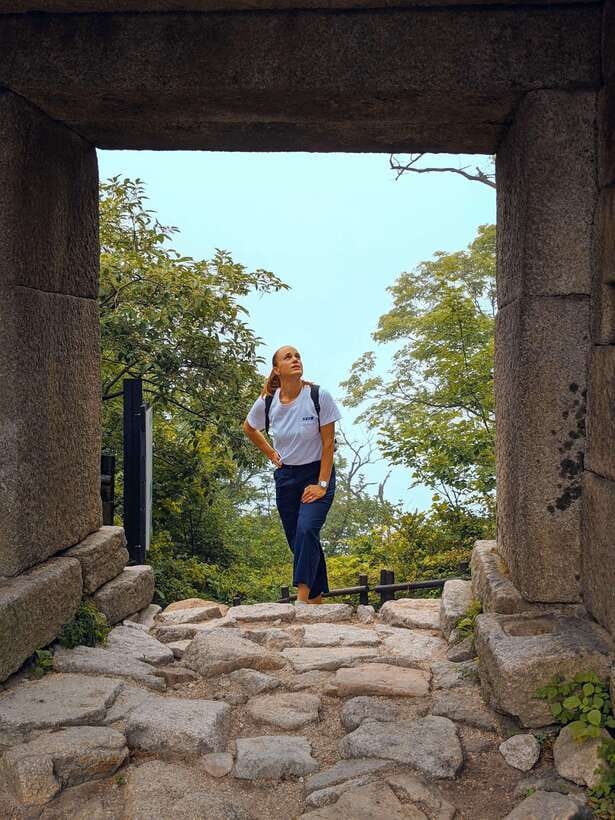
I would recommend this tour to you if you want a proper mountain climb, speak English, and have enough fitness for a steep two-hour ascent. It suits visitors who want to reach a high point, use ropes on a memorable summit section, and return to Seoul within half a day.
It also works well if you prefer a guide for route support. You do not need to study every trail connection or make decisions about the most direct approach. Koa’s pacing, safety advice, and group management are the main reasons to choose this over going alone.
I would be cautious about booking if you have a fear of heights, painful knees, or little experience with steep hiking. You can avoid the final rope section, but the earlier ascent still gains 600 meters quickly. If you want a flat, easy nature walk, this is the wrong choice.
The small-group atmosphere may appeal to solo visitors. The hike naturally creates conversation, and the guide works to include people along the way. Couples and friends should also find the pace practical, provided everyone is comfortable with the difficulty.
Is $67 good value?
At $67, this is not the cheapest way to enter Bukhansan. The park itself does not require this kind of guided-tour price, and a confident local hiker could potentially organize an independent outing.
The value comes from reducing the planning burden. You get an English-speaking guide, a carefully chosen shorter route, first aid support, bug spray, and a rain coat if needed. You can also borrow poles and crampons partway up. The guide’s presence matters most on the steep summit section and during the descent.
The optional lunch adds a modest extra cost rather than being bundled into the tour price. That is fair for diners who want it, and it lets you skip the meal if your schedule or budget is tight.
Should you book Bukhansan’s summit course?
Book it if Baek-un-dae is high on your Seoul wish list and you want help managing a steep, rope-assisted route. The early departure, focused trail plan, English guidance, and optional tofu meal create a useful half-day package.
Skip it if you are looking for an easy stroll or if steep rock and heights make you uneasy. The best decision comes down to fitness, not sightseeing interest. If you can handle a climb like 200 floors of stairs and accept a demanding final section, this is a memorable way to see Seoul from above.
FAQ
Where does the Bukhansan summit tour meet?
Meet guide Koa outside Exit 2 of Bukhansan Ui Station in South Korea.
Is the meeting point at Bukhansan Bogungmun Station?
No. The meeting point is Bukhansan Ui Station. Do not confuse it with Bukhansan Bogungmun Station.
What time does the group leave?
The group leaves at 8:15 a.m. sharp.
How long does the activity last?
The listed duration is 4.5 hours. The hiking portion can take about four hours, depending on the group.
How difficult is the hike?
The route is physically demanding. It gains 600 meters over 2.1 kilometers, with the uphill section usually taking 100 to 120 minutes.
How high is Baek-un-dae?
Baek-un-dae is 836 meters high, or 2,743 feet, making it the highest peak in Seoul.
Do I have to climb the rope-assisted section?
No. The final 20 to 30 minutes can be avoided if you are uncomfortable with heights. You can rest while the group continues.
Is lunch included?
No. Lunch is optional and costs about 9,000 to 15,000 KRW per person.
What language does the guide speak?
The tour is conducted in English, with guide Koa leading the group.
What happens if I need hiking equipment?
Crampons and hiking poles can be borrowed at about one-third of the way up. Bug spray, a first aid kit, and a rain coat when needed are also included.
Newest park tours we have reviewed in the world
- Nairobi National Park –Adventure at City’s Edge Free PickUp★ 4.9 · 8 reviews
- 3D2N Mai Chau – Pu Luong from rice valley to nature reserve★ 4.5 · 11 reviews
- From Banff: Snowshoeing Tour in Kootenay National Park★ 4.9 · 37 reviews
- 5Hrs Nairobi National Park MorningEvening Gamedrive 4×4 Van★ 4.2 · 6 reviews
- 3-Hour Shared Game Drive in Pilanesberg National Park★ 4.7 · 38 reviews
- 3 Nights 4 Days Chitwan National Park with Tower Night Stay★ 5.0 · 4 reviews
- 3 Days Victoria Falls and Full day Chobe National Park★ 3.2 · 3 reviews
- 3-days safari from Dar-es-Salaam to Mikumi National Park★ 5.0 · 8 reviews