Reviewed · HOBART NATIONAL PARK TOURS
Hobart: Mt Field National Park & Wildlife Shore Excursion
The best part of this Hobart shore excursion is the range packed into one day: rainforest, waterfalls, giant trees, and native animals without having to arrange transport yourself. Mt Field National Park gives you cool fern-lined walks, while Bonorong brings you close to wombats, wallabies, and Tasmanian Devils.
I like the easy walk to Russell Falls and Horseshoe Falls, and I like that the tour includes both park admission fees. The small-group format also gives the guide room to adjust the pace. The main catch is time: Bonorong gets about 90 minutes, which may feel short if you want to linger with every animal.
Key points to know before booking
- Russell Falls and Horseshoe Falls: Follow an easy streamside path through rainforest to two of Tasmania’s prettiest waterfalls.
- Tall Trees Trail: Look up at swamp gums that can reach more than 80 metres.
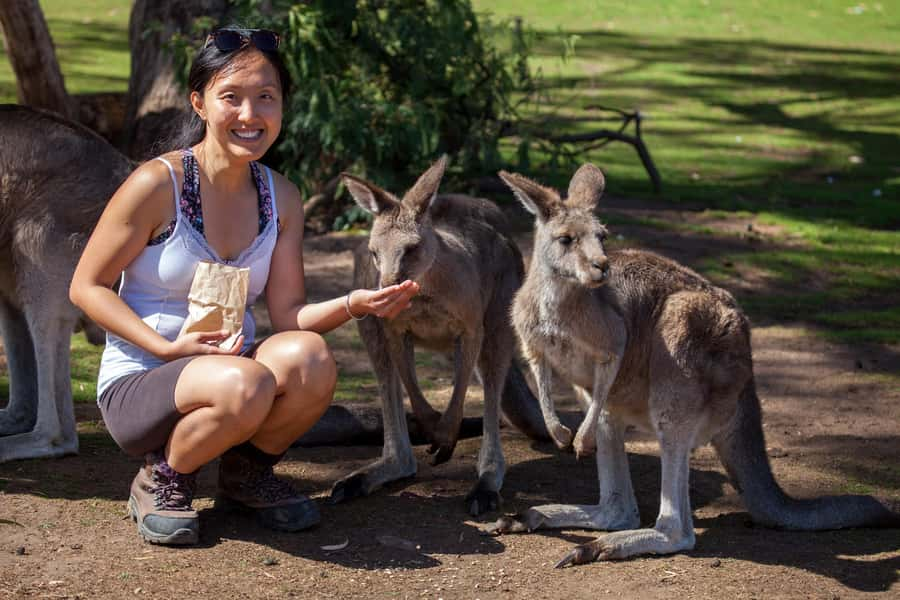
- Bonorong Wildlife Sanctuary: Feed wallabies and see wombats, Tasmanian Devils, and other native animals.
- Cruise-friendly timing: Meet at 8:45 a.m. near the terminal, depart at 9:00 a.m., and return around 4:00 p.m.
- Active but manageable: Expect several short walks, uneven outdoor paths, and changing weather.
- Bring lunch money: A bakery-style takeaway lunch can be bought along the way, but food and drinks are not included.
A full day beyond Hobart’s waterfront
At $130 per person, this is not the cheapest way to spend a day in Hobart. But the price covers transport, a professional English-speaking guide, Mount Field National Park entry, and Bonorong admission. For cruise passengers, that bundled cost matters. You avoid hiring a car, navigating unfamiliar roads, paying separate entry fees, and watching the clock alone.
The tour runs for about seven hours and is designed around cruise-ship arrival and departure times. You meet at the Tasmanian Travel and Information Centre at 20 Davey Street, a simple five-minute walk from the cruise terminal. That location is useful, though you should allow enough time to leave the ship, clear any required procedures, and walk over promptly.
The day is best for you if you want an active taste of Tasmania rather than a city tour. You will not spend much time shopping or sitting in cafes. Instead, you will be outside for most of the day, moving between short walks, viewpoints, woodland, and animal enclosures.
More Wildlife and Elephant Encounters in Australia
- Kakadu Wildlife Escape Fogg Dam or Crocodile Cruise from Darwin
★ 4.5 · 295 reviews - Darwin: Kakadu National Park & Wildlife Full Day Tour
★ 4.5 · 200 reviews - Kakadu National Park Wildlife & Ubirr Rock Art Tour from Darwin
★ 4.5 · 101 reviews
The 90-minute drive to Mt Field National Park
The first major stop is Mount Field National Park, about 1.5 hours from Hobart. The drive makes this a true day trip, not a quick roadside outing, but it also takes you well beyond the port and into Tasmania’s forest country.
The park is one of Tasmania’s oldest national parks. Its appeal is variety. In a fairly compact visit, you can see cool temperate rainforest, open moorland in the higher country, streams, ferns, and waterfalls. The tour focuses on the lower forest area, where the walking is accessible but still feels properly wild.
There is a 15-minute break in New Norfolk on the way. This is a practical pause rather than a major sightseeing stop. Use it to stretch your legs, buy a drink, or pick up anything you forgot before the walks begin.
The journey may feel long if your main goal is wildlife. If waterfalls and forest are high on your list, the drive pays off. I would think of the bus ride as the price of reaching a much quieter part of Tasmania.
Russell Falls, the classic Mt Field walk
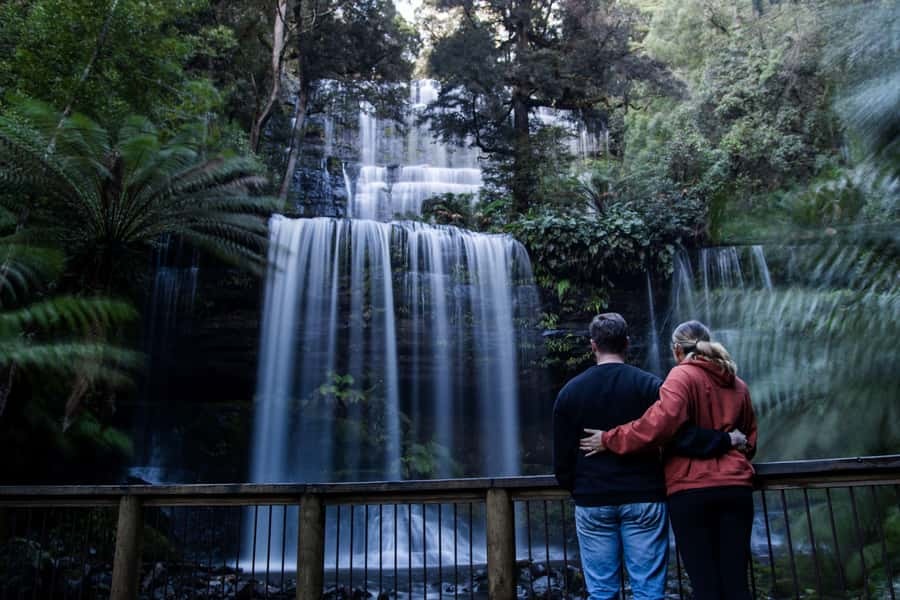
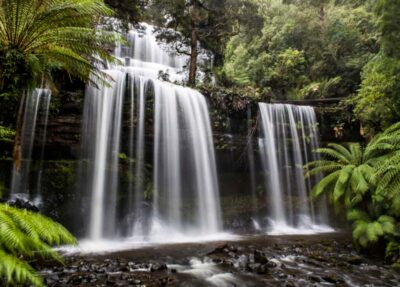
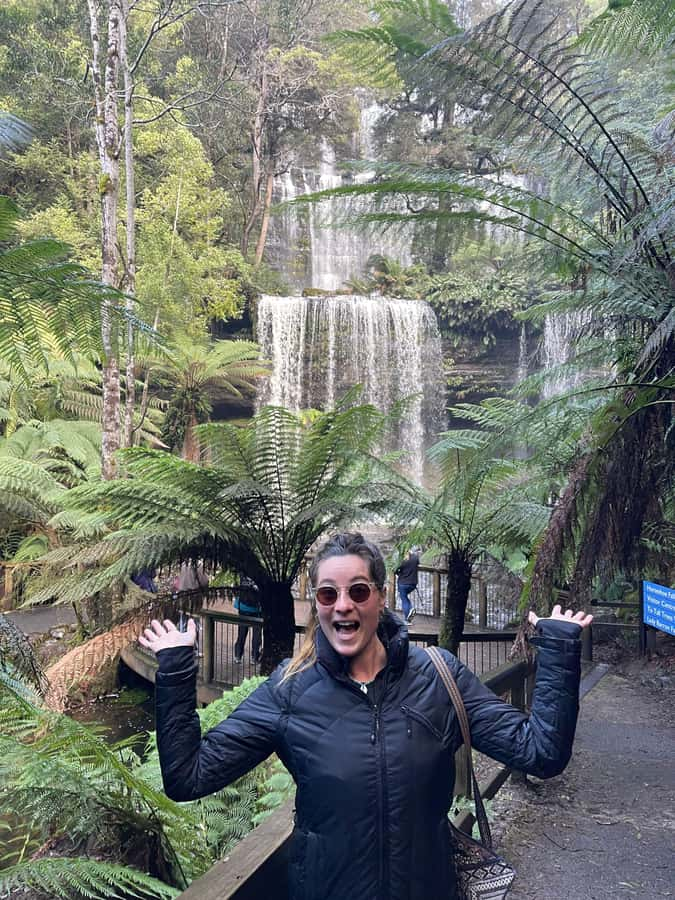
The walk to Russell Falls is one of the strongest parts of the day. You follow a gentle path beside a stream, with ferns and rainforest plants close to the trail. The route is short and easy compared with a full-day bushwalk, but it gives you the feeling of entering a proper forest.
Russell Falls drops in three distinct tiers over dark rock. After rain, the water can look especially impressive, though the park’s weather is changeable and no two visits will look exactly alike. The setting is more important than a single photo stop: the stream, tall trees, damp air, and filtered light make the walk feel cool and calm.
Your guide leads the group and provides context as you go. Trevor, one of the guides associated with this trip, is especially good at keeping a group moving at a brisk pace while still watching for small wildlife. On one outing, he spotted a pademelon tucked into thick growth, the kind of sight you can easily miss while looking only toward the waterfall.
The path is described as easy, but you still need comfortable walking shoes. Roots, damp ground, and changing conditions are part of a forest visit. This is not a suitable outing for wheelchair users or people with significant mobility limitations.
Horseshoe Falls and a quieter stretch of forest
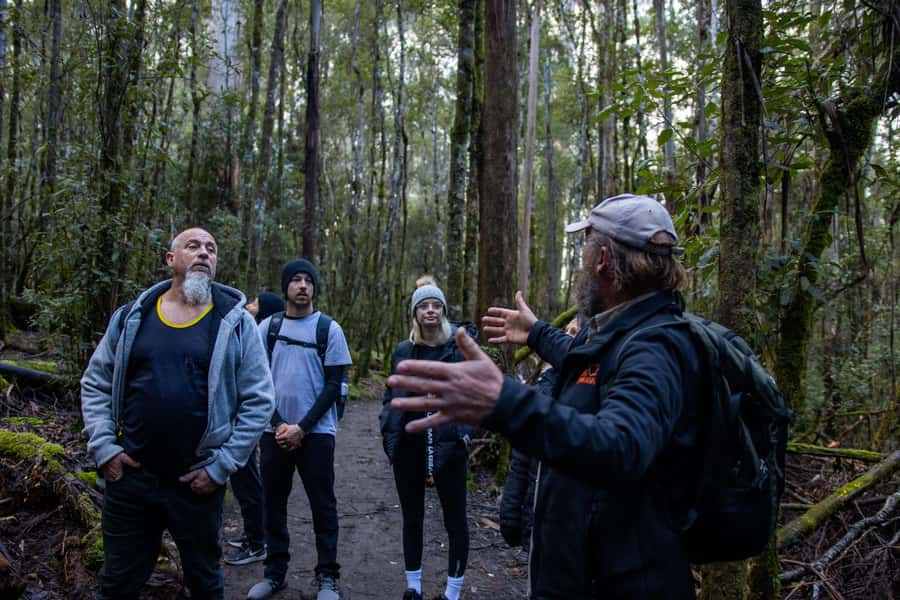
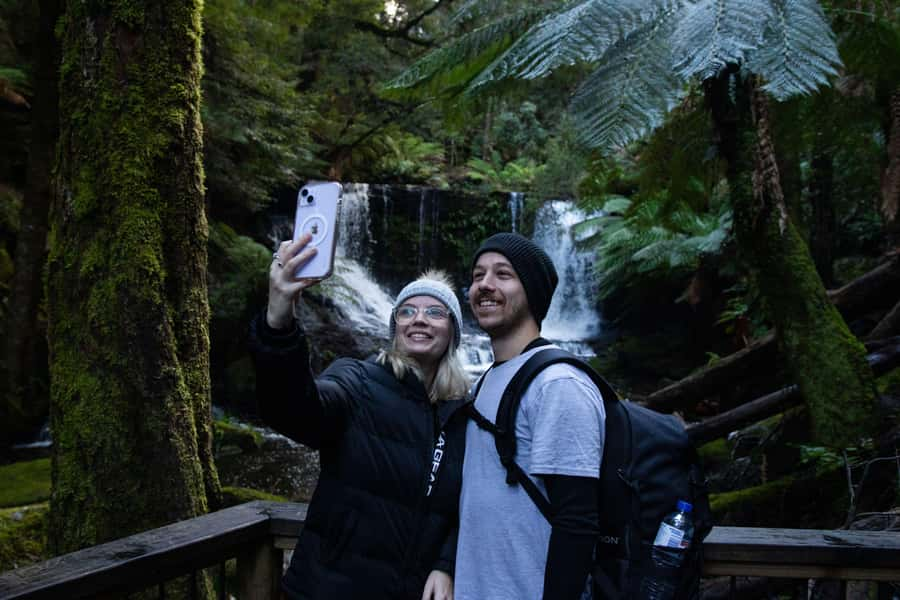
From Russell Falls, the route continues through fern glades to Horseshoe Falls. These falls are smaller and more enclosed than Russell Falls, but that is part of their charm. You get a second waterfall without needing a long or strenuous hike.
The walk also gives the guide time to point out the character of the rainforest. You may notice how little sound reaches the trail compared with Hobart’s waterfront. The stop is a good reminder that Tasmania’s appeal is not only dramatic scenery. It is also the simple pleasure of walking beside running water under a thick canopy.
The three-hour Mount Field portion includes the guided walks and the Tall Trees Trail. That sounds generous, but the time is shared among several sights, photography, and group movement. If you like taking long pauses for close-up pictures, you may need to be selective.
The pace can be a benefit. One guide, Trevor, kept the group moving swiftly while waiting for slower walkers. That approach helps you see the full program in a single day, though it may feel rushed if you prefer an unhurried bushwalk.
Same region, a different park day:
- Litchfield National Park and Jumping Crocodile Cruise
★ 5.0 · 2,119 reviews - Grampians National Park Small-Group Eco Tour from Melbourne
★ 5.0 · 761 reviews - From Port Arthur: Tasman Island Wilderness Cruise
★ 4.9 · 704 reviews - Sydney: Blue Mountains National Park Tour with River Cruise
★ 4.6 · 701 reviews
Looking up on the Tall Trees Trail
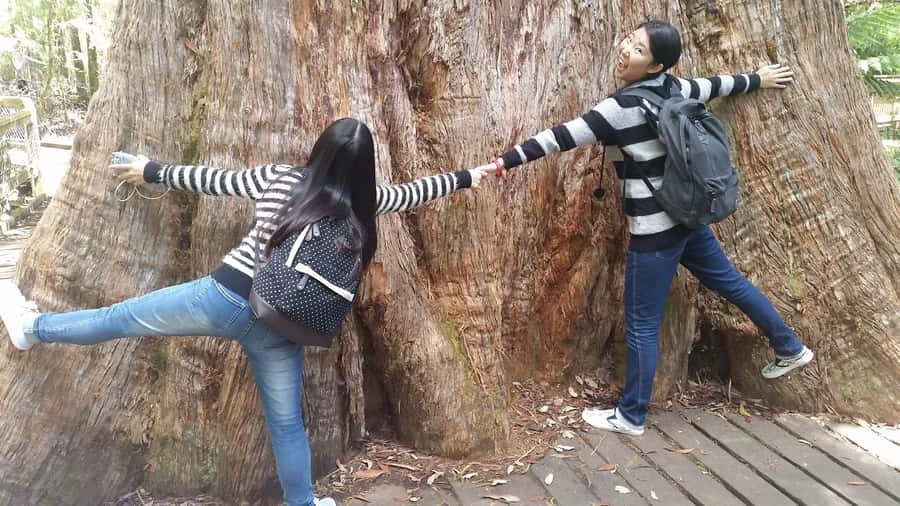
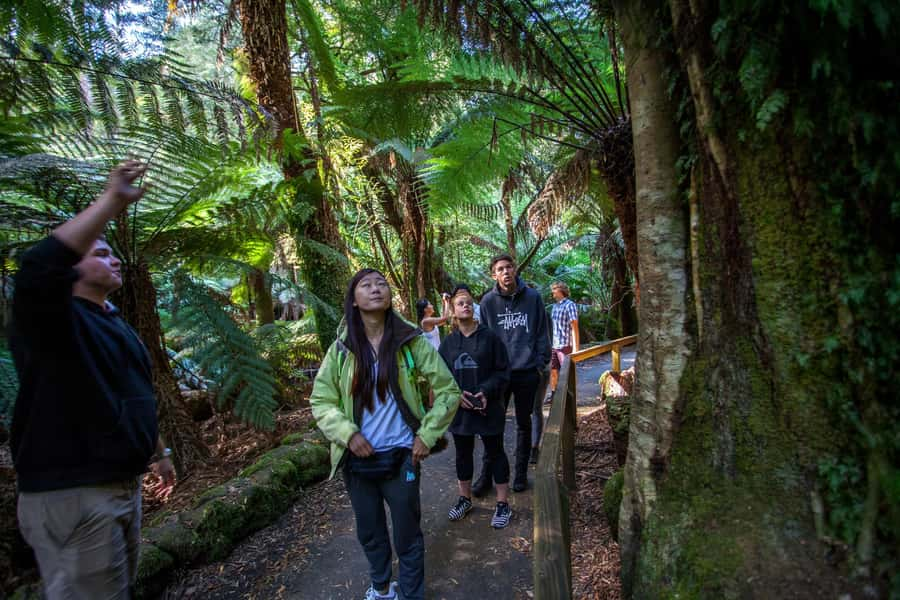
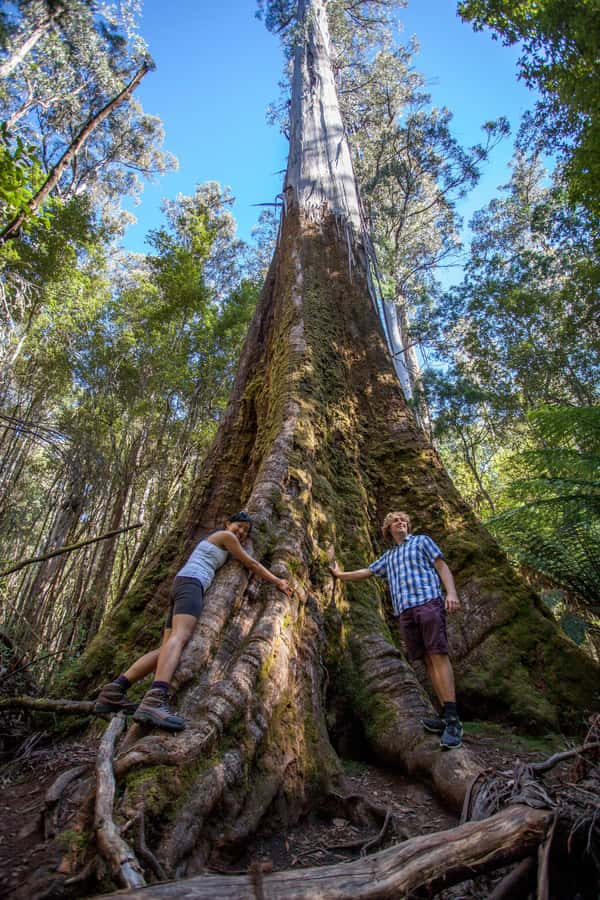
The Tall Trees Trail changes the scale of the park. At the waterfalls, your attention stays close to the stream, rocks, and ferns. Here, you look upward at swamp gums reaching more than 80 metres into the sky.
These trees are among the memorable details of the tour because they make you feel small without requiring a difficult hike. Take a moment to look along the trunks before rushing to take a picture. The height does not always translate well into a phone image, but it is easy to appreciate in person.
This part of Mt Field is also a useful counterpoint to the falls. Instead of one famous viewpoint, you get a sense of the forest’s size and age. The guide can help you notice features you might otherwise pass without a second thought.
Weather is worth taking seriously. Tasmanian conditions can shift, so bring a waterproof layer or other outdoor clothing even if Hobart begins with sunshine. Wear shoes with a good grip, and carry water. The tour is active, but it is not a technical hike.
A practical picnic lunch in the park
Lunch is not included, so plan for it rather than hoping to find a full restaurant during the day. You have an opportunity to buy a bakery-style takeaway lunch along the way, then eat in the relaxed setting of the Mount Field picnic area.
This arrangement keeps the schedule flexible and suits a day built around outdoor stops. You can choose something simple and get back outside quickly. If you have dietary needs or prefer a particular meal, bringing your own snacks is sensible. Food and drinks are not supplied as part of the tour.
Do not treat lunch as a long break. The park visit has several parts, and the group needs to stay on schedule for Bonorong and the return to Hobart.
Bonorong Wildlife Sanctuary: wombats, wallabies, and devils
The second major stop is Bonorong Wildlife Sanctuary, with about 1.5 hours to see the animals. This gives the day a different focus. Mt Field is about walking through native forest; Bonorong is about learning close to the animals themselves.
You can hand-feed wallabies and meet resident wombats. These encounters are a strong fit if you want more than distant sightings. The setting also helps you understand Tasmania’s native fauna in a direct, approachable way, especially if you are traveling with older children who enjoy animal visits.
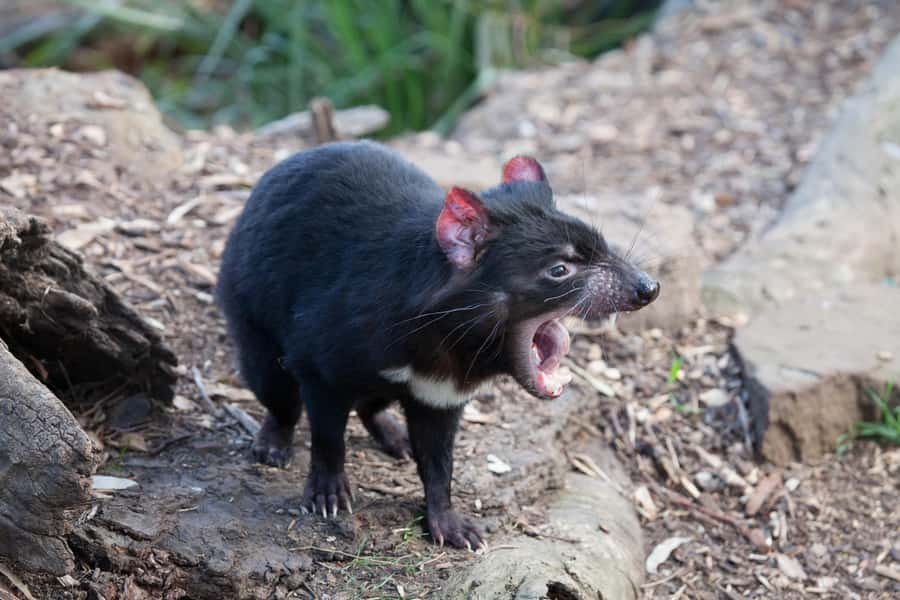
The sanctuary is also home to Tasmanian Devils. These carnivorous marsupials are found only in Tasmania. They may look like compact bears, but their behavior is much more forceful, and their bite is among the strongest in the animal kingdom for their size.
A Tasmanian Devil feeding show adds a useful lesson to the visit. You see the animals when they are active and hear about their behavior and place in Tasmania’s wildlife. The show is not just a photo opportunity. It explains why the devil is such a distinctive part of the island’s identity.
Still, 90 minutes passes quickly. One practical criticism of the schedule is that you may want more time at Bonorong, particularly if the wombats, wallabies, or devils are the main reason you booked. The short visit works well as part of a mixed nature day, but it will not satisfy someone seeking a long wildlife sanctuary visit.
How the guides shape the day
A good guide matters on a tour with several stops and a firm cruise schedule. You need someone who can explain the park, spot small wildlife, watch the clock, and adjust the pace without turning the day into a race.
Trevor is specifically associated with a strong Mt Field experience. He kept the group moving, identified a pademelon in dense growth, and waited for guests who did not show up on time. Another guide, a woman whose name is not provided here, was praised for being flexible about how long the group spent at each stop.
That flexibility is useful because no two groups want the same thing. Some people want waterfall photos. Others want to study the trees or spend every available minute near the animals. The guide can make small adjustments, but the overall schedule remains fixed by the ship’s departure.
There is one important warning for cruise passengers: arrive early and be ready at the meeting point. A delayed immigration process created a serious problem for one passenger who had been told the group would wait, but the vehicle left. You should not rely on informal promises about delays. Confirm the meeting instructions, allow extra time to leave the ship, and reach 20 Davey Street before the stated meet time.
Is $130 a fair price?
I see this as a reasonable package for a cruise passenger who wants both nature and wildlife in one day. The price includes two admission fees and guided walks, which removes several small costs that can add up. It also gives you transport from Hobart to Mt Field and back, a major benefit if you do not want to rent a car for a single port call.
The value is less clear if you already have a rental car or only want one attraction. A self-drive day may give you more control over lunch, walking pace, and time at Bonorong. On the other hand, driving yourself means managing road times and making sure you return to the ship safely.
The tour’s strongest value is convenience with substance. You are not simply driven to one viewpoint. You get two waterfalls, a tall-tree walk, a national park visit, and a wildlife sanctuary in a single outing.
Who should book this shore excursion?
You should consider it if you:
- Want to leave Hobart and see Tasmania’s forest country
- Prefer a guided outing to self-driving
- Enjoy short nature walks rather than a strenuous hike
- Want to see wombats and Tasmanian Devils
- Are comfortable with a brisk schedule
- Need a cruise-friendly return time
- Can manage uneven outdoor paths and changing weather
You may want another plan if you use a wheelchair, have limited mobility, are under six years old, or want a slow day with long stops. It is also not ideal if Bonorong is your sole priority, since the wildlife visit is limited to about 90 minutes.
Should you book the Mt Field and Bonorong tour?
I would book this tour if your perfect Hobart port day includes waterfalls in the morning and wildlife in the afternoon. The mix is more satisfying than choosing only a city activity, and the national park walks are short enough for many reasonably active visitors.
Go in with realistic expectations. The bus ride takes time, the walks need proper shoes, lunch is your responsibility, and Bonorong may feel rushed. Arrive early at 20 Davey Street, bring water and weatherproof clothing, and keep your camera ready for small animals as well as big sights.
For $130, you get a well-packed introduction to two very different sides of Tasmania. It is a practical choice for cruise passengers who want a guided day beyond Hobart without taking on the risks of independent transport.
FAQ
Where does the tour meet in Hobart?
The meeting point is the Tasmanian Travel and Information Centre at 20 Davey Street, Hobart. It is about a five-minute walk from the cruise terminal.
Is this tour designed for cruise ship passengers?
Yes. The meeting and return times are arranged around cruise ship arrival and departure schedules.
What time does the tour usually start and finish?
Most cruise ships suit an 8:45 a.m. meeting time, with departure at 9:00 a.m. Return is expected around 4:00 p.m.
How long is the tour?
The full experience lasts about seven hours.
What will I see at Mount Field National Park?
You will take guided walks to Russell Falls and Horseshoe Falls, then visit the Tall Trees Trail to see towering swamp gums.
Is lunch included?
No. You can buy a bakery-style takeaway lunch along the way and eat at the Mount Field picnic area. Bring your own snacks and water if preferred.
Are entrance fees included?
Yes. The Mount Field National Park entrance fee and Bonorong Wildlife Sanctuary entrance fee are included.
Is the tour suitable for people with mobility impairments?
No. The tour is not suitable for people with mobility impairments or wheelchair users. Comfortable walking shoes and weather-appropriate outdoor clothing are required.
Newest park tours we have reviewed in Australia
- Kakadu National Park Full Day Tour + Yellow Water River Cruise★ 5.0 · 16 reviews
- Kakadu National Park Evening Tour + Yellow Water Sunset Cruise★ 5.0 · 4 reviews
- Litchfield National Park Waterfalls & Wildlife Adventure Tour★ 5.0 · 30 reviews
- Nitmiluk National Park & Katherine Hot Springs – Full Day Tour★ 5.0 · 12 reviews
- Kakadu National Park Cultural Experience + Scenic Flight★ 5.0 · 8 reviews
- Kakadu National Park Scenic Flight &Yellow Water Cruise★ 5.0 · 28 reviews
- Small-Group Trekking Experience in Daintree National Park★ 5.0 · 4 reviews
- Day Excursion Burnie Cradle Mt National Park★ 4.5 · 8 reviews
Hobart National Park Tours, compared.
Port Arthur Full-day Guided Tour with Harbour Cruise and Tasman National Park
Read our review →
Bruny Island Wilderness Cruise from Adventure Bay, Bruny Island
Read our review →
Wineglass Bay & Freycinet National Park Day Trip from Hobart
Read our review →
Southwest Tasmania Wilderness Experience: Fly Cruise and Walk Including Lunch
Read our review →
Hobart: Wineglass Bay & Freycinet National Park Active Tour
Read our review →
Hobart: Wineglass Bay & Freycinet National Park – Active Day Tour
Read our review →
Tasmania: Wilderness and Wildlife Guided 6-Day Tour
Read our review →