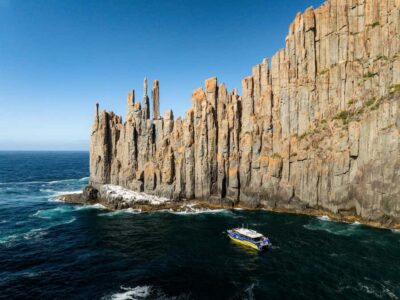
Reviewed · HOBART NATIONAL PARK TOURS
Tasmania: Wilderness and Wildlife Guided 6-Day Tour
Tasmania’s best feature is its variety, and this six-day route packs in an impressive amount: rainforest, alpine lakes, wild beaches, old mining towns, wildlife, and pink granite peaks. You move from Hobart to Strahan, Cradle Mountain, Launceston, Bicheno, Freycinet, and back to Hobart without needing to hire a car.
I especially like the choice of walks each day and the guides’ local knowledge. Phil, Keygan, Brendan, Hayden, and other guides have been praised for explaining Tasmania’s animals, plants, geology, and stories in a lively way. The main drawback is the pace: you cover a lot of ground, and the older bus may feel less comfortable on long drives.
Key points to know before booking
- Six days cover both coasts and the mountains: You see the West Coast, Cradle Mountain, Bay of Fires, Freycinet, Richmond, and kunanyi, also called Mount Wellington.
- Walks suit different energy levels: Easy options are available, but moderate walks such as the six-kilometre Dove Lake Circuit include steps, uneven ground, and short hills.
- Wildlife is part of the route: Bonorong offers close encounters with Tasmanian devils, wombats, quolls, kangaroos, and birds.
- Accommodation has two styles: Choose motel rooms with private bathrooms or hostel rooms, including dorms and some private rooms with shared same-gender bathrooms.
- Meals are not included: You need to budget separately for food and drinks, and the Gordon River cruise costs extra.
- The group format saves driving headaches: Pickups are available from selected central Hobart hotels and hostels, with luggage stored in a trailer during the road journey.
Why this route works for a first visit to Tasmania
Tasmania is compact on a map but slower to cross than you might expect. Roads wind through forest and mountain country, and many of the best places are far from Hobart. A guided trip solves the car problem while giving you context along the way.
This tour also avoids the trap of focusing on just one corner of the island. You get the cool, wet forests of the West Coast, the high country around Cradle Mountain, the bright beaches of the northeast, and the granite headlands of Freycinet.
The route is active but not built around one demanding hike. Every day includes short walks, with many classified as easy or moderate. That makes the tour a good fit if you want to walk regularly but do not want to commit to a single long trek.
You should still be comfortable getting on and off the bus, walking on rough surfaces, and handling changing weather. The tour is not suitable for children under eight, people with back problems, or people with mobility impairments.
More National Park Day Trips in Australia
- Port Arthur Full-day Guided Tour with Harbour Cruise and Tasman National Park
★ 4.5 · 585 reviews - Grampians National Park Small-Group Eco Day Tour
★ 4.8 · 577 reviews - From Darwin: Kakadu Wilderness Escape & Rock Art Day Tour
★ 4.5 · 403 reviews
Day 1: Russell Falls, Lake St Clair, and Queenstown
The first day takes you west from Hobart into some of Tasmania’s most memorable country. At Mount Field National Park, the walk to Russell Falls is an easy 1.4-kilometre return trip that takes about 25 minutes. The path is flat and even, so it is a pleasant first stop rather than a fitness test.
The forest here is a major part of the appeal. You walk among some of the world’s tallest trees before reaching the waterfall, where water drops through a green forest setting. Bring a jacket even if Hobart feels mild. Mountain and rainforest weather can change quickly.
Next comes Lake St Clair, Australia’s deepest freshwater lake. The stop gives you a taste of Tasmania’s high country, with cool air, open water, and mountain scenery. You then travel through Franklin-Gordon Wild Rivers National Park, where rainforest, rivers, and rugged peaks fill the route.
The day ends in Queenstown, an old mining town with a stark, weathered appearance. It is a useful contrast to the forests and lakes earlier in the day. From here, you continue to Strahan, a small harbour village and your base for two nights.
This is a long sightseeing day, so do not expect hours to explore each stop independently. Its value comes from seeing the scenery change dramatically as you cross the island.
Day 2: Sand dunes, rainforest, and the wild West Coast
The second day gives you more time around Strahan and the West Coast. At the Henty Sand Dunes, you see a striking stretch of pale sand rising beside the coast. The setting feels remote and open, with very little of the settled Tasmania you see around Hobart or Launceston.
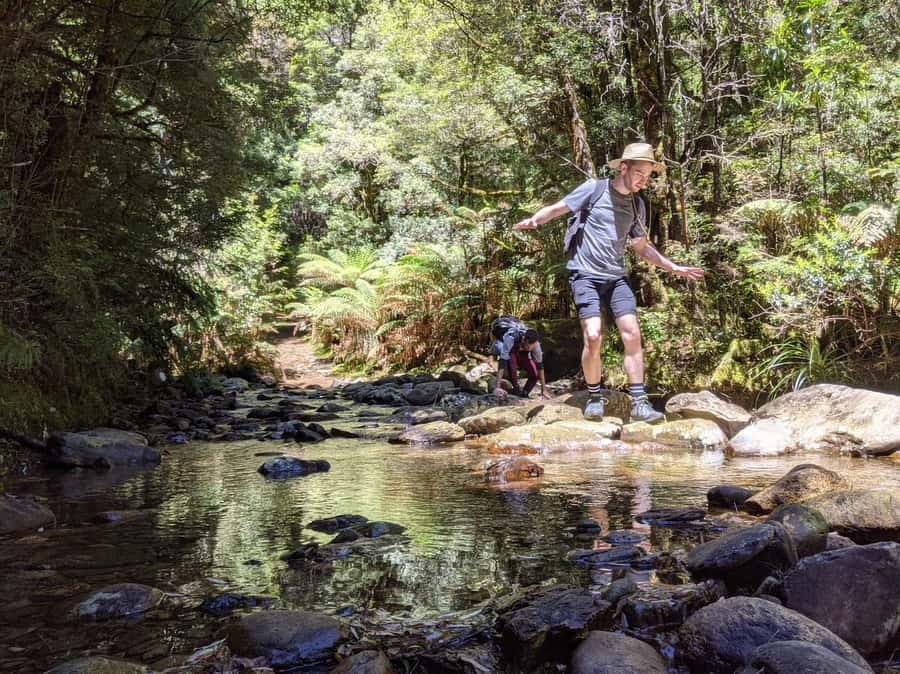
You also take a guided walk through ancient rainforest. This is where your guide matters. A good guide can point out the links between the forest, rainfall, river systems, and the people who have lived and worked in the region.
You have a choice later in the day. You can take part in the scheduled land-based activities, or pay separately for a Gordon River cruise. The cruise is not included, so check the added cost before committing. It can be appealing if you want to see the river from the water, but choosing the included activities keeps the total price lower.
Ocean Beach provides another memorable stop. The beach is broad, exposed, and known for exceptionally clean air. It is a place for a walk and a breath of sea air rather than a built-up seaside visit.
Two nights in Strahan help make the West Coast section worthwhile. You are not simply passing through for a quick photograph before moving on.
Day 3: Cradle Mountain and the road to Launceston
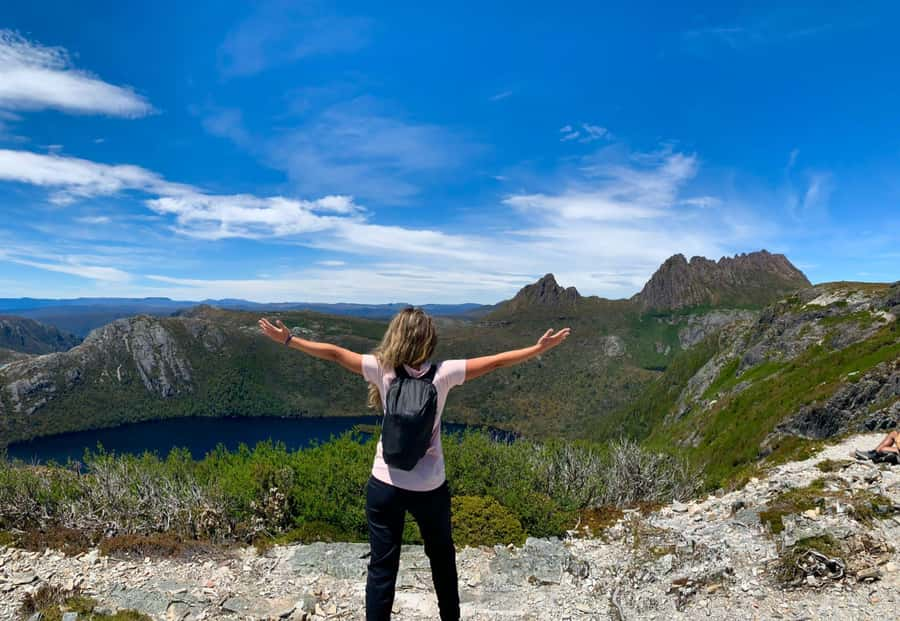
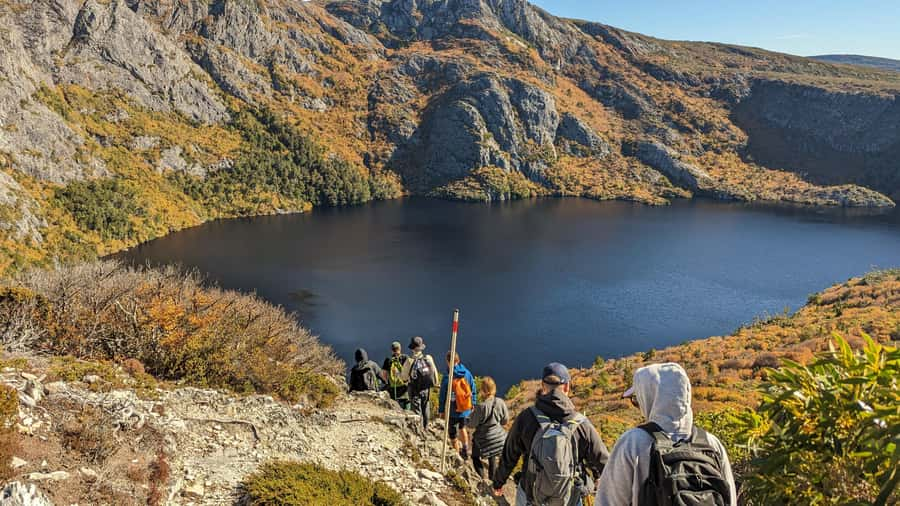
Cradle Mountain National Park is the tour’s main alpine experience. Its glacially shaped peaks, lakes, and rough walking tracks look very different from the West Coast rainforest.
You choose a walk based on your fitness and energy. The Dove Lake Circuit is a strong option for most active walkers. It covers six kilometres and takes about two to three hours, with short hills, steps, and rough patches underfoot. The route gives you close views of the lake and surrounding peaks without requiring a full mountain climb.
For a tougher outing, Marion’s Lookout offers a more demanding climb. It is the choice for people who want higher views and are prepared for a steeper effort. You can also look for wombats around Ronny Creek, a popular area for spotting these sturdy marsupials.
Weather is the key variable here. Pack warm clothing, a waterproof jacket, long pants, and proper hiking shoes. Even if the day begins pleasantly, conditions at higher elevations can turn cold and wet.
After leaving the park, the tour stops in Sheffield, known as the Town of Murals. This gives you a lighter cultural break after the mountain walks. You then continue to Launceston for the night.
This day is one of the busiest on foot. If you want the best experience, save some energy for Cradle Mountain rather than treating every earlier stop as a major hike.
More Wildlife and Elephant Encounters in Australia
- Kakadu Wildlife Escape Fogg Dam or Crocodile Cruise from Darwin
★ 4.5 · 295 reviews - Darwin: Kakadu National Park & Wildlife Full Day Tour
★ 4.5 · 200 reviews - Kakadu National Park Wildlife & Ubirr Rock Art Tour from Darwin
★ 4.5 · 101 reviews - PRIVATE Blue Mountains Wilderness & Wildlife Late Start Tour
★ 5.0 · 46 reviews
Day 4: Cataract Gorge, St Helens, and the Bay of Fires
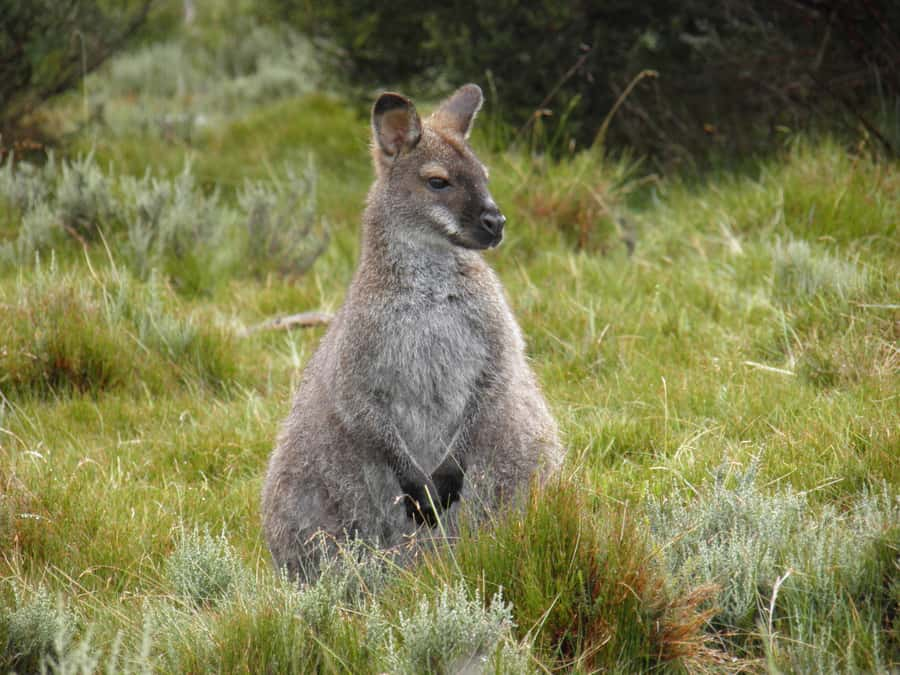
Launceston’s Cataract Gorge is an easy way to start the day. You can walk around the gorge and look for local wallabies before heading east toward the coast.
The drive to St Helens brings a change in scenery, with open country and coastal views. Lunch in St Helens breaks up the journey before the walk at the Bay of Fires.
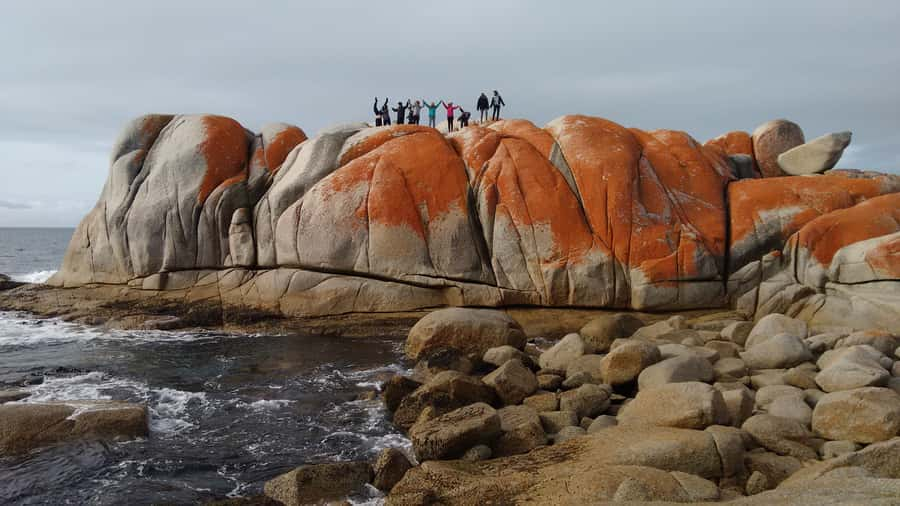
The Bay of Fires is famous for white sand, clear water, and orange lichen on coastal rocks. The walk is one of the tour’s best chances to enjoy Tasmania’s beaches without spending the whole day on a difficult trail. Bring swimwear and a towel if you want the option of getting in the water, though the itinerary does not promise a swimming stop.
You spend the night in Bicheno, a fishing village on the East Coast. Penguins can sometimes be seen emerging from the sea here. Wildlife sightings are never guaranteed, so treat this as an opportunity rather than a fixed show.
The East Coast portion feels more relaxed than the West Coast crossing. Still, you are covering distance, so the day combines short walks with road time rather than offering a long, lazy beach stay.
Day 5: Wineglass Bay and the pink granite Hazards
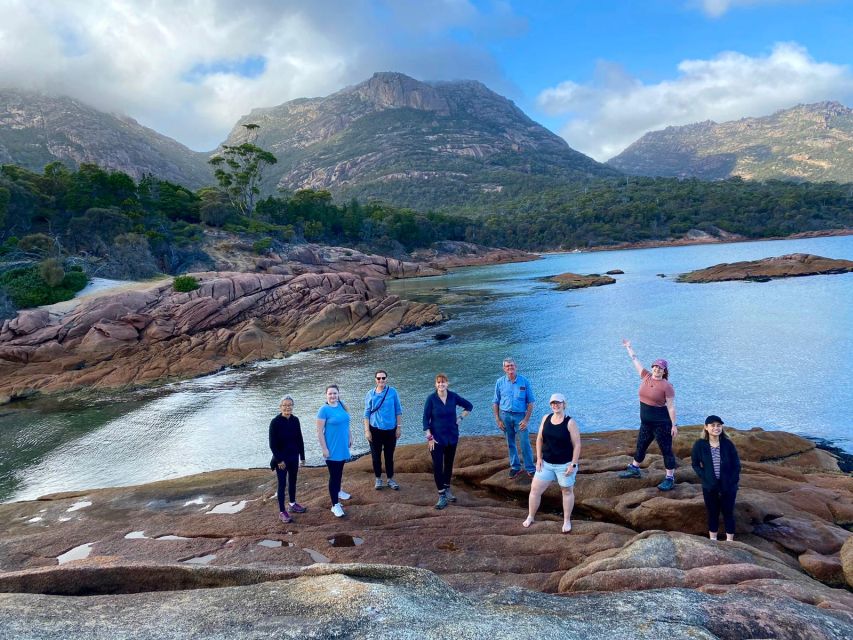
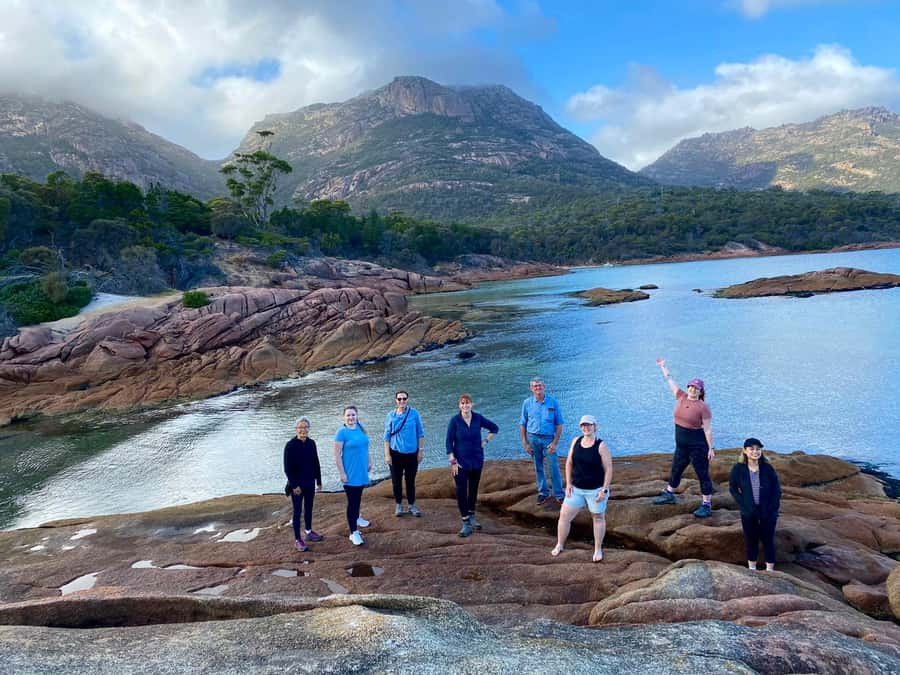
Freycinet National Park is one of Tasmania’s signature places, and the tour gives you several ways to see it. Honeymoon Bay offers a quieter coastal viewpoint with the pink granite Hazards rising behind it.
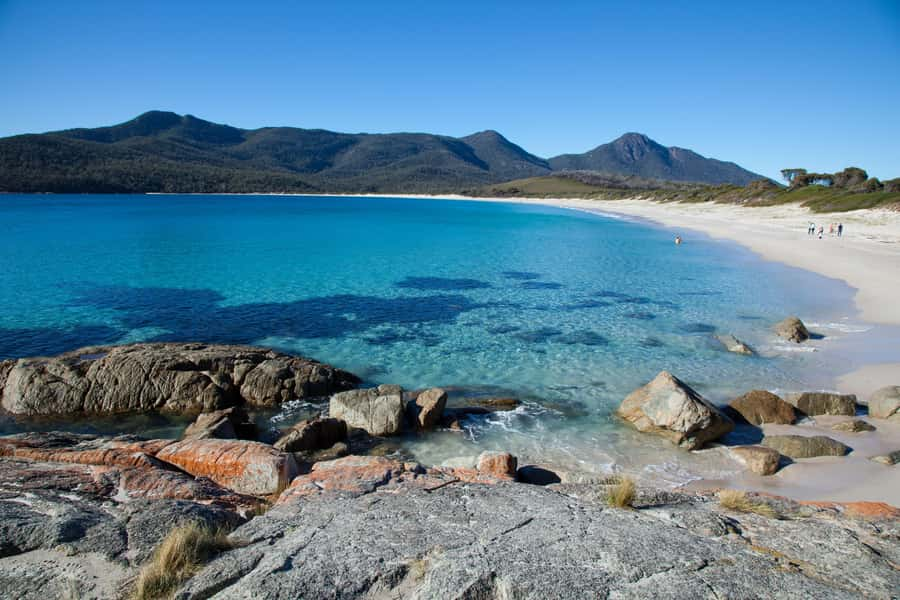
The classic option is the Wineglass Bay lookout and beach walk. From the lookout, you see the famous curve of white sand from above, then continue down to the beach if you want a closer look. The return climb requires more effort than the viewpoint itself, so plan your energy carefully.
For a harder challenge, choose Mount Amos. This climb is steep and demanding, and it is best for people who are comfortable with strenuous walking. The reward is a broad view over Wineglass Bay, but you should not choose it simply because it is the most famous option.
Cape Tourville offers another perspective, with ocean and mountain views from a shorter walking route. I like having these choices because Freycinet can work for both serious walkers and people who prefer scenic paths with less strain.
You return to Hobart along the Great Eastern Drive. It is a full day, but the sequence works well: sheltered coves, a famous lookout, an optional climb, and a final coastal viewpoint.
Day 6: Bonorong, Richmond, and kunanyi
The final day begins at Bonorong Wildlife Sanctuary, Tasmania’s best-known conservation and wildlife center. You can see Tasmanian devils, wombats, quolls, kangaroos, and birds in a setting designed around animal care and conservation.
This is more than a quick roadside wildlife stop. A special sanctuary-led experience may add detail about the animals and the pressures facing native species. It is also one of your best chances to see a Tasmanian devil during a short visit.
Next, you walk around Richmond, a colonial village in the Coal River Valley. Its historic buildings and quieter streets provide a change of pace after the wildlife sanctuary.
The final outdoor stop is Wellington Park on kunanyi, locally called The Mountain or Mount Wellington. Your guide can take you through fern glades, eucalyptus forest, rock columns, and boulder fields, with walking tracks leading to scenic lookouts.
This is a fitting end because it brings together several themes from the week: native plants, mountain weather, unusual rock formations, and wide views close to Hobart. The tour ends after this experience, so do not plan a tight flight connection unless you have confirmed the finish time.
Guides, group style, and the bus
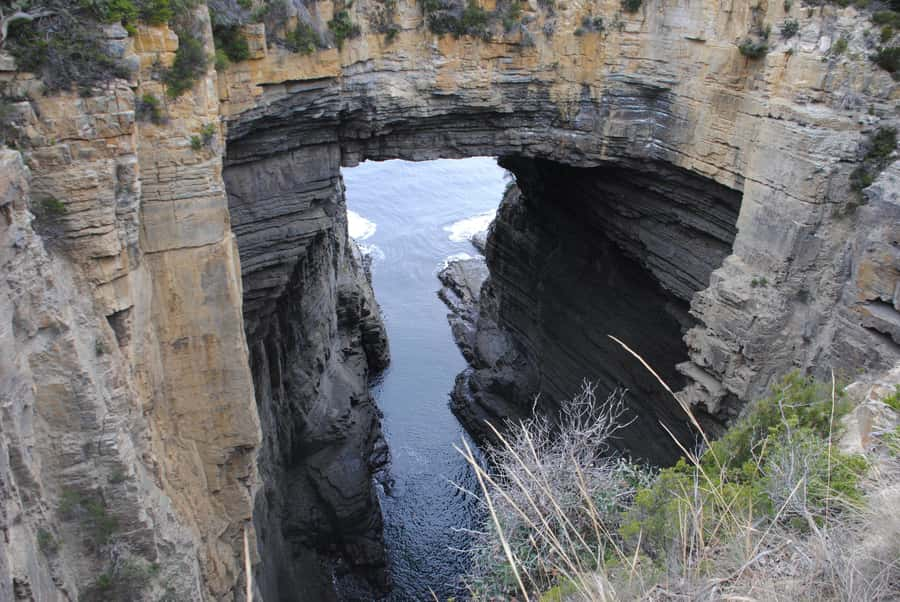
The guide is central to this tour. You are not just being driven between parks. The guide provides commentary, explains local geology and wildlife, helps match walks to the group, and points out places to eat.
Guides who have led recent departures include Phil, Keygan, Brendan, Hayden, and Garreth. Phil is known for local tips such as cafes and ice cream stops, while Keygan and Brendan have been praised for their clear explanations of Tasmanian nature and history. Your guide can vary, so treat those names as examples rather than a guarantee.
The walk choices make the group format more flexible than a fixed hiking trip. You can select an easier route while stronger walkers choose Marion’s Lookout or Mount Amos. All walks are optional, but you will get more from the tour if you have moderate fitness and good mobility.
The bus is practical rather than luxurious. One recent assessment called it a little old, which is worth keeping in mind on long travel days. Luggage is limited to 20 kilograms and stored in a trailer, so pack a small day bag with water, sunscreen, a jacket, and snacks.
Accommodation and the real cost at $831
At $831 per person, the price offers solid value if you want to see both the West Coast and East Coast without renting a car. It includes five nights of accommodation, national park entry, guided walks, commentary, Bonorong admission, and selected Hobart pickups and drop-offs.
It does not include meals, drinks, or the Gordon River cruise. Those extras can make a noticeable difference to your final budget, especially because you are on the road for six days.
You can choose motel accommodation with a private room and ensuite facilities. Hostel choices include same-gender dorms, or private single, twin, and double rooms with shared same-gender bathrooms. Twin and double bookings require at least two people.
The accommodation has been described as better equipped than expected, with some motels offering basic facilities for preparing breakfast or heating food. Still, you should check the exact room type before paying. The difference between a private ensuite and a shared dorm bathroom affects the value more than small differences in room decor.
Free cancellation is available up to 14 days before departure for a full refund. Pickup is offered from centrally located Hobart hotels and hostels, but not from Airbnbs or private homes. If you stay outside the pickup area, the operator can provide a nearby meeting point.
Should you book this Tasmania tour?
Book it if you want a broad first look at Tasmania, do not have your own car, and enjoy walking several times a day. It is especially good for solo visitors and couples who want company, local guidance, and accommodation choices without planning every road connection.
Think twice if you prefer slow travel, long mornings, luxury transport, or a single base. The route covers a lot of ground, and some days involve several hours of driving. It also requires sensible clothing and shoes for wet tracks, cold mountain conditions, and uneven surfaces.
For most active visitors, the strongest reasons to book are the range of scenery, the flexible walks, and the wildlife focus. Pack light, bring a reusable water bottle, keep your expectations realistic about the bus, and set aside money for food and optional activities. That combination gives you a practical and memorable introduction to Tasmania.
FAQ
How long is the Tasmania wilderness and wildlife tour?
The tour lasts six days and includes five nights of accommodation.
Where does the tour begin and end?
The tour begins in Hobart and returns to Hobart. Selected central Hobart hotel and hostel pickups and drop-offs are available.
What places does the tour visit?
The route includes Mount Field National Park, Lake St Clair, Franklin-Gordon National Park, Queenstown, Strahan, Henty Sand Dunes, Ocean Beach, Cradle Mountain, Sheffield, Launceston, Cataract Gorge, St Helens, the Bay of Fires, Bicheno, Freycinet National Park, Bonorong Wildlife Sanctuary, Richmond, Coal River Valley, and Wellington Park.
Is the Gordon River cruise included?
No. The Gordon River cruise is optional and costs extra.
Are meals and drinks included?
No. You need to pay separately for all food and drinks.
What accommodation choices are available?
You can choose motel accommodation with private rooms and ensuite bathrooms, or hostel accommodation with same-gender dorms or some private rooms with shared same-gender bathrooms.
How difficult are the walks?
The tour includes short daily walks, with most classified as easy to moderate. The Russell Falls walk is 1.4 kilometres and takes about 25 minutes, while the Dove Lake Circuit is six kilometres and takes about two to three hours, with hills, rough surfaces, and steps.
How much luggage can I bring?
You can bring up to 20 kilograms of luggage. Your main luggage is stored in a trailer on travel days.
Is hotel pickup available from an Airbnb?
Pickup is not available from Airbnbs or private residences. If you stay outside the allocated central pickup area, the operator can advise you of the closest available meeting point.
More Six-Day Trips in Australia
- African Wildlife & Nature – 5 Kenya national parks – 6 day Jeep Safari
★ 5.0 · 60 reviews - 6 days 5 nights safari Ngorongoro, Serengeti and Tarangire National Parks
★ 5.0 · 39 reviews - From Johannesburg: 6-Day Classic Kruger National Park Safari
★ 5.0 · 14 reviews - 6-Day Tanzania Camping Safari: Lake Manyara, Serengeti, Ngorongoro Cater and Tarangire National Park from Arusha
★ 4.0 · 6 reviews
More Multi-Day Safari Tours in Australia
- Tasmania: 6-Day Comfort Tour for Wilderness and Wildlife
★ 5.0 · 5 reviews - Yosemite National Park 2-Day Tour from San Francisco with Lodging
★ 4.5 · 412 reviews - Khao Lak: Khao Sok National Park Overnight Treehouse Trip
★ 4.7 · 216 reviews - 2-Day Yellowstone National Park Upper and Lower Loop Exploration
★ 5.0 · 200 reviews
Newest park tours we have reviewed in Australia
- Kakadu National Park Full Day Tour + Yellow Water River Cruise★ 5.0 · 16 reviews
- Kakadu National Park Evening Tour + Yellow Water Sunset Cruise★ 5.0 · 4 reviews
- Litchfield National Park Waterfalls & Wildlife Adventure Tour★ 5.0 · 30 reviews
- Nitmiluk National Park & Katherine Hot Springs – Full Day Tour★ 5.0 · 12 reviews
- Kakadu National Park Cultural Experience + Scenic Flight★ 5.0 · 8 reviews
- Kakadu National Park Scenic Flight &Yellow Water Cruise★ 5.0 · 28 reviews
- Small-Group Trekking Experience in Daintree National Park★ 5.0 · 4 reviews
- Day Excursion Burnie Cradle Mt National Park★ 4.5 · 8 reviews
Hobart National Park Tours, compared.
Port Arthur Full-day Guided Tour with Harbour Cruise and Tasman National Park
Read our review →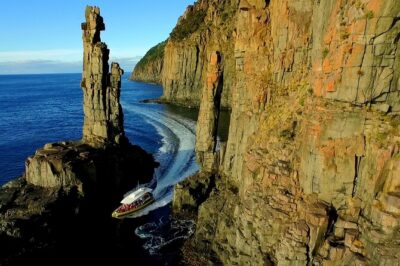
Bruny Island Wilderness Cruise from Adventure Bay, Bruny Island
Read our review →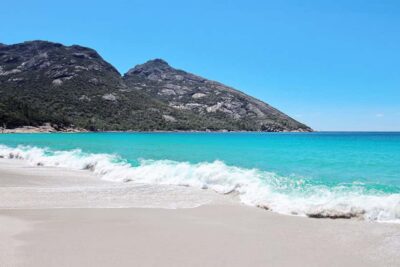
Wineglass Bay & Freycinet National Park Day Trip from Hobart
Read our review →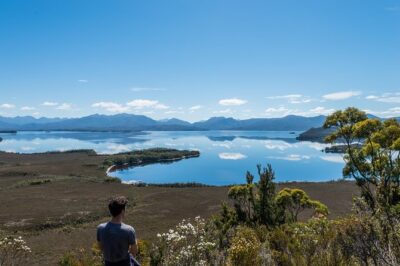
Southwest Tasmania Wilderness Experience: Fly Cruise and Walk Including Lunch
Read our review →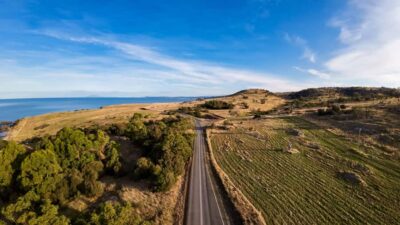
Hobart: Wineglass Bay & Freycinet National Park Active Tour
Read our review →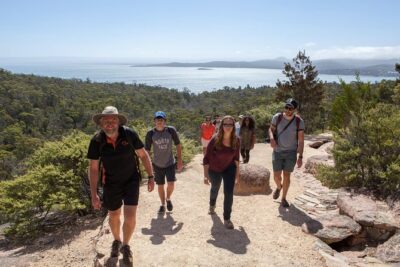
Hobart: Wineglass Bay & Freycinet National Park – Active Day Tour
Read our review →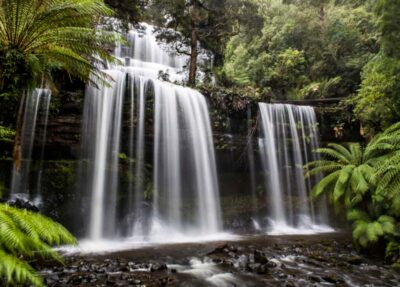
From Hobart: Mt. Field National Park and Russell Falls
Read our review →