
Reviewed · AUSTRALIA NATIONAL PARK TOURS
Wilsons Promontory: Afternoon Wilderness Cruise
The best part of this Wilsons Promontory cruise is the way it puts you beside a raw granite coast that is difficult to appreciate from inland tracks. You ride a purpose-built amphibious boat into Bass Strait, passing South Point, Norman Beach, the Glennies, Anderson Islets, and the strange skull-like hollows of Skull Rock. I especially like the wildlife search and the calm, useful commentary from guides such as Damo, Dushan, Dan, and Howie.
I also like that the waterproof jacket is included, a small detail that matters on an exposed afternoon boat ride. The main drawback is simple: this is open-sea travel, so rough water, spray, wind, or a weather cancellation are possible. Bring warm clothes and expect an active ride, not a still-water sightseeing trip.
Key points to know before you book
- South Point by sea: Reach the southernmost point of mainland Australia from the water, with views of Bass Strait and Victoria’s first marine national park.
- A purpose-built amphibious boat: The vessel is designed for comfort and safety on the water, with a thrilling ride when conditions turn lively.
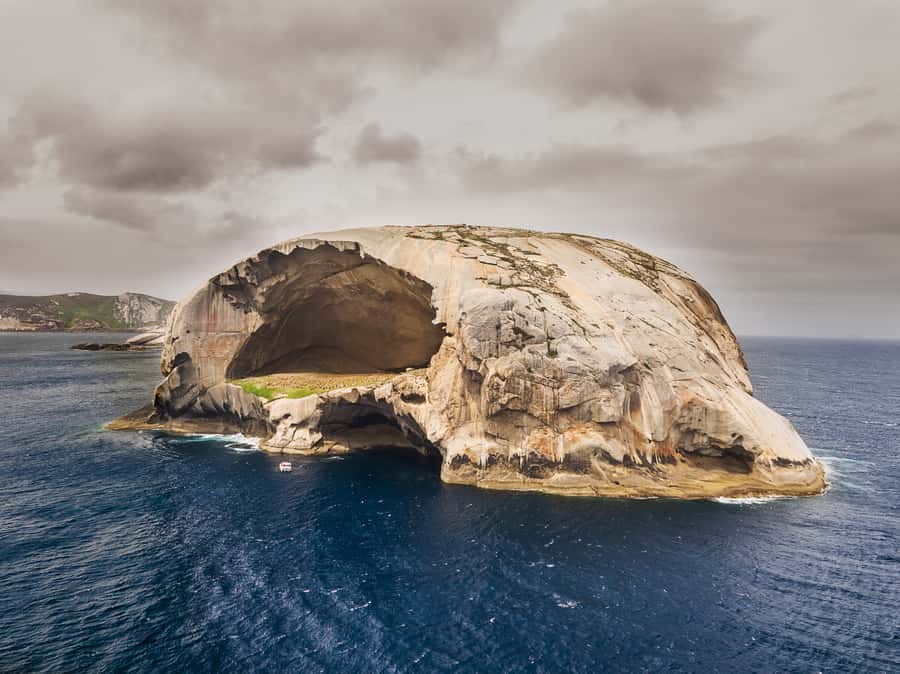
- Skull Rock up close: Wave-carved granite creates eerie skull shapes that become clearer as the boat approaches.
- Wildlife is a major draw: Look for Australian fur seals, dolphins, migrating whales, sea eagles, and many kinds of seabirds.
- Guides add real value: Damo, Dushan, Dan, Howie, Dave, Deb, Janice, and other crew members provide safety guidance, local stories, and nature commentary.
- Plan for cold and spray: A waterproof and windproof jacket is supplied, but you should still wear warm layers and check in 30 minutes early.
Why this afternoon cruise is a good way to see Wilsons Promontory
Wilsons Promontory is famous for beaches, bush walks, granite peaks, and wildlife on land. The afternoon cruise shows you the other half of the park: the rough southern coast and offshore islands where waves, wind, and time have shaped the rock.
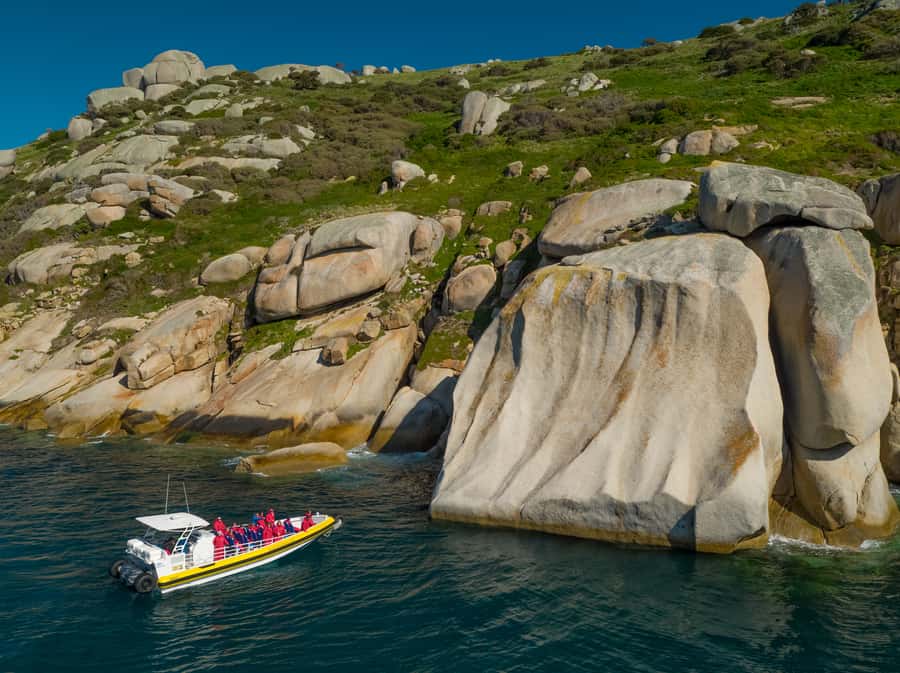
From the boat, you get a changing view of the coast. A beach that looks small from a lookout can stretch beneath high granite slopes. A dark rock outcrop can turn into a cave, arch, or face when you pass closer. The scale is the point. You are not simply looking at a postcard view. You are moving through the setting that made it.
The cruise lasts 150 minutes, or two and a half hours. That gives the crew enough time to cover several major sights without turning the outing into an all-day commitment. The 2pm departure also fits neatly into a day spent at Tidal River, though you should leave time to check in, listen to the safety briefing, and reach the vessel.
This is a sightseeing trip with an adventurous edge. Some stretches may feel relaxed, especially when the boat slows near rock formations or wildlife. Other sections can be lively, particularly on the return to shore. One passenger described the waves on the way back as part of the fun, while another noted that rough weather added to the experience. That same motion may not suit anyone prone to seasickness.
More National Park Tours in Australia:
- Litchfield National Park and Jumping Crocodile Cruise
★ 5.0 · 2,119 reviews - Grampians National Park Small-Group Eco Tour from Melbourne
★ 5.0 · 761 reviews - From Port Arthur: Tasman Island Wilderness Cruise
★ 4.9 · 704 reviews
Getting ready at Tidal River
The ticketing office is in the same building as the Tidal River Open Air Cinema. Check in 30 minutes before departure. This is not needless padding in the schedule. The time allows for registration, the safety briefing, and the walk to the boat.
Wear warm clothing even if the afternoon begins mild. The open water can feel much colder than the beach, and wind can cut through light clothing. The operator supplies a waterproof and windproof jacket, with long coats described as reaching to the ankles in one account. Still, bring your own jacket or warm layers as requested, and wear clothes you do not mind getting damp.
Food and drinks are not included. Eat before you set off or bring what you need according to the operator’s rules. There is no indication that a meal service forms part of the cruise, so treat this as a scenic excursion rather than a catered outing.
The boat can carry infants on laps, and service animals are permitted. If you need these arrangements, confirm the details when booking. The experience is conducted in English with a live guide.
The amphibious boat and what the ride feels like
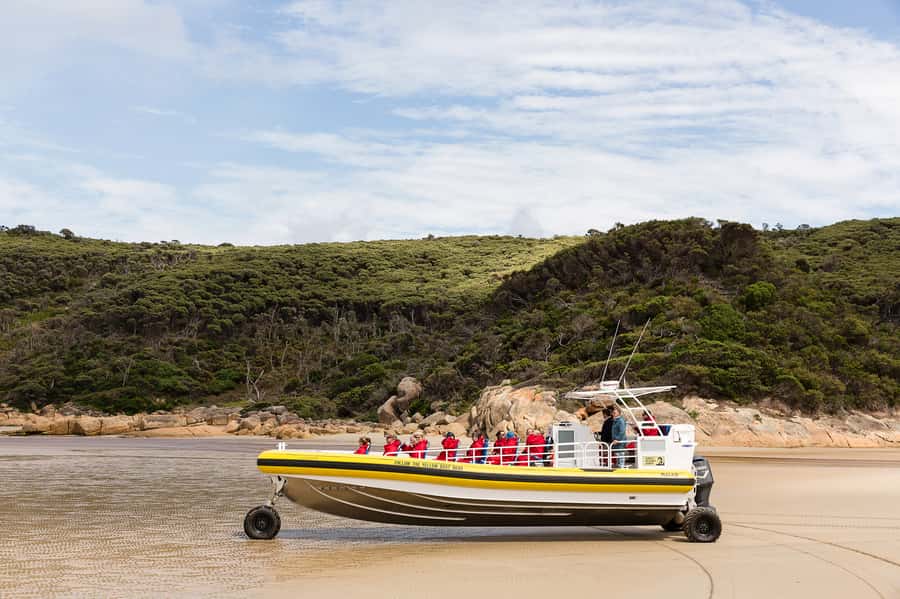
The vessel is the unusual feature here. It is described as the world’s first custom-built amphibious boat and the world’s largest custom-built amphibious boat. Its design allows the crew to take passengers comfortably and safely along the coast while handling the transition involved in getting on and off the water.
For you, the practical benefit is a boat made for this particular kind of trip rather than a standard ferry pressed into sightseeing duty. The vessel provides broad views of the coast, and the crew can position it near formations such as Skull Rock for a better look.
Do not expect a silent, glassy cruise from start to finish. This is Bass Strait, not a sheltered pond. Spray and movement are part of the experience. The waterproof coat helps, but it cannot remove the weather from an outdoor trip. Sit ready for changing conditions, keep your camera protected, and hold onto loose items.
The crew places strong emphasis on safety. Dan and Howie have been singled out for explaining the trip clearly, covering safety matters, and checking on passengers during the ride. The captain and bosun have also been praised for handling the boat well. That matters more here than polished patter. You want a team that can make the outing enjoyable while paying attention to sea conditions.
South Point and Bass Strait
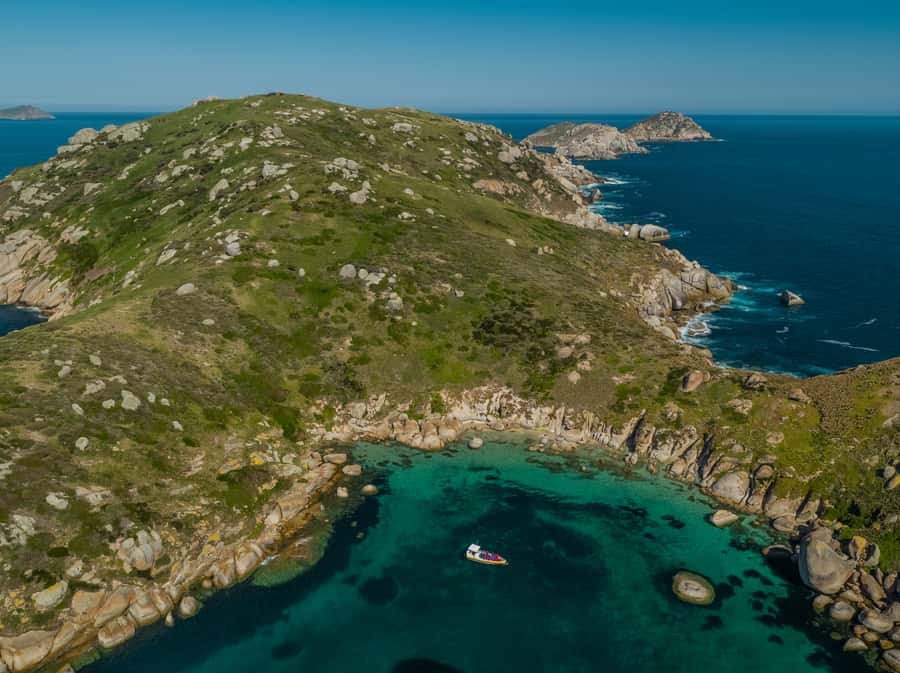
The cruise heads toward South Point, the southernmost tip of mainland Australia. This is one of those geographic markers that feels more meaningful when seen from the water. You are looking at the end of the mainland before Bass Strait opens out around you.
The southern coast feels exposed and elemental. There are no urban sights to distract you, only cliffs, beaches, offshore rocks, and changing water. The guides explain the area’s history and natural features as you go, helping you connect the names on a map with the actual coast in front of you.
The cruise also enters the waters of Victoria’s first marine national park. That setting gives the wildlife search a useful context. The seals, dolphins, whales, and seabirds are not decorative extras added to a boat trip. They are part of a protected marine environment, and their appearance depends on season, weather, and luck.
A whale sighting is possible during migration, but it is not guaranteed. One outing produced a whale sighting, while another did not. The same applies to dolphins and seals. Go expecting a beautiful marine setting first, with wildlife as a welcome bonus.
Same region, a different park day:
- Sydney: Blue Mountains National Park Tour with River Cruise
★ 4.6 · 701 reviews - From Hobart/Adventure Bay: Bruny Island Wilderness Cruise
★ 4.8 · 601 reviews - Port Arthur Full-day Guided Tour with Harbour Cruise and Tasman National Park
★ 4.5 · 585 reviews - Grampians National Park Small-Group Eco Day Tour
★ 4.8 · 577 reviews
The Glennies, Anderson Islets, and Anser Island
The route continues past the Glennies, Anderson Islets, and Anser Island. These offshore formations show how broken and irregular the southern coast becomes once you leave the main beaches behind.
From land, you may see only part of these places. The boat gives you a low, moving viewpoint, with the water framing the rock. That makes the formations feel more immediate. You can watch for birds on ledges and seals in the water, then turn back toward the mainland for a different angle on the cliffs.
The names can blur together if you are not familiar with the area, so listen to the commentary. The guides do more than point out rocks. They explain what you are seeing and add information about local wildlife and the area’s past. Damo has been praised for leading the trip with a friendly manner, while Dushan has shared commentary alongside him.
This section may not have one dramatic landmark equal to Skull Rock, but it helps you understand the coast as a whole. It is a chain of islands, islets, beaches, and granite outcrops rather than a single attraction.
Mount Oberon, Norman Beach, and the mainland view
Mount Oberon appears behind the white quartz sands of Norman Beach. From the water, the mountain and beach form one of the cruise’s strongest views. The prehistoric-looking boulders and pale sand create a sharp contrast with the blue water and darker offshore rock.
This is a good reminder that the boat trip complements, rather than replaces, the park’s land-based sights. From a track or lookout, you can study a mountain or beach from one fixed angle. From the water, you see how the same features fit together along the coast.
The crew may pause or slow the vessel so you can take in the view. That pause matters. A fast boat ride can turn even a spectacular coast into a blur. The combination of movement between stops and slower viewing near key sights gives the cruise a better rhythm.
If photography is important to you, this section offers plenty of variety: bright sand, rounded granite, mountain slopes, and open water. Protect your phone or camera from spray. The most useful photographs may come when the boat is near the coast, but those are also the moments when water can reach the deck.
Skull Rock, the cruise’s signature sight
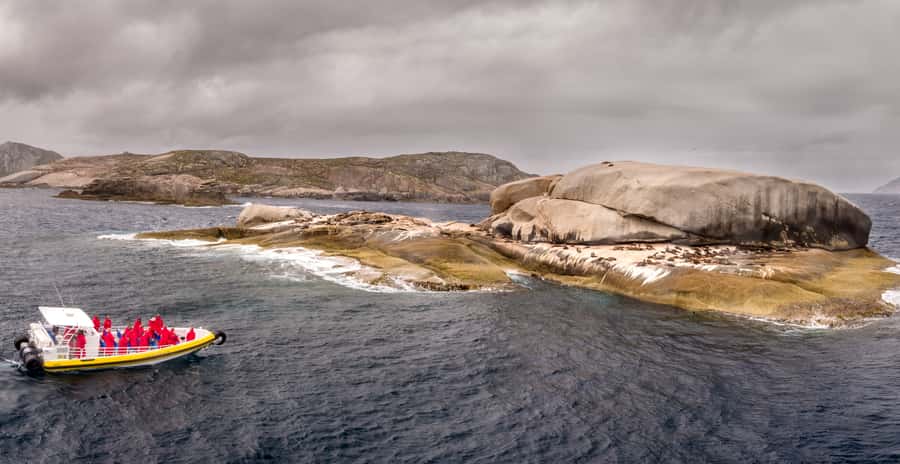
Skull Rock is the visual centerpiece. Waves have sculpted the granite into an eerie formation, and the skull shapes become easier to spot as the boat gets closer. The first view may look like a rough rock wall. Then the openings and hollows begin to take shape.
The name is not just a clever label placed on an ordinary boulder. The formation has a strange, weathered character, and the changing angle from the boat makes it more interesting than a single lookout photograph. The guide helps you identify the features, but you will also enjoy looking for the shapes yourself.
This is a good place to keep your camera ready, though do not spend the entire approach staring at a screen. Skull Rock is best appreciated as a three-dimensional formation surrounded by clear water, with the boat moving around it.
The stop also shows why a boat is useful at Wilsons Promontory. You can see the rock from the water rather than from a distant trail, and you get a sense of how waves continue to work on it. The coast looks ancient, but it is still being changed.
Seals, dolphins, whales, and birdlife
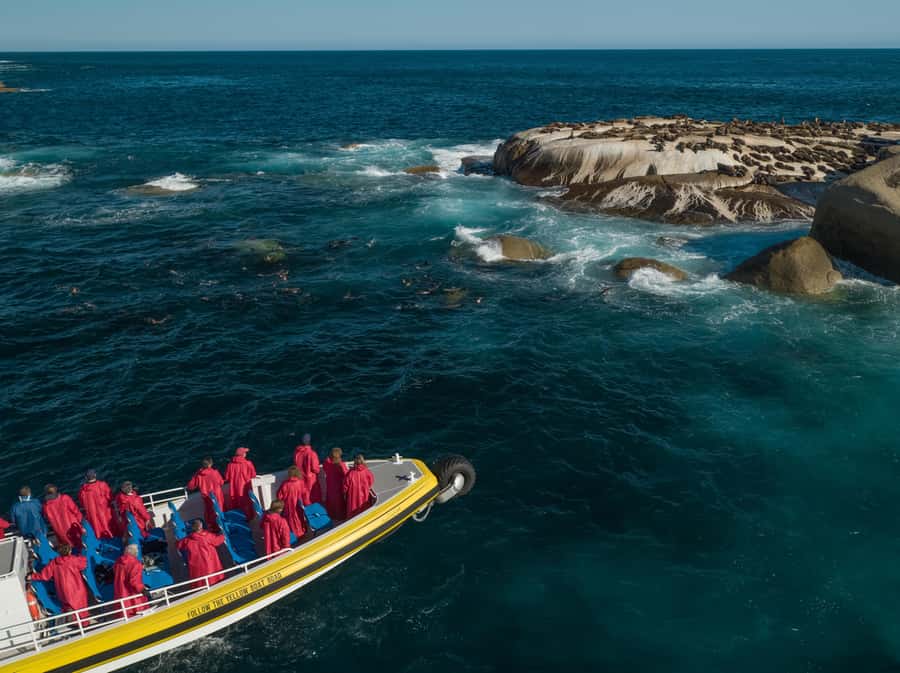
Wildlife is one of the strongest reasons to choose this cruise. The route passes areas where you may see thousands of seals, along with dolphins and seabirds. Australian fur seals have been spotted in colonies, with some jumping and playing in the water. Baby seals have also appeared.
Birdlife can be just as rewarding if you pay attention. White-bellied sea eagles have been seen, along with many other birds. The open water and rocky islands give the crew good places to scan, but no wildlife sighting can be promised.
You might also see migrating whales. Treat this as a possibility rather than the purpose of the booking. If you want guaranteed whale watching, this trip cannot offer that from the information available. If you want a broad look at a protected coast where seals, dolphins, birds, and whales may appear, the cruise makes sense.
The crew’s role is important here. A sharp eye can find a seal before you do, and the guides can explain what you are seeing without turning the wildlife into a sideshow. Keep your eyes moving between the water, rock ledges, and sky.
The guides make the two and a half hours work
The strongest praise has gone to the crew. Damo, Dushan, Dan, Howie, Dave, Deb, and Janice have all been mentioned for friendly service, clear explanations, local knowledge, and careful attention to passengers.
That combination matters because the scenery is doing much of the work, but the guide controls how much you take from it. A good explanation can turn a named island into a place with meaning. A clear safety briefing can help you relax once the boat reaches open water.
The crew also keeps an eye on comfort. On one outing with poor weather, the coats helped passengers stay warm and dry. The guides checked on people throughout the trip and offered travel sickness remedies. Since these details can vary by departure, do not rely on them as a replacement for your own preparation, but they show the practical approach of the operation.
The English commentary suits visitors who want to understand the coast as they see it. If you prefer a completely quiet ride, the regular narration may feel like more than you need. For most people, it adds useful context without taking away from the scenery.
Is $109 good value?
At $109 per person, this is not a cheap add-on, but the price covers 150 minutes on a specialist boat with a guide and a waterproof jacket. You are paying for access to a difficult-to-reach stretch of coastline, not simply transportation from one pier to another.
The value is strongest if you have limited time at Wilsons Promontory and want to combine major sights with the chance of wildlife. South Point, offshore islands, Mount Oberon, Norman Beach, and Skull Rock would be difficult to connect from the water on your own. The boat, crew, safety support, and commentary are part of the cost.
The value is weaker if you dislike open water, want a guaranteed animal sighting, or plan to spend the whole day on land-based walks. Weather can change the character of the trip, and rough conditions may be exciting for one person and uncomfortable for another.
The 4.8 rating from 168 submitted ratings, with 86 percent giving the transport a perfect score, points to a consistently strong experience. Still, read those numbers alongside the practical warnings: the sea can be rough, spray is possible, and nature does not work to a timetable.
Who should book this cruise?
I would choose it for first-time visitors who want a broad introduction to the southern coast without committing to a full day on the water. It also suits photographers, families with older children, wildlife watchers, and anyone who wants to see Wilsons Promontory from a fresh angle.
It is a good match for you if you enjoy a little motion and want the scenery explained as you go. The friendly crew, supplied outer layer, and clear safety information make the trip easier for people who are unsure about boat excursions.
I would think twice if you are very sensitive to seasickness, need guaranteed calm conditions, or are looking for a quiet, slow cruise. Check the forecast, dress warmly, and keep your expectations realistic about wildlife.
The operator offers free cancellation up to 24 hours before departure. If poor weather forces a cancellation, you can be offered another date or a full refund. You can also reserve now and pay later, which helps if your schedule around Wilsons Promontory is still shifting.
FAQ
Where does the Wilsons Promontory cruise depart from?
Check in at the ticketing office in the same building as the Tidal River Open Air Cinema. The tour begins from this location.
What time does the afternoon cruise leave?
The listed afternoon departure is at 2pm. Check availability when booking, as starting times can change.
How long does the cruise last?
The cruise lasts 150 minutes, or two and a half hours.
What is included in the ticket?
The ticket includes the cruise, an English-speaking live guide, and a waterproof and windproof jacket.
Should I bring food and drinks?
Food and drinks are not included. The supplied information advises you to plan for your own refreshments.
What should I wear?
Dress warmly and bring a jacket. The operator supplies a waterproof and windproof jacket, but warm layers are still recommended for the open water.
What happens if the weather is poor?
The experience requires good weather. If the operator cancels because of poor conditions, you will be offered a different date or a full refund. You can also cancel up to 24 hours before departure for a full refund.
Should you book it?
Book this cruise if you want to see South Point, Skull Rock, offshore islands, and Wilsons Promontory’s marine wildlife in one well-planned outing. The specialist amphibious boat, strong crew, and close views of the granite coast give the experience real value at $109.
Skip it if open water makes you uncomfortable or if you need guaranteed whales and dolphins. For everyone else, check in early, dress for wind, protect your camera, and save your best attention for Skull Rock and the water around the seal colonies.
Newest park tours we have reviewed in Australia
- Barron Gorge and Kuranda National Park Half Day Rainforest and Waterfall 4WD Tour from Cairns★ 5.0 · 73 reviews
- Kakadu National Park Wildlife & Ubirr Rock Art Tour from Darwin★ 4.5 · 101 reviews
- Grampians National Park with MacKenzie Falls and Kangaroos★ 4.5 · 121 reviews
- PRIVATE Blue Mountains Wilderness & Wildlife Late Start Tour★ 5.0 · 46 reviews
- Private Guided Tour from Sydney to Blue Mountains National Park★ 5.0 · 41 reviews
- Royal National Park Private Tour★ 5.0 · 55 reviews
- Wilderness, Waterfalls, Three Sisters BLUE MOUNTAINS PRIVATE TOUR★ 5.0 · 61 reviews
- Litchfield National Park Day Tour & Berry Springs, Max 11 Guests★ 4.5 · 131 reviews
Australia National Park Tours, compared.
Litchfield National Park and Jumping Crocodile Cruise
Read our review →
Grampians National Park Small-Group Eco Tour from Melbourne
Read our review →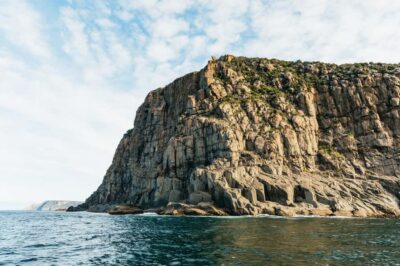
From Port Arthur: Tasman Island Wilderness Cruise
Read our review →
Sydney: Blue Mountains National Park Tour with River Cruise
Read our review →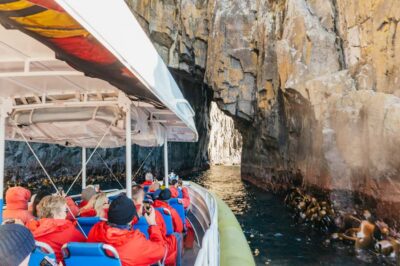
From Hobart/Adventure Bay: Bruny Island Wilderness Cruise
Read our review →
Port Arthur Full-day Guided Tour with Harbour Cruise and Tasman National Park
Read our review →
Grampians National Park Small-Group Eco Day Tour
Read our review →
Hobart: Bruny Island Wilderness Coast Eco Cruise with Lunch
Read our review →Lists this park day appears in