
Reviewed · TENERIFE NATIONAL PARK TOURS
Tenerife. Stargazing in Teide National Park
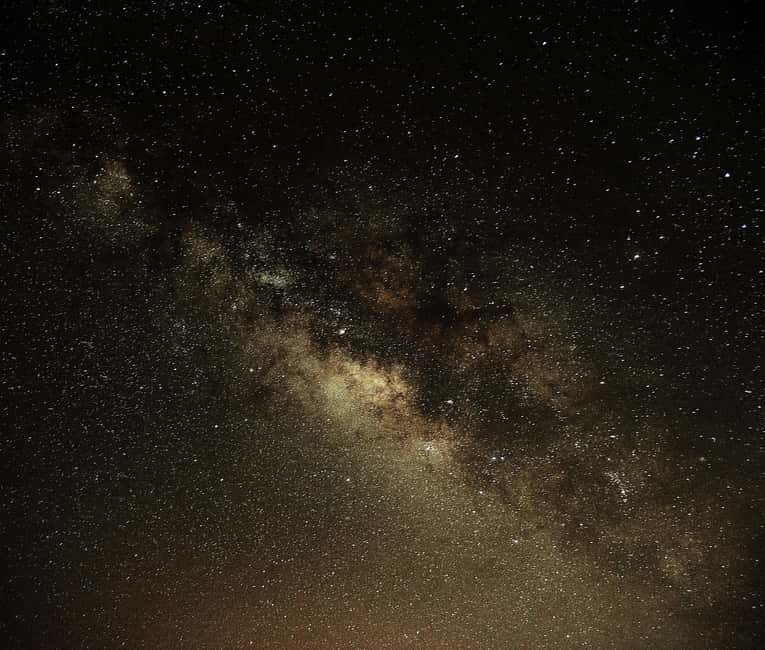
Teide’s high, dark mountain setting gives this two-hour stargazing session its real strength. With little artificial light, you can see far more than the usual handful of bright stars, then use a serious telescope to examine planets, clusters, nebulae, and galaxies. Guide Roberto explains the sky in clear English and Spanish, without assuming you know a constellation from a comet.
I like the small-group format, which gives you time at the telescope instead of a quick glance and a shuffle onward. I also like the personal touches: free photos, water, chocolate, and blankets when the mountain air turns cold. The main drawback is the temperature. Even in Tenerife, Teide after dark can feel bitterly cold and windy, so warm clothing is not optional.
Key points to know before booking
- See the sky from Teide National Park: The high mountain setting offers darker, clearer skies than the coast.
- Roberto leads the session: He explains astronomy, mythology, planets, and constellations in English and Spanish.
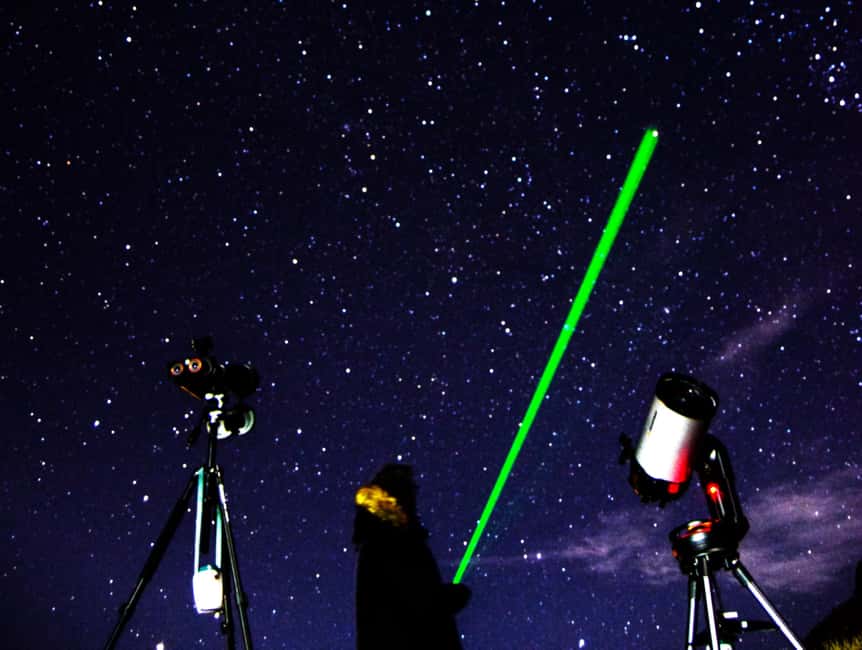
- Quality viewing equipment: The session uses a high-end telescope, laser explanations, and, on some occasions, astronomy binoculars.
- Small groups feel personal: Groups are generally around 10 to 12 people, allowing more time for questions and telescope viewing.
- Free photos are included: Roberto takes keepsake photos beneath the stars, sometimes with Teide in the background.
- Prepare for real mountain cold: Bring a coat, fleece, trousers, and sturdy shoes. Blankets may be available, but your own warm layers matter most.
Why Teide is such a good place to study the stars
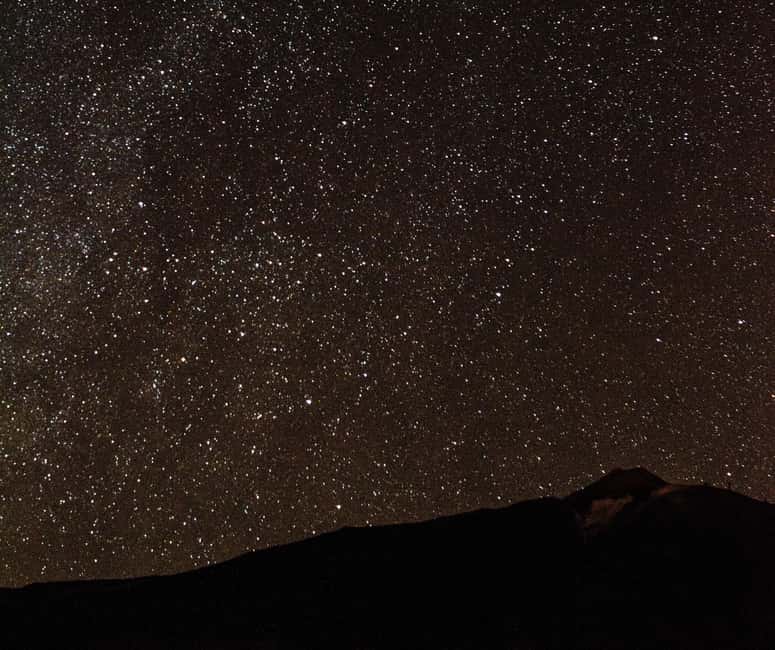
Most Tenerife visitors spend their evenings near the coast, where streetlights, hotels, and roads wash out the faintest stars. Teide National Park gives you a much darker setting at roughly 2,000 meters, according to one detailed account of the experience. That height matters because the sky can be clearer above low cloud, and the lack of city glare lets you see more of the Milky Way and other faint objects.
The setting also adds a sense of occasion. You are not simply looking through a telescope in a town. You are standing in a volcanic mountain park after sunset, with the island below and the night sky overhead. The quiet is part of the experience.
Still, do not assume every night will offer identical views. Clouds, wind, the moon, and the time of year affect what appears above you. The guide chooses suitable objects for the conditions, so the exact planets, galaxies, and constellations can change from one evening to the next.
More Teide National Park Tours in Tenerife:
- Tenerife: Teide National Park Sunset & Stargazing Tour
★ 4.2 · 3,812 reviews - Tenerife: Sunset and Stargazing at Teide National Park
★ 4.7 · 2,826 reviews - Teide National Park Sunset & Stargazing with Dinner (Star Safari)
★ 5.0 · 2,601 reviews
Meeting beside the Ermita de las Nieves
The meeting point is beside the Ermita de las Nieves in Teide National Park. The session begins 40 minutes after sunset, giving the sky time to darken properly before serious observing starts.
You need to arrange your own transport. Transfer, food, and drinks are not included, although Roberto has often supplied water and chocolate during the session. Several people found the location easy to reach by rental car, with parking available nearby. Allow plenty of driving time, especially around sunset, when roads toward Teide can be busy with people stopping for views.
The road through the park is part of the evening. If you are driving up, leaving earlier lets you stop for sunset photographs and mountain views. Do not cut it too close, though. The meeting point is not the place to arrive flustered after racing up winding roads.
The location is wheelchair accessible, but you should still consider the mountain setting and nighttime conditions when deciding if it suits your needs. Babies under one year are not permitted.
The first part: learning how the sky moves
Roberto begins by helping you understand the celestial sphere, meaning the apparent movement of the sky above you. This is useful because it turns a random scatter of stars into something you can read.
You learn how to find major constellations and bright stars, how to tell different kinds of objects apart, and how people have used the sky for orientation. The session also brings in mythology and the old stories connected to constellations. That combination works well. Science explains what you are seeing, while mythology explains why particular patterns have held human attention for so long.
The explanations are aimed at ordinary people, not astronomy students. Roberto assumes no prior knowledge and breaks complex ideas into manageable pieces. Parents also have good reason to bring older children and teenagers. A nine-year-old was particularly engaged during one session, while teenagers were able to follow the interactive format without being talked down to.
The bilingual approach is another strength. Roberto speaks English and Spanish, and he has taken care to make explanations understandable to people with only basic Spanish. If your group includes speakers of both languages, this can make the evening easier for everyone.
The telescope session: planets, galaxies, and clusters
The telescope is the heart of the activity. One detailed account describes an impressive 8-inch Go-To telescope, along with astronomy binoculars on a tripod. The equipment allows you to see much more than you can with the naked eye.
Depending on the date and conditions, you might see planets, double stars, nebulae, star clusters, galaxies, and the moon. Saturn and its rings have been visible on some nights. Andromeda, the Milky Way, Neptune, comets, and shooting stars have also featured in different sessions, though you should not treat any one list as a promise for your particular evening.
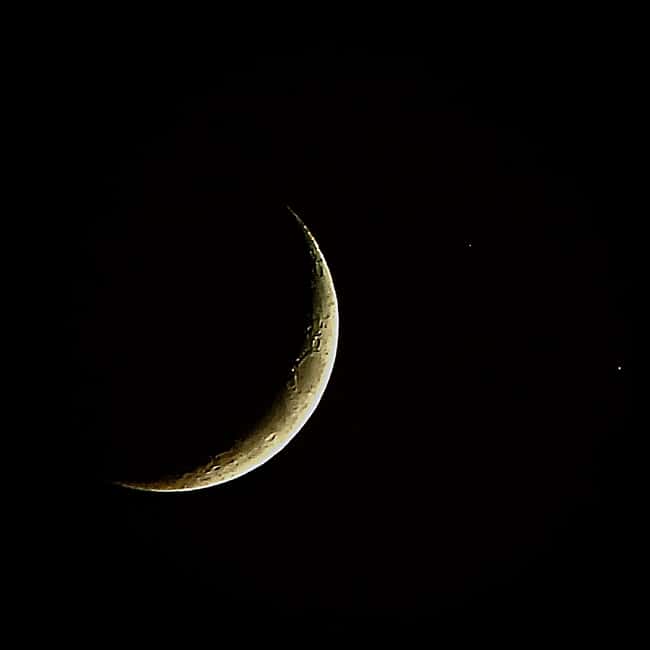
The moon can be especially striking through different magnifications. It is bright and easy to identify, but the telescope brings out surface detail that is lost when you simply look up. On darker nights, the appeal shifts toward faint clusters and distant galaxies.
A good guide makes a major difference here. Telescope viewing can otherwise become a line of people waiting for a few seconds at the eyepiece without knowing what they are seeing. Roberto explains each object before and after you look, answers questions, and makes sure everyone gets a turn. The small group helps keep the pace relaxed.
There is also room for photography advice. If you bring your own phone or camera, Roberto may help you understand how to photograph the sky. His own camera produces the best results, but the guidance can help you make more of your equipment.
More National Park Tours in Tenerife:
- Teide National Park: Sunset & Stargazing Safari with Dinner
★ 4.6 · 2,115 reviews - Tenerife: Teide National Park Full-Day Tour with Pickup
★ 4.5 · 1,613 reviews - Tenerife: Quad Adventure Tour in Teide National Park
★ 4.7 · 1,492 reviews - Tenerife: Snorkeling Tour in a Marine Protected Area
★ 4.9 · 636 reviews
A small group and an unhurried pace
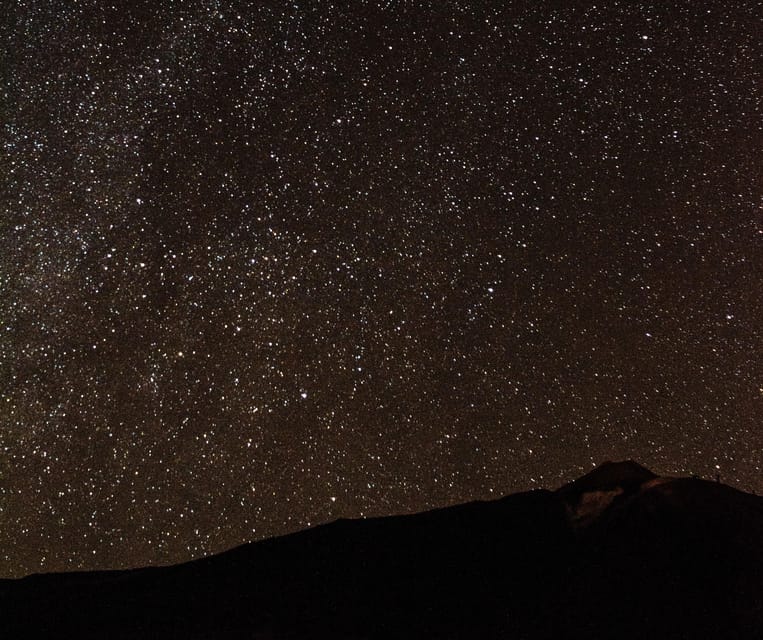
The group size is described as small, with several sessions running at about 10 to 12 people. That is a useful middle ground. You have enough company to make the evening sociable, but not so many people that the telescope becomes a stage show for a crowd.
I like the way this format fits astronomy. You need pauses to let your eyes adjust and time to follow the guide’s explanation. A rushed program would work against the subject. The best part of stargazing is often the calm between observations, when you look up without being told exactly where to look.
Roberto also keeps the mood friendly. His style includes humor and storytelling, which helps during the inevitable waiting periods. You can ask questions without feeling that you need technical vocabulary.
The group format does mean you share the telescope. If you want hours of private observing or advanced instruction in astrophotography, this is not that kind of outing. It is a guided introduction with enough substance to satisfy people who already have some interest in astronomy.
The cold is the real practical issue
Teide after sunset is much colder than the coastal resorts. Reports from different months describe temperatures around 3 Celsius, strong wind, and a chill that feels sharper than the forecast suggests. Even people who checked temperatures of 10 to 12 Celsius found it wise to bring serious layers.
Pack:
- A warm coat or insulated jacket
- A fleece or extra sweater
- Long trousers
- Closed, sturdy shoes
- Gloves and a hat if you feel the cold easily
Roberto has provided blankets, spare fleece layers, and jackets on some evenings. Water and chocolate are also welcome small extras, but you should not rely on borrowed clothing. Dress as if you will spend two hours standing outside in mountain wind.
The cold can affect your enjoyment more than the astronomy. If you arrive in shorts and a light holiday sweater, the telescope may become secondary to keeping your hands warm. This is the one point I would stress most strongly when planning the booking.
Free photographs under the stars
The included photographs add unusual value. At the end of the session, Roberto takes professional-style pictures of participants beneath the night sky, sometimes with Teide behind them. Some photos have included playful lightsaber effects, which adds a lighthearted finish to a serious astronomy session.
These images matter because ordinary phone cameras often struggle in darkness. You may manage a moon picture, but capturing people with stars behind them usually needs a tripod, careful exposure, and patience. Having someone handle that while you enjoy the evening is a useful bonus.
The photos are provided without an extra charge. If you need to leave early, Roberto has also shared additional photos afterward in at least one case. That should not be treated as a guaranteed arrangement, but it shows the practical care built into the experience.
Is $41 good value?
At $41 per person, this is reasonably priced for a two-hour guided activity using a high-end telescope. The price includes the guide, equipment, laser-based explanations, and free photos. You are not paying only for a view of the stars. You are paying for someone to identify objects, explain them, manage the telescope, and keep the group moving.
The value is strongest if you are curious but not experienced. Without guidance, you may see a beautiful sky but miss the clusters, galaxies, and double stars that make the setting special. The explanations turn looking into learning.
It is also good value for families with older children, couples seeking a quieter evening, and adults who want something different from another restaurant or sunset stop. The small group and refreshments make the experience feel more personal than a large coach-based astronomy program.
The value is less clear if you already own excellent astronomy equipment and want advanced technical instruction. One experienced amateur still enjoyed the quality of the telescope and the range of objects, but a serious observer should understand that this remains a shared public session rather than a private observatory visit.
Who will enjoy it most?
I would recommend this experience to:
- Families with children old enough to stay comfortable outdoors for two hours
- Teenagers who enjoy science, space, or photography
- Couples wanting a calm evening away from resort entertainment
- First-time stargazers who want clear explanations
- Amateur astronomers who enjoy seeing southern skies from a dark mountain location
- Visitors comfortable driving to Teide after sunset
It suits people who like questions, stories, and a little patience. You may spend time waiting for your turn at the telescope, but that is part of a shared astronomy session.
I would hesitate to recommend it to anyone who dislikes cold, wind, or standing outside at night. The wheelchair-accessible status is helpful, but the mountain conditions still deserve careful thought. Babies under one year are not suitable for the activity.
Booking, cancellation, and language details
You can book now and pay later, which helps if your Tenerife plans are still shifting. Free cancellation is available up to 24 hours before the activity for a full refund.
The live guide operates in English and Spanish. Some content may be presented in its original language, so confirm your preferred language when booking if that matters to your group. Availability and exact starting times can change because the session is tied to sunset.
Should you book this Teide stargazing experience?
Yes, if you want an accessible and personal introduction to the night sky. Roberto’s clear explanations, quality telescope, small groups, and free photos give the evening more substance than simply driving up to Teide and looking around.
Book it especially if you are willing to prepare for the cold and allow plenty of time for the drive. Bring serious layers, arrive near the Ermita de las Nieves on time, and expect the exact objects to vary with the season and conditions. If you do that, $41 buys a memorable mountain evening and a better understanding of what you are seeing above you.
FAQ
Where does the stargazing activity meet?
The guide meets you beside the Ermita de las Nieves in Teide National Park.
When does the session begin?
The activity starts 40 minutes after sunset. Check availability for the exact starting time on your date.
How long does the experience last?
The stargazing session lasts two hours.
Which languages does the guide speak?
The live guide speaks English and Spanish.
Is transport included?
No. Transfers are not included, so you need to arrange your own way to the meeting point.
What equipment is provided?
A high-end telescope is provided, along with laser technology explanations. One session also used an 8-inch Go-To telescope and astronomy binoculars on a tripod.
What should I wear?
Bring weather-appropriate clothing, with a warm coat, fleece, long trousers, and sturdy shoes strongly recommended. Teide can be very cold and windy after dark.
Are photographs included?
Yes. Free photos of the experience are included, with pictures taken under the stars.
Newest park tours we have reviewed in Tenerife
- Tenerife: Teide National Park and Volcano Buggy Tour★ 4.0 · 39 reviews
- Quad Tour Volcano Teide By Day in Teide National Park★ 4.0 · 80 reviews
- Teide National Park Exclusive and private Tour★ 5.0 · 115 reviews
- Get to know the Teide National Park and the north of Tenerife on a private tour★ 5.0 · 63 reviews
- Teide National Park: Landscapes and Viewpoints Private Tour★ 4.7 · 52 reviews
- PRIVATE TOUR Teide National Park: Hiking and Stargazing★ 5.0 · 38 reviews
- Tenerife: Teide National Park Buggy Tour with Hotel Transfer★ 4.5 · 145 reviews
- Self Drive Sunset & Stargazing in Teide National Park – No Dinner★ 5.0 · 151 reviews
Tenerife National Park Tours, compared.
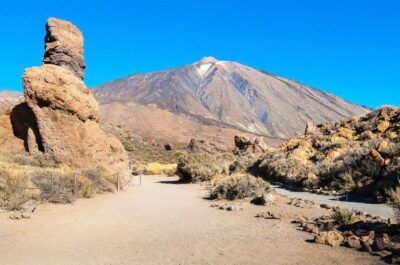
Teide National Park Full-Day Tour with Pickup
Read our review →
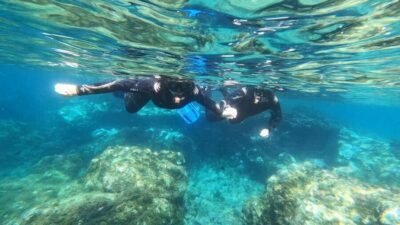
Small Group Teide National Park Volcanic and Forest Wonders
Read our review →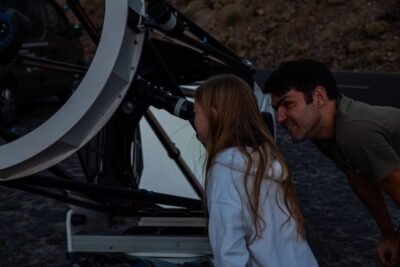
Teide National Park: Guided Large Telescope Stargazing Tour
Read our review →
Paragliding from Puerto de la Cruz or Teide National park
Read our review →Lists this park day appears in