Reviewed · USA NATIONAL PARK TOURS
Sequoia National Park: Group Stargazing Program
Sequoia National Park gets wonderfully dark after sunset, and this one-hour program gives you a way to enjoy that sky without hiking or driving an hour back to your rental. Scott, who has led stargazing programs in Sequoia for 11 years, uses a laser pointer, star maps, and plenty of stories to connect constellations with science and cultures around the world.
I like two things here: the easy logistics and the mix of astronomy with mythology. You can meet near Potwisha, only about 10 minutes inside the park from Three Rivers, or near the General Sherman Tree, about 10 minutes from Wuksachi Lodge or Lodgepole Campground. The main thing to consider is the complete darkness. Bring a flashlight, dress warmly, and expect a quiet outdoor setting where wildlife can feel close.
Key points to know before you book
- Two meeting areas inside the park: Choose Potwisha Overflow Lot near the Three Rivers entrance or the General Sherman Tree parking area.
- A true no-hike activity: You sit or stand for one hour while Scott points out stars and constellations.
- Science and cultural stories together: Expect astronomy, current space missions, mythology, and star traditions from different cultures.
- Useful hands-on aids: Star maps, a 3D solar system model, and a 3D Saturn model help make the sky easier to follow.
- Good for first-time stargazers: Families and beginners can follow along, while astronomy fans have room to ask questions.
- Come prepared for the dark and cold: Wear warm layers, bring a flashlight, and remember that there is no cell service at the Potwisha meeting point.
Why this short Sequoia program works
Many park activities ask you to drive, hike, and plan around daylight. This one is simpler. You arrive at a designated parking area, settle into a chair or stand beside the group, and spend an hour looking up.
That simplicity matters in Sequoia. After a full day on the Generals Highway, you may not want another long walk or a late drive on winding roads. The Potwisha option is especially handy if you are staying in Three Rivers or near the lower park entrance. The General Sherman Tree location makes more sense if you are based near Wuksachi Lodge or Lodgepole Campground.
I also like the one-hour length. It is long enough to learn several constellations and ask questions, but short enough for children and tired adults. You are not committing to a whole evening in the cold. The program gives you a focused look at the night sky, then lets you return to your lodging or campsite.
The price is $25 per person. That is a fair cost for a live guide, star maps, hands-on models, seating if requested for mobility needs, and a planned astronomy lesson in a national park. You are not paying for transportation, a telescope session, or take-home equipment. If you want a private tour, telescope stargazing, or a program built around a specific topic, those are separate options through Big Trees Tours.
More National Park Tours in the USA:
- Miami: Everglades National Park Airboat Tour & Wildlife Show
★ 4.5 · 7,296 reviews - Clear Kayak Tour of Shell Key Preserve and Tampa Bay Area
★ 5.0 · 5,800 reviews - Discover Rocky Mountain National Park
★ 5.0 · 3,419 reviews
Finding the meeting point at Potwisha
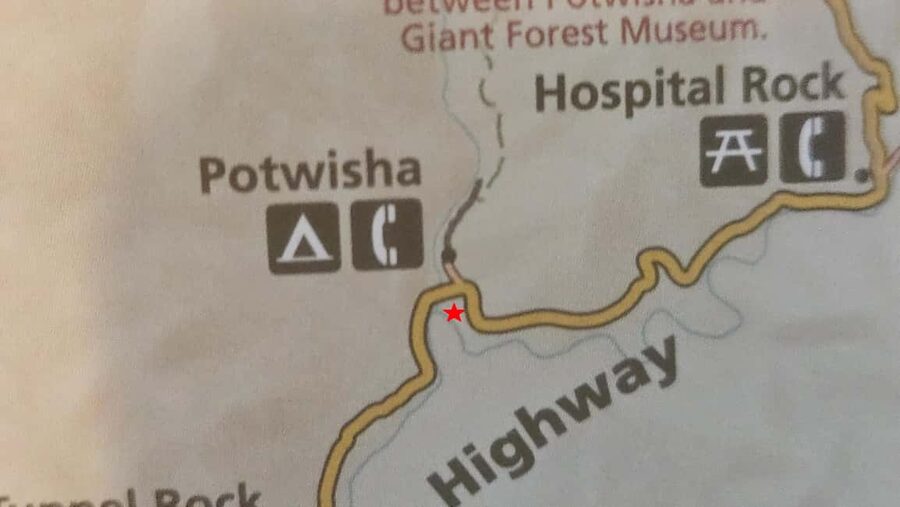
The Potwisha meeting area can be confusing if you arrive expecting a normal campground gathering spot. The campground entrance is on one side of the Generals Highway. The group meets across the road in the Potwisha Overflow Lot, not inside the campground.
Look for the red lights set up at the meeting point. There is no Google Maps location for this exact spot, so study the provided meeting photos and send questions before the program. Cell coverage is not available there, which makes it smart to save the details before leaving your lodging.
The location is about 10 minutes inside the park from the Three Rivers entrance station. That makes it a practical evening choice if you are staying in Three Rivers, but you still need to arrive with enough time to identify the correct side of the road. Bring a flashlight for walking safely around the parking area, but use it carefully so you do not shine bright light into other people’s eyes.
The second location is the parking area for the General Sherman Tree. It is about a 10-minute drive from Wuksachi Lodge or Lodgepole Campground. This option saves you a long evening drive down toward the lower park and fits well into a stay in the park’s higher country.
The exact start times vary, and additional winter times are available at Potwisha. Check the available time when booking, then plan to arrive early enough to get settled without rushing.
What happens during the one-hour program
The format is relaxed. You can sit or stand while Scott guides your attention across the sky with a laser pointer. The point is not to race through a list of stars. It is to learn how to recognize patterns and understand why people have watched them for thousands of years.
You may begin with familiar constellations or seasonal objects visible that night. Scott explains how the stars fit together in the sky, then adds the stories attached to them. Those stories do not come only from one tradition. The program looks at how different cultures named, explained, and used the night sky.
That cultural angle gives the hour more depth than a basic constellation lesson. You are not only learning that a group of stars has a certain name. You are also hearing how people connected those stars with travel, memory, identity, and the passage of time.
Science remains central. Scott can discuss modern discoveries, current missions, and the larger questions that make astronomy exciting. The program is suitable for a first-time stargazer, but you can also bring astronomy questions if you already know the basics.
Special astronomical events may occasionally be visible, including a passing comet or a nova. These events depend on nature and cannot be promised for a particular date. Think of them as a welcome bonus, not part of the guaranteed program.
Scott’s teaching style and the mood of the evening
Scott has been leading stargazing tours in Sequoia for 11 years, and that experience matters in a setting where darkness can feel unfamiliar. He is also first aid and CPR certified, which offers some reassurance when you are spending the evening outdoors in a remote-feeling park setting.
The tone is informal. The included dad jokes and puns keep the program from feeling like a classroom lecture. That can help children stay engaged, especially during a quiet activity where everyone is asked to look upward for long stretches.
Families with older children should find the subject easy to share. A 9-year-old and a 10-year-old can follow the stories and facts, while adults can ask about constellations, star clusters, or current space research. Children under 2 are not suitable for this program, and unaccompanied minors are not allowed.
The mood can also feel a little spooky. In complete darkness, normal park sounds may seem much closer, and you may think about wildlife moving nearby. That is part of the night park setting, but it is worth knowing before you arrive. Stay with the group, follow the guide’s directions, and bring a light for practical safety.
Same region, a different park day:
- Yosemite Highlights & Giant Sequoias Day Tour from San Francisco
★ 4.5 · 3,455 reviews - Mt. Rainier National Park Highlights Tour
★ 5.0 · 3,156 reviews - Grand Canyon National Park South Rim Bus Tour from Las Vegas
★ 4.5 · 3,071 reviews - Wilderness, Wildlife, Glacier Experience from Anchorage
★ 5.0 · 3,004 reviews
What you will use besides your eyes
The program includes star maps, also called planispheres. These help you connect what Scott points out in the sky with a printed guide you can hold in your hands. A planisphere is especially useful if you are new to astronomy and find a laser pointer hard to follow at first.
Scott also brings a 3D model of the solar system and a 3D model of Saturn. These models make scale, orbit, and planetary structure easier to discuss than a spoken explanation alone. They are particularly useful for children, but adults who enjoy space science will appreciate having something concrete to examine.
The laser pointer is part of the live instruction, not a souvenir. Take-home materials and personal laser pointers are not included. You also should not expect a telescope in this group program. Telescope stargazing is available through a separate private service.
On cold nights, hand warmers are available. Seating can be provided if requested for ADA accommodations. If you need a chair, ask ahead rather than assuming one will be waiting at the parking area.
Darkness, weather, and what to pack
Dress warmer than you think you need. Standing still under a clear night sky can feel much colder than walking around during the day, and park temperatures can change quickly. Warm layers, closed shoes, and a jacket are sensible choices.
Bring a flashlight for the walk to and from the meeting area. A flashlight with a dim or red setting is especially considerate during a stargazing program because bright beams can spoil everyone’s night vision. The meeting area uses red lights, so you should be able to identify the group without flooding the lot with white light.
There is no cell coverage at the Potwisha meeting point. Download directions, save the booking details, and handle questions before you arrive at the lot. This is a small detail, but it can prevent a needless scramble after sunset.
The program does not include transportation. You must reach the meeting area on your own, and the guide does not provide a ride back to your lodging. That is part of the appeal for people already staying nearby, but it matters if you are trying to plan a late return from another part of the park.
Drones, fireworks, and bare feet are not allowed. Those rules fit the setting: keep the area quiet, safe, and dark for everyone.
Who will get the most from this program
This is a strong choice if you are new to stargazing and want someone to help you make sense of the sky. You do not need to know constellation names in advance. Scott provides the structure, points out the patterns, and explains the stories behind them.
It also suits families with school-age children and adults who want more than a quick look at the stars from a campground. The models and jokes keep the material approachable, while the scientific discussion gives curious minds something to chew on.
Couples can enjoy the calm setting, too. The hour has a quiet, shared quality without requiring a strenuous hike or a formal dinner plan. It can work well as a final evening activity, especially if you are staying near the meeting location.
The program is less suitable if you want an extended telescope session, photography instruction, or a private astronomy lesson. It is also not designed for people with visual or hearing impairments. The experience relies on seeing the sky and hearing the guide’s explanations, and no visual aids for people with visual impairments are provided.
Wheelchair access is supported, with seating available upon request for mobility needs. Ask ahead so the guide can prepare appropriately.
How this fits into a Sequoia trip
If you are staying in Three Rivers, choose the Potwisha area when available. Its position near the lower entrance keeps your evening drive short, and you can return to your rental without climbing farther into the park after dark.
If you are staying at Wuksachi Lodge or Lodgepole Campground, the General Sherman Tree parking area is the practical choice. It is about 10 minutes away, so the program can fit neatly after a day among the giant sequoias.
Scott also offers hike recommendations for your next day in Sequoia and Kings Canyon National Parks. That is a useful extra because the best hike depends on where you are staying, how much time you have, and how much energy remains after the drive. Treat the suggestions as a chance to shape the next day rather than as part of the formal stargazing lesson.
The no-hike format is important here. You get the benefits of a dark park setting without adding another trail to a day already filled with walking. If you are traveling with children, older relatives, or anyone who needs a slower evening, that can make the program easier to fit in.
Value, flexibility, and the small limitations
At $25, the program is priced below a private guided astronomy outing while still giving you a real person, prepared teaching aids, and a planned hour under the sky. I see the best value in the local setting and the guide’s experience. You are not simply parking and hoping the clouds clear. You are learning how to read what you see.
The tradeoff is that the program is brief and group-based. You may not get a long answer to every question, and the sky objects available will depend on the date, season, weather, and natural events. There is no promise of a comet, nova, or any single famous object.
You can cancel up to 24 hours in advance for a full refund, and a reserve-now, pay-later option is available. Those policies help if your Sequoia plans depend on road conditions, weather, or a changing park schedule.
The rating is strong at 4.7 from 10 reviews, with especially high marks for Scott’s storytelling, astronomy explanations, and ability to connect with children. The most repeated strengths are clear: he makes the science easy to follow, keeps the mood friendly, and adds cultural context that many basic stargazing sessions skip.
Should you book the Sequoia stargazing program?
Book it if you want a gentle, well-organized introduction to the night sky and you are staying near Potwisha, General Sherman Tree, Wuksachi, or Lodgepole. It is also a smart pick for families and couples who want a memorable evening without a hike or a long drive back to the rental.
Skip it if you need a telescope, a private guide, a photography session, or support designed for visual or hearing impairments. Also think twice if you dislike cold outdoor evenings or feel uneasy in a dark park setting.
For most visitors who can dress warmly and arrive prepared, the $25 price buys a useful hour with a guide who knows the park, enjoys the subject, and can turn a sky full of scattered lights into something you can understand.
FAQ
How long does the Sequoia stargazing program last?
The program lasts one hour.
How much does the experience cost?
The price is $25 per person.
Where does the program meet?
You can meet at the Potwisha Overflow Lot across the Generals Highway from Potwisha Campground, or at the parking area for the General Sherman Tree. The selected location depends on the available program time.
Is the Potwisha meeting point inside the campground?
No. The meeting point is across the road from the campground in the overflow parking lot. Red lights mark the area.
Is there cell service at the Potwisha meeting point?
No. There is no cell coverage at the Potwisha meeting area, so handle questions and save directions before arriving.
Do I need to hike?
No. You sit or stand during the one-hour guided program, and no hike is part of the experience.
Is seating available?
Yes. Seating can be provided upon request for ADA accommodations.
What should I bring?
Dress warmly and bring a flashlight for safety. A flashlight with a dim or red setting is a considerate choice during stargazing.
Can I cancel for a refund?
Yes. You can cancel up to 24 hours in advance for a full refund. A reserve-now, pay-later option is also available.
Newest park tours we have reviewed in the USA
- Mt Rushmore Yellowstone & Arches National Parks 7-day Tour★ 4.5 · 6 reviews
- Private Tour of the Rocky Mountain National Park From Denver★ 5.0 · 15 reviews
- Private Rocky Mountain National Park Tour from Denver★ 5.0 · 6 reviews
- Private Day Tour From Denver to Estes Park and Rocky Mountain National Park★ 5.0 · 6 reviews
- Rocky Mountain National Park – Private Hiking Tour★ 5.0 · 17 reviews
- Rocky Mountain National Park – Private Sightseeing Tour★ 5.0 · 98 reviews
- Private Hike Emerald Lake In Rocky Mountain National Park★ 5.0 · 5 reviews
- Private Birding Hike in Rocky Mountain National Park★ 5.0 · 58 reviews
USA National Park Tours, compared.
Everglades National Park Airboat Tour & Wildlife Show
Read our review →
Clear Kayak Tour of Shell Key Preserve and Tampa Bay Area
Read our review →
Yosemite Highlights & Giant Sequoias Day Tour from San Francisco
Read our review →
Grand Canyon National Park South Rim Bus Tour from Las Vegas
Read our review →
Wilderness, Wildlife, Glacier Experience from Anchorage
Read our review →
Bryce Canyon & Zion National Park from Las Vegas with Lunch, WiFi
Read our review →