Reviewed · BIG ISLAND NATIONAL PARK TOURS
Self-Guided GPS Audio E-Bike Tour Hawaii Volcanoes National Park
The best thing about this tour is simple: an e-bike lets you cover far more of Hawaii Volcanoes National Park than you could on foot, while still feeling the cool air, volcanic heat, and changing ground beneath you. You ride mostly on paved, level, or downhill routes, with a GPS audio app explaining the geology and Hawaiian stories along the way.
I like the freedom to stop and linger without waiting for a tour group. I also like the practical advantage of biking into areas where car parking is limited, including the route toward Keanakakoi Crater Overlook. The main catch is that this is not a beginner cycling outing: you need to steer, shift, balance, and control the bike on both paved and gravel surfaces.
Key Points at a Glance
- Mostly downhill riding: The route is designed to reduce hard pedaling, though a few hills and uneven sections still require basic cycling confidence.
- Access beyond the car parks: Bike toward Keanakakoi Crater Overlook and other quieter areas where cars cannot go.
- A short but varied route: Expect rainforest, steam vents, lava fields, crater views, and the Thurston Lava Tube.
- Self-guided pacing: Stop for photos, add a walk, eat lunch at Volcano House, or spend longer at a viewpoint.
- Bring a working phone: The GPS map and audio app depend on your own fully charged smartphone, and the app can drain the battery quickly.
- Cool, wet summit weather: At roughly 4,000 feet, Kilauea can be 12 to 15 degrees cooler than the coast, with rain and mist possible any day.
Why an E-Bike Works So Well at Kilauea
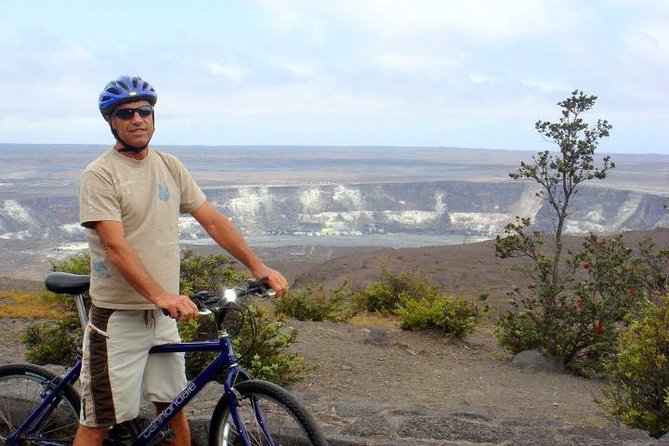
Hawaii Volcanoes National Park is spread out, and the most memorable sights do not sit in one tidy cluster. Driving gives you range, but it also means dealing with busy pullouts and limited parking. Walking gives you a closer connection to the ground, but covering the park’s main sights takes much longer.
This tour finds a useful middle ground. You ride from the Bike Volcano base on Old Volcano Road, then head less than a mile to the park’s bike trail entrance. From there, the electric assistance helps you travel through the park without turning the day into a hard workout.
The route is described as mostly downhill or level, but do not read that as completely effortless. You still need to control your speed, especially around turns and on wet pavement. One past group had trouble when rain made the road slick, so I would take the safety briefing seriously and slow down well before corners.
The reward is a more direct experience than a coach or private vehicle can provide. You hear the wind in the forest, smell damp earth and sulfur near steam vents, and notice the shift from thick rainforest to open volcanic rock. An e-bike also lets you stop quickly for a photo without searching for a parking space.
More Volcano National Park Tours in the USA
- Hilo Shore Excursion: Volcanoes National Park & Black Sand Beach
★ 4.5 · 2,338 reviews - Big Island: Fat Tire E-Bike Tour through Volcanoes National Park
★ 5.0 · 546 reviews - Big Island, Hawaii: Volcanoes National Park Safari
★ 4.5 · 545 reviews
Starting at 9:30 AM in Volcano
The morning pickup begins at 9:30 AM. You meet at Bike Volcano, at 19-3972 Old Volcano Road in Volcano, Hawaii. Secure parking, restrooms, and a shaded staging area are provided, which matters in a place where weather can change quickly.
Before setting off, staff fit you with an electric comfort hybrid bicycle, helmet, and lock. You receive an equipment orientation and safety talk, then test the controls before riding toward the park.
Arrive ready to go rather than expecting a long setup period. Give the staff your name, height, and local Hawaii contact number when requested. If you are tall, mention it early so you can receive a suitable frame size.
You also need to have your GPS audio app ready on a fully functioning smartphone. The map and audio system are useful, but one practical weakness is the phone setup. The map can use battery quickly, and the audio may require opening separate links at points of interest. Download or prepare the app before arrival, bring your phone fully charged, and carry a backup battery if you have one.
An equipment deposit of $1,500 per party is pre-authorized, so bring identification and a payment card. The park entrance fee is separate and listed at $15 per person. The price also excludes a smartphone, rain jacket, food, and bottled water.
Through Fern Forest and Volcanic Heat
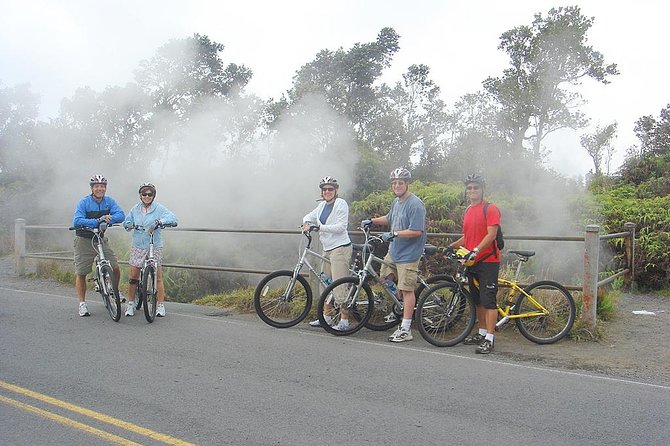
Once inside the park, the route takes you through native Hawaiian fern rainforest and toward the rim of Kilauea’s erupting crater. The contrast arrives quickly. One moment you are surrounded by greenery and shaded vegetation; the next, you are near steam rising from the ground.
The GPS narration covers mythology, geology, and the cultural importance of the volcano. Expect information about Pele, the volcano goddess, along with explanations of how lava shapes the island. This kind of audio works best when you stop safely at the marked point, listen, and then continue rather than trying to operate the phone while riding.
Steam vents are a memorable stop because they make the volcano feel active even when you cannot see lava. Warm air rises from cracks in the ground, while the summit weather may be cool and damp. Wear layers, not just a T-shirt, and keep a rain shell close.
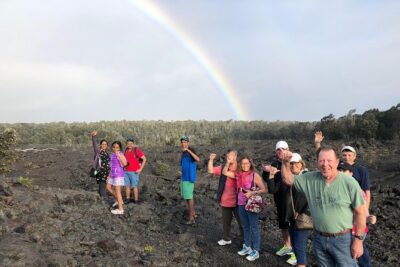
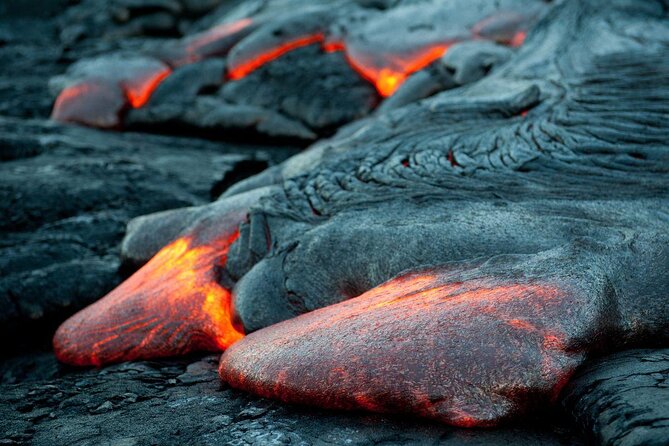
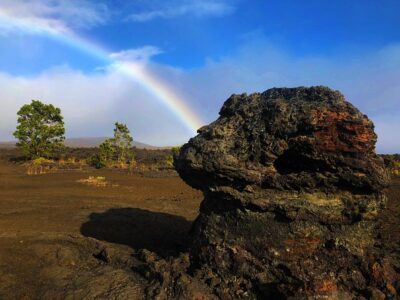
The route passes through several types of volcanic terrain. You may see old lava fields, thick forest, crater edges, and broad views that are difficult to appreciate from inside a car. The ride is especially good for people who enjoy seeing how plants slowly return to ground shaped by eruptions.
Nahuku and the Thurston Lava Tube
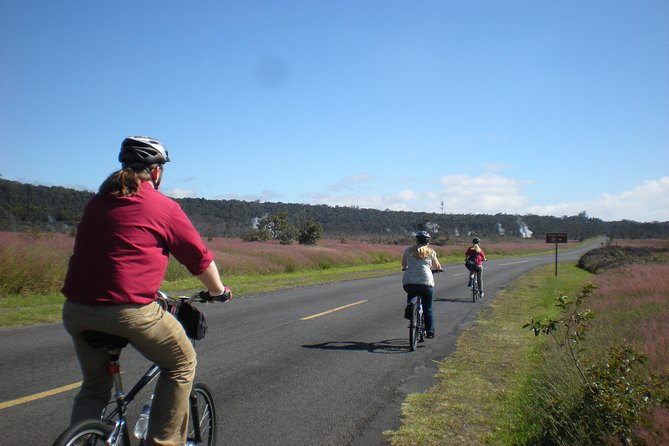
The Nahuku section includes a short 15-minute loop walk through native rainforest. The path leads around Nahuku Crater, a roughly 500-year-old pit crater filled with tall hapuʻu ferns and other native plants.
This is a walking stop, not a ride-through attraction. You leave the bike and follow the shaded path, listening to GPS audio about the forest, endemic plants, and the area’s cultural meaning.
The Thurston Lava Tube is the main draw. The cave formed when the outside of a lava flow cooled while molten rock continued moving beneath it. Once the flow drained away, it left a hollow passage behind.
Inside, the temperature and feel change noticeably. The walls are smooth in places, and vegetation gathers near the openings where light reaches in. It is a short stop, but it adds a different kind of volcanic experience to the day. You are not only looking at a crater or a lava field. You are walking through a space created by moving rock.
Because the walk is brief, it fits neatly into the e-bike outing. Still, wear closed-toed shoes with decent grip. The tour requires them, and they make more sense here than sandals.
Same region, a different park day:
- Miami: Everglades National Park Airboat Tour & Wildlife Show
★ 4.5 · 7,296 reviews - Clear Kayak Tour of Shell Key Preserve and Tampa Bay Area
★ 5.0 · 5,800 reviews - Yosemite Highlights & Giant Sequoias Day Tour from San Francisco
★ 4.5 · 3,455 reviews - Discover Rocky Mountain National Park
★ 5.0 · 3,419 reviews
Kilauea Visitor Center and Park Orientation
The Kilauea Visitor Center provides useful context before you continue farther into the park. Exhibits explain the volcano’s geology, native wildlife, and Hawaiian cultural traditions connected with Pele.
The center also has maps, a bookstore, a gift shop, and park rangers who can provide current safety information. This is important in a volcanic park, where conditions and access can change. If you have questions about an active eruption, trails, or viewing areas, this is the right place to ask.
You receive only about 15 minutes here as part of the planned route, so use the time efficiently. If the center is a major priority for you, ask staff how the timing works before you leave the staging area. The strength of this tour is the ride and its access to quieter bike routes, not a long museum visit.
Keanakakoi Crater Overlook by Bike
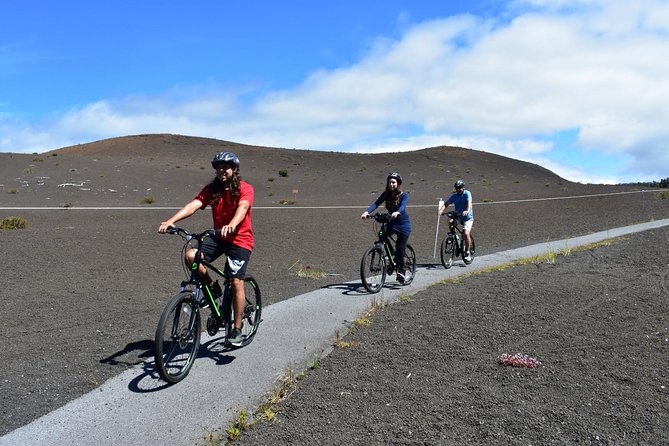
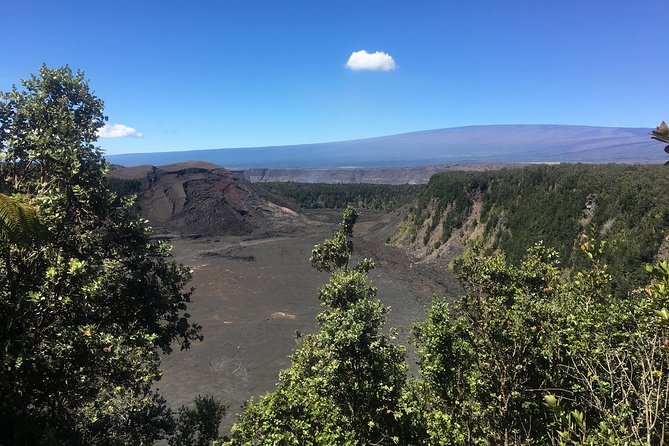
The ride toward Keanakakoi Crater Overlook is one of the tour’s strongest features. This section is accessible by bike or on foot rather than by car, so the bicycle gives you a practical advantage.
The route runs for about two miles through koa and ʻōhiʻa forests and volcanic terrain. The GPS narration adds stories about the area’s geology, ancient Hawaiian basalt quarrying, and the ecology of the forest.
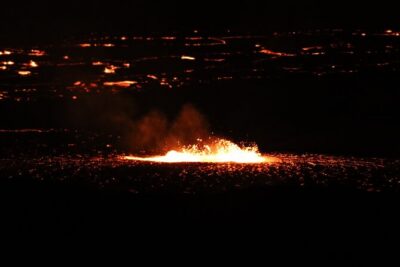
From the overlook, you can see toward the sacred Halemaʻumaʻu Crater, associated with Pele. On rare days when conditions allow, you may see active lava, including fountains that can rise more than 1,000 feet. Volcanic activity is never guaranteed, and viewing conditions can change, so book this for the ride and the park itself, not solely for a lava sighting.
The nearby lava viewing area can offer close views of an active lava lake when the volcano is erupting and access is open. Again, treat this as a possibility rather than a promise. The park’s conditions control what you can safely see.
This section also shows why the bike matters. You can reach viewpoints without walking every mile, yet you are still outside and moving slowly enough to notice the forest, rock, steam, and changing light.
Lunch, Walks, and Your Own Timing
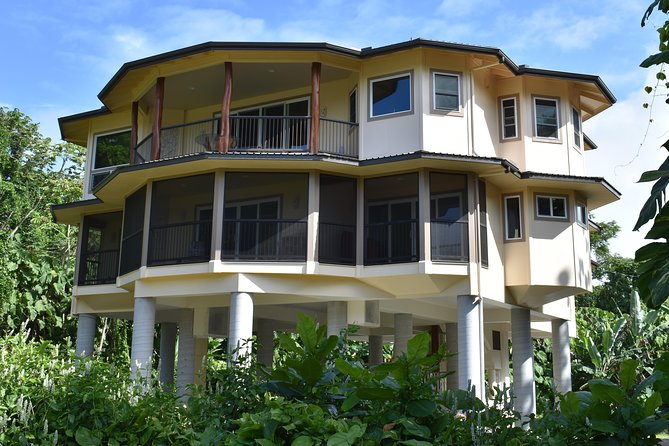
The tour lasts about four and a half hours, with roughly three hours of riding and sightseeing built into the itinerary. That leaves room for a stop at Volcano House, where you can eat lunch overlooking the crater.
Lunch is not listed as included, so plan your budget accordingly. You may also want to bring money for water or buy supplies at the Kilauea General Store. A backpack can be rented for $5 if you do not want to carry your own.
One benefit of the self-guided format is control over the pace. You can stop for photos, take a short walk, linger at a viewpoint, or move on when the weather turns damp. The route is not a race.
The afternoon option begins at 12:30 PM but requires at least four riders. The morning departure is the safer choice if you want more time for park stops or need flexibility later in the day.
Weather, Fitness, and Safety
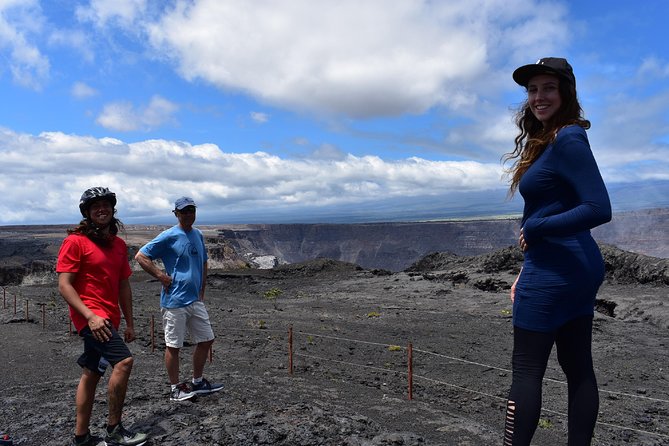
Summit weather is the main practical concern. Kilauea sits at about 4,000 feet, and temperatures can run 12 to 15 degrees cooler than at sea level. Rain, wind, mist, and chilly conditions are possible throughout the year.
Wear layers that you can add or remove. Closed-toed shoes, sunglasses or protective eyewear, sunscreen, and a hat are required or strongly recommended. A rain jacket is not provided, though one can be purchased at the Kilauea General Store.
You need moderate physical fitness and basic cycling ability. The tour is not recommended for someone who has never handled a bicycle confidently. You must be able to steer, shift, balance, and control your speed on paved and gravel surfaces.
The minimum age is 15, and the tour is not available to people weighing more than 270 pounds. These limits are worth checking before booking, particularly for families or mixed-ability groups.
Stay alert around pedestrians and follow park rules. Some walking trails do not allow bicycles, and you may be reminded firmly to dismount. Treat those directions as part of the park experience, not an inconvenience.
Is $159 a Fair Price?
At $159 per person, this is not a budget way to enter Hawaii Volcanoes National Park. You also pay the park entrance fee, and you must cover lunch, drinks, and any rain gear or backpack rental.
The value comes from what is included: the electric bicycle, helmet, lock, parking, restroom access, equipment briefing, GPS audio app, and staff support. You also avoid renting a bike separately and gain access to bike-friendly routes that are less convenient by car.
I think the price makes sense if you value active sightseeing and want to cover a lot of ground without joining a large group. It is less compelling if you plan to spend most of the day at the visitor center, drive between a few overlooks, or already have a vehicle and plenty of time.
The 92 percent recommendation rate and 4.7 rating from 131 ratings point to a generally strong experience. The most consistent praise centers on comfortable, well-maintained bikes, easy riding, good park access, and the chance to avoid crowded parking areas. The clearest criticisms concern phone setup, battery drain, and wet-road safety.
Who Should Book This Volcano Bike Tour?
I would recommend it to couples, families with older teenagers, and active adults who want a relaxed but outdoor-focused way to see the park. It works especially well if you have only half a day and want to leave time for another Big Island activity.
You should book it if you like deciding your own pace and are comfortable using a smartphone for navigation. You should skip it if you want a fully guided day, have no cycling experience, dislike cool wet weather, or need a guaranteed lava sighting.
Prepare properly, and this is a smart way to see Kilauea. Bring layers, a charged phone, a backup battery, closed shoes, and realistic expectations about volcanic activity. If you do, the e-bike gives you a rare mix of freedom, range, and close contact with one of Hawaii’s most unusual national parks.
FAQ
Where does the tour start?
The meeting point is Bike Volcano at 19-3972 Old Volcano Road, Volcano, Hawaii 96785. Secure parking and restroom access are provided.
What time does the morning tour begin?
The morning e-bike pickup begins at 9:30 AM. An afternoon departure is available at 12:30 PM and requires a minimum of four riders.
Is the national park entrance fee included?
No. The listed park entrance fee is $15 per person and is separate from the tour price.
Do I need my own smartphone?
Yes. You need a fully functioning smartphone to use the GPS audio app. The phone should be charged before arrival, and a backup battery is useful because the map can drain the battery quickly.
What should I wear?
Wear layered clothing, closed-toed shoes, sunglasses or prescription glasses, sunscreen, and a hat. Summit weather can be rainy, windy, misty, and 12 to 15 degrees cooler than conditions at sea level.
Can beginners or children join?
The tour is not available to cyclists under 15 years old and is not recommended for beginner cyclists. You need to steer, shift, balance, and control the bicycle on paved and gravel surfaces.
More Self-Guided Driving and Audio Tours in the USA
- Joshua Tree National Park Self-Guided Driving Audio Tour
★ 4.5 · 762 reviews - Ultimate Acadia National Park Self-Guided Driving Audio Tour
★ 4.0 · 521 reviews - From Moab: Half-Day Arches National Park 4×4 Driving Tour
★ 4.8 · 440 reviews - Self-Guided Ebike Tours of Acadia National Park Carriage Roads
★ 5.0 · 427 reviews
Newest park tours we have reviewed in the USA
- Canyonlands National Park Self-Guided Driving Audio Tour★ 4.5 · 54 reviews
- Full-Day Audio Driving Tour of Arches National Park★ 4.5 · 27 reviews
- SLC:Grand Teton and Yellowstone National Park Multi-Day Tour★ 3.7 · 7 reviews
- Grand Teton,Yellowstone National Park 3-Day Tour from SLC★ 3.3 · 13 reviews
- 4-Day Salt Lake City, Grand Teton, Yellowstone National Park Tour★ 4.0 · 6 reviews
- Utah Mighty 5 National Parks: Small Group 7-Day Tour★ 4.5 · 7 reviews
- Small Group One Day Tour Death Valley National Park and Rhyolite Ghost Town★ 4.5 · 74 reviews
- 7-Day Yellowstone National Park Rocky Mountain Explorer★ 4.9 · 8 reviews
Big Island National Park Tours, compared.
Big Island: Fat Tire E-Bike Tour through Volcanoes National Park
Read our review →
Big Island, Hawaii: Volcanoes National Park Safari
Read our review →
Small-Group Big Island Tour: Hawaii Volcanoes National Park and Kona Coffee Farm
Read our review →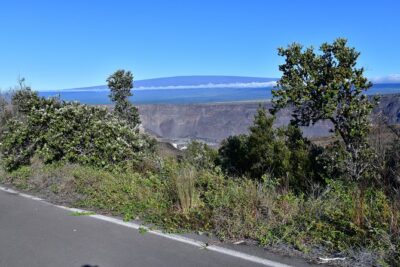
Private Tour: Hawaii Volcanoes National Park Eco Tour
Read our review →