
Reviewed · USA NATIONAL PARK TOURS
Self-Guided Audio Driving Tour in Death Valley National Park
Death Valley is best understood from behind the wheel, where the scenery changes from salt flats to red cliffs, sand dunes, volcanic craters, and high mountain views. This self-guided audio tour lets you make that drive your own, with GPS-triggered stories and directions playing as you move.
I like the freedom to set your own pace and the fact that one $19.99 purchase covers everyone in a vehicle, up to eight people. I also like the practical advice woven into the commentary, such as where a side trip fits and when desert heat calls for caution.
The main drawback is simple: you must drive, navigate the app, and manage your own timing. The tour does not include a vehicle, park admission, or a live guide, and the remote northern section has limited commentary and rougher roads.
Key points to know before you go
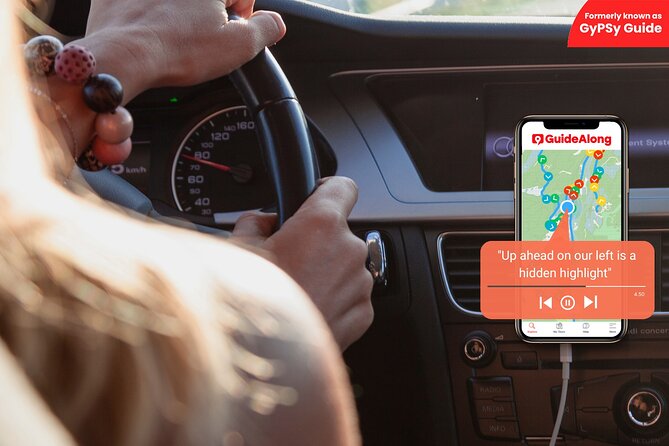
- GPS-based commentary: Stories, directions, and tips play automatically according to your location.
- One purchase per vehicle: The $19.99 price can be excellent value for a group of up to eight.
- Major Death Valley highlights: The route includes Badwater, Artist’s Palette, Dante’s View, Zabriskie Point, Mesquite Flat Sand Dunes, and more.
- Offline use: Download the GuideAlong app and tour before entering areas with weak or absent cell service.
- Flexible timing: You can take eight hours, stretch the outing toward 16 hours, or return to the tour on another day.
- Northern route caution: Ubehebe Crater is a long side trip, and the route beyond it requires careful checking of road conditions and vehicle suitability.
Why an audio driving tour works well in Death Valley
Death Valley is huge, hot, and spread out. You will spend plenty of time in the car between viewpoints, so a good audio guide can turn those long stretches into part of the experience rather than dead time.
GuideAlong’s commentary is tied to your phone’s GPS. As you approach a point of interest, the app plays stories, directions, and tips without requiring you to stop and search through a menu. You can follow a suggested route, skip a stop, or build a day around the places that matter most to you.
That flexibility is especially useful here. You may want a short morning around Badwater and Artist’s Palette, then a sunset stop at Zabriskie Point. Or you may prefer a full day with Dante’s View, the dunes, and Father Crowley Vista Point. The tour does not force you into a bus schedule or a fixed order.
The commentary is in English and includes more than 220 points along the route. You buy it once, and it has no expiry date. Free updates are included, which makes the purchase more useful if your Death Valley trip changes from one day to another.
More Joshua Tree and Death Valley Tours in the USA:
- Joshua Tree National Park Self-Guided Driving Audio Tour
★ 4.5 · 762 reviews - Joshua Tree National Park Scenic Tour
★ 4.5 · 499 reviews - Joshua Tree National Park Offroad Tour
★ 5.0 · 427 reviews
The real value of the $19.99 price
At $19.99 per group, this is priced for the vehicle rather than per person. That matters. A couple pays the same as a full car of eight, so the value improves quickly as your group gets larger.
You will still need to pay the optional national park fee, listed as $30 per vehicle, with the exact amount subject to change based on the length of stay, ages, and group size. The audio tour does not replace park admission. Think of it as a driving companion that adds explanation and structure once you are inside the park.
A live guide could provide conversation and answer questions in real time. This tour costs far less and gives you privacy, but it also puts more responsibility on you. You choose the stops, watch the clock, handle navigation, and decide when heat or road conditions call for a change of plan.
For a private outing, the price is hard to fault. If you are already planning to drive through Death Valley, this adds context and route help without tying you to other people.
Badwater and Devil’s Golf Course: Death Valley at its lowest
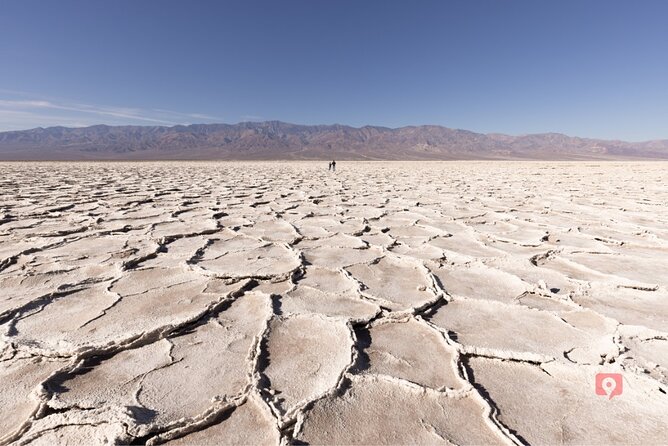
Badwater is the essential first lesson in the park’s extremes. At 282 feet below sea level, it is the lowest point in North America. From the roadside, you can walk out toward the salt flat and look across a broad, pale basin marked by geometric salt patterns.
A small pool beside the road gives Badwater its name. The water is undrinkable, and after one of the area’s rare rain events, the basin may hold more water for a short time before drying again. The audio commentary helps explain why this place looks so unusual, but you should also leave time simply to look around.
The suggested stop takes about 30 minutes. That is enough for a brief walk and photos, though the heat can make even a short outing feel long. Bring water and avoid treating the listed time as a rule. In Death Valley, the weather should have the final say.
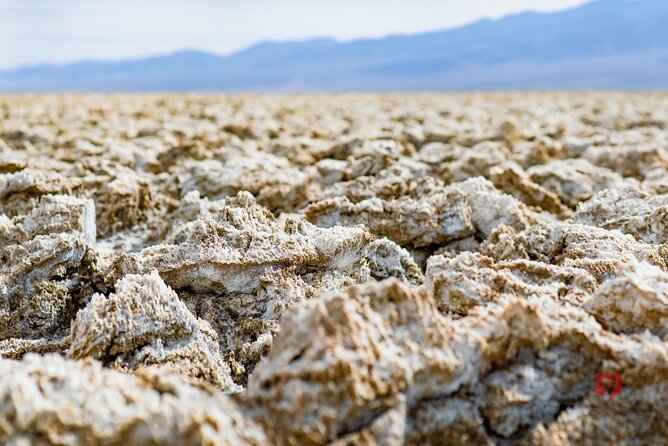
Nearby Devil’s Golf Course offers a completely different surface. Here, salt crystals form jagged, uneven shapes that expand and contract as temperatures change. The name comes from the roughness of the ground, which looks as if it might challenge the devil himself to a round of golf.
You may even hear the crystals popping in the heat. Do not walk casually across the formations. The surface is sharp and uneven, and a viewpoint stop gives you a good sense of the place without unnecessary risk.
Artist’s Palette and Zabriskie Point: Color in the desert
Artist’s Drive is one of the most enjoyable short detours in Death Valley. It is a narrow, one-way road that twists between mineral-stained hills. The road feels more like a scenic ride than a straight transfer from one point to another.
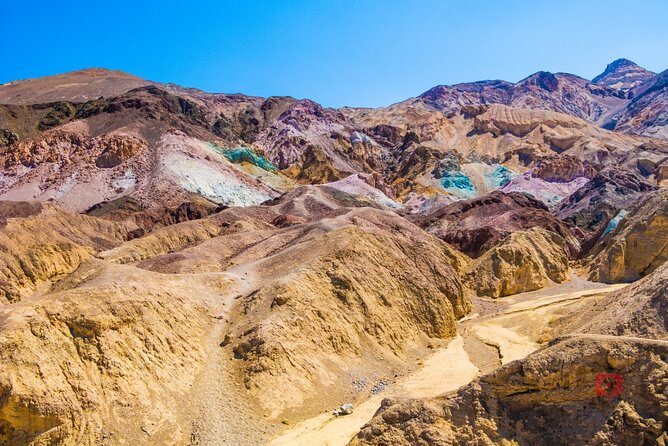
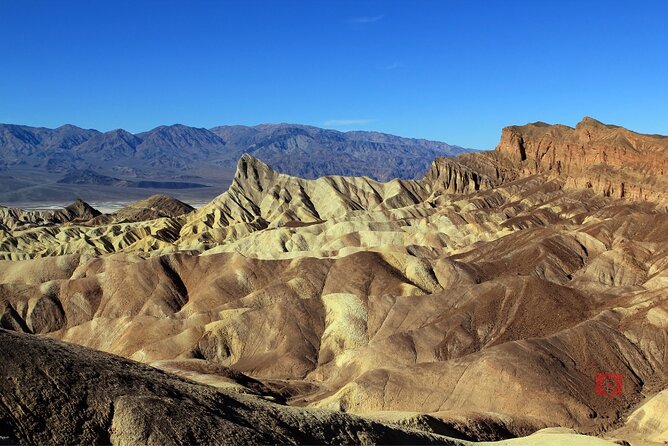
The colors change from coppery green to yellow, red, terra-cotta, and pink. Different mineral deposits create the effect, with Artist’s Palette offering the most concentrated view. This is one of the best places to stop for photographs, especially when the changing sun brings out new shades in the rock.
Allow about 30 minutes for the stop, though the one-way drive itself adds time. Check the route direction and road conditions before setting out. The audio guide can tell you where to go, but you still need to follow park signs and drive with care.
Zabriskie Point offers another kind of beauty. From the easy overlook, you can see folded badlands cut into sharp ridges and shallow valleys. The colors and forms change as the sun moves, so the same viewpoint can feel different at morning and later in the day.
You can spend 30 minutes here for the view, or use it as a starting point for longer hikes. A 3.5-mile route to Golden Canyon is listed as one option for people who want more exercise. The audio tour helps you understand the stop, but it cannot judge your hiking ability or the day’s heat. Carry enough water and plan honestly.
More Self-Guided Driving and Audio Tours in the USA:
- Ultimate Acadia National Park Self-Guided Driving Audio Tour
★ 4.0 · 521 reviews - From Moab: Half-Day Arches National Park 4×4 Driving Tour
★ 4.8 · 440 reviews - Self-Guided Ebike Tours of Acadia National Park Carriage Roads
★ 5.0 · 427 reviews - Driving Tour of Valley Forge National Park from Philadelphia
★ 5.0 · 297 reviews
Dante’s View: The park’s greatest change in scale
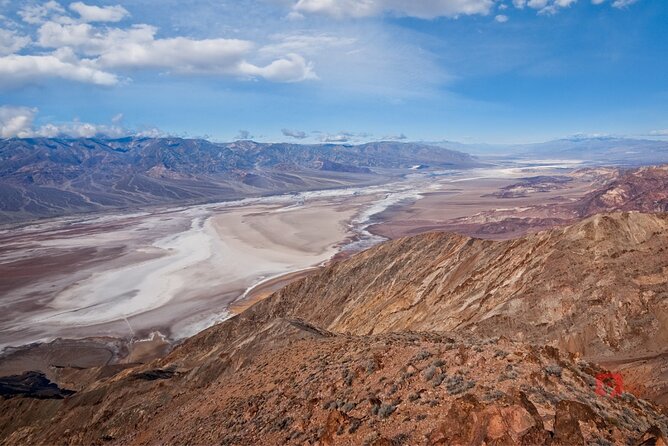
Dante’s View is reached by a 13-mile side trip from the road near Death Valley Junction. The viewpoint sits just above 5,000 feet, far above the salt basin below. That change in elevation is what makes the stop so useful.
From the overlook, you can look down toward Badwater, then turn toward the Panamint Mountains, which rise above 11,000 feet. On a clear day, Mount Whitney, the highest point in the Lower 48 at 14,505 feet, may also be visible.
The drive takes extra time, and the stop itself is listed at about 20 minutes. I would not rush it. Dante’s View helps you understand the scale of Death Valley in a way that a roadside stop cannot. You see the low basin, the high mountains, and the long distances between them from one place.
The temperature can also differ from the valley floor because of the elevation. That is a useful reminder that Death Valley is not one uniform environment. The park changes quickly as you climb.
Mesquite Flat Sand Dunes: Bring water and watch the heat
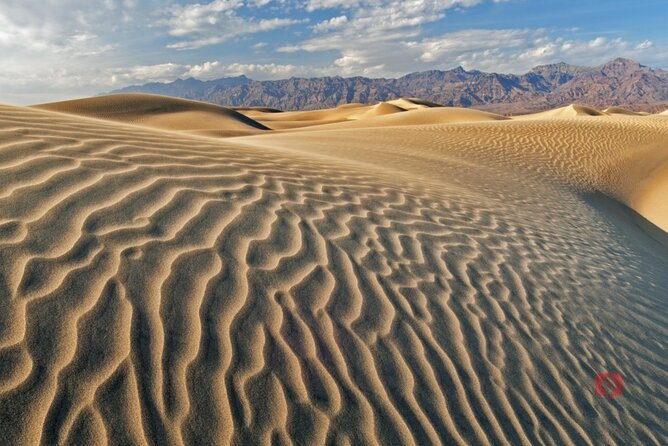
Mesquite Flat Sand Dunes provide the classic desert scene: rolling sand with no foliage to interrupt the view. Wind reshapes the dunes, so the patterns and ridgelines are always subject to change.
The suggested visit lasts about an hour. You can walk a short distance over the sand or continue farther, but the distance can be deceptive. A dune that looks close may take more effort to reach than expected, and returning across hot sand can be harder than walking out.
Take ample water, particularly on a hot day. The sand can become scorching, and there is little reason to push farther than feels sensible. This is a good stop for a slow walk and photographs, not a place to prove how far you can go without preparation.
The audio commentary gives the stop a sense of place while you drive in. Once you leave the car, your own judgment matters most. Wear suitable footwear, protect yourself from the sun, and allow the scenery to work without trying to cover every dune.
Father Crowley Vista Point and the western approach
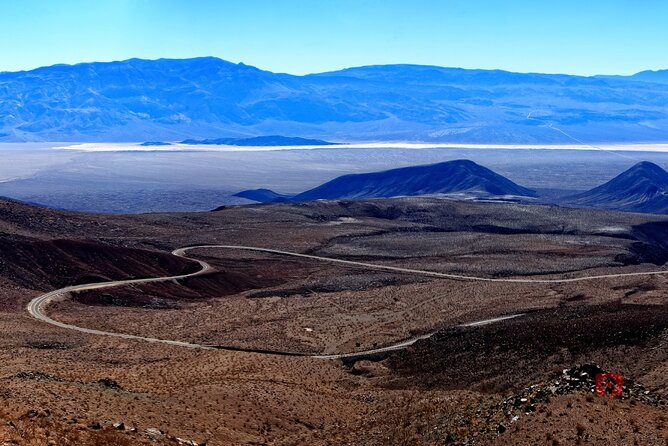
Father Crowley Vista Point is one of the strongest views on the western side of the park. It works well as a first stop if you are arriving from that direction, and it also makes a fitting farewell before you leave Death Valley.
The overlook reaches across the valley and toward Rainbow Canyon. Red volcanic rock is prominent here, giving the view a different character from the salt basin and badlands farther south.
The stop is listed at about 30 minutes, which gives you time to look, take photographs, and listen to the story behind the name. Father Crowley was an Irish Catholic priest known as the Padre of the Desert. He served communities in Inyo County during the first half of the twentieth century.
This stop shows why location-based commentary can add value. You get the view first, then a bit of human context tied to the place beneath your feet. It is not a long lecture. It is a useful layer of meaning during a drive.
Ubehebe Crater and the remote northern route
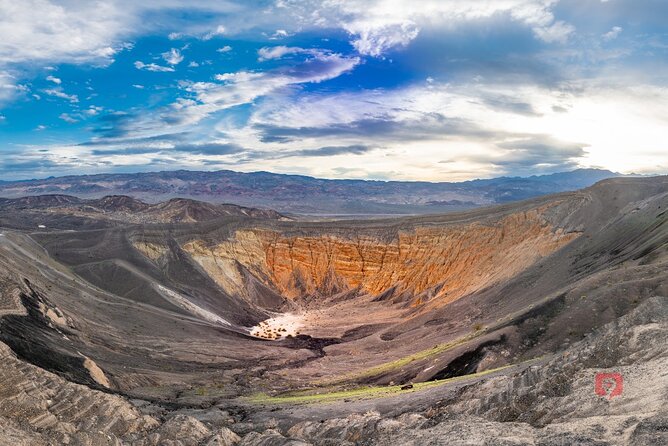
Ubehebe Crater is the most demanding stop on the suggested route. It sits in the remote northern part of the park and requires a substantial side trip. Expect to spend about two hours on the visit, with an hour or more of driving on an unpaved road noted in the route information.
The crater formed through an explosive meeting of groundwater and hot magma. It is the largest of roughly a dozen craters in the area. The scale and isolation make it feel very different from the busy viewpoints near Badwater Road.
The app will guide you toward Ubehebe, but commentary does not continue all the way along the remote road. That distinction matters. You are not getting the same continuous narration throughout this section, so download the route and review the trip plan before setting out.
Going farther can lead toward Racetrack Playa, known for boulders that move across the salt surface. The route requires a strong commitment and an appropriate four-wheel-drive vehicle. Scotty’s Castle is also in this general part of the park, but you should check current road status and any pre-booking requirement before attempting that trip.
For many people, Ubehebe is best treated as an optional add-on rather than a must-see stop. If you have a full day and suitable road conditions, it adds a remote side of Death Valley. If you have limited time, the southern viewpoints offer more return for less driving.
Planning an eight to sixteen hour day
The tour is advertised for roughly eight to 16 hours, but you control the actual length. That range reflects the park’s size, your chosen stops, and whether you include the longer northern route.
For a shorter day, focus on Badwater, Devil’s Golf Course, Artist’s Palette, Zabriskie Point, and Dante’s View. For a longer outing, add Mesquite Flat Sand Dunes and Father Crowley Vista Point. Ubehebe Crater can take the day in a different direction and should be planned separately.
You can start and finish anywhere along the tour route. The listed start and end points are Death Valley and Death Valley National Park, but the app does not require you to meet at one fixed location. Commentary plays according to your position, so you can begin when you enter the route and stop when your own day is finished.
Download the tour over Wi-Fi or cellular data before you go. Once it is on your phone, no internet or cell service is required. That is important in a park where coverage can be limited.
Bring a USB or USB-C car charger. You will use your phone for GPS and audio, and a low battery can turn a relaxed outing into a navigation problem. You should also test the sound connection before leaving.
Who will enjoy this format most
I would recommend this tour to independent drivers, couples, families, and small groups who want information without a scheduled guide. It is especially useful if your group has different interests because you can linger at one stop and skip another without holding anyone up.
It also suits anyone making a national park road trip. The purchase does not expire, and you can resume the tour on another day if your plans change. That is helpful when weather, road conditions, or fatigue alter your route.
You should think twice if you want a fully guided experience with someone physically present. The app cannot answer a question in the moment or take over the driving. It also cannot solve poor preparation. You remain responsible for water, fuel, vehicle condition, road decisions, and safe timing.
The experience is offered in English only. Most travelers can participate, but the format requires someone in the group to use a smartphone and manage the app.
Booking, cancellation, and practical details
After booking, you receive instructions by email and text. Search for the message titled Download Audio Tour, sign in with your preferred Apple or Google account, and redeem the voucher code before arrival.
Then download the free GuideAlong app and sign in with the same account. The tour appears under My Tours. You can preview the route, start locations, and trip planner before you set out.
The experience is private to your group, with up to eight people covered by one vehicle purchase. It is available every day, around the clock, during the stated operating period from May 16, 2023, through February 3, 2027.
Free cancellation is available until 24 hours before the experience start time. Canceling or changing the booking within 24 hours does not qualify for a refund. Cutoff times follow local time.
Should you book the Death Valley audio tour?
Book it if you want to drive independently but still want stories, directions, and practical tips tied to the road ahead. The strongest reasons are the low group price, offline access, no expiry date, and freedom to shape the day around your energy and interests.
Skip it if you are looking for a live guide, included transportation, or a tightly managed sightseeing schedule. You will need to prepare your phone, watch the heat, and make sensible choices about remote roads.
For most self-driving groups, this is a useful companion rather than a complete tour package. At $19.99 for up to eight people, it earns its keep by making the long drive more informative while leaving the park’s best quality intact: the freedom to stop, look around, and set your own pace.
FAQ
How much does the self-guided Death Valley audio tour cost?
The tour costs $19.99 per group, covering up to eight people in one vehicle. National park admission is not included. An optional park pass is listed at $30 per vehicle, with the amount subject to change based on the length of stay, ages, and group size.
How long does the Death Valley driving tour take?
The suggested duration is approximately eight to 16 hours. Your actual time depends on which stops you visit, how long you stay, and whether you include remote stops such as Ubehebe Crater.
Does the tour include a vehicle or transportation?
No. You provide your own vehicle and drive the route yourself. The experience is a private self-guided activity for your group.
Does the audio commentary work without cell service?
Yes. Download the tour in the GuideAlong app before entering the park. Once downloaded, the tour works offline and uses your phone’s GPS for location-based commentary.
Which language is available?
The tour is offered in English.
Can I start the tour at any time and location?
Yes. You can start and end anywhere along the tour route. Commentary plays automatically based on your location, and the tour has no fixed date or time limit after purchase.
What happens if I need to cancel?
You can receive a full refund if you cancel at least 24 hours before the experience start time. Cancellations or changes made less than 24 hours before the start time are not refunded or accepted.
Newest park tours we have reviewed in the USA
- Mt Rushmore Yellowstone & Arches National Parks 7-day Tour★ 4.5 · 6 reviews
- Private Tour of the Rocky Mountain National Park From Denver★ 5.0 · 15 reviews
- Private Rocky Mountain National Park Tour from Denver★ 5.0 · 6 reviews
- Private Day Tour From Denver to Estes Park and Rocky Mountain National Park★ 5.0 · 6 reviews
- Rocky Mountain National Park – Private Hiking Tour★ 5.0 · 17 reviews
- Rocky Mountain National Park – Private Sightseeing Tour★ 5.0 · 98 reviews
- Private Hike Emerald Lake In Rocky Mountain National Park★ 5.0 · 5 reviews
- Private Birding Hike in Rocky Mountain National Park★ 5.0 · 58 reviews
USA National Park Tours, compared.

Everglades National Park Airboat Tour & Wildlife Show
Read our review →
Clear Kayak Tour of Shell Key Preserve and Tampa Bay Area
Read our review →
Yosemite Highlights & Giant Sequoias Day Tour from San Francisco
Read our review →
Grand Canyon National Park South Rim Bus Tour from Las Vegas
Read our review →
Wilderness, Wildlife, Glacier Experience from Anchorage
Read our review →
Bryce Canyon & Zion National Park from Las Vegas with Lunch, WiFi
Read our review →
Grand Canyon National Park South from Las Vegas with Lunch, WiFi
Read our review →Lists this park day appears in