
Reviewed · NATIONAL PARKS
Rio de Janeiro: Tijuca National Park EcoTour
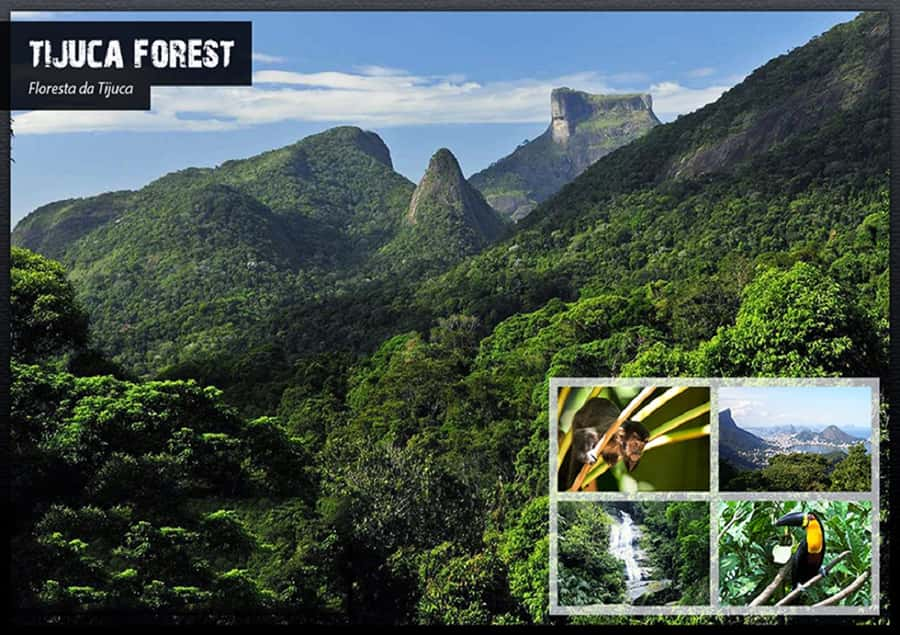
Tijuca National Park gives you something few big cities can match: a real Atlantic Rainforest inside Rio de Janeiro. In a few hours, you can trade apartment blocks and beach traffic for shaded trails, rushing water, caves, mountains, and the sound of the forest. The visit to Cascatinha Taunay, Rio’s largest waterfall, is the tour’s natural centerpiece.
I like the small group of up to six people, which should make the pace and trail choice more manageable. I also like the included hotel-area transfers from Copacabana, Ipanema, Leblon, Flamengo, and Botafogo, since getting to the park on your own can add time and fuss. The main caution is that this is a walking tour, with trails ranging from easy to moderate, so it is not suitable for anyone with mobility impairments.
Key points to know before you book
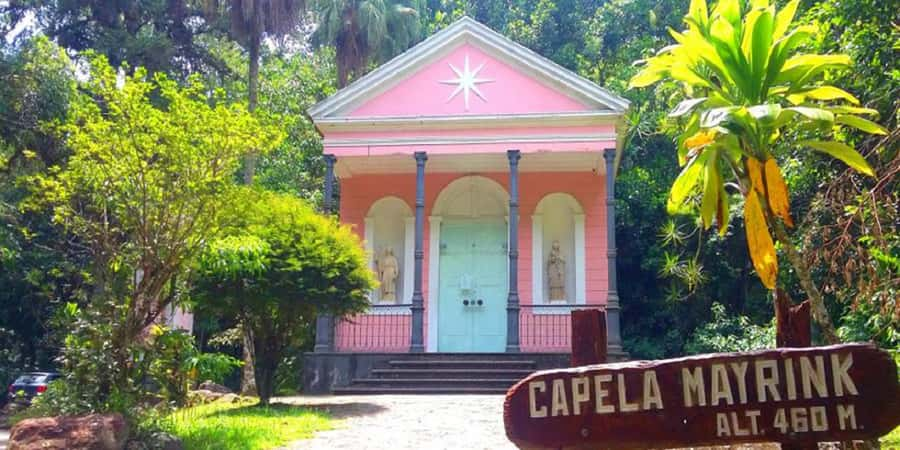
- A rainforest inside the city: Tijuca National Park is integrated into Rio’s urban area rather than sitting far outside it.
- Cascatinha Taunay is the main natural sight: The waterfall is described as Rio’s largest and makes a strong focus for the forest visit.
- The hike lasts about 1.5 hours: Trail options range from easy to moderate, with about 3.5 hours in the park overall.
- Small groups keep the outing personal: The group is limited to six participants and the guide speaks English, Portuguese, or Spanish.
- Vista Chinesa is weekday-only: The Chinese Belvedere is visited on weekdays, except local holidays.
- Rain does not automatically cancel the tour: Wet weather can make the forest and waterfalls more dramatic, though the route can change.
Why Tijuca Forest matters in a city like Rio
Tijuca National Park is not a remote wilderness reached after a long drive. It is part of central Rio, woven into the city’s daily life. That unusual setting is the first reason I would consider this tour.
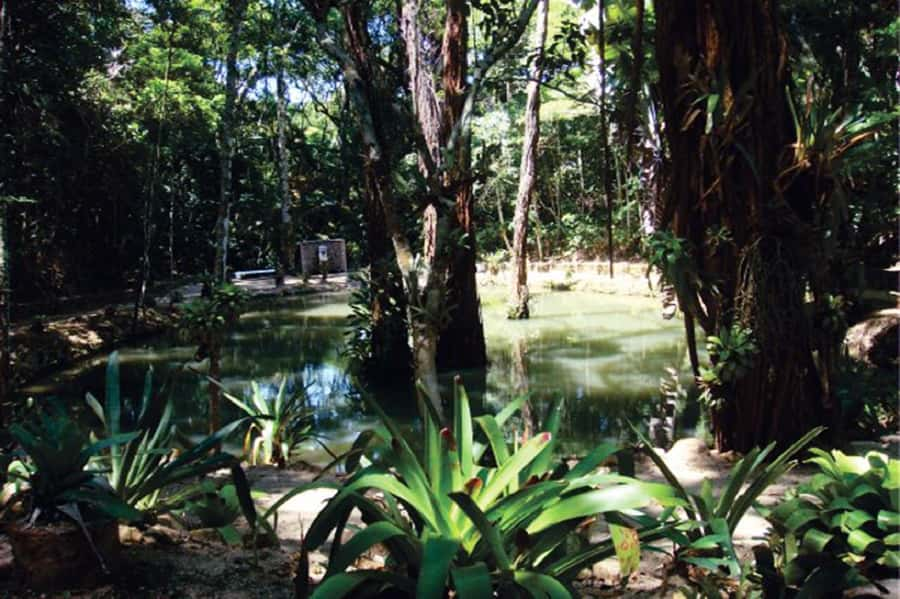
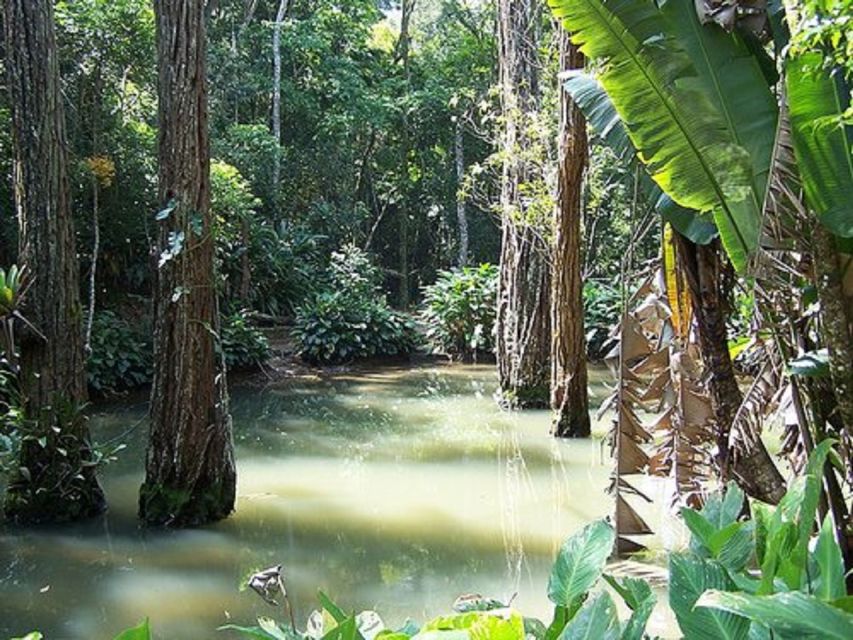
The park is a Brazilian conservation unit for the full protection of nature and is also listed by UNESCO as a Biosphere Reserve. It covers a preserved section of Atlantic Rainforest, one of Brazil’s important native forest types. You are not simply visiting a city park with a few trees. You are entering a protected forest with waterfalls, rivers, lakes, caves, mountains, and native plant and animal life.
The park does not form one continuous block. Its sections are integrated into Rio, which helps explain the quick change in scenery. One moment you are being collected in a South Zone neighborhood, and soon the road is taking you through forest. That contrast gives the outing more character than a standard city sightseeing drive.
I like this tour because it adds a different side of Rio without requiring a full day away from the city. You still have time for the beach, museums, or an evening meal. The five-hour schedule is long enough to feel substantial, but short enough to fit into a busy visit.
More National Park Tours in the world:
- Miami: Everglades National Park Airboat Tour & Wildlife Show
★ 4.5 · 7,296 reviews - Chiang Mai: Doi Inthanon National Park Eco-Friendly Tour
★ 4.6 · 6,667 reviews - Clear Kayak Tour of Shell Key Preserve and Tampa Bay Area
★ 5.0 · 5,800 reviews
Morning pickup and the value of a small group
The usual morning departure is around 7:20 a.m. An afternoon departure is offered at 1 p.m. on weekdays. Pickup and return are available in Copacabana, Ipanema, Leblon, Flamengo, and Botafogo, with exact times varying by neighborhood and shared a few days ahead by WhatsApp or email.
The early start is useful in practical terms. You get into the forest before the day feels too hot, and you leave room in your afternoon for another Rio plan. It also means you should eat something beforehand or bring a snack, since food and drinks are not included.
The group limit of six matters here. A forest walk is easier to manage when you are not waiting for a large crowd at every turn. A small group also gives the guide more room to adjust the walking pace and choose an easy or moderate trail option based on the group’s physical ability.
The guide service is available in English, Portuguese, and Spanish. An accredited guide accompanies you, which is especially useful in a protected area where park rules and natural conditions can affect the route. The guide can also help explain how the forest fits into Rio’s history and local way of life, rather than treating the park as a quick photo stop.
Following the forest roads and trails

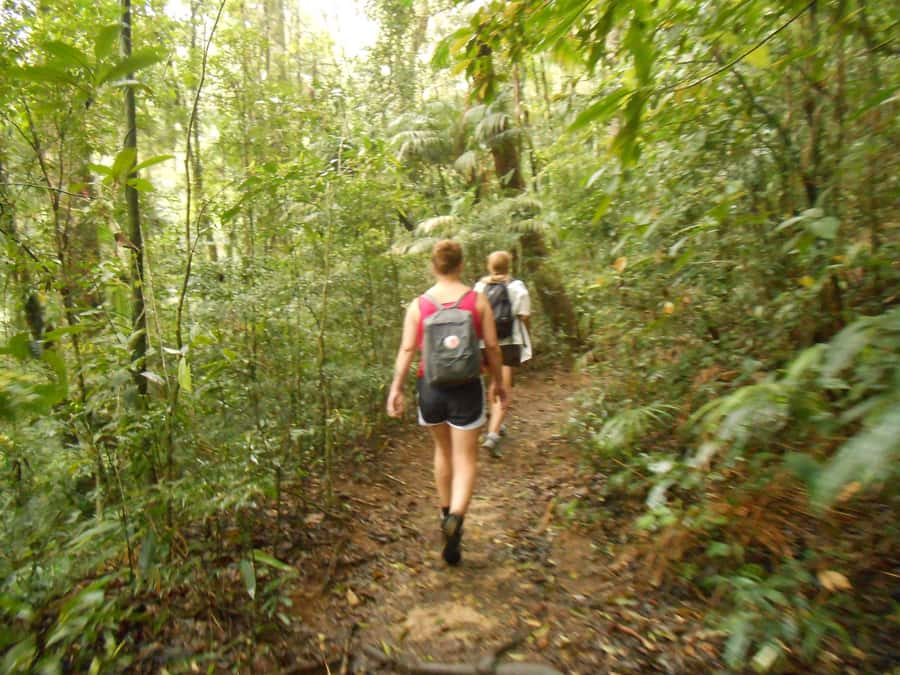
The park portion lasts about 3.5 hours, including the scenic drive and stops, while the main trail walk is about 1.5 hours. That distinction is worth noting. This is not a five-hour nonstop hike, but you should still expect regular walking over forest paths and uneven ground.
The route uses beautiful forested roads and trails in the Forest Sector. Trail difficulty ranges from easy to moderate, so the exact feel of the walk depends on the path selected and the physical ability of the group. The itinerary can change because of park regulations, weather, natural conditions, or the group’s fitness.
You should wear proper hiking shoes, breathable clothing, and carry water in a daypack. Insect repellent, a sun hat, and sunglasses are sensible additions. Large bags and luggage are not allowed, so pack for the walk rather than bringing your full hotel baggage.
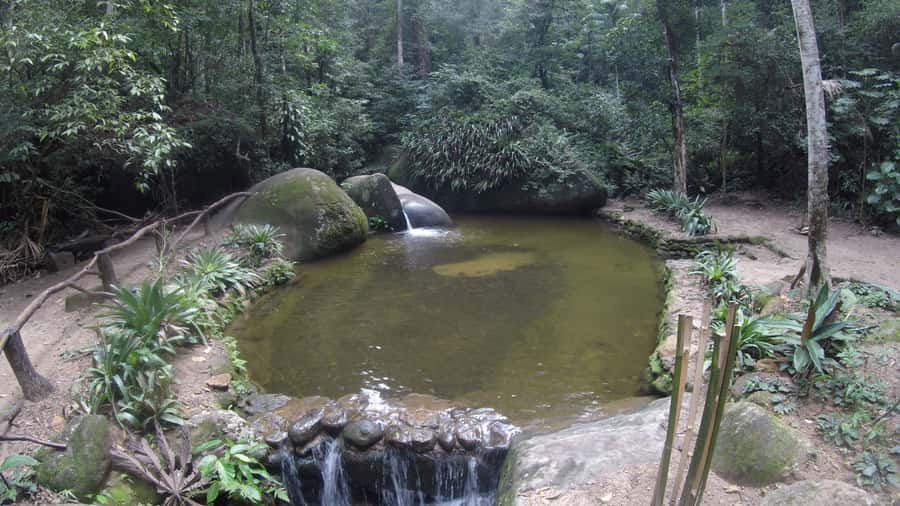
The forest setting gives the hike its appeal. You might find thick native vegetation, streams, waterfalls, caves, and mountain views along the way. The supplied details do not promise a particular animal sighting, so I would treat wildlife as a possibility rather than a guarantee. Rain can increase the chance of seeing animals and can make the forest feel more active, but it can also make walking conditions less predictable.
Cascatinha Taunay, the waterfall stop
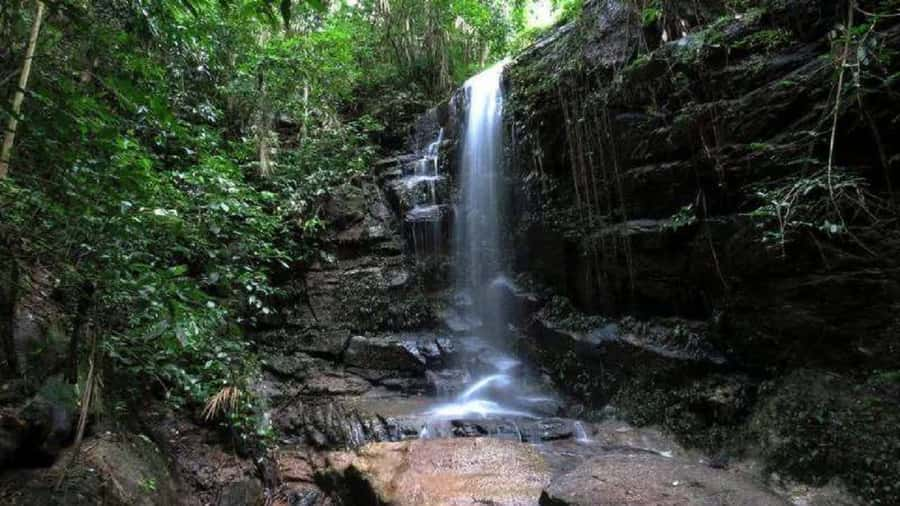
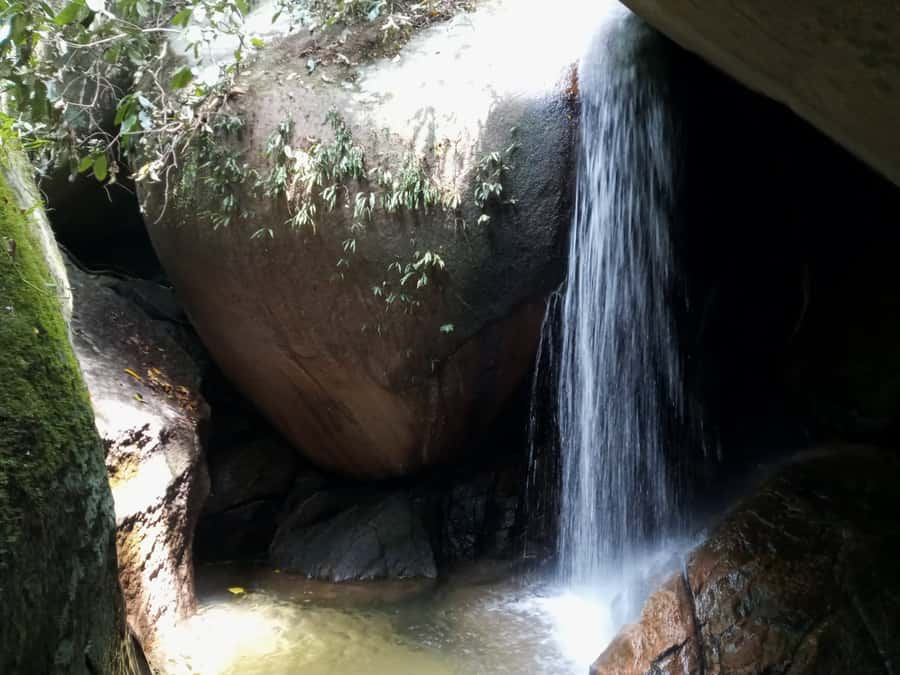
Cascatinha Taunay is the tour’s clearest must-see. It is identified as Rio’s largest waterfall, and the visit gives the outing a strong visual focus after the forest walk.
Waterfalls are especially sensitive to weather. During rainy periods, the flow can become more powerful, which is one reason the tour continues in wet conditions. You may find the forest more atmospheric in the rain, with fuller streams and stronger water sounds. At the same time, you should be prepared for wet clothing and slippery conditions, which is why a change of clothes, towel, swimwear, and sandals are included on the suggested packing list.
The waterfall stop is not presented as a swimming activity, so bring swimwear only as a practical precaution rather than expecting a scheduled swim. The itinerary may change according to park rules and natural conditions. A towel and spare clothes still make sense if you are comfortable around wet paths or waterfalls.
I would not book this outing expecting a long, demanding mountain trek. The real pleasure is the mix of a moderate forest walk, scenic drives, water, and Rio’s unusual city-to-jungle transition.
Same region, a different park day:
- Tenerife: Teide National Park Sunset & Stargazing Tour
★ 4.2 · 3,812 reviews - Discover Rocky Mountain National Park
★ 5.0 · 3,419 reviews - Mt. Rainier National Park Highlights Tour
★ 5.0 · 3,156 reviews - Grand Canyon National Park South Rim Bus Tour from Las Vegas
★ 4.5 · 3,071 reviews
Vista Chinesa and the weekday difference
The route includes a 15-minute stop at Vista Chinesa, also called the Chinese Belvedere. This is a photo and sightseeing stop reached by scenic drive, giving you a chance to look out from the forested hills and take pictures.
There is one important catch: Vista Chinesa is visited only on weekdays, except local holidays. If you book a weekend tour, you should not assume this viewpoint will be included. The forest visit still remains the main part of the experience, but the itinerary will differ.
The short stop also sets the right expectation. This is not a long viewpoint visit or a separate attraction with extended free time. It is a brief scenic pause within the larger park tour. Bring your camera or phone, but keep your attention on the route and the guide’s timing.
Rain, wildlife, and changing conditions

The tour operates in rainy weather. That can be good news for anyone who wants to see Tijuca at its most dramatic. Waterfalls may be stronger, streams more active, and the forest more lively. The possibility of spotting wild animals also increases during rainfall, according to the tour information.
Still, rain changes the experience. You will need breathable clothing, a change of clothes, and footwear suited to damp trails. The itinerary may be adjusted for safety, park regulations, natural conditions, and the physical ability of the group.
I appreciate the clear warning that the route is not fixed in every detail. A protected forest is not a museum with a guaranteed sequence of rooms. Conditions matter. The important point is that the tour is designed to continue safely rather than simply cancel at the first cloud.
Is the $83 price good value?
At $83 per person, the cost is reasonable if you want a guided forest visit without arranging transport yourself. The price includes an accredited guide and round-trip transfer from the listed South Zone neighborhoods. It does not include food, drinks, or personal extras.
For me, the value comes from the combination of logistics and access. You are paying for a five-hour outing, a small group capped at six, multilingual guiding, and transport to and from the park. If you were already staying in the South Zone and planning to visit Tijuca independently, you might spend less, but you would need to handle the route, timing, park access, and trail decisions yourself.
The tour is less appealing if you want a private vehicle, a long strenuous hike, or a fully fixed schedule. Pickup outside the South Zone carries an additional charge, so check that point before booking. The listed pickup neighborhoods are convenient for many Rio visitors, but not for everyone.
Free cancellation is available up to 24 hours in advance for a full refund, and you can reserve now and pay later. Those terms help if your Rio schedule is still shifting. I would still check the exact start time and pickup point once they are sent by WhatsApp or email.
Who should book this forest tour?
I would recommend it to you if you want a manageable introduction to Tijuca National Park rather than a full-day wilderness outing. It suits visitors who enjoy walking, waterfalls, scenic viewpoints, and natural settings but do not want to sacrifice an entire day of city sightseeing.
It is also a good choice if you value a guide who can handle the practical side of the visit. The small group, included South Zone transport, and choice of easier or moderate trails make the outing more approachable than planning a forest trip from scratch.
You should think twice if you have mobility limitations, dislike uneven paths, or want guaranteed access to every listed stop. The itinerary can change, and Vista Chinesa is not part of weekend departures. You should also avoid bringing luggage or large bags, since they are not allowed.
Pack light, bring water and snacks, wear hiking shoes, and expect the weather to be part of the experience rather than something the tour simply ignores. If you are prepared for a real forest walk, the wet-weather policy is more advantage than nuisance.
Should you book the Tijuca National Park EcoTour?
Book it if you want to see Rio beyond its beaches and famous urban viewpoints in half a day. The combination of Atlantic Rainforest, Cascatinha Taunay, a short hike, a small group, and South Zone transfers makes this a practical introduction to one of the city’s most unusual natural areas.
Skip it if you are looking for a strenuous trek, a private tour, or a weekend visit built around Vista Chinesa. For most active visitors, though, the $83 price buys a useful blend of nature, guiding, and simple transport. Pack for rain, keep your bag small, and let Tijuca’s forest side of Rio take the lead.
FAQ
How long does the Tijuca National Park EcoTour last?
The tour lasts about five hours. The park visit takes roughly 3.5 hours, including scenic driving and stops, with about 1.5 hours spent on the trail.
What time does the tour depart?
Morning pickup is at about 7:20 a.m. every day. A 1 p.m. departure is available on weekdays. Exact pickup times vary by location and are shared a few days before the tour.
Where is pickup available?
Pickup and drop-off are available in Botafogo, Leblon, Flamengo, Ipanema, and Copacabana. Pickup outside Rio’s South Zone requires an additional charge.
Is Vista Chinesa included on every departure?
No. Vista Chinesa is visited on weekdays, except local holidays. The stop lasts about 15 minutes and includes sightseeing, photos, and a scenic drive.
What languages does the guide speak?
The live tour guide service is available in English, Portuguese, and Spanish.
What should I bring?
Bring water, snacks, hiking shoes, breathable clothing, insect repellent, sunglasses, a sun hat, a daypack, and a passport or ID card. Swimwear, sandals, a towel, and a change of clothes are also suggested. Luggage and large bags are not allowed.
Newest park tours we have reviewed in the world
- Tour Wicklow Mountains National Park in a limo with private guide★ 5.0 · 42 reviews
- Private car transfer Dong Hoi to Phong Nha National Park and versa★ 5.0 · 9 reviews
- eBiking Glenveagh National Park. Donegal. Self guided. 3 hours.★ 5.0 · 2 reviews
- Three Eyes National Park Exploration Tour★ 4.5 · 40 reviews
- Glenveagh National Park and Gaeltacht Tour★ 5.0 · 22 reviews
- National Park of the East Private Hiking Tour with Swimming★ 5.0 · 4 reviews
- Haitian National Park and fell up★ 4.5 · 3 reviews
- Haitises National Park and Montaña Redonda (Full Day)★ 5.0 · 2 reviews