
Reviewed · SOUTH AFRICA NATIONAL PARK TOURS
Jonkershoek Nature Reserve: Guided Panorama Trail Hike
Jonkershoek’s Panorama Trail is not a gentle stroll with a pretty viewpoint at the end. It is a 14-kilometer mountain loop with more than 1,000 meters of climbing, rocky gullies, high ridges, and broad views over the Stellenbosch mountains and Berg River Saddle. The hard work starts early, but the scenery keeps improving as you gain height.
I like the small group size, limited to six people, and the way a guide can set a sensible pace on the steep sections. I also like the range of scenery, from protea-covered slopes and forest to open ridges and clear mountain streams. The main drawback is simple: this is a strenuous hike, not a good choice if your fitness is low or you dislike steep, exposed ground.
Key points at a glance
- More than 1,000 meters of climbing: Expect a serious ascent up rocky terrain, with rest stops along the way.
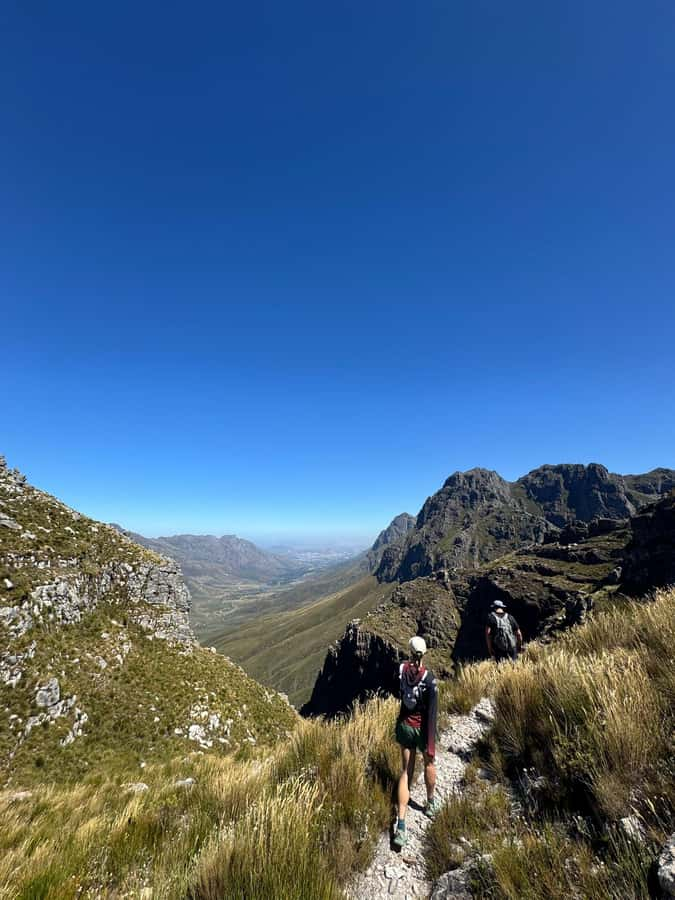
- A true circular mountain route: The 14-kilometer trail returns to Jonkershoek after crossing high ridges and passing the Berg River Saddle.
- Small guided groups: Groups are limited to six, with English or German guiding available.
- A wide mix of Cape scenery: Look for fynbos, proteas, grassy ridges, craggy cliffs, waterfalls, and clear streams.
- The reserve entrance is included: You meet at Jonkershoek Nature Reserve, then continue about 5 kilometers on a gravel road to the trailhead.
- Bring serious water and food supplies: You should carry at least 2.5 liters of water, snacks, sun protection, and a jacket.
Why this is a serious hike, not a casual walk
The Panorama Trail earns its reputation through effort. You climb more than 1,000 meters in a relatively short distance, often over steep and rocky ground. That makes the route demanding even for active walkers, especially if warm weather or a brisk pace adds to the strain.
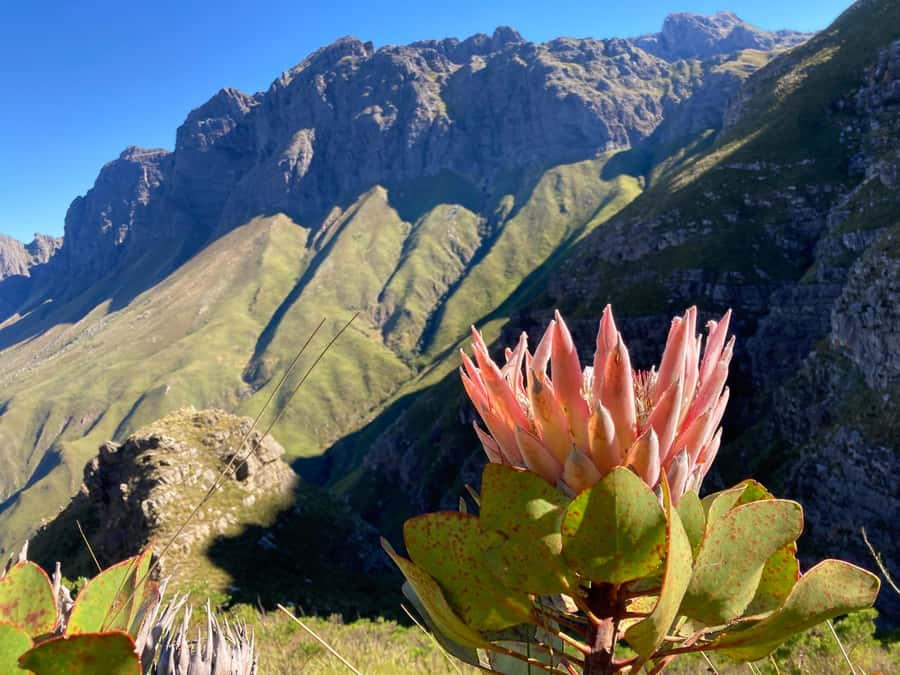
The reward is not held back for one final lookout. Views open up as you climb, and the scenery changes with the height. Lower sections may include forest, streams, and waterfalls, while higher ground brings proteas, open grassy ridges, craggy cliffs, and long views over the Jonkershoek valley.
I would rate the route as suitable for someone with a good to strong fitness level. You need to be comfortable hiking for five to seven hours and handling steep rocky slopes. The trail is not suitable for children under 12, people with mobility impairments, people afraid of heights, or anyone with a low level of fitness.
A guide makes a real difference here. Dominic is the named guide associated with this experience, and he leads in English or German. The small group format also means the pace can be adjusted, rather than forcing everyone into a large group schedule.
More Park Hiking and Trekking Tours in South Africa:
- San Francisco: Yosemite National Park & Giant Sequoias Hike
★ 4.5 · 1,777 reviews - Skaftafell National Park: Falljokull Glacier Easy Hike
★ 4.7 · 1,370 reviews - Skaftafell National Park: Falljokull Glacier Advanced Hike
★ 4.8 · 1,083 reviews
Starting at the Jonkershoek gate
You meet at the entrance gate of Jonkershoek Nature Reserve. This is not the actual start of the walking section. From the gate, you travel about 5 kilometers along a gravel road to the trailhead, either in your own vehicle or in the guide’s vehicle.
That transfer is useful to understand before booking. If you plan to drive yourself, you will need a suitable vehicle for the gravel road and should be ready to follow the guide from the gate. If you use the guide’s vehicle, confirm the arrangement when booking so you know what to expect on the day.
Before setting off, you receive a route and safety briefing. This is a good moment to ask about the day’s direction, weather, water, and the steep sections ahead. The route can be walked clockwise or counter-clockwise, so the guide’s choice may depend on conditions and the group’s needs.
The total outing is generally described as six hours, but the practical range is five to seven hours. Fitness, pace, weather, and rest stops all affect the timing. I would keep the rest of your day free rather than scheduling a tight lunch booking or another activity immediately afterward.
The first climb through rocky mountain country
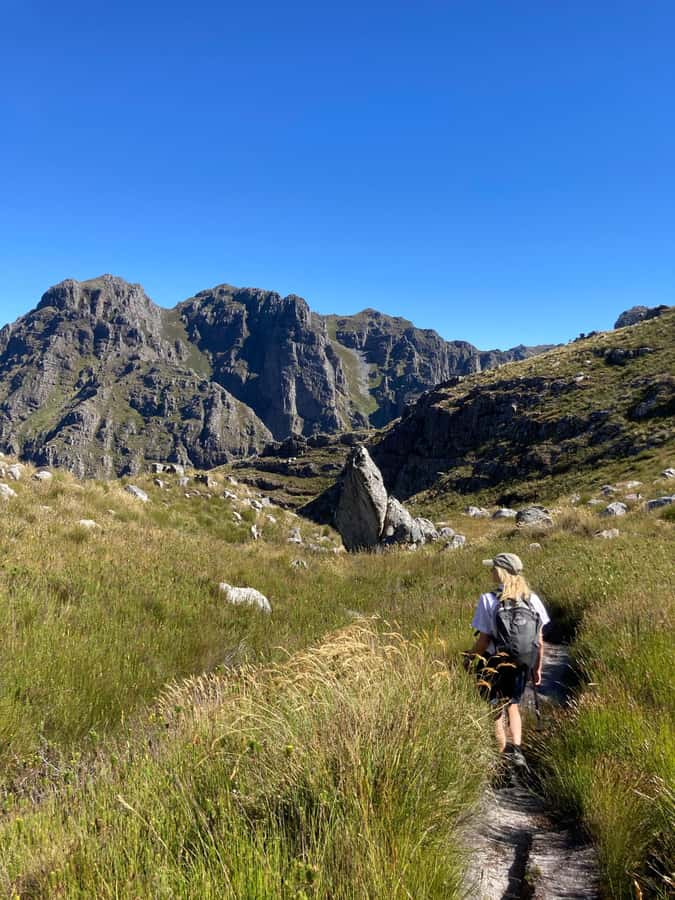
The opening ascent is the toughest physical test. The route soon turns into a steep climb through a rocky gully, with more than 1,000 meters of height to gain before the trail reaches the high ridge.
This is where good pacing matters. Your guide sets a sustainable speed and includes regular breaks, so you can drink, catch your breath, and look back at the valley. You should not treat those pauses as wasted time. They help you manage the climb and give you a chance to take in views that change quickly as you rise.
Wear proper hiking shoes or boots with good grip. Comfortable clothes are important, but ordinary city trainers are a poor match for a long route with rocky slopes. A jacket is also worth packing, since conditions can change as you gain height.
The trail can feel demanding even if you exercise often. Hiking uphill uses your legs in a different way from running, cycling, or gym workouts. If you are uncertain about your fitness, the 1,000-meter gain should be the deciding detail.
Proteas, fynbos, cliffs, and open ridges
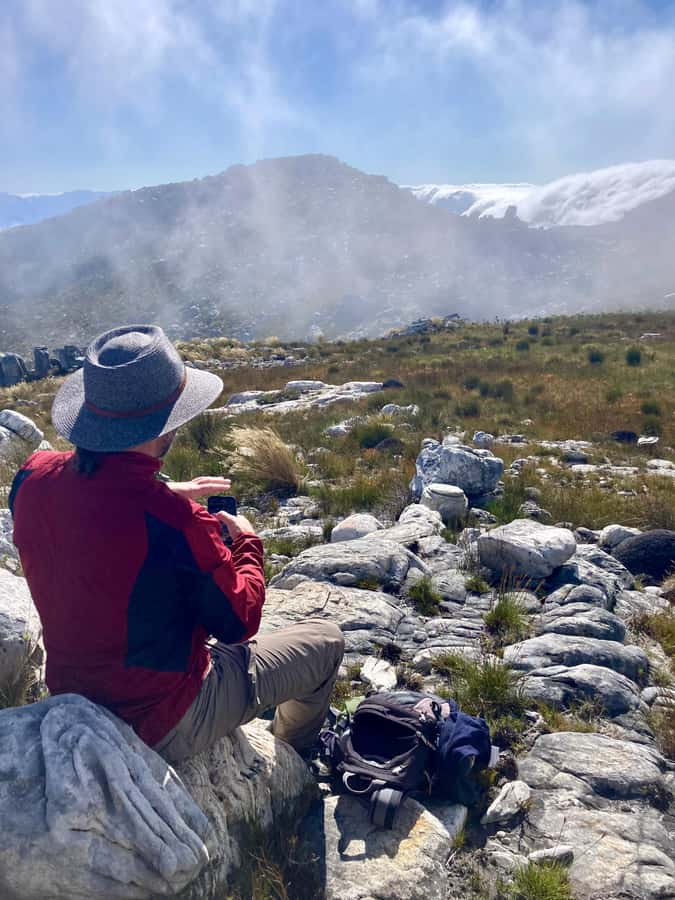
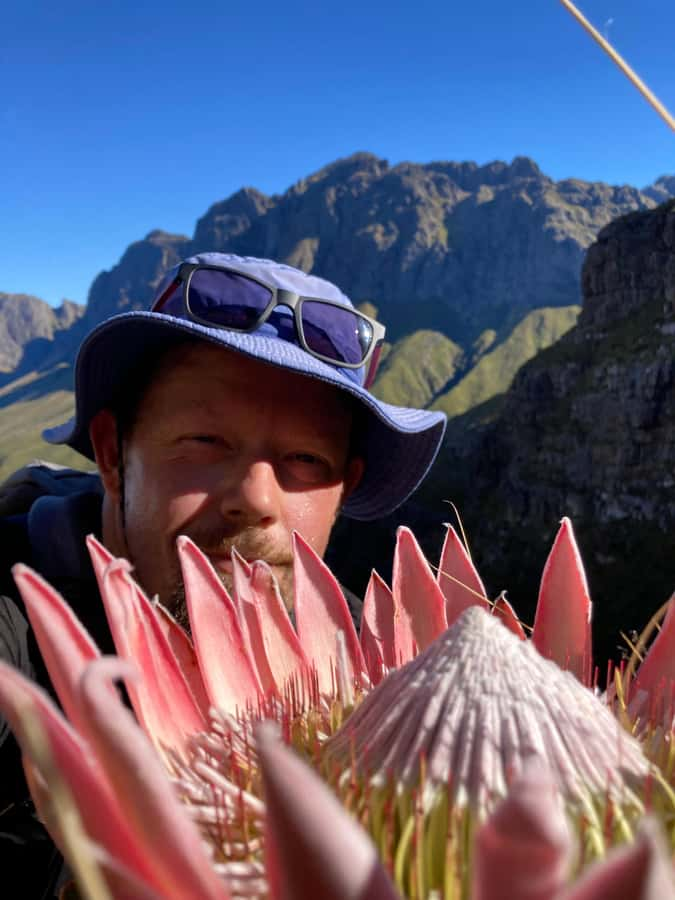
One of the best features of this hike is the variety of plant and mountain settings. The route passes protea-covered slopes, grassy ridges, and craggy cliffs, with fynbos forming a recurring part of the scenery.
The changing vegetation gives the walk more interest than a simple uphill slog. You may move from woodland and streamside sections into more open mountain country, with wider views and fewer visual barriers. One particularly useful detail for photographers is the range of habitats, described as including fynbos, forest, and alpine areas.
Bring a camera, but protect your battery. The views and plant life provide plenty of reasons to stop, and a phone battery can disappear quickly when you are taking pictures throughout a long day. A small power bank is sensible, though the essential items remain water, food, sun protection, and suitable footwear.
The reserve also includes waterfalls and clear streams. Swimwear is listed among the recommended items, and the clear water can provide a refreshing opportunity if conditions and the guide allow it. Do not count on swimming as the central feature, however. The main event is the mountain route, and water levels and timing may affect what is practical.
More Guided Trips in South Africa:
- Addo National Park: Guided Half-Day Safari
★ 4.7 · 175 reviews - Addo Elephant National Park: Guided Half-Day Safari
★ 4.4 · 27 reviews - From Split: Plitvice Lakes National Park Guided Tour
★ 5.0 · 3,002 reviews - From Split: Plitvice Lakes National Park Guided Tour
★ 5.0 · 2,355 reviews
Reaching the high ridge and the Panorama views
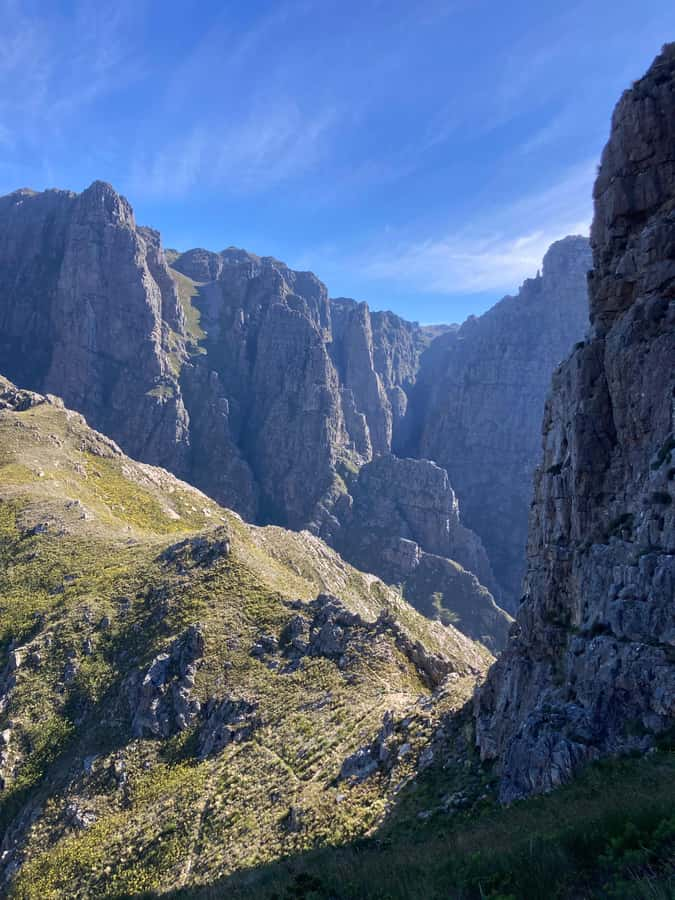
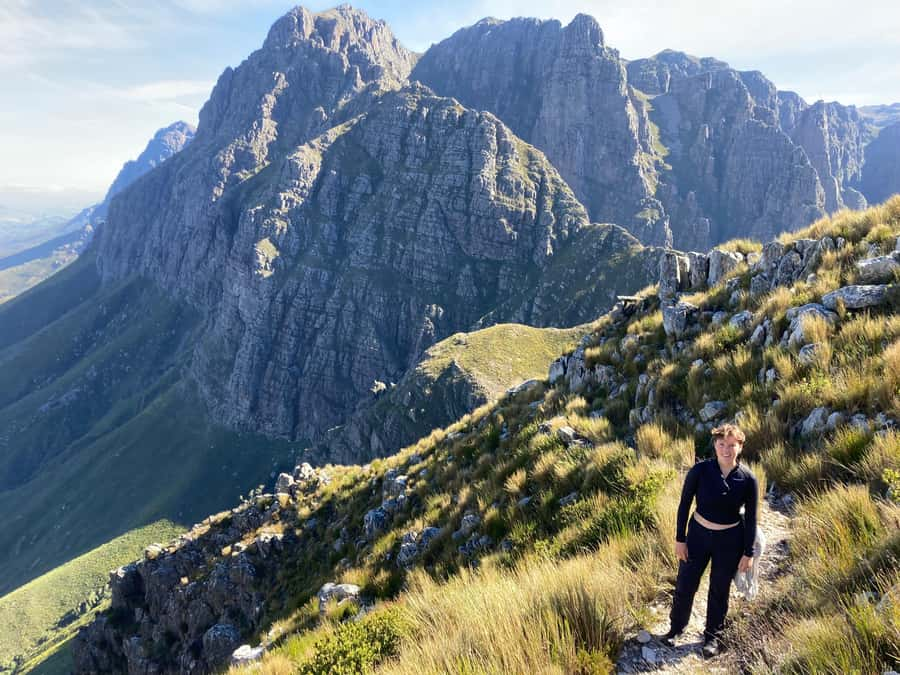
Once you reach the upper ridge, the character of the hike changes. The close, steep work opens into broad views across the Jonkershoek valley, surrounding peaks, deep gorges, and fynbos-covered slopes.
This is the section that gives the trail its name. You can look back over the ground you have climbed and see why the ascent is worthwhile. The ridge also gives the group room to pause, take photographs, and enjoy the scale of the reserve without rushing through every viewpoint.
The high terrain is also where people who dislike heights may feel uncomfortable. The route includes steep mountain ground, and the information for this activity specifically warns that it is not suitable for people afraid of heights. If exposed ridges make you nervous, the views may not compensate for the discomfort.
The guide’s role is important here. Navigation, pacing, and awareness of the terrain matter more on a high route than on a short marked walk. A small group lets you ask questions and pause for photographs without holding up a large crowd.
Berg River Saddle and the Assegaibos Kloof view
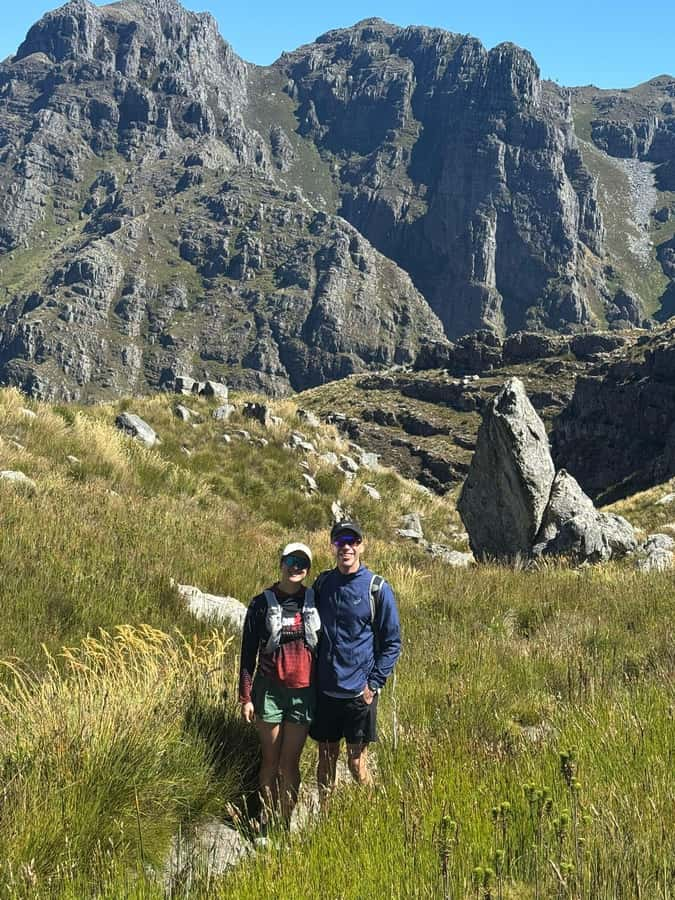
The descent passes the Berg River Saddle, one of the major scenic points on the route. From here, you can look into the Assegaibos Kloof Valley, through which the Berg River flows.
This is a strong reward after the climb because the view changes from a broad look over Jonkershoek to a more focused view into a pristine valley and river corridor. It is also a natural place for a longer photo stop, though the route still has distance to cover afterward.
Do not assume the descent is easy. Downhill hiking can be hard on knees and ankles, especially after several hours on the trail. Rocky ground requires care, and your legs may be tired from the climb. Trekking poles could be useful, although they are not listed as a required item.
The Berg River Saddle is likely to be one of the day’s most memorable points, but the route works because it connects several types of scenery. The high ridge, valley views, water, plant life, and changing terrain all contribute to the experience.
Completing the circular route through the valley
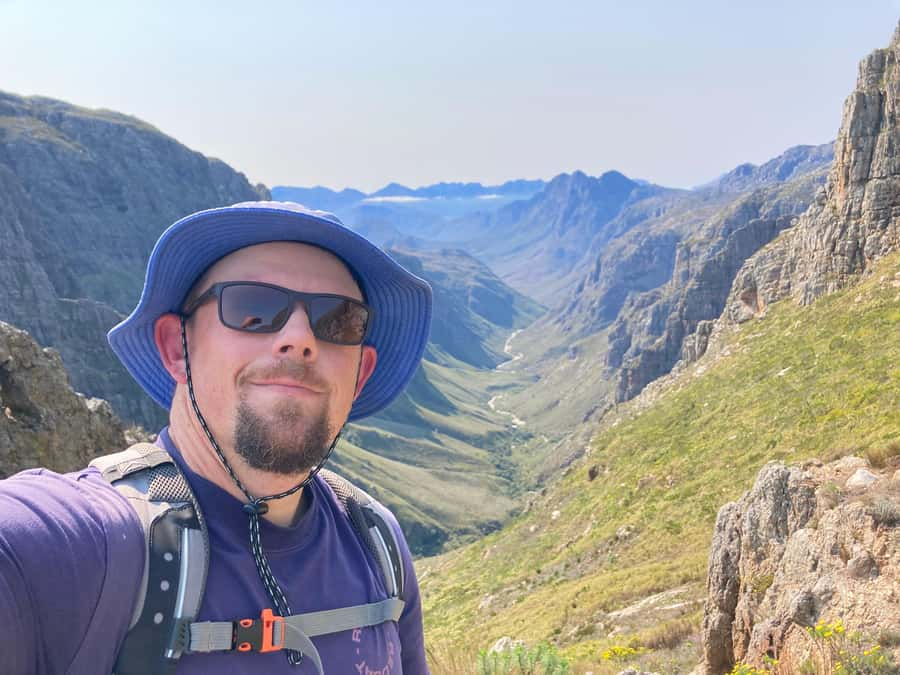
After the saddle and high sections, the trail curves back toward the valley and completes its circular route. A loop is more satisfying than an out-and-back walk because you continue seeing new ground rather than retracing the same climb.
The final part may feel easier mentally because the route is heading back to the reserve, but tired legs still need care. Keep drinking water, eat the food you brought, and resist the temptation to rush the descent. A guide can help you keep a steady pace through the final sections.
The route finishes back at Jonkershoek Nature Reserve. From there, the experience ends at the reserve rather than at your accommodation, so you need to arrange your own onward transport. Transport to Jonkershoek is not included in the price.
What the $112 price gets you
At $112 per person, this is not a cheap independent day hike. The value depends on how much help you want with the difficult parts of the day.
The price includes the expert mountain guide, reserve entrance fee, and the guided route itself. You are also paying for local navigation, safety guidance, pacing, and a group limited to six people. On a route with steep terrain and more than 1,000 meters of climbing, those services have practical value.
You still need to pay for or arrange transport to Jonkershoek. Drinks and snacks are also not included. Pack enough food for a long, strenuous outing and at least 2.5 liters of water. A sun hat, sunscreen, jacket, hiking shoes, and comfortable clothing belong in your day pack.
For a confident hiker who already knows the area and wants to walk independently, the guide may feel like an extra cost. For someone visiting Stellenbosch or Cape Town who wants a demanding mountain day without managing route decisions alone, the price is easier to justify.
Timing, group size, and practical preparation
The listed duration is six hours, but you should allow five to seven hours in real terms. Starting times vary, so check availability and avoid planning anything immediately afterward.
The group is limited to six participants. That is small enough for direct contact with the guide and easier pace adjustments. It also means the experience should feel more personal than a large coach-style excursion, though the route itself remains physically demanding.
Pack the following:
- At least 2.5 liters of water
- Food and snacks for the full hike
- Hiking shoes or boots
- Sun hat and sunscreen
- A jacket
- Comfortable hiking clothes
- Swimwear if you want to be prepared for possible swimming opportunities
Smoking, littering, and making fires are not allowed. Those rules matter in a protected nature reserve, especially on a route with streams, fynbos, and sensitive mountain vegetation.
The activity offers free cancellation up to 24 hours before departure, and you can reserve now and pay later. Those terms are useful if your South African itinerary may change, but they do not remove the need to check weather and make an honest assessment of your fitness.
Who should book the Panorama Trail
I would recommend this hike to active visitors who want a full mountain day rather than a short scenic walk. It suits you if you enjoy steep climbs, varied natural scenery, photography, and big views earned through physical effort.
It is also a good match if you want a guide but do not want to join a large group. The English and German options make it practical for international visitors, and the small group limit should allow questions and a more flexible pace.
I would not choose it for a relaxed family outing, a first-ever hike, or a day when you want to conserve energy for wine tasting and town sightseeing. The route is strenuous, and the return descent comes after hours of climbing.
The strongest reason to book is the combination of terrain and scenery. You get a serious climb, high ridges, fynbos, waterfalls, clear streams, and views into the Berg River and Assegaibos Kloof Valley in one circular route. The most useful preparation tip is equally clear: bring enough water, allow the full day, and make sure your footwear can handle rock.
Should you book this guided hike?
Book it if you are fit enough for a 1,000-meter climb and want one of the most demanding scenic hikes near Stellenbosch. Dominic’s guiding, the six-person limit, and the included reserve entry add useful structure to a route where pacing and navigation matter.
Skip it if steep rocky ground, heights, or a five-to-seven-hour outing sound unpleasant. This is a rewarding mountain challenge, not an easy introduction to Jonkershoek. For the right walker, though, the Berg River Saddle, Assegaibos Kloof views, varied fynbos, and high ridge scenery make the $112 worthwhile.
FAQ
Where does the hike begin?
You meet at the entrance gate of Jonkershoek Nature Reserve. The group then travels about 5 kilometers on a gravel road to the start of the walking route.
How long does the Panorama Trail take?
The stated duration is six hours. In practice, you should expect about five to seven hours, depending on fitness, pace, weather, and rest stops.
How far is the hike?
The circular route covers about 14 kilometers.
How much climbing is involved?
The trail includes more than 1,000 meters of elevation gain, including steep sections on rocky mountain terrain.
What fitness level do I need?
You should have a good to strong fitness level and be comfortable hiking for five to seven hours on steep, rocky slopes.
Is the hike suitable for children?
The activity is not suitable for children under 12 years old.
What languages does the guide speak?
Guiding is available in English or German.
Is transport included?
Transport to Jonkershoek Nature Reserve is not included. After meeting at the gate, you travel 5 kilometers on a gravel road either in your own vehicle or in the guide’s vehicle.
What should I bring?
Bring at least 2.5 liters of water, food, hiking shoes, sunscreen, a sun hat, comfortable clothes, and a jacket. Swimwear is also suggested because the route includes clear streams and possible swimming opportunities.
Newest park tours we have reviewed in South Africa
- Robben Island Museum Plus Table Mountain National Park & Bo-kaap All Tickets F/d★ 5.0 · 7 reviews
- Kruger National Park. 3 Days Best Ever Safari from Cape Town★ 5.0 · 25 reviews
- 7-day Cape Town, Winelands, Garden Route and Addo National Park★ 5.0 · 5 reviews
- 5 Day Garden Route Tour and Addo Elephant National Park★ 5.0 · 74 reviews
- Garden Route and Addo National Park 4 Day Safari★ 5.0 · 6 reviews
- Cape Agulhas | Stony Point Nature Reserve★ 5.0 · 4 reviews
- Kruger National Park. 2 Days Best Ever Safari from Cape Town★ 5.0 · 8 reviews
- 4 Day Addo Elephant National Park & Garden Route From Cape Town★ 5.0 · 2 reviews
South Africa National Park Tours, compared.
Addo Elephant National Park All Inclusive Full-Day Safari
Read our review →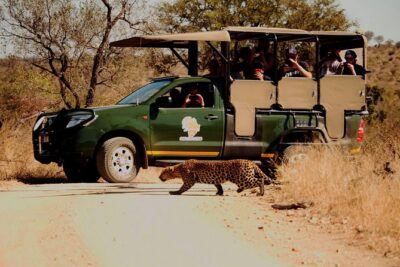
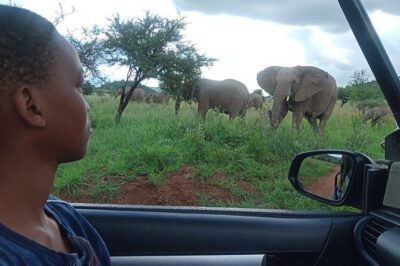
Full Day Ultimate Pilanesberg National Park Safari from Johannesburg or Pretoria
Read our review →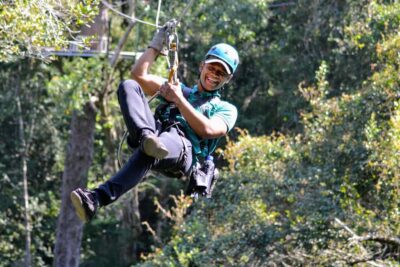
Storms River: Tsitsikamma National Park Zipline Canopy Tour
Read our review →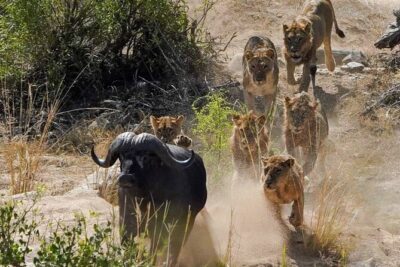
Kruger National Park – Private full day Safari trip.
Read our review →Addo Elephant National Park All Inclusive Full-Day Safari
Read our review →
From Sun City: Pilanesberg National Park 3-Hour Game Drive
Read our review →Lists this park day appears in