
Reviewed · AUSTRALIA NATIONAL PARK TOURS
Hobart: Maria Island National Park Active Full-Day Tour
Maria Island’s magic begins with what is missing: no cars, no traffic, and very little noise. Instead, you get wombats wandering near old convict buildings, wallabies in the grass, and broad coastal views reached on foot. Darlington’s preserved settlement and the island’s wildlife are my two favorite parts of this day. The Painted Cliffs and Fossil Cliffs add striking scenery and a good dose of geology.
I also like the small-group format. Guides such as Heather, Trevor, Ben, Nick, and Lucas have been praised for their wildlife spotting, local knowledge, and easygoing care. The tradeoff is clear: this is about 10 kilometers of walking over unpaved ground, with hills, wind, and changing weather. It is not a gentle sightseeing bus trip.
Key points to know before you book
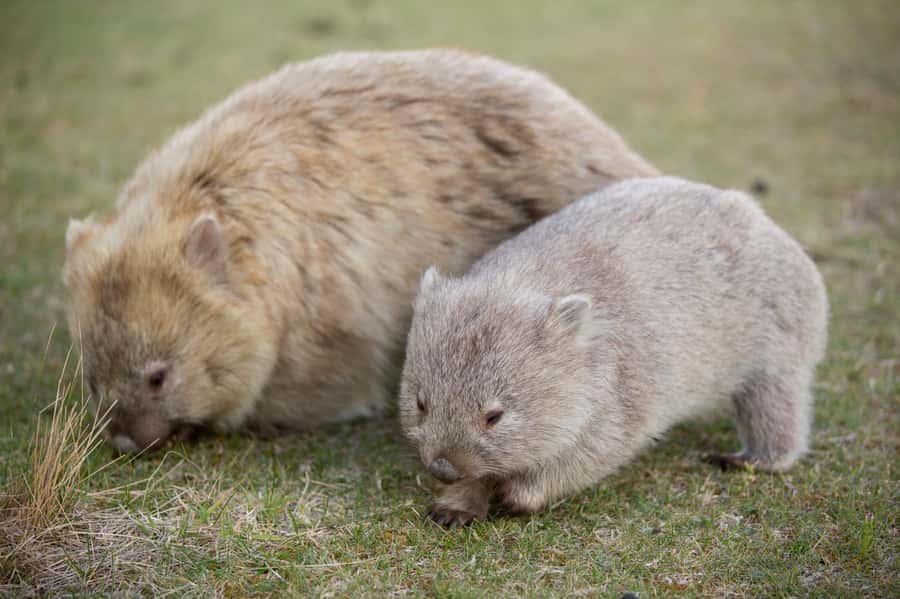
- Wombats are a major highlight: You might see several, along with wallabies, kangaroos, pademelons, bandicoots, Cape Barren geese, and many other birds.
- The walking program is substantial: The Painted Cliffs and Fossil Cliffs walks each cover roughly 4.5 kilometers.
- Darlington adds real depth: This beautifully preserved former convict settlement is part of a UNESCO World Heritage site.
- The day starts early: In summer, meet at 6:40 AM for a 6:45 AM departure. Winter departures are at 8:00 AM.
- Bring your own food and water: Meals and drinks are not included, and there is no lunch provided.
- Small groups improve the experience: A group of six can feel almost private, especially when the guide is helping you spot wildlife.
Why Maria Island feels different from a normal day trip
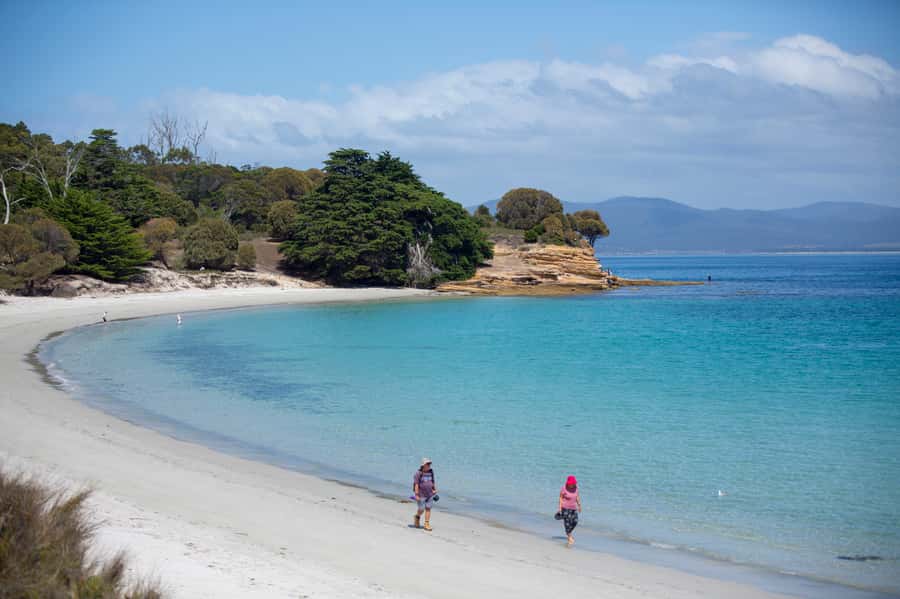
The first reward is the change of pace. From Hobart, you ride east for about an hour, then board a ferry for roughly 30 minutes. Once you reach Maria Island, the day becomes slower and quieter. There are no vehicles on the island, so your feet do the work and the scenery arrives at walking speed.
That matters here. Wombats may be feeding beside the track. Wallabies can appear in open grass. Cape Barren geese wander through the same broad setting as the old buildings and coastal paths. The absence of roads makes the island feel less managed and more open, even though the main walks are easy to follow with a guide.
The tour also brings together three different kinds of interest: wildlife, geology, and colonial history. You are not spending the entire day on one long walk with nothing to break it up. Darlington gives you buildings and stories, the Painted Cliffs provide colorful rock formations, and Fossil Cliffs show a much older chapter of the island’s past.
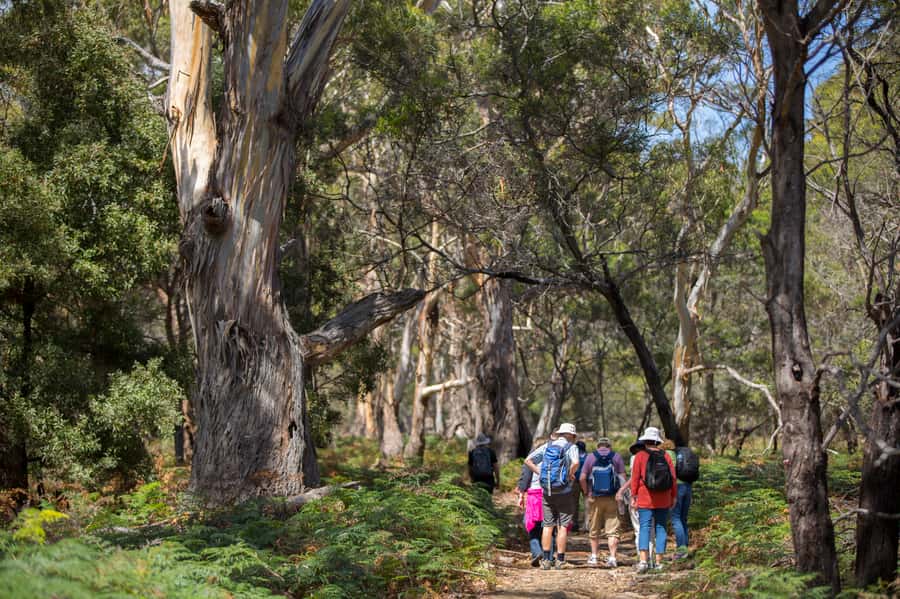
The main caution is stamina. The tour is described as active for good reason. You need comfortable closed-toe shoes, a daypack, water, sunscreen, a hat, warm layers, and clothing suited to outdoor conditions. Several people have found the walking manageable, but you should still expect uneven ground, small hills, exposed sections, and a long day outside.
More National Park Day Trips in Australia
- Port Arthur Full-day Guided Tour with Harbour Cruise and Tasman National Park
★ 4.5 · 585 reviews - Grampians National Park Small-Group Eco Day Tour
★ 4.8 · 577 reviews - From Darwin: Kakadu Wilderness Escape & Rock Art Day Tour
★ 4.5 · 403 reviews
The early coach ride from Hobart
The meeting point is the Tasmanian Travel and Information Centre at 20 Davey Street in Hobart. In summer, from October 1 through April 30, you meet at 6:40 AM and leave promptly at 6:45 AM. In winter, from May 1 through September 30, the meeting time is 7:55 AM, with an 8:00 AM departure.
Do not treat the departure time casually. The coach must connect with the Maria Island ferry, so late passengers cannot be held. There is also no parking at the general meeting point, which matters if you are considering driving into Hobart before dawn.
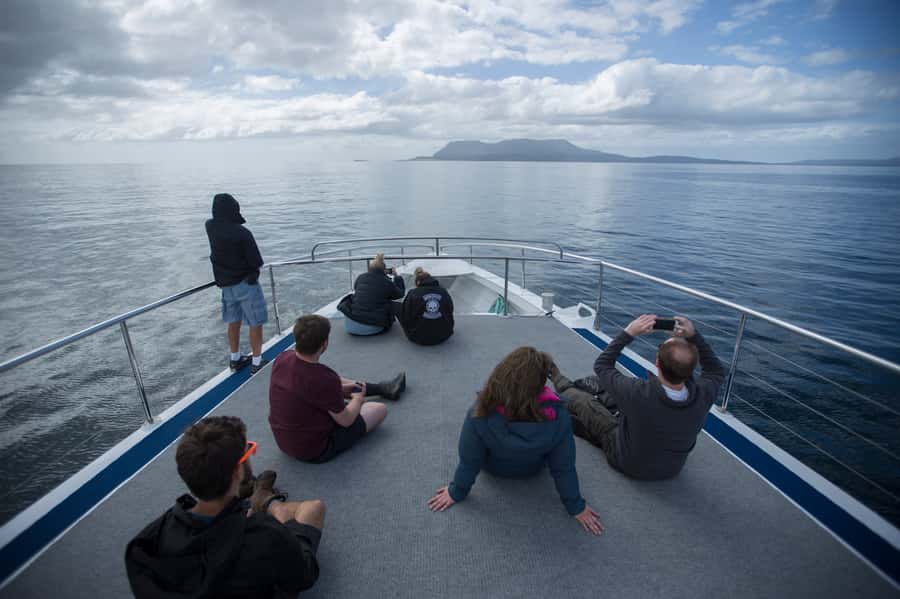
The ride takes about an hour. It is not just dead time between Hobart and the ferry. You pass through rural Tasmania, with green pastures, waterways, and sheep visible from the road. One particularly useful part of the trip is that the guide begins setting the scene before you reach the island, explaining the day and helping you understand what you are about to see.
The return to Hobart is scheduled for around 5:00 PM. That makes this a full day, but not an overnight commitment. You should still avoid booking a tightly timed evening activity, especially if weather or ferry timing affects the return.
The ferry crossing and first steps on Maria Island
The ferry ride lasts about 30 minutes and is included in the $152 price. It is short enough to be easy, but long enough to mark a clear break from Hobart. You leave behind roads, buildings, and city schedules, then arrive somewhere where walking is the main way to get around.
The first impression is quiet. You may notice wildlife soon after stepping off the boat, but the better approach is to slow down and look closely. Guides are particularly useful here because they know where animals tend to appear and can point out details you might miss while taking in the coast.
The small-group setup helps. A group of six can move more easily than a large crowd, and a guide can answer questions without turning the day into a lecture. Different guides bring different personalities, but the strongest part of the guiding is the mix of wildlife spotting, plant information, island history, and practical pacing.
You should not expect a guaranteed animal checklist. Wombats are a frequent highlight, and several tour days have included multiple wombats, including babies. Other days may bring wallabies, kangaroos, pademelons, birds, or Cape Barren geese instead. Nature makes the decisions, but a good guide improves your chances and helps you appreciate what you do see.
Darlington’s convict buildings and a glimpse into island history
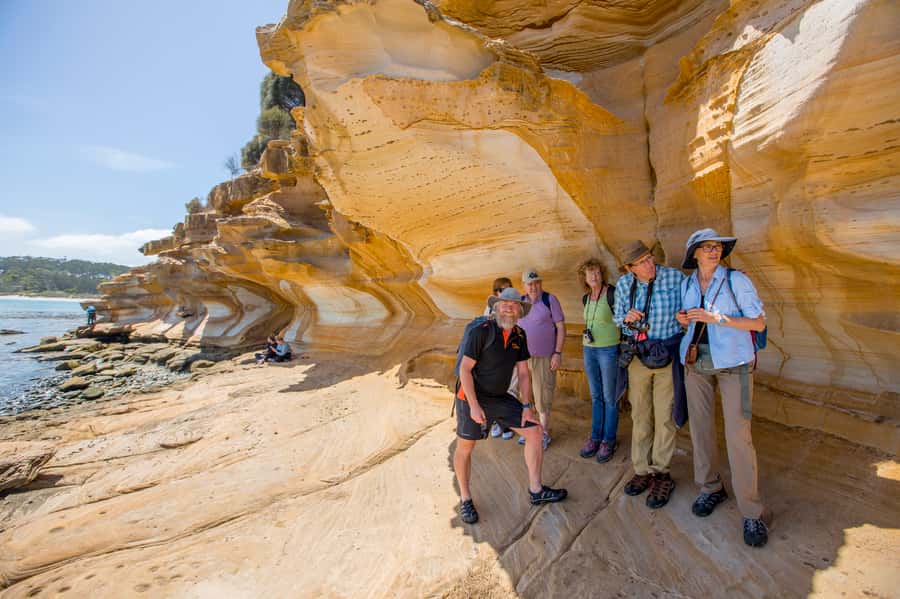
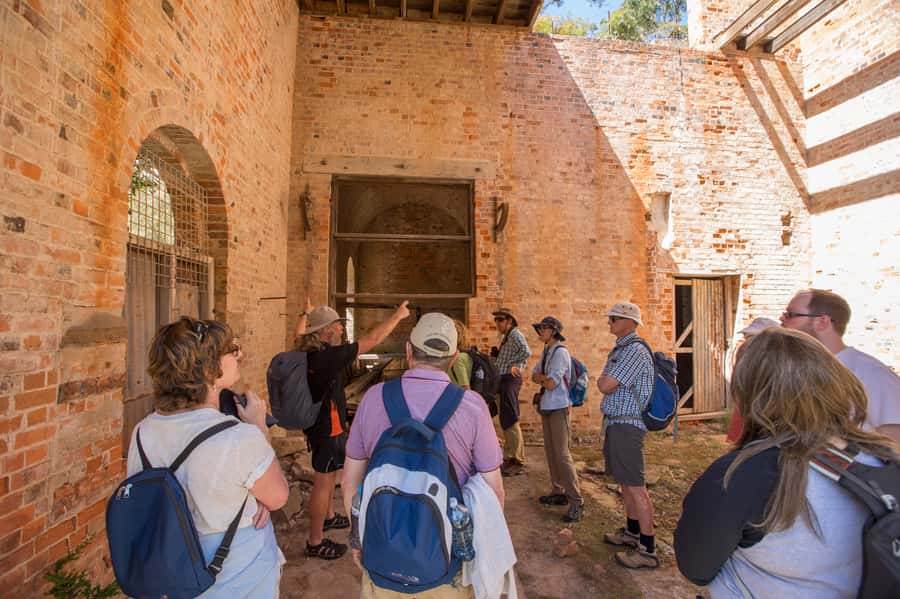
Darlington is one of the most important stops because it gives the day a human story. The settlement is a beautifully preserved former convict site and part of a UNESCO World Heritage listing. You walk among old buildings and learn how the settlement functioned as a probation station.
This is not a museum visit where you spend hours indoors reading panels. The historical setting is spread through the settlement, so the guide’s interpretation matters. Guides such as Trevor, Nick, Lucas, and Heather have been praised for explaining the island in a clear, approachable way rather than simply reciting dates.
Darlington also adds variety before the longer coastal walks. You can examine the buildings, hear about colonial life, and then move back into open country. I like that balance. Maria Island is not treated as only a wildlife park or only a history site. The old structures sit within the same setting as wombats and wallabies, which makes the past feel connected to the place rather than sealed off from it.
Allow yourself time to look around. The tour has a planned route, and the group needs to stay together, but this is one of the stops where rushing would reduce the value. The buildings help explain why Maria Island matters beyond its scenery.
Same region, a different park day:
- Litchfield National Park and Jumping Crocodile Cruise
★ 5.0 · 2,119 reviews - Grampians National Park Small-Group Eco Tour from Melbourne
★ 5.0 · 761 reviews - From Port Arthur: Tasman Island Wilderness Cruise
★ 4.9 · 704 reviews - Sydney: Blue Mountains National Park Tour with River Cruise
★ 4.6 · 701 reviews
Painted Cliffs: color, sandstone, and an easy coastal walk
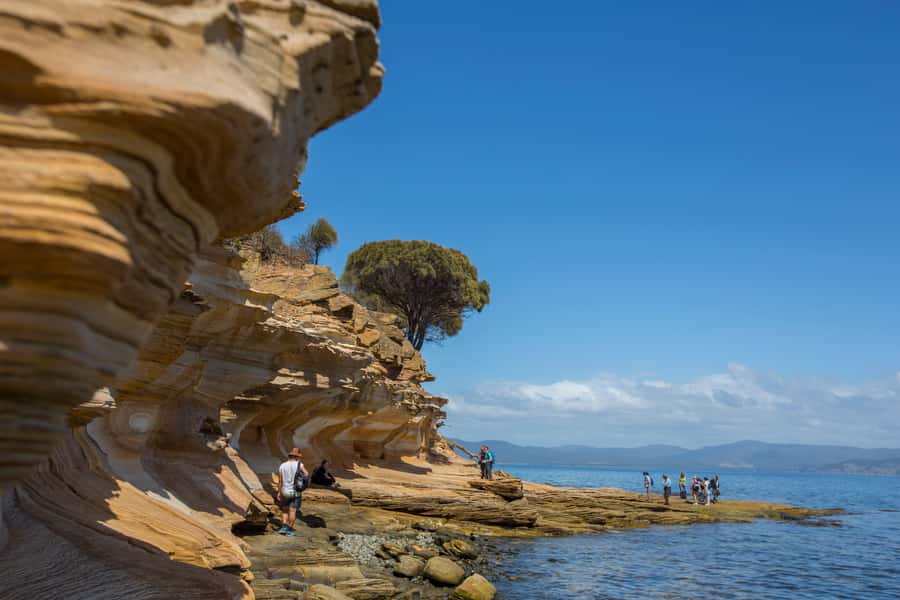
The walk to the Painted Cliffs is about 4.5 kilometers round trip and is generally easy, though you should still expect unpaved ground. The reward is a stretch of sandstone marked by bands and patterns in warm colors. At close range, the formations look almost too neat to be natural.
This is a good place to bring your camera, but photographs do not always show the scale and texture of the cliffs. The guide can explain what you are seeing and help you approach the formations with care. Depending on conditions and the tide, there may also be opportunities to pause near rock pools or spend a little time by the beach.
The walk is not a technical hike. It does, however, add to the day’s total distance. If you are counting steps, remember that the Painted Cliffs circuit is only one half of the walking program. The route may include small rises, and wind can make exposed sections feel harder than the distance suggests.
I would treat this as a scenic walk rather than a beach day. There may be time to relax briefly, but the tour is built around covering both cliff areas and seeing the main parts of the island. One useful tip is to keep your layers accessible. Tasmanian weather can shift, and a sunny morning does not guarantee a calm afternoon.
Fossil Cliffs and 300 million years of geological time
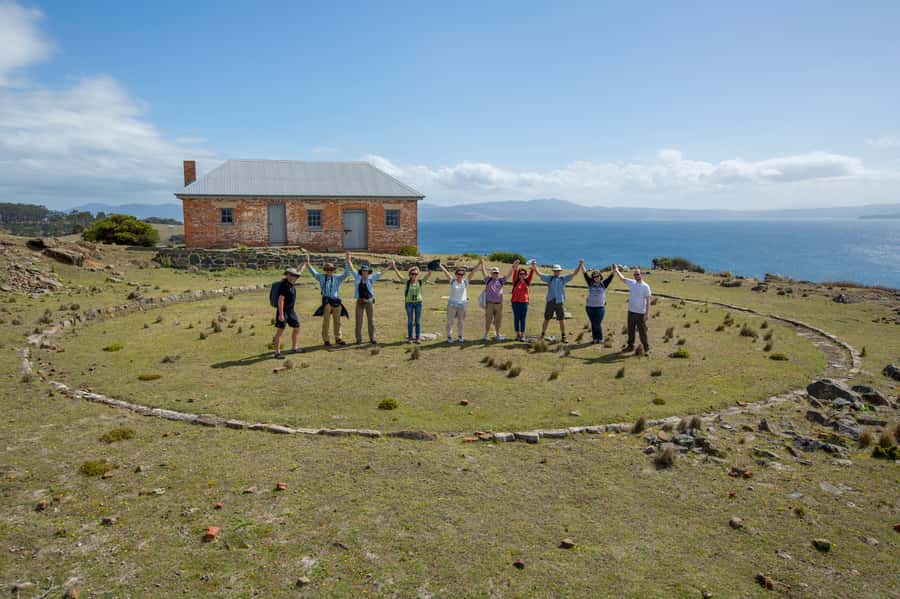
The Fossil Cliffs walk covers another roughly 4.5 kilometers. It crosses the western side of Maria Island through windswept hills and along cliffs containing fossils estimated at about 300 million years old.
This stop changes the scale of the day. At the Painted Cliffs, your attention goes to color and shape. At Fossil Cliffs, you are looking at evidence of an ancient marine world and the geological forces that shaped the island. Exposed fossils make the past feel physical. You are not simply hearing that the rocks are old. You can see traces in the stone.
The route is described as easy overall, with some small hills. You should still be ready for open, windy conditions and uneven surfaces. The views are broad, but there is less shelter than among the buildings or wooded tracks. A jacket is not optional packing here, even in warmer months.
Some people find the second half of the tour less dramatic than the first, especially if wildlife and the Painted Cliffs are their main priorities. I think that depends on your interests. If you enjoy geology, coastal views, and open walking, Fossil Cliffs is essential. If you mainly want a short animal encounter and a beach break, this part may feel long.
Wildlife spotting without a zoo-like setup
Maria Island’s animals are one of the strongest reasons to book this tour. You might see wombats, wallabies, kangaroos, pademelons, bandicoots, Cape Barren geese, and other birdlife. Wombats are the stars, and several days have produced close sightings of two, three, or even four animals.
The best part is that the animals are living in their own setting. You are not moving from enclosure to enclosure. You may need patience, a quiet approach, and a willingness to stop when the guide notices movement near the track or grass.
Guides make a real difference. Ben has been praised for his care with wildlife and his persistence in searching for wombats even on a windy day. Heather has been singled out for spotting animals and explaining their place in the island’s ecology. Other guides, including Hannah, Nick, Trevor, Pete, Zayn, Clinton, and Lucas, have been described as friendly, attentive, and well prepared.
Do not expect every animal on every outing. One day may produce several wombats, while another brings wallabies and kangaroos but no wombat sighting. That uncertainty is part of the appeal, but you should book this for the chance to see wildlife, not for a guaranteed photograph.
How demanding is the 10 kilometer walking day?
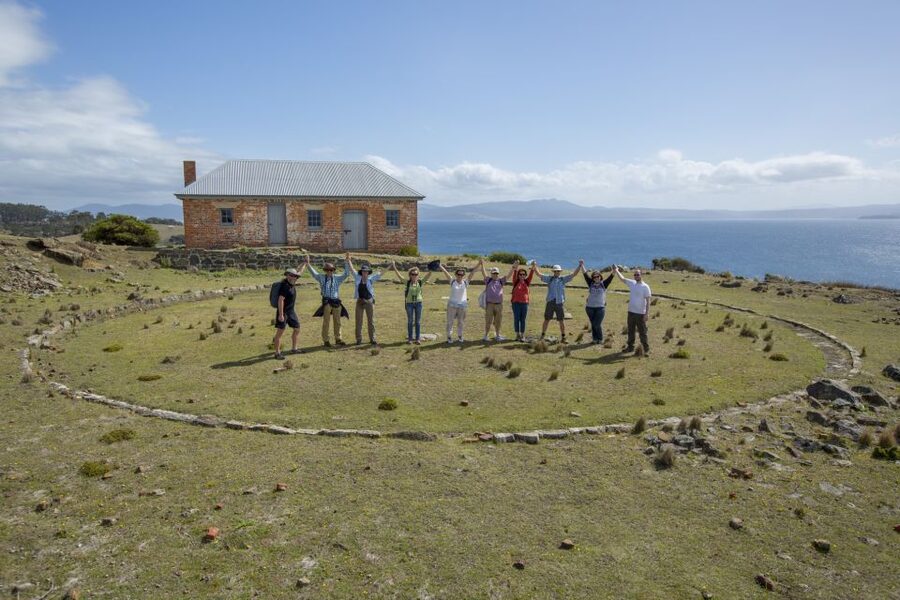
The tour suits anyone with good mobility and a moderate level of fitness. The total walking distance is about 10 kilometers, spread across the Darlington area, Painted Cliffs, Fossil Cliffs, and connecting tracks. You will walk on varied, unpaved terrain, with some hills and exposed coastal sections.
Several useful details help put that distance in perspective. The cliff walks are generally considered easy, and one person described only one short incline as especially notable. Still, 10 kilometers can feel different when you add ferry transfers, early starts, wind, sun, and a full day outdoors.
You should be comfortable walking for several hours and keeping up with a group. The guide can adjust options and pace, particularly in winter, when shorter daylight hours affect the program. The winter outing is more flexible and guide-led, with the day shaped by weather, conditions, and the group’s pace.
The tour is not suitable for children under eight, wheelchair users, or people with mobility impairments. It is a poor match if you need frequent access to vehicles, smooth paths, or long indoor breaks. For active families with children eight and older, the main question is stamina rather than age alone.
What to pack, and what you must provide yourself
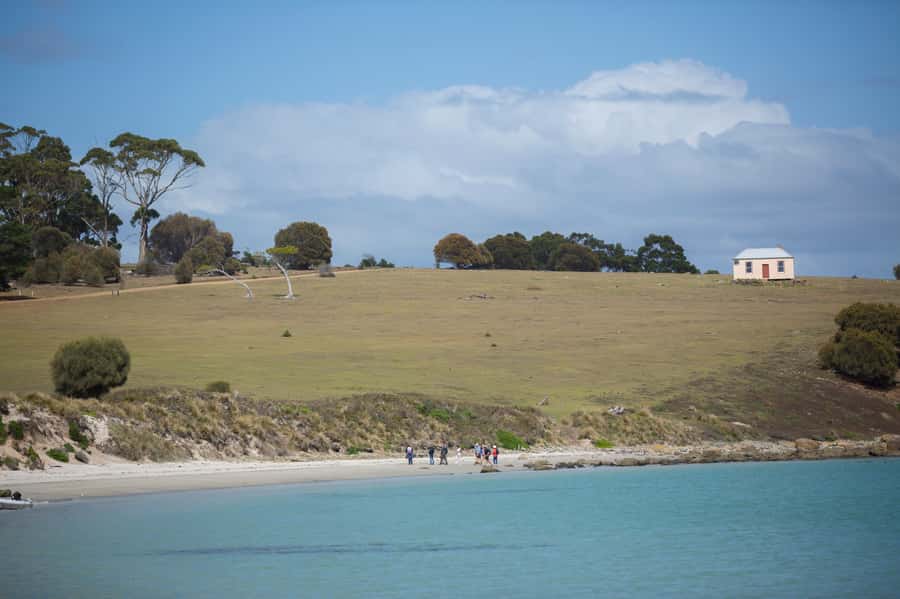
The $152 price includes the national park fee, return ferry tickets, transport from Hobart, a small-group experience, an English-speaking guide, and guided walks with interpretation. That is solid value if you would otherwise need to arrange transport, ferry tickets, park access, and a day of route finding yourself.
Food and drinks are not included. You need to bring lunch, snacks, and enough water for a full day. One practical complaint about the setup is that carrying sufficient water is not always convenient, but it is still your responsibility. A reusable bottle and a comfortable daypack are the sensible choice.
Pack:
- Comfortable closed-toe walking shoes
- Water and food
- Hat and sunscreen
- Warm layers and a jacket
- Weather-appropriate outdoor clothing
- A small daypack
Large bags and luggage are not allowed. Keep your load light, since you will carry it across the island. I would also keep sunscreen and an extra layer near the top of the bag, not buried beneath lunch.
Is $152 fair for a full day on Maria Island?
At $152 per person, the price makes sense for travelers who value convenience and interpretation. You get a coach from central Hobart, the ferry crossing, national park access, and a guide who organizes a demanding day across several parts of the island.
The value is strongest if you do not have a car or do not want to plan the ferry and walks yourself. The guide also adds something you cannot get from simply arriving and walking alone: help locating wildlife, context for Darlington, and explanations of the cliffs and fossils.
The weaker point is that meals and drinks are extra. You also pay for a full program, so there is limited time to abandon the route and spend half the day on a beach. If your ideal Maria Island visit is a slow picnic with long stretches of free time, an independent visit may suit you better.
The transport score is high, with 88 percent of ratings giving it a perfect mark. That fits the practical shape of the day: early but organized, with the ferry connection built in and a return to Hobart around 5:00 PM.
Who should book this Maria Island tour?
Book it if you want a well-planned active day that combines wildlife, geology, and convict history. It is especially good for first-time visitors to Tasmania who want to see Maria Island without arranging every connection themselves.
You should also book if wombats are high on your wish list, while accepting that wildlife sightings cannot be promised. The strongest guides help a lot, and the small groups make animal spotting and questions easier.
Think twice if you dislike long walks, early departures, carrying your own lunch and water, or changing weather. You may also prefer another style of visit if your priority is free time at the beach. For most fit walkers, though, the combination of quiet tracks, old Darlington, colorful sandstone, fossil-bearing cliffs, and wild animals makes this one of the better full-day outings from Hobart.
The cancellation policy is helpful if your plans are uncertain: you can cancel up to two days in advance for a full refund. Just remember that the tour itself is not flexible about the morning meeting time.
FAQ
How long does the Maria Island tour take?
The tour lasts 10 hours and returns to the Tasmanian Travel and Information Centre in Hobart around 5:00 PM.
What time does the tour leave Hobart?
From October 1 through April 30, meet at 6:40 AM for a 6:45 AM departure. From May 1 through September 30, meet at 7:55 AM for an 8:00 AM departure.
How much walking is involved?
You should expect approximately 10 kilometers of walking across varied, unpaved terrain. The Painted Cliffs and Fossil Cliffs walks are each about 4.5 kilometers.
Are meals and drinks included?
No. You need to bring your own food and drinks, including enough water for the full day.
What wildlife might I see?
Possible sightings include wombats, wallabies, kangaroos, pademelons, bandicoots, Cape Barren geese, and other birds. Sightings vary and are not guaranteed.
Is the tour suitable for children and people with limited mobility?
The minimum age is eight. The tour is not suitable for wheelchair users or people with mobility impairments, and good mobility with a moderate level of fitness is needed.
More Full-Day Trips in Australia
- Litchfield National Park: Full-Day & Lunch from Darwin
★ 4.6 · 205 reviews - Darwin: Kakadu National Park & Wildlife Full Day Tour
★ 4.5 · 200 reviews - Tenerife: Teide National Park Full-Day Tour with Pickup
★ 4.5 · 1,613 reviews - Montenegro: Full-Day Tour to Lovcen National Park & More
★ 4.9 · 992 reviews
Newest park tours we have reviewed in Australia
- Kakadu National Park Wildlife & Ubirr Rock Art Tour from Darwin★ 4.5 · 101 reviews
- Grampians National Park with MacKenzie Falls and Kangaroos★ 4.5 · 121 reviews
- Barron Gorge and Kuranda National Park Half Day Rainforest and Waterfall 4WD Tour from Cairns★ 5.0 · 73 reviews
- PRIVATE Blue Mountains Wilderness & Wildlife Late Start Tour★ 5.0 · 46 reviews
- Private Guided Tour from Sydney to Blue Mountains National Park★ 5.0 · 41 reviews
- Wilderness, Waterfalls, Three Sisters BLUE MOUNTAINS PRIVATE TOUR★ 5.0 · 61 reviews
- Royal National Park Private Tour★ 5.0 · 55 reviews
- From Darwin: Litchfield National Park Small-Group Day Trip★ 4.7 · 131 reviews
Australia National Park Tours, compared.
Litchfield National Park and Jumping Crocodile Cruise
Read our review →
Grampians National Park Small-Group Eco Tour from Melbourne
Read our review →
From Port Arthur: Tasman Island Wilderness Cruise
Read our review →
Sydney: Blue Mountains National Park Tour with River Cruise
Read our review →
From Hobart/Adventure Bay: Bruny Island Wilderness Cruise
Read our review →
Port Arthur Full-day Guided Tour with Harbour Cruise and Tasman National Park
Read our review →
Grampians National Park Small-Group Eco Day Tour
Read our review →
Hobart: Bruny Island Wilderness Coast Eco Cruise with Lunch
Read our review →Lists this park day appears in