Reviewed · CROATIA NATIONAL PARK TOURS
From Zagreb: Plitvice Lakes National Park Tour with Tickets
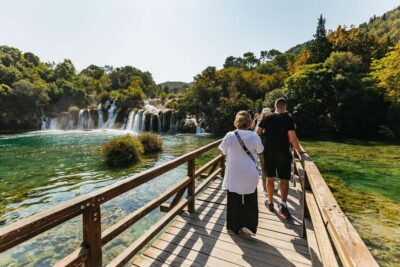
Plitvice Lakes is the star here: a chain of turquoise pools, wooden walkways, roaring falls, and old beech woods spread across a huge national park. The best part is seeing the water from several angles, sometimes level with the lakes, sometimes looking down from a forest path.
I like the small-group feel and the guide-led route. Guides such as Ivan, Patrik, Luka, and Stjepan are repeatedly praised for clear stories about Croatia and for adjusting the pace. I also like that your ticket, transport, Wi-Fi, water, snack, and rain protection are bundled into one price.
The main catch is the walking. You may cover around 8 kilometers during roughly four hours in the park, with uneven paths and plenty of standing. Also, the advertised reference to Bled cream cake and a castle view does not fit the Zagreb, Rastoke, and Plitvice schedule, so do not book this trip expecting a stop in Bled.
Key points to know before booking
- Rastoke adds a charming 40-minute stop: See the Slunjčica River flow into the Korana among small waterfalls and old watermills.
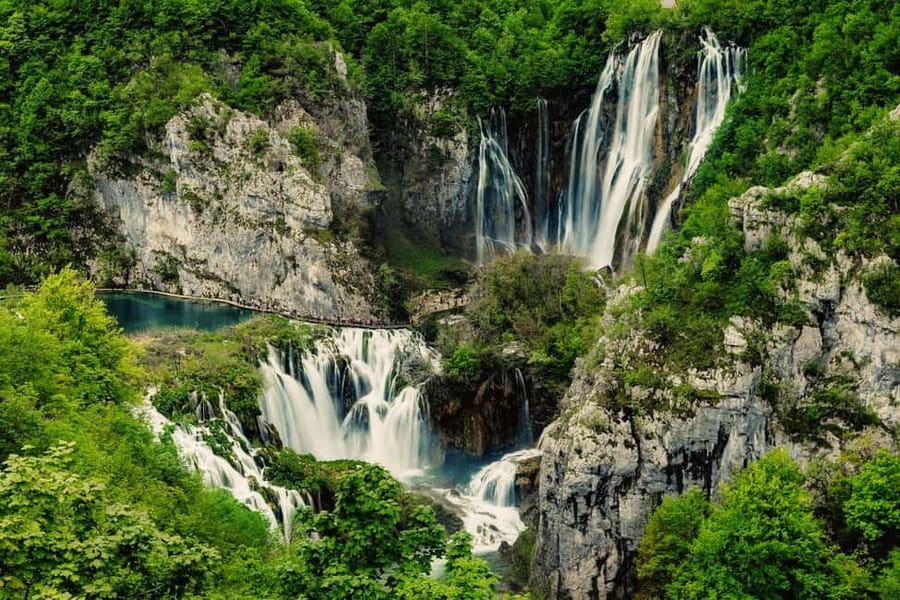
- Plitvice gets the main four-hour visit: Expect guided walking, scenic viewpoints, lakes, forest paths, and the 78-meter Veliki slap.
- The ride is part of the experience: The van takes about four hours total, with Wi-Fi, water, a snack, and a bilingual guide.
- The route needs steady walking: Comfortable shoes are essential, and the tour is not suitable for people with limited mobility.
- Winter changes the visit: From November 1 through March 31, panoramic trains and electric boats do not run.
- The price covers the expensive part: At $123, your national park entrance and transport are included, but lunch is not.
Why this day trip works well from Zagreb
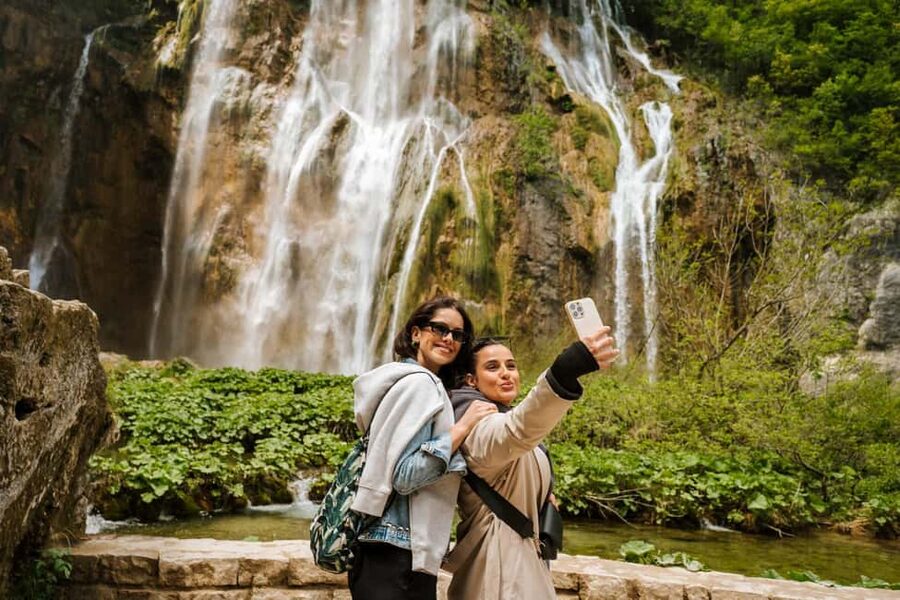
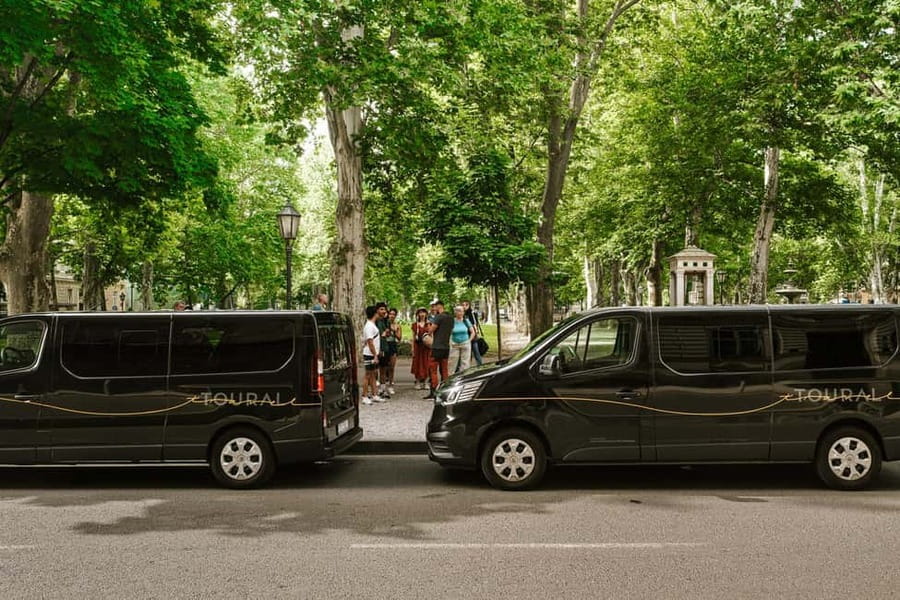
Plitvice Lakes is far enough from Zagreb that visiting independently takes planning, transport, and a separate park ticket. This tour gathers those pieces into one 10-hour day, beginning at Zrinjevac 2, near the center of Zagreb and only a three-minute walk from Ban Jelačić Square.
The schedule is straightforward. You leave Zagreb by air-conditioned van or minibus, spend about 90 minutes on the road, stop at Rastoke, continue for another 40 minutes, then spend four hours at Plitvice. The return drive takes about two hours.
That is a long day, but the timing makes sense. You get a short first stop before the main park, enough time at Plitvice to see far more than a quick viewpoint, and a direct ride back to Zagreb. I would choose this over trying to connect buses on your own, especially if you have only one free day in the capital.
The vehicle matters, too. The ride includes Wi-Fi, one bottle of water per person, a snack, and a raincoat if needed. Those are small touches, but they make a difference on a full day outside. The drive also gives your guide time to explain Croatia, the countryside, and the places ahead.
More Waterfall and Lakes Park Tours in Croatia
- From Split: Plitvice Lakes National Park Guided Tour
★ 5.0 · 3,002 reviews - From Split: Plitvice Lakes National Park Guided Tour
★ 5.0 · 2,355 reviews - Plitvice Lakes National Park Guided Day Tour from Split
★ 5.0 · 1,948 reviews
Rastoke: a small waterfall village before the big park
Rastoke is not just a bathroom break. You get about 40 minutes to explore the village, where the Slunjčica River meets the Korana River over a series of small cascades and channels.
The setting feels intimate compared with Plitvice. Water runs through the village, and the old water-powered character of the place gives you a quick introduction to the region’s relationship with rivers and mills. It is a good warm-up for the larger natural spectacle later in the day.
Still, keep your expectations in proportion. Forty minutes is enough for a look and photographs, not a slow village visit. You will want to listen to the guide, see the river junction, and move on when the group regathers. The stop works best as a preview rather than a separate destination.
Entering Plitvice Lakes National Park
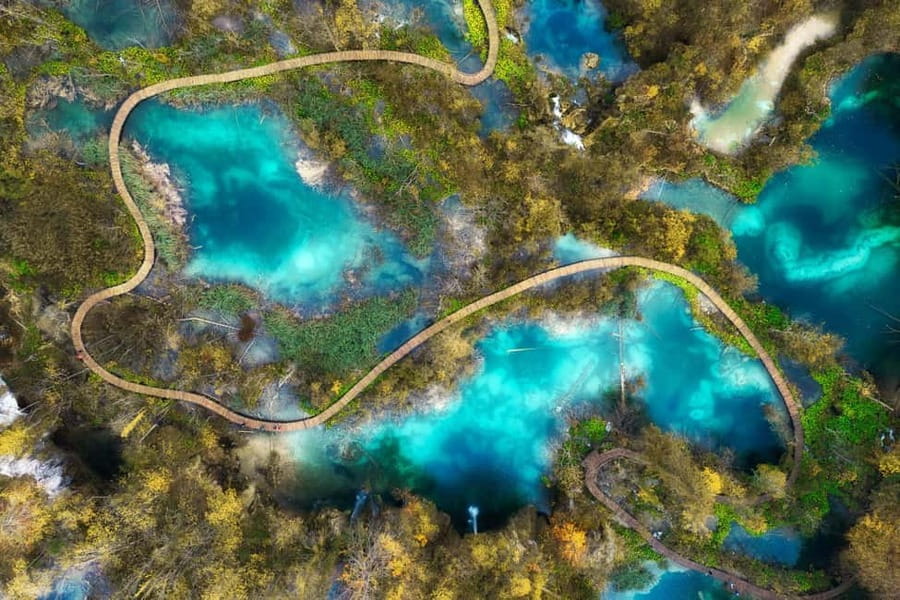
Plitvice is a UNESCO World Heritage Site made up of 16 lakes linked by waterfalls and travertine barriers. Travertine is the pale mineral material formed as water deposits calcium carbonate around plants, rocks, and stream edges. It is not a fixed display. The rivers, springs, and streams keep shaping the watercourses.
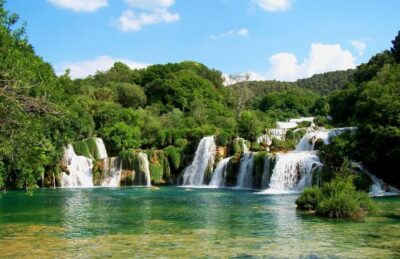
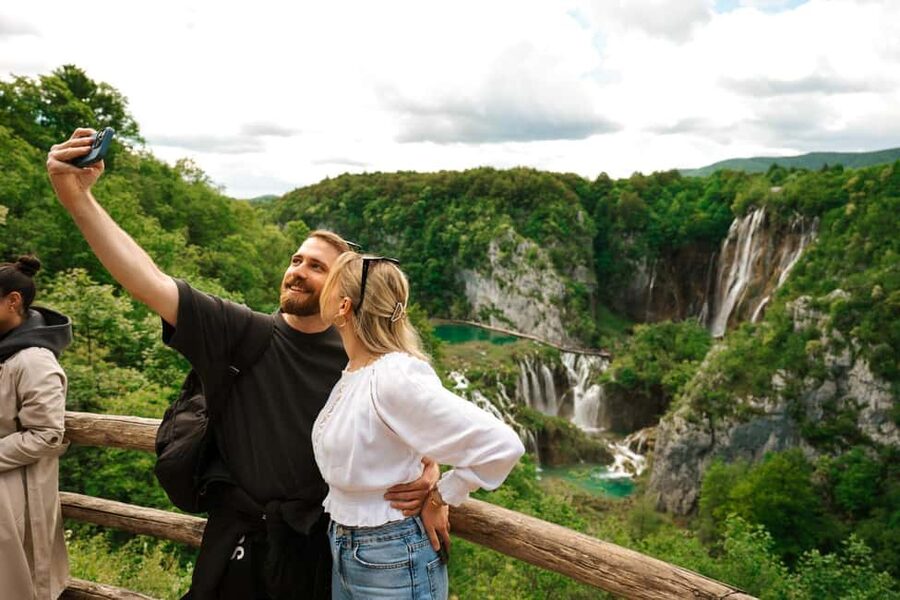
That ongoing process explains the park’s unusual look. The lakes do not feel like a row of separate ponds. Water spills from one level to another, gathers in pools, and breaks into fine falls across the barriers. The colors change with depth, light, minerals, and the surrounding woods.
Your entrance ticket is included, and the tour is designed to bypass the ticket line. Once inside, the main work is walking. You follow winding paths and bridges around the water, with your guide pointing out the park’s natural features and explaining how karst rivers and streams have shaped the area.
The tour information refers to a system of 12 lakes separated by travertine barriers, while the park itself is described as having 16 lakes. Do not get hung up on the count. The useful point is that the park is a connected water system, and a four-hour route lets you see a broad section of it rather than one isolated waterfall.
Four hours among bridges, water, and woodland
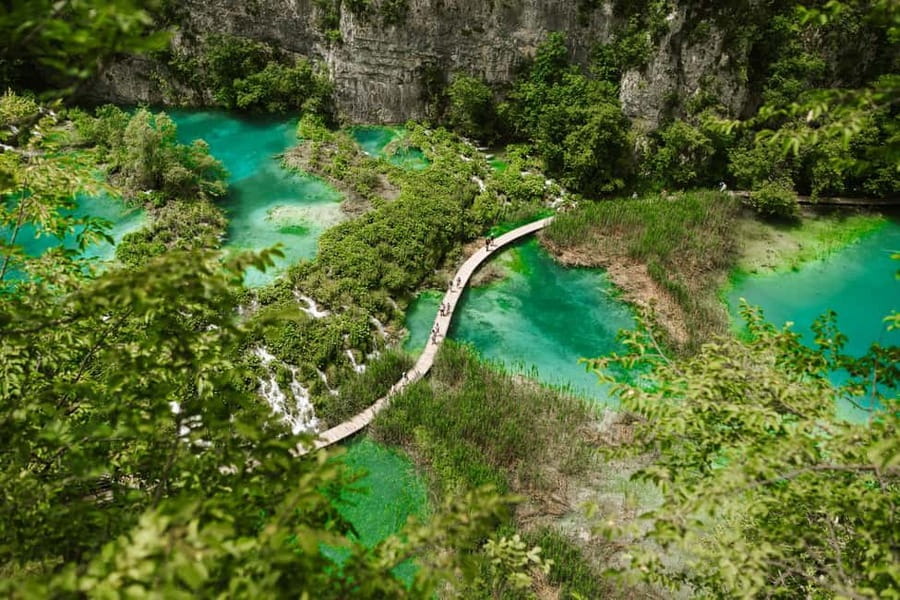
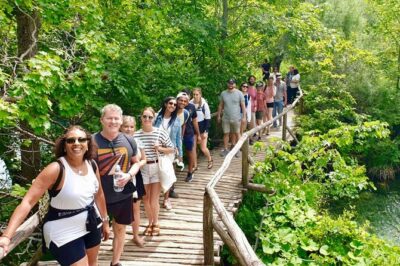
The walking is the heart of the outing. You may cross wooden footbridges, follow paths beside the lakes, and climb or descend gradually through the woods. The route is scenic almost all the time, but it is not a flat stroll through a city park.
One visitor found the full 8,000-meter walk tiring, while another described the pace as easy with plenty of time for photographs. Both points are useful. Your guide may keep the group moving at a comfortable rate, but four hours on foot still demands decent shoes and a reasonable level of fitness.
The strongest part of a guided route is the pacing. A good guide can spend more time at the most striking viewpoints and avoid wasting your limited park hours. Patrik was praised for planning a route that reached all the lakes while giving extra time to the most impressive sections. Ivan was praised for slowing down, offering breaks, and helping a person with a knee problem.
That does not turn the tour into an accessible outing. The activity is specifically not recommended for people with limited mobility. If you have a knee issue, breathing difficulty, or trouble on uneven paths, contact the provider before booking rather than assuming the group can alter the entire route.
More Plitvice and Krka Lakes Tours in Croatia:
- From Split: Krka National Park Tour
★ 4.7 · 2,359 reviews - From Split: Krka Waterfalls Trip with Boat Cruise and Swimming
★ 5.0 · 1,710 reviews - Krka National Park Tour with tour Guide & Wine tasting from Split & Trogir
★ 5.0 · 1,625 reviews - Split: Krka National Park Day Trip with Boat Ride & Swimming
★ 4.6 · 1,321 reviews
Veliki slap and the park’s most dramatic water
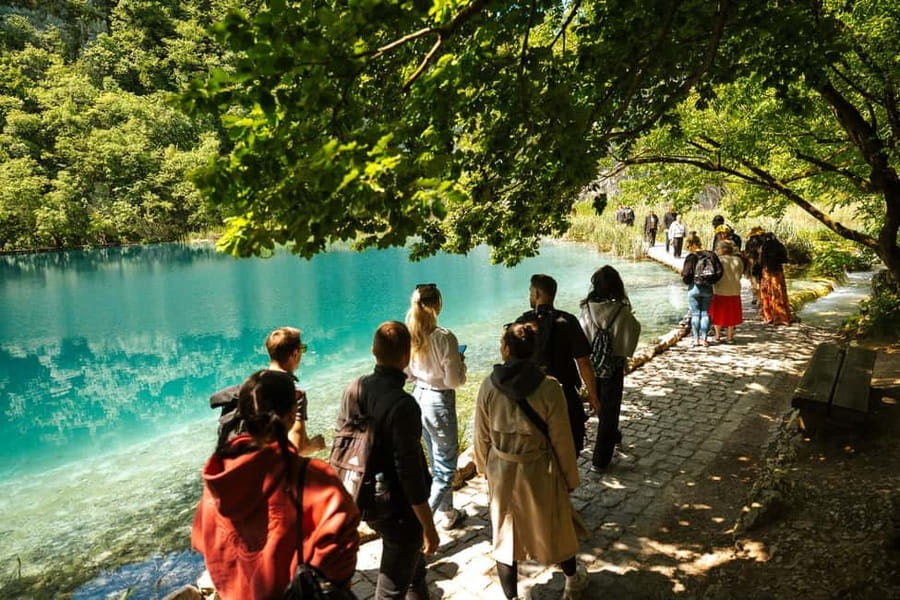
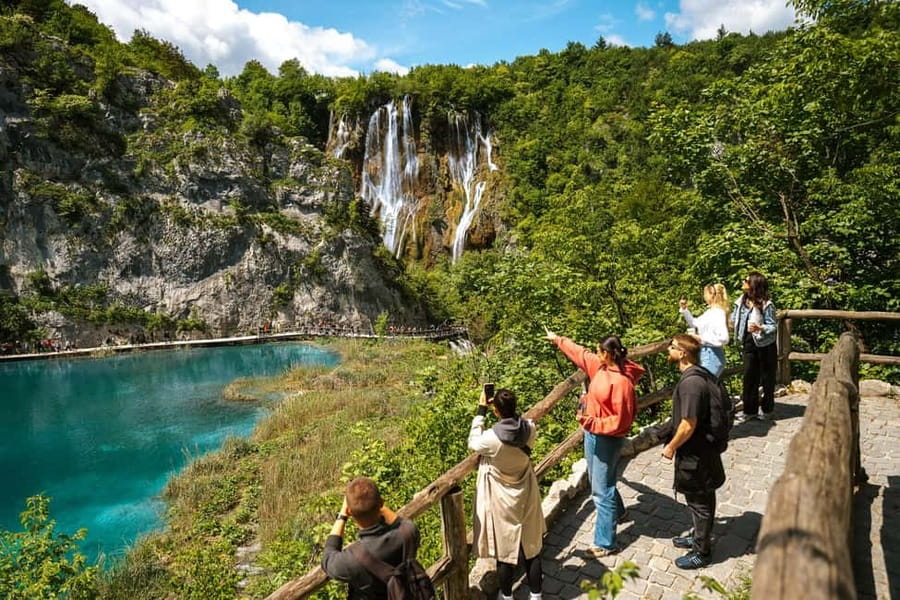
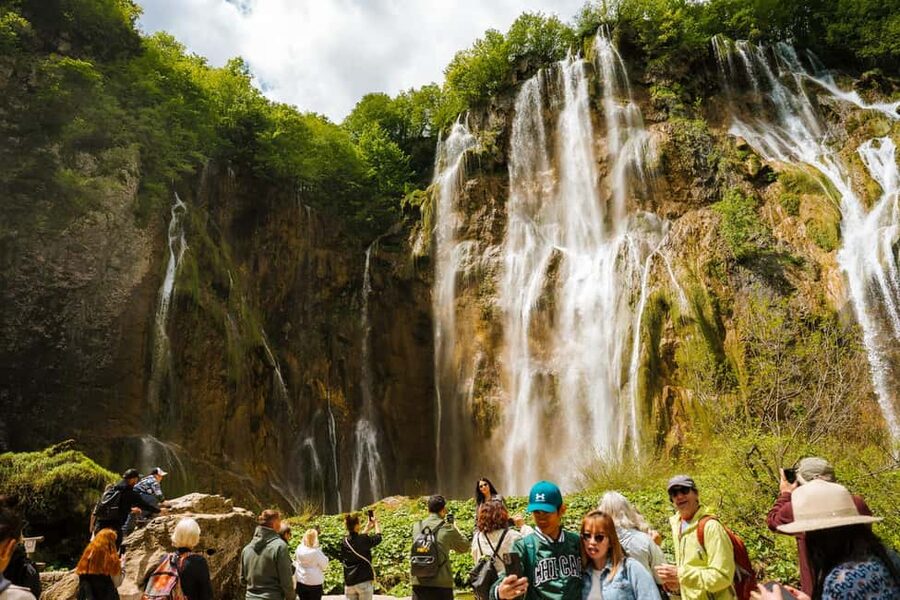
The Large Waterfall, or Veliki slap, drops 78 meters and is one of the clear high points of the visit. You can stand near the fall and hear the force of the water as it hits below. It is the sort of place where photographs help, but do not fully capture the sound or scale.
The smaller falls are just as important to the character of Plitvice. The park is not only about one giant drop. Water threads through the barriers, pours over ledges, and slips between trees. The changing scale keeps the walk interesting.
Spring can be especially rewarding because rain and snowmelt can feed the falls. Several people who visited in April found the waterfalls especially powerful, even in wet weather. Rain may make the paths less pleasant, but it can also give the streams more force. Bring sensible footwear and use the supplied raincoat if conditions turn.
Boat and train changes through the year
The activity information notes that panoramic trains and electric boats do not operate from November 1 through March 31. During that period, the tour runs on foot, and some areas may be restricted by weather.
That seasonal detail matters. In warmer months, a boat or panoramic train can break up the walking and help you cover more ground. In winter, you should expect a more purely walking-based visit. Frozen paths may also make access to some waterfalls unsafe, as happened during a winter visit when certain areas were closed.
Winter has its appeal. The park can feel quieter, and snow or ice can give the falls a different look. But you need to accept less predictable access and no electric boat or panoramic train. If your main goal is to see the waterfalls from every angle, a milder season gives you a better chance.
What the guide adds on the road and in the park
This is not a silent transfer with a map handed to you at the entrance. The bilingual driver-guide usually provides context during the drive and continues with explanations in Rastoke and Plitvice. English and Spanish are available, depending on the option you choose.
The best guide reports are specific. Ivan is praised for patience, humor, and care with different walking speeds. Patrik is praised for clear English and a well-planned route. Luka is praised for explaining Croatia during the drive and the park while walking. Stjepan is praised for sharing information about Croatian history, geography, and wildlife while still allowing people time to look around.
That range matters because you spend a lot of time with the same person. A friendly, well-informed guide can turn a long transfer into useful orientation rather than dead time. The small-group option is also worthwhile if you prefer to ask questions and keep the pace personal. One group had only eight people, which allowed for a relaxed day without constant crowd management.
The guide carries a lime green umbrella so you can find the meeting group. At the starting point, look for the tour at Nikola Šubić Zrinski Square, in front of the meteorological post.
Is $123 a fair price?
At $123 per person, this is not the cheapest way to see Plitvice. It can still be good value if you want the day organized for you.
The price includes the national park entrance, return transport, a bilingual guide, Wi-Fi in the vehicle, a snack, bottled water, and a raincoat in wet conditions. The park ticket alone can be a substantial part of the cost, especially at busier times, and you avoid arranging transport and finding the correct entrance yourself.
Lunch is not included. The park restaurants are described as offering mainly fast food, so I would bring something more substantial if you need a proper meal. The included snack is useful, but it should not be treated as lunch.
For a solo visitor, a couple, or anyone short on time, the package is practical. A larger private group might compare the cost with driving, but you would then need to handle parking, park tickets, the route, and road conditions yourself. The strongest value here is convenience plus guiding, not a low headline price.
What to bring and who should book
Wear comfortable walking shoes with a good grip. Bring your passport, or a valid EU identity card if that applies to you. Pack a light layer, especially outside the warmest months, and carry food if you do not want to rely on fast food in the park.
I would recommend this tour to:
- First-time visitors using Zagreb as a base
- Solo people who want organized transport and a small group
- Couples who want a full nature day without renting a car
- People who enjoy walking and want explanation along the way
- Families whose children can manage a long day and uneven paths
I would hesitate if you want a leisurely village tour, have limited mobility, or dislike spending up to four hours on foot. I would also check the operating season carefully if boat or train travel is important to you.
The booking terms are flexible: you can cancel up to 24 hours before departure for a full refund, and reserve now while paying later. The tour needs at least two participants to operate. Those details reduce the risk of committing too early, but you should still check the available start time for your date.
One confusing promise to clarify before you pay
The highlight list refers to Bled cream cake and a view from a castle. Bled is in Slovenia, not on the stated Zagreb, Rastoke, and Plitvice route, and neither Bled nor a castle appears in the day’s schedule.
Treat that mention as an error or a detail from another activity. The actual experience described here is a Croatian nature trip to Rastoke and Plitvice Lakes. If Bled is important to your plans, book a separate excursion that clearly includes it.
Should you book this Plitvice day trip?
Book it if you want the simplest way to reach Croatia’s most famous lakes from Zagreb, and if you are happy to walk for several hours. The included ticket, direct transport, small-group option, and strong guide support make the $123 price reasonable for a full day.
I would choose a warmer month if you want the best chance of using the electric boat and panoramic train. I would choose spring for fuller waterfalls, or winter for a quieter visit, but only if you accept weather-related restrictions.
Skip it if you need an accessible route, want a short outing, or expect a Bled castle stop. For most active visitors with one free day in Zagreb, though, this is a well-organized way to see Rastoke and Plitvice without taking on the transport and park logistics yourself.
FAQ
Where does the tour start?
The meeting point is Nikola Šubić Zrinski Square, in front of the meteorological post. It is about a three-minute walk from Ban Jelačić Square.
How long does the tour last?
The full activity lasts about 10 hours, including the drives from Zagreb and back.
How long is the drive to Plitvice Lakes?
The first van journey takes about 1.5 hours to reach Rastoke. After the 40-minute stop, the ride to Plitvice takes about 40 minutes.
How much time do I get at Plitvice Lakes?
You get about four hours in the national park for guided sightseeing, walking, and scenic views.
Is the Plitvice entrance ticket included?
Yes. The national park entrance fee is included in the tour price.
Is lunch included?
No. Lunch and personal expenses are not included. The tour does include one snack and one bottle of water per passenger.
What languages are available?
The activity is available in English and Spanish, depending on the option selected.
Do the electric boats and panoramic trains operate all year?
No. They do not operate from November 1 through March 31. During that period, the tour is conducted on foot.
Is this tour suitable for people with limited mobility?
No. The tour is not recommended for people with mobility impairments because it involves several hours of walking on park paths.
What identification should I bring?
Bring a valid passport. If you are from the European Union, a valid identity card is accepted.
Newest park tours we have reviewed in Croatia
- Private Plitvice Lakes National park tour from Split★ 5.0 · 24 reviews
- Full-Day Private Tour of Plitvice Lakes National Park from Zadar★ 5.0 · 32 reviews
- Private Speedboat tour to National Park Kornati Islands★ 5.0 · 57 reviews
- Private experience of Rastoke and Plitvice Lakes from Zagreb★ 5.0 · 138 reviews
- Split: Krka National Park Full-Day Tour with Wine Tasting★ 4.9 · 142 reviews
- Pula: Brijuni National Park Dolphin Watching Tour w/Dinner★ 4.5 · 148 reviews
- Brijuni Boat Tour with Lunch & Drinks – Swim Stop Included★ 5.0 · 166 reviews
- Brijuni National Park Boat Excursion from Pula. With a visit to the island★ 4.0 · 179 reviews
Croatia National Park Tours, compared.

Plitvice Lakes National Park Guided Day Tour from Split
Read our review →
Krka Waterfalls Trip with Boat Cruise and Swimming
Read our review →
Krka National Park Tour with tour Guide & Wine tasting from Split & Trogir
Read our review →
Krka National Park Day Trip with Boat Ride & Swimming
Read our review →