
Reviewed · NORWAY NATIONAL PARK TOURS
Færvik: Raet National Park Sea Kayaking Trip
Raet National Park is a watery place: 98 percent of it lies below the surface, so a kayak is one of the best ways to experience it. From Hove, you paddle through sheltered skerries shaped by a glacier more than 12,000 years ago, following sea routes used since the 1500s. I especially like the mix of natural scenery and local island history, plus the patient paddle practice that helps first-timers settle in.
I also like that your guide can shape the outing around conditions and the group, as Pat did on one well-regarded trip in rainy weather. The main catch is simple: this is a real workout, with two to three hours on open water. You need to swim, be in good physical condition, and accept that bad weather can change or cancel the trip.
Key points to know before you book
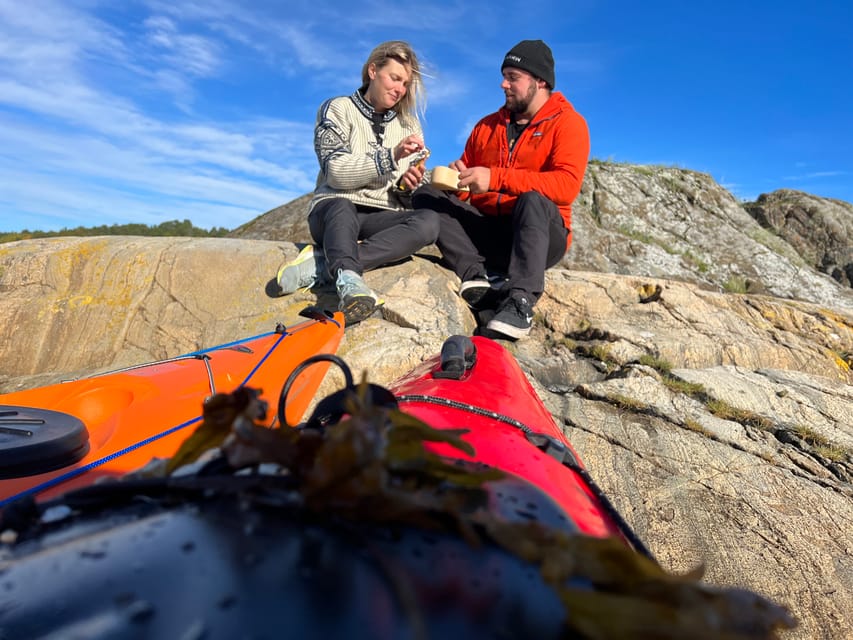
- Raet from water level: Kayak through a marine national park that is mostly below the sea, where clear water and maritime life are central to the experience.
- A beginner-friendly start: You receive protective clothing, a safety talk, paddle instruction, and practice time before setting off.
- Glacier-shaped skerries: Gjessøya, Merdø, Gjessholmen, and the smaller islands show the marks of ice that moved through the region more than 12,000 years ago.
- A history-filled route: Your guide explains the islands and the old sea routes that connected this coast from the 1500s onward.
- Weather matters: Rain need not spoil the trip, but wind and sea conditions can lead to a changed route or cancellation.
- Bring warmth and a backup outfit: Comfortable shoes, swimwear, wool underclothes, warm clothes, a towel, and dry clothes are useful.
Starting at Hove on Tromøya
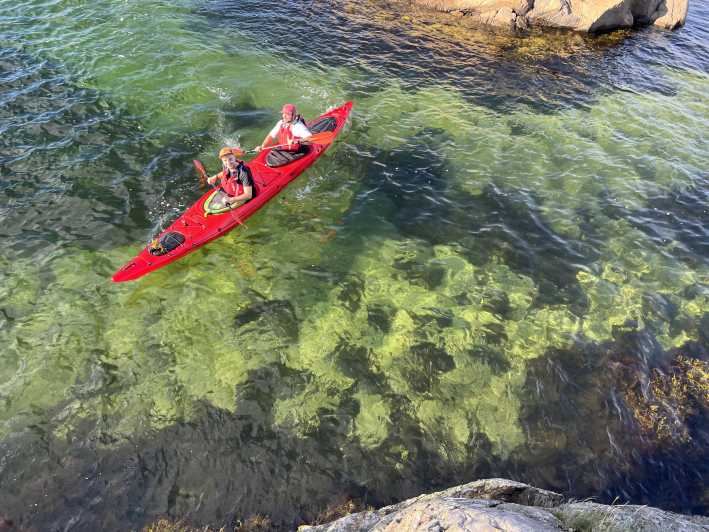
The trip begins at the Beach House at Hove, at Hoveveien 108 on Tromøya. This is not a meet-and-wander kind of outing. Allow time to get ready, receive protective clothing, and listen carefully before you touch the water.
The first formal part takes place at Hoveodden 80 and lasts about 20 minutes. Your guide explains the plan, covers safety, and gives you a clear sense of what the next three hours will involve. Smoking, alcohol, drugs, drones, chewing gum, and bare feet are not allowed.
That firm start is useful. Sea kayaking looks calm from the shore, but you are still working in open water. You should be able to swim and feel comfortable with sustained physical activity. The tour is not suitable for children under 12, pregnant women, non-swimmers, or anyone over 110 kilograms.
After the safety talk, you receive instruction in paddle technique. The guide allows time to practise before the group begins the main route. For a first kayak trip, this matters more than a long speech about equipment. You get a chance to find a comfortable rhythm, learn how the kayak responds, and ask for help while still close to shore.
More Park Boat and Lake Tours in Norway:
- Clear Kayak Tour of Shell Key Preserve and Tampa Bay Area
★ 5.0 · 5,800 reviews - From Split: Krka Waterfalls Trip with Boat Cruise and Swimming
★ 5.0 · 1,710 reviews - Ajaccio/Porticcio: Scandola Nature Reserve Guided Boat Tour
★ 4.3 · 1,375 reviews
Why Raet works so well from a kayak
Raet National Park is best understood from the water. Its most important feature is not a large mountain or a famous viewpoint. It is the broad marine area beneath and around you, with islands, channels, skerries, and open stretches shaped by ancient ice.
The glacier connection gives the route a clear sense of time. More than 12,000 years ago, ice moved through this part of southern Norway and left behind the rocky islands and low shores you see today. From a kayak, you notice those forms at eye level rather than from a road or a high lookout.
The park also connects nature with working history. Sea routes around these islands have been used since the 1500s, and the guide points out places tied to that long coastal story. You are not simply paddling between pretty names on a map. The islands form part of a sea passage that people have used for centuries.
The water is described as clear, and the area supports maritime life. You might spot signs of life beneath the surface or along the rocky edges, but the exact sightings depend on conditions. The value is in having time to look. A kayak moves quietly, without the engine noise of a boat tour, and gives you a better chance to notice small details.
From Hoveodden toward Gjessøya
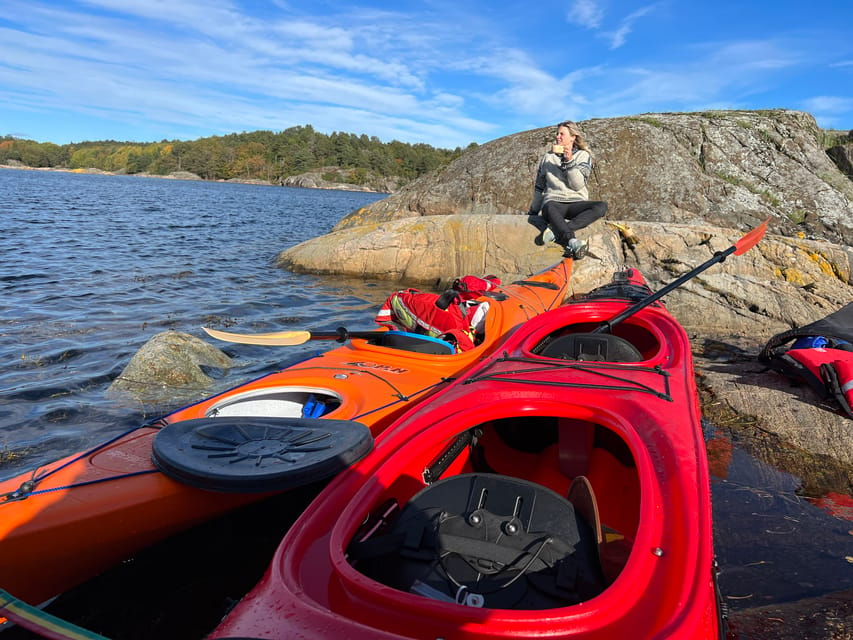
The main kayaking section begins at Hoveodden. You spend about 30 minutes getting comfortable on the water before passing Gjessøya, where the route pauses for roughly 10 minutes.
This early stretch is important for beginners. You are moving beyond the launch point, but the route uses the sheltered waters of the archipelago. That protection does not make the sea completely still, so you still need to listen to your guide and keep your strokes steady. It does make the first part less intimidating than starting immediately in a broad, exposed stretch of sea.
Gjessøya is one of the first islands that gives the trip its character. Your guide explains local points of interest as you go, so the paddling has a sense of place rather than becoming a silent exercise session. Keep your eyes moving between the water, the low island shores, and the spaces between them.
You should not expect a long land stop at every location. The itinerary is built around paddling and passing through the islands, not around a series of extended walks. That is good news if you want a continuous sea experience, but less useful if your main goal is to explore each island on foot.
Merdø and the old coastal route
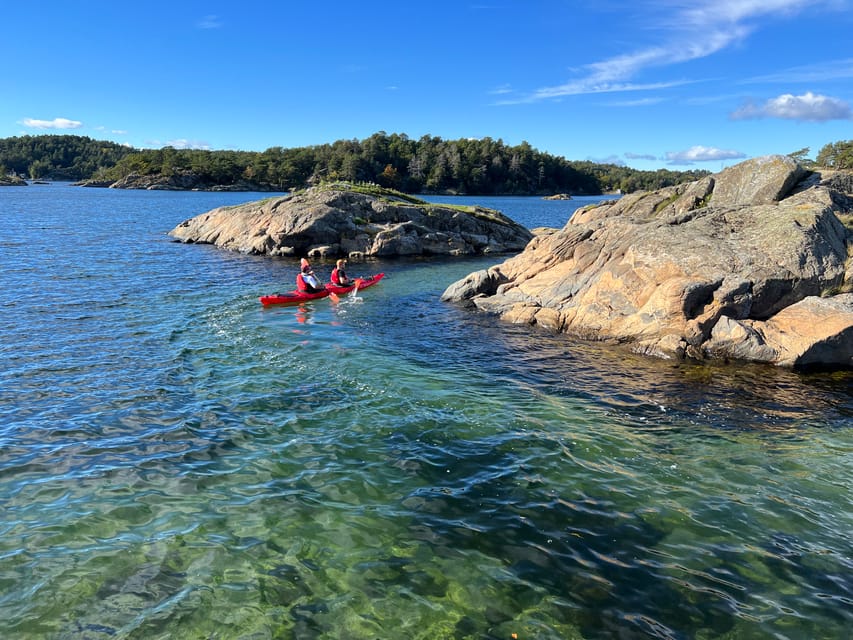
The route continues toward Merdø, with about 30 minutes of kayaking listed for this part of the journey. Merdø is one of the more historically interesting places on the outing, and the guide uses the island to explain more about the coast and its earlier sea traffic.
Depending on the route and conditions, the trip can include time for lunch or a visit to the museum at historic Merdø. Treat this as a possible part of the outing rather than a guaranteed long break. The overall experience lasts three hours, so the balance between paddling, history, and any stop can change.
I like this option because it gives you a choice of emphasis. You can focus on the water and island views, or use Merdø to add a little cultural context. If you hope to eat there or spend time in the museum, ask the provider about the plan for your date before booking.
The route does not turn the history into a lecture. Instead, the guide points out places as you pass. That approach suits kayaking. You are using your arms, watching the route, and staying aware of other boats and the water. Short explanations are easier to appreciate than a long talk while you are trying to paddle.
More National Park Tours in Norway:
- From Tromsø: Ice Domes Snow Park and Wilderness Experience
★ 4.6 · 1,255 reviews - From Bergen: Folgefonna National Park & Glacier Lake Tour
★ 4.9 · 589 reviews - Musk ox Safari in Dovrefjell National Park, Oppdal Safari
★ 5.0 · 524 reviews - Bergen Day Tour to National Park Folgefonna and Glacier Lake
★ 5.0 · 408 reviews
Lille Brattholmen, Torjusholmen, and the return
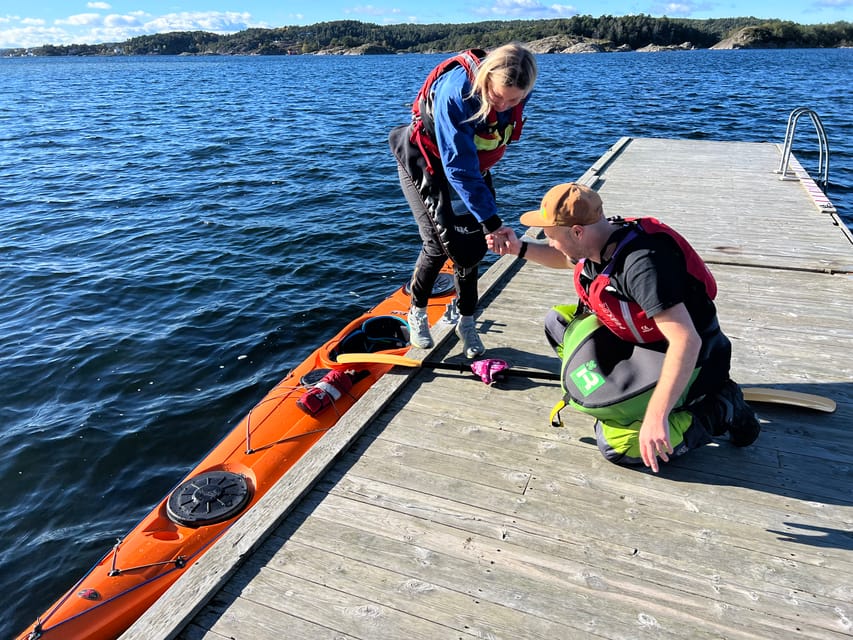
After Merdø, the itinerary allows about 30 minutes around Lille Brattholmen. From there, you continue toward Torjusholmen, with roughly 40 minutes of kayaking before returning to Hoveveien 108.
These later stretches give the trip its longest uninterrupted time on the water. By then, you should have found a workable paddle rhythm. If you are new to kayaking, you may also notice the effort in your shoulders, arms, and back. That is why the warm-up and early practice matter, and why you should not treat this as a passive sightseeing cruise.
The smaller islands help keep the scenery changing. You pass rocky shores and sheltered channels, with the glacier-shaped forms appearing from different angles. The route includes Lille Brattholmen and Torjusholmen, while the broader trip also passes St Helena Island and Badeholmen before reaching the sandy bay at Gjessholmen.
The return to Hove completes a loop-like outing through the archipelago rather than leaving you at a separate landing point. Exact routing can shift with weather. The provider reserves the right to move or cancel an activity if conditions are poor, which is sensible for a sea trip.
The sandy bay at Gjessholmen
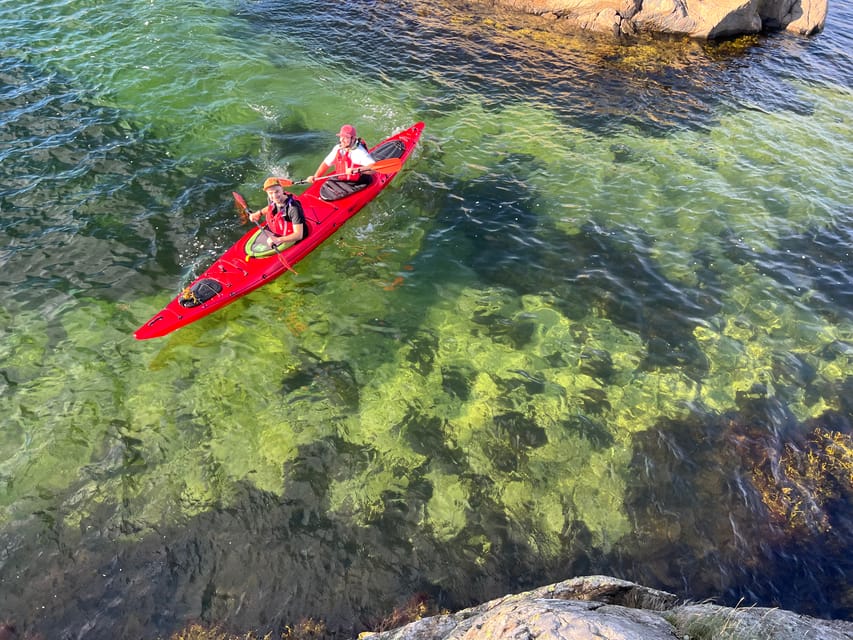
Gjessholmen is one of the route’s gentler visual changes. After rocky islands and open channels, you enter a pretty sandy bay. It is a good place to appreciate the contrast between the rough skerries and the softer shore.
The bay also shows why this trip is not only about athletic effort. You get moments when the kayak carries you quietly through the scene, and the guide can point out features that would be easy to miss from land. Clear water, sheltered paddling, and the surrounding islands make this one of the most attractive parts of the route.
Still, do not book this expecting a beach holiday. The activity is built around kayaking, and the supplied equipment and instructions are intended to keep you moving safely through the park. Bring a towel and a change of clothes, but understand that a stop at the sandy bay does not turn the trip into a long swimming break.
Equipment, clothing, and comfort
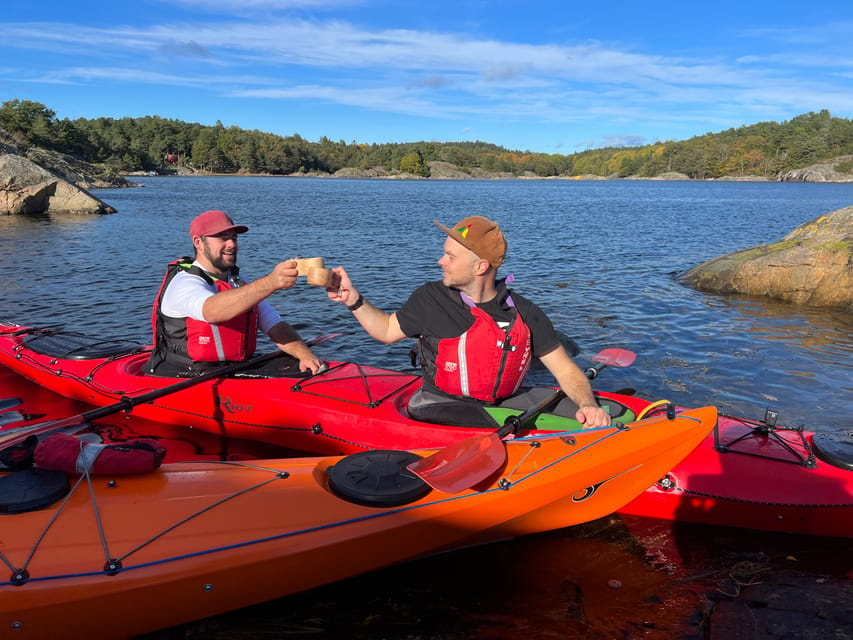
All water equipment is included, as is protective clothing. You also receive paddle training and safety instruction, which keeps the $125 price from being just a charge for access to a kayak.
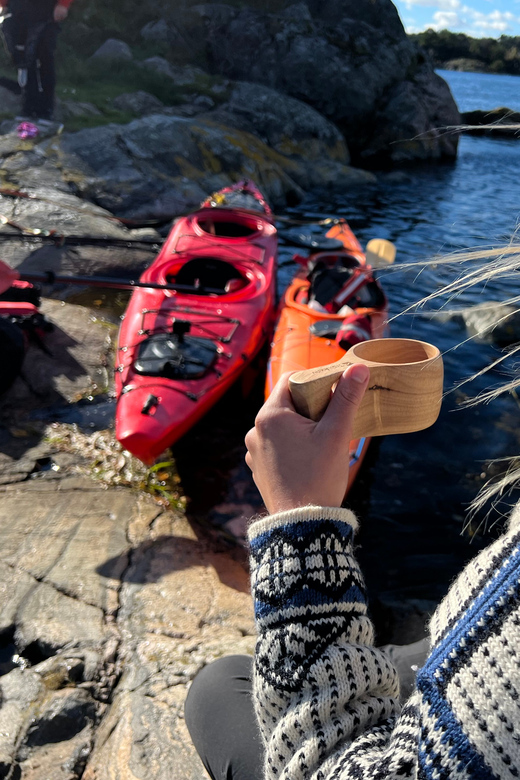
You should bring comfortable or jogging shoes, a swimsuit, warm clothing, wool underclothes, a towel, and a full change of clothes. Wool is a smart choice for a cool or wet day because sea weather can feel colder than the temperature on land suggests.
Dress for the water, not just the forecast at Hove. One trip received praise even though it took place in rain, and that says something useful about preparation: wet weather does not automatically ruin the outing. Good clothing and an adaptable guide can keep the focus on the scenery.
The experience is offered in Norwegian and English. Photos taken by the guide are included, which is a useful extra. You can concentrate on paddling and the view instead of trying to protect a phone from splashes while taking pictures.
The guide makes a practical difference
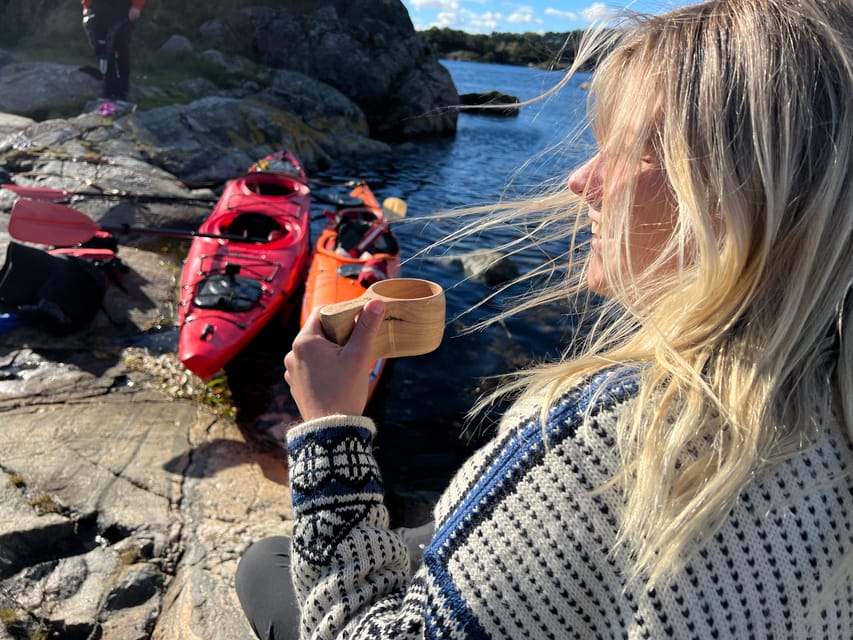
The strongest praise for this experience centers on the guide. Pat was described as well prepared, helpful, engaging, and able to adjust the trip to the people present. Another highly positive assessment noted that the guide personalized the outing despite the weather.
That flexibility matters on a beginner kayak tour. People learn at different speeds, and weather can change the feel of the route. A guide who can explain paddle technique clearly and adjust the pace makes a big difference to your comfort.
The guide also adds the local history that gives the route more meaning. You hear about the islands and the sea routes from the 1500s while moving through the setting itself. That combination is stronger than either a stand-alone history talk or a simple paddle without context.
There are only four published ratings in the information provided, all at five out of five. That is a very small sample, so I would not treat it as final proof of every trip. It does point to two consistent strengths: capable guiding and a strong experience even in rain.
Is $125 a fair price?
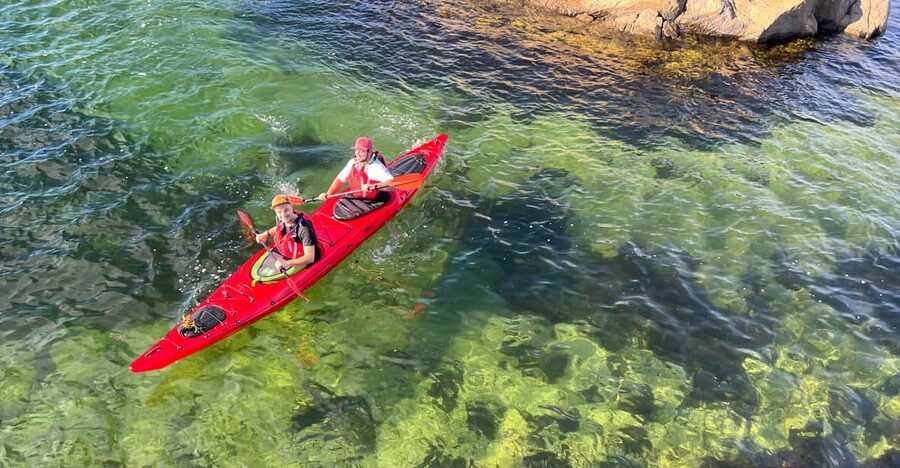
At $125 per person, this is not the cheapest way to spend three hours around Arendal and Tromøya. The value comes from what is included: kayak equipment, protective clothing, instruction, safety guidance, local history, and guide-taken photos.
You are also paying for access to a route that would be harder to plan and manage alone. Raet is mostly marine, and a first-time visitor may not know which channels are sheltered or how to judge changing conditions. A guide reduces that guesswork.
The price makes the most sense if you are new to sea kayaking, want a structured introduction, or have limited time in the area. Experienced paddlers who already own equipment and know the skerries may prefer a self-guided outing, if they can do so safely and legally. For everyone else, the included preparation and local route knowledge add real value.
Free cancellation up to 24 hours before the start and a reserve-now, pay-later option make planning easier. The weather policy still matters more than the payment flexibility. Check conditions close to the date and keep a backup plan for poor weather.
Who should book this kayak trip?
I would recommend it to adults and older children who can swim, enjoy active sightseeing, and want to see southern Norway from the water. It is especially useful for beginners because the tour builds in safety instruction and practice before the longer route begins.
You should book if you like a mix of nature, small-island history, and steady physical activity. You should think twice if you want a relaxed boat ride, a guaranteed museum visit, or a long lunch stop.
Rain is not an automatic reason to cancel your own plans. One trip remained highly successful in wet weather, and the guide’s preparation helped. Wind and unsafe sea conditions are different. The provider may change or cancel the outing, and that is a reasonable safety measure.
Should you book Raet National Park Sea Kayaking?
Yes, if you want an active and personal way to see Raet National Park. The route combines glacier-shaped islands, clear water, maritime life, old sea routes, and the sandy bay at Gjessholmen in a compact three-hour trip.
Book it knowing that you will paddle for much of the outing. Bring wool layers, warm clothes, a towel, and a change of clothes. If you can swim, meet the fitness demands, and accept some weather uncertainty, this offers good value and a strong first taste of Norway’s southern skerries.
FAQ
Where does the kayaking trip begin?
The trip begins at the Beach House at Hove on Tromøya, at Hoveveien 108.
How long does the experience last?
The sea kayaking experience lasts three hours.
What is the price?
The listed price is $125 per person.
Is the tour suitable for beginners?
Yes. You receive a safety briefing, paddle instruction, and practice time before the main route begins.
Do I need previous kayaking experience?
No previous experience is required, but you should be able to swim and handle two to three hours of paddling in open water.
Which places does the route visit?
The route includes Raet National Park and passes or paddles near Gjessøya, Merdø, Lille Brattholmen, Torjusholmen, St Helena Island, Badeholmen, and Gjessholmen.
Can the trip include Merdø museum or lunch?
The route can include a paddle to historic Merdø for lunch or a museum visit. Ask about the exact plan for your date because the route and timing can change.
What should I bring?
Bring comfortable shoes, a swimsuit, wool underclothes, warm clothing, a towel, and a change of clothes.
What is included in the price?
Water equipment, protective clothing, paddle training, local history, and photos taken by the guide are included.
Can bad weather change the trip?
Yes. The provider may move or cancel the activity because of bad weather. The trip is available in Norwegian and English, and cancellation is free up to 24 hours in advance.
Newest park tours we have reviewed in Norway
- RIB Expedition to Seiland National Park – 3.5h★ 4.5 · 14 reviews
- Oslo: Wilderness Skiing Tour with Lunch by the Fire★ 5.0 · 21 reviews
- Lofoten Islands: Guided Hiking Into the Wilderness – Uphill★ 5.0 · 3 reviews
- From Alta: Experience Seiland National Park★ 4.3 · 4 reviews
- Dovrefjell National Park: Hiking Tour and Musk Ox Safari★ 4.8 · 88 reviews
- Eidfjord Guided tour Vøringfossen Waterfall & National Park★ 4.5 · 147 reviews
- From Tromso: Arctic Wilderness Snowmobile Evening Tour★ 4.4 · 149 reviews
- From Tromso: Arctic Wilderness Snowmobile Daytime Tour★ 4.5 · 174 reviews
Norway National Park Tours, compared.
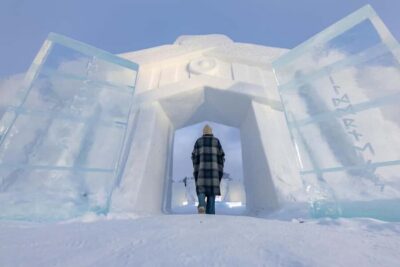
From Tromsø: Ice Domes Snow Park and Wilderness Experience
Read our review →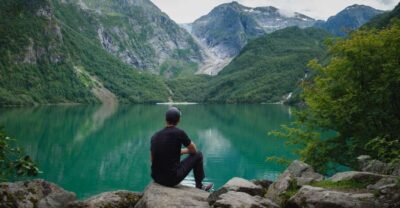
From Bergen: Folgefonna National Park & Glacier Lake Tour
Read our review →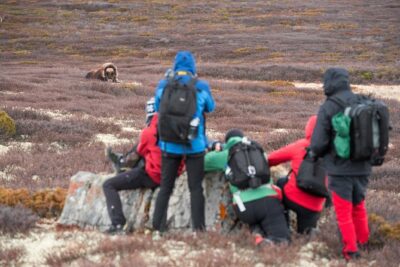
Musk ox Safari in Dovrefjell National Park, Oppdal Safari
Read our review →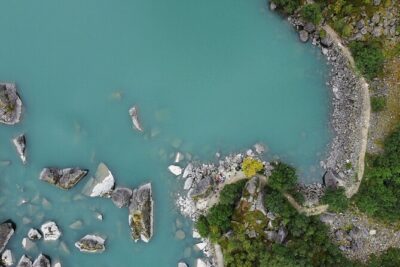
Bergen Day Tour to National Park Folgefonna and Glacier Lake
Read our review →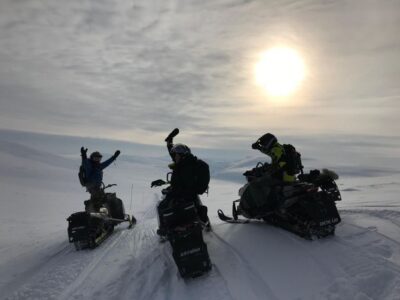
From Tromso: Arctic Wilderness Snowmobile Daytime Tour
Read our review →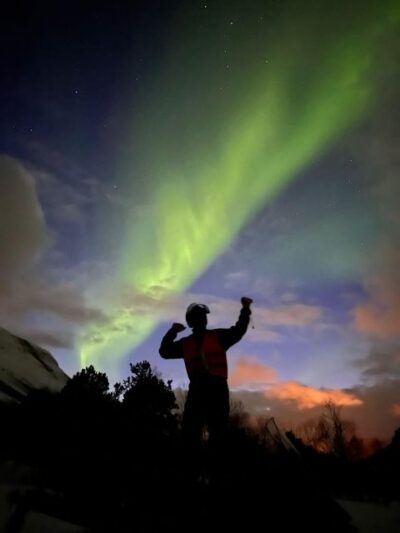
From Tromso: Arctic Wilderness Snowmobile Evening Tour
Read our review →
Eidfjord Guided tour Vøringfossen Waterfall & National Park
Read our review →
Dovrefjell National Park: Hiking Tour and Musk Ox Safari
Read our review →Lists this park day appears in