
Reviewed · HISTORICAL TOURS
Etosha National Park: Himba Village Cultural Tour
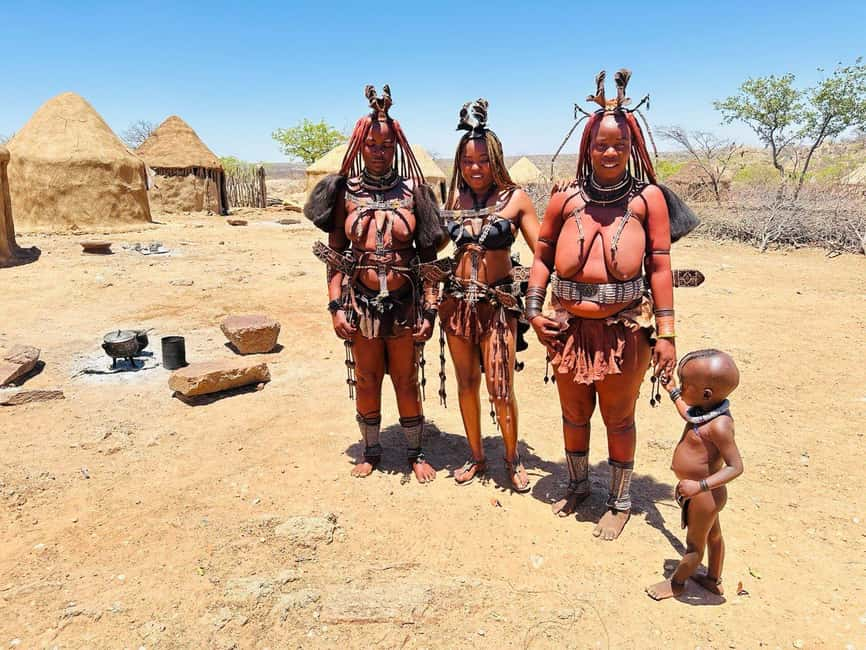
A short drive from Etosha’s Anderson Gate brings you to a very different kind of wildlife encounter: a Himba village visit focused on people, family, cattle, ritual, and craft. You walk through traditional mud huts and open courtyards, hear how the community is organized, and learn why red ochre and butter are central to Himba beauty customs.
I like the small group of six, which gives you room to ask questions without turning the visit into a bus tour. I also like that the experience puts local people at the center and gives you a direct way to support the village by buying handmade goods. The main caution is value: the visit itself is fairly short, and you should confirm exactly what the village entrance fee covers before paying, since one booking account reported an extra 300 NAD charge.
Key things to know before you go
- Only the southern entrance works: Pick-up is at Anderson Gate or a lodge within 30 kilometers of the gate.
- The drive is part of the timing: The trip includes about 1.5 hours by jeep or SUV, followed by the village visit and return.
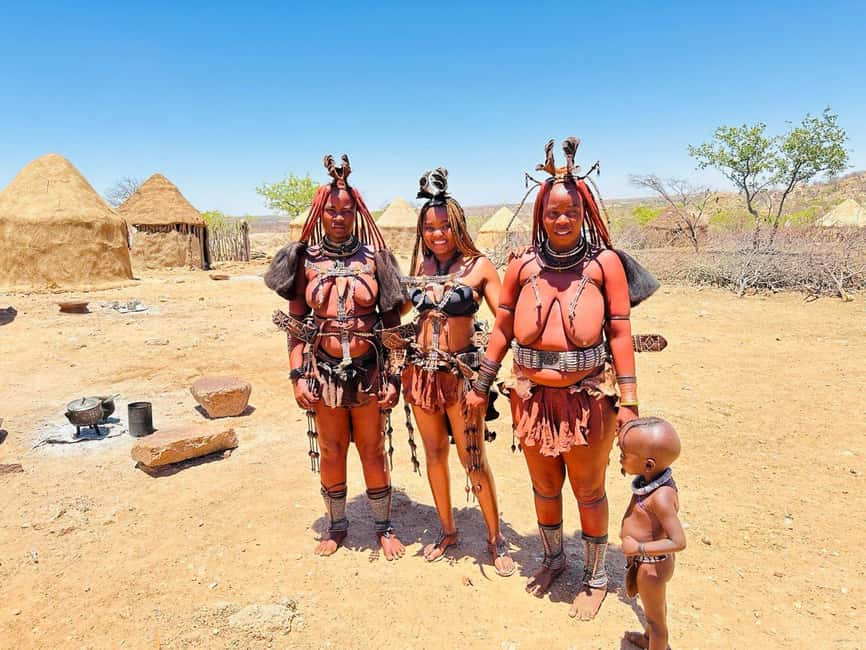
- Himba life is shown through daily details: Expect mud huts, family courtyards, cattle kraals, jewelry, beauty rituals, and talk of marriage and spiritual practice.
- Dance and crafts depend on the day: Traditional music, dance, pottery, weaving, and jewelry-making may be available, but they are not guaranteed.
- Bring your own supplies: Food, drinks, water, sunscreen, a hat, comfortable shoes, and a camera are not provided.
- Plan for walking: The activity is not suitable for wheelchair users or people with mobility impairments.
From Anderson Gate to the Himba village
Your meeting point is Anderson Gate, Etosha National Park’s southern entrance, or a lodge located within 30 kilometers of the gate. This detail matters more than it first appears. The activity is not offered from Etosha’s eastern or western entrances, so you need to build it into a stay near the park’s southern side.
Transport is by jeep or SUV. The stated drive time is about 1.5 hours for the transfer portion, while the village program itself lasts about two hours. The full activity is listed at 150 minutes, so the timing deserves a quick check when you book. The supplied schedule describes a 1.5-hour drive, a two-hour village visit, and a return to Anderson Gate, which adds up to more than 150 minutes. Ask for the exact departure and return times so you can coordinate this with a game drive, lodge meal, or park entry.
The vehicle transfer is not a sightseeing stop in its own right, but it gives you time to shift from Etosha’s animal-focused setting to a community visit. You will want water close at hand, especially in warm weather. The instructions also call for a hat, sunscreen, comfortable walking shoes, and food or drinks.
More Heritage Trips in the world:
- 2-Hour Gettysburg Battlefield Guided History Bus Tour with a National Park Guide
★ 4.5 · 2,201 reviews - Branson: Top of the Rock Ozarks Heritage Preserve
★ 4.7 · 690 reviews - From Calgary to Waterton National Park Nature History and Wonders
★ 5.0 · 22 reviews
Walking through huts, courtyards, and cattle kraals
At the village, a local English-speaking guide leads you through the settlement. The visit centers on places that help explain how Himba life works: traditional mud huts, open courtyards, cattle kraals, and central gathering spaces.
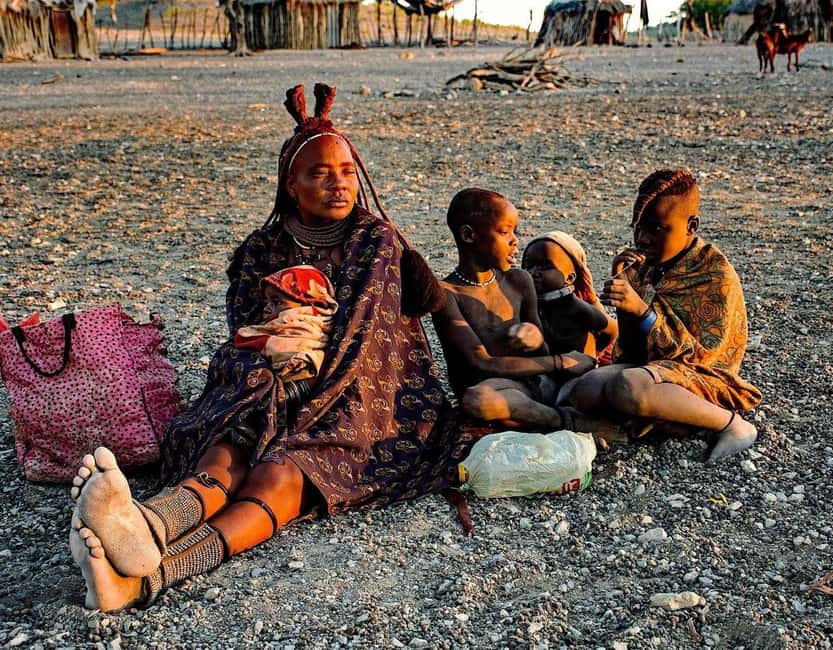
The huts and courtyards are not simply photo backdrops. They help you picture how family life, work, and conversation take place within a shared community. Cattle are especially important to this setting. The tour explains their role in daily life and helps connect animal husbandry with family ties, status, and tradition.
You will also hear about agriculture and craftsmanship. The Himba way of life includes more than livestock, and the village visit gives space to discuss household work, handmade objects, and skills passed from one generation to the next.
I would approach this walk with patience. The most useful part may not be a single performance or photo, but the chance to ask how a custom fits into ordinary life. Keep questions respectful and let the guide explain what can and cannot be photographed.
Customs, marriage, and spiritual practice
The guide discusses the Himba social structure, belief systems, marriage customs, and spiritual practices. These subjects give the visit its real purpose. Without them, a walk through huts and cattle enclosures could feel like a quick stop for photographs. With context, you can better understand why certain objects, spaces, and rituals matter.
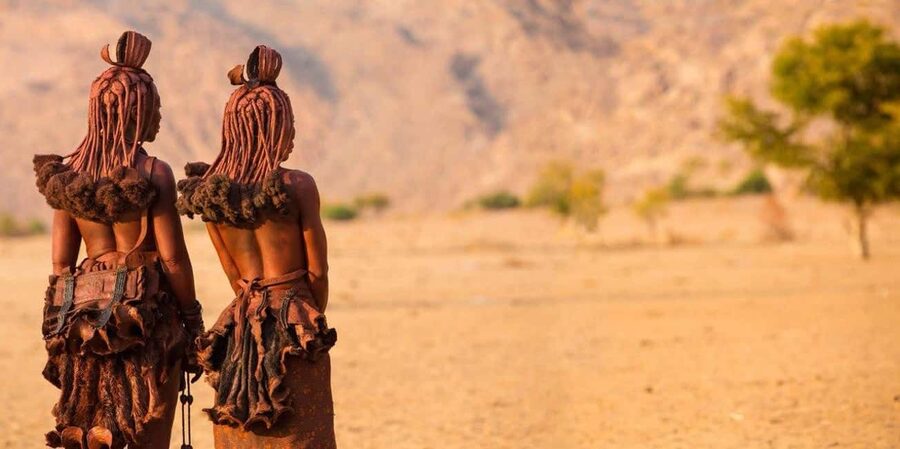
The Himba are also known for distinctive clothing, hair, and skin treatment. One of the most recognizable customs is the use of red ochre mixed with butter, applied to the skin and hair. The tour explains the beauty ritual rather than treating it as a costume display.
This is where your own attitude matters. You are entering a living community, not a museum. Ask questions, listen carefully, and avoid treating people as props. The activity specifically asks you to respect Himba people and their culture, and that is practical advice, not a formality.
The local guide is your bridge to the visit. The English-language tour format lets you ask about family life, cattle, marriage, rituals, and crafts as you go. Feedback about the guide has been especially positive, with specific praise for attentiveness, availability, and willingness to answer questions. No guide name is supplied, so you should not expect a named host in advance.
The red-ochre beauty tradition
The red-ochre and butter mixture is likely to be one of the most memorable parts of the visit. It gives the Himba women’s hair and skin a red tone and forms part of a beauty practice with cultural meaning.
For you, this is a chance to learn rather than simply photograph. The guide can explain how the mixture relates to appearance and tradition, while the surrounding village shows how personal customs fit into family and community life.
Photography is allowed and encouraged as something to bring, but permission and courtesy should guide every picture. Ask before photographing individuals, especially during a ritual or demonstration. A camera can record a moment, but it cannot replace a respectful exchange.
The setting also offers distinctive images: red ochre, traditional clothing, mud huts, cattle enclosures, and the Namibian surroundings. Bring a camera if photography matters to you, but do not let it take over the visit. Put it down long enough to listen.
More National Park Tours in the world:
- Miami: Everglades National Park Airboat Tour & Wildlife Show
★ 4.5 · 7,296 reviews - Chiang Mai: Doi Inthanon National Park Eco-Friendly Tour
★ 4.6 · 6,667 reviews - Clear Kayak Tour of Shell Key Preserve and Tampa Bay Area
★ 5.0 · 5,800 reviews - Tenerife: Teide National Park Sunset & Stargazing Tour
★ 4.2 · 3,812 reviews
Dance, music, and handmade crafts
Depending on the season, you may see traditional Himba dance and music. A dance presentation can add energy to the visit, but it is not guaranteed at every departure. The schedule also includes a traditional dance show, so it is wise to ask at booking how the current program is being handled.
You may also see demonstrations or examples of jewelry-making, pottery, and weaving. These skills have been passed down through generations, and the arts and crafts market gives you a practical way to support the village.
The chance to buy handmade goods is included as an option, not a compulsory part of the visit. I recommend setting aside some Namibian dollars if you want to purchase something, but the supplied information does not state which payment methods are accepted or how much items cost. Ask before the tour if you want to budget accurately.
Buying directly from the village can make your visit more than an observation. It gives you a way to take home a locally made object while contributing to the community. Still, buy because you value the work, not because you feel pressured. A good cultural visit leaves room for choice.
Is $64 a fair price?
The listed price is $64 per person. It includes transportation, a local guide, and village entrance according to the supplied tour details. The small-group limit of six improves the value because you are not sharing the guide with a large coach party.
The price makes the most sense if you value personal explanation and a direct community visit. You are paying for the vehicle, the guide’s time, access to the village, and a compact cultural program near Etosha. For someone already staying near Anderson Gate, it is a convenient way to add a people-focused experience to a wildlife itinerary.
The value is less clear if you expect a long village stay. The advertised duration is 150 minutes, while the detailed schedule describes a longer drive and a two-hour village program. One booking account also reported that the village entrance fee was not included and that an additional 300 NAD per person was requested. This conflicts with the stated inclusion of entrance fees.
Because of that conflict, confirm three points before departure:
- Is the 300 NAD village fee already covered?
- Is the quoted price the final cost per person?
- How long will you spend at the village, and how long will the transfers take?
This is a simple step, but it protects you from an unpleasant surprise. The activity offers free cancellation up to 24 hours before departure and a reserve-now, pay-later option, so you have some flexibility while checking the details.
What the small group changes
A maximum of six participants is one of the strongest features here. A small group lets you hear the guide more easily and gives you a better chance to ask about customs that interest you.
It also makes the visit feel less like a scheduled show. That does not guarantee a private experience, since the village remains a working community and the exact program can vary, but six people is a sensible limit for a place where quiet observation matters.
The small group may also help with photography. You can move more carefully and avoid a crowd filling a courtyard or blocking a craft demonstration. Still, do not assume that a smaller group means unlimited access. The community sets the boundaries, and you should follow the guide’s instructions.
Practical details for a comfortable visit
Wear shoes that are comfortable for walking on uneven ground. Bring a hat, water, sunscreen, food, drinks, and a camera. Meals and drinks are not included, so you need to handle those yourself.
The activity is not suitable for wheelchair users or people with mobility impairments. Electric wheelchairs, fireworks, and explosive substances are not allowed. The walking portion through huts, courtyards, and cattle areas makes mobility a real consideration.
The tour is conducted in English. If you need another language, the supplied information does not indicate that one is available. Check the starting time and meeting point carefully, especially if you are staying outside Etosha.
This activity is conducted only from the southern entrance. That restriction is useful when planning a route. If your accommodation is near Anderson Gate, the tour fits naturally into your schedule. If you are staying far from the south, the transfer may make the outing less practical.
Who will enjoy this visit most?
I would choose this experience if you want to understand the people and customs connected to the region, not just watch wildlife. It suits visitors who enjoy asking questions, listening to local explanations, and seeing how a community organizes daily life.
It is also a good match for photographers who want distinctive portraits and details, provided they are prepared to request permission and respect limits. Families may appreciate the clear demonstrations and craft elements, though the walking and lack of wheelchair access should be considered carefully.
I would be more cautious if you want a long, informal stay in a village or if you dislike staged elements. The information describes guided explanations, dance, and a crafts market. One booking account felt the visit seemed arranged for tourists, while other feedback described it as a genuine look at Himba daily life with an attentive guide. That difference points to the main question: are you comfortable with a cultural program designed for visitors, as long as it is handled respectfully?
Should you book the Himba village tour?
Book it if you are staying near Anderson Gate, want a small-group cultural experience, and will take time to listen rather than rush through photographs. The guide, village walk, explanations of ritual and family life, and chance to buy handmade goods offer a useful counterpoint to Etosha’s animal sightings.
Before you commit, confirm the real duration and the entrance fee. The possible 300 NAD charge is the one practical concern that could change the value. If the fee is included as stated and you are happy with a compact, guided visit, $64 is reasonable for transport, access, and a group limited to six.
Skip it if you are based at another Etosha entrance, need wheelchair access, or want an entirely unscripted encounter. For the right visitor, this is a thoughtful way to give human context to a trip through northern Namibia.
FAQ
Where does the Himba village tour start?
It starts at Anderson Gate, the southern entrance to Etosha National Park, or at a lodge within 30 kilometers of Anderson Gate.
Can I join from another Etosha entrance?
No. The activity is conducted only from Etosha’s southern entrance gate.
How long does the experience last?
The activity is listed as 150 minutes. The detailed schedule describes about 1.5 hours of transport, a village visit lasting about two hours, and a return to Anderson Gate, so confirm the exact timing before booking.
Is transportation included?
Yes. Transportation by jeep or SUV is included.
Is the village entrance fee included?
The supplied tour details state that village entrance is included. However, one booking account reported paying 300 NAD per person separately, so confirm this cost before departure.
What should I bring?
Bring comfortable walking shoes, a hat, camera, food, drinks, water, and sunscreen. Meals and drinks are not included.
Newest park tours we have reviewed in the world
- Tour Wicklow Mountains National Park in a limo with private guide★ 5.0 · 42 reviews
- Private car transfer Dong Hoi to Phong Nha National Park and versa★ 5.0 · 9 reviews
- eBiking Glenveagh National Park. Donegal. Self guided. 3 hours.★ 5.0 · 2 reviews
- Three Eyes National Park Exploration Tour★ 4.5 · 40 reviews
- Glenveagh National Park and Gaeltacht Tour★ 5.0 · 22 reviews
- National Park of the East Private Hiking Tour with Swimming★ 5.0 · 4 reviews
- Haitises National Park and Montaña Redonda (Full Day)★ 5.0 · 2 reviews
- Haitian National Park and fell up★ 4.5 · 3 reviews
Historical Tours, compared.
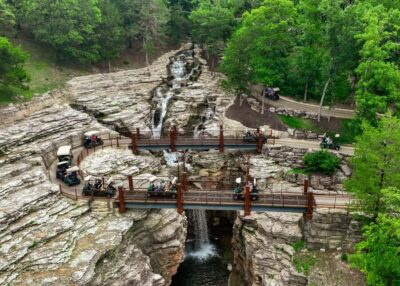
Branson: Top of the Rock Ozarks Heritage Preserve
Read our review →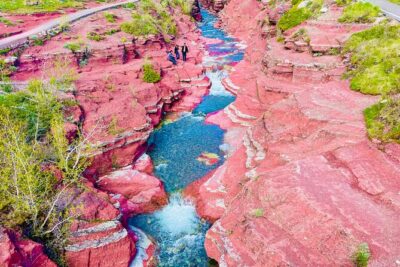
From Calgary to Waterton National Park Nature History and Wonders
Read our review →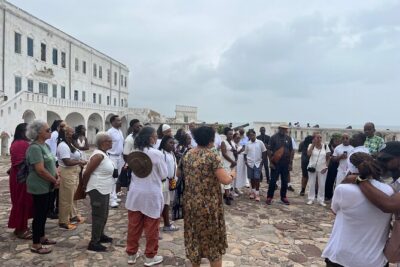
HERITAGE GHANA(Cape Coast Castles and Kakum National Park)
Read our review →
5 Days Tour to World Heritage–listed Harrar, Dire Dawa and Awash NATIONAL PARK
Read our review →
Blue Mountains: Inside a World Heritage National Park
Read our review →
Discover UNESCO World Heritage Sites – Ayutthaya to Khao Yai National Park
Read our review →Lists this park day appears in