
Reviewed · NATIONAL PARK SAFARIS
Etosha National Park: Full or Half-Day Game Drive
The best feature here is the local guide knowledge. Guides such as Ben, Amone, and Matias know Etosha well, keep in touch with other guides, and adjust the route when animals are reported nearby. That gives you a better chance of finding wildlife than simply driving the main road alone.
I like the early start, which means cooler temperatures, fewer vehicles, and better light for photographs. I also like the open 4×4, which gives you a clear view in every direction. The main drawback is the cold morning air, especially from May through August, and the $123 price does not include the park entrance fee, lunch, or drinking water.
Key points to know before booking
- Meet at Anderson Gate early: Free parking lets you drive yourself to the entrance and join the first vehicles into the park.
- Choose full day for the best value: The longer outing lasts up to 10 hours and includes morning and afternoon wildlife viewing.
- Expect a flexible route: The guide follows current sightings, weather, and animal behavior rather than a fixed sightseeing plan.
- Bring serious warm clothing: An open vehicle can feel very cold at sunrise, even when the afternoon becomes warm.
- Plan for your own food and water: Lunch is available at a restaurant inside the park, but meals and drinks are not included.
- Wildlife can include the big names: Elephants, lions, giraffes, rhinos, zebras, oryx, springboks, and sometimes cheetahs or leopards are possible.
Starting at Anderson Gate before the crowds arrive
This Etosha safari begins at Anderson Gate, near Okaukuejo, at park opening time. That meeting point matters. You can drive your own vehicle to the gate, leave it in the free secure parking area, and join the open 4×4 without waiting for a long transfer from a distant lodge.
I like this arrangement because you are not paying for unnecessary driving before the safari begins. More important, an early arrival can put you among the first vehicles entering Etosha. The first hours often offer fine light, cooler temperatures, and a quieter feel on the roads.
The meeting instructions require attention. Full-day trips may include pickup from selected accommodation within about 30 minutes of Anderson Gate, but half-day trips do not include pickup. For a half-day booking, you must reach Anderson Gate yourself.
If you are staying at Okaukuejo Lodge or Okaukuejo Camp, do not assume the vehicle will collect you inside the park. If no other clients are entering that day, you may need to drive to Anderson Gate on your own. Confirm this before setting your morning alarm.
More National Park Safaris in the world:
- Teide National Park Sunset & Stargazing with Dinner (Star Safari)
★ 5.0 · 2,601 reviews - Teide National Park: Sunset & Stargazing Safari with Dinner
★ 4.6 · 2,115 reviews - From Johannesburg: Pilanesberg Nature Reserve Game Safari
★ 4.8 · 1,327 reviews
The open 4×4 makes wildlife easier to watch
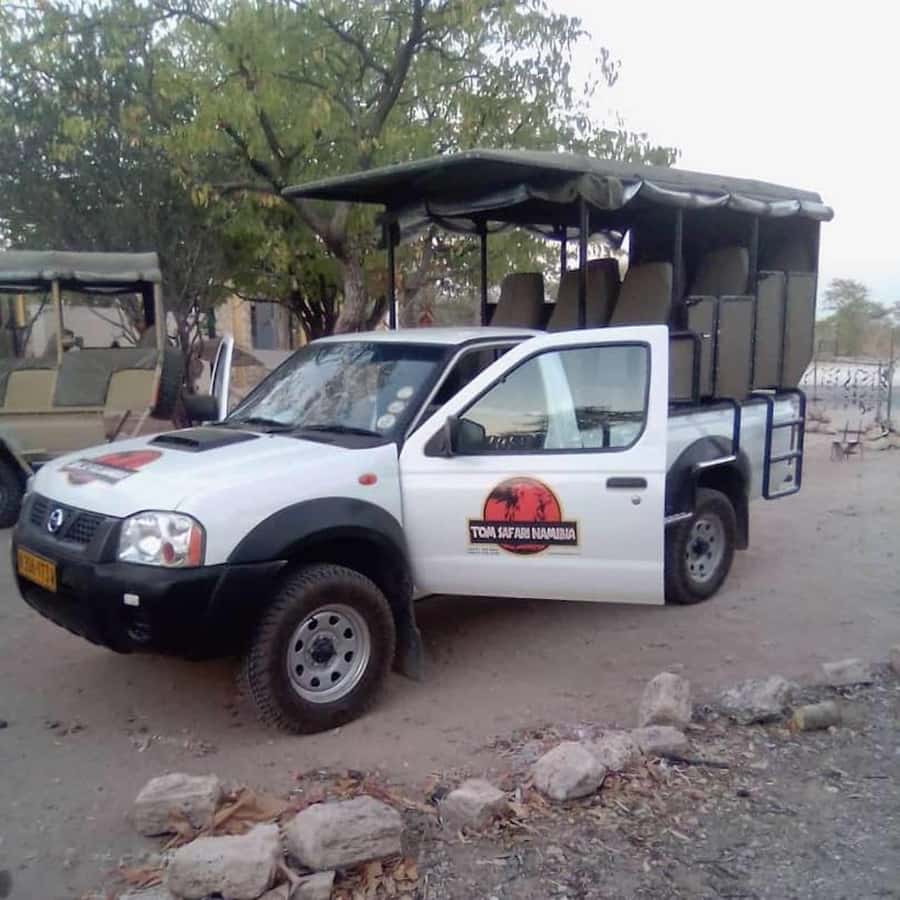
The safari uses an open 4×4 built for game viewing. You are not looking through ordinary car windows or trying to photograph animals over a high roof. The open sides give you broad views, fresh air, and a better chance to follow movement across the dry Etosha plains.
That openness has a price. The wind can cut through you during the first drive of the day. Bring layers, a windbreaker, and gloves if you feel the cold easily. A warm fleece poncho is available on board, but I would treat it as helpful backup rather than a substitute for proper clothing.
Shared binoculars are available, which is useful if you do not want to pack your own pair. Still, you may need to wait your turn when several people spot something at once. A camera with a useful zoom lens will help, but patient observation matters more than expensive equipment.
The vehicle is also part of the social experience. You share the drive, the sightings, and the guide’s explanations with the rest of the group. If you want a private vehicle or complete control over the route, this is not described as a private safari, so ask the operator before paying.
A route shaped by sightings, weather, and radio contact
There is no rigid sightseeing loop. The guide chooses the route each day according to weather and recent animal sightings. This is a sensible approach in Etosha, where conditions and animal movements can change quickly.
The guide’s contact with other safari drivers is a practical advantage. Ben is repeatedly praised for knowing where to look, stopping at the right moment, and giving animals enough time. Amone is noted for finding animals that were easy to miss, while Matias used communication with other guides to help locate more species.
You should understand what this does and does not mean. Radio contact can point the vehicle toward a promising sighting, but it cannot guarantee a lion, cheetah, leopard, or rhino. Animal sightings remain unpredictable. A good guide improves your chances and helps you understand what you see, but nature still sets the timetable.
The best guides also know when not to rush. The most useful stops are not always the ones with the biggest animal. A patient pause can reveal behavior, movement, or a bird that you would miss during a quick photograph and immediate departure.
Morning wildlife viewing and the first long drive
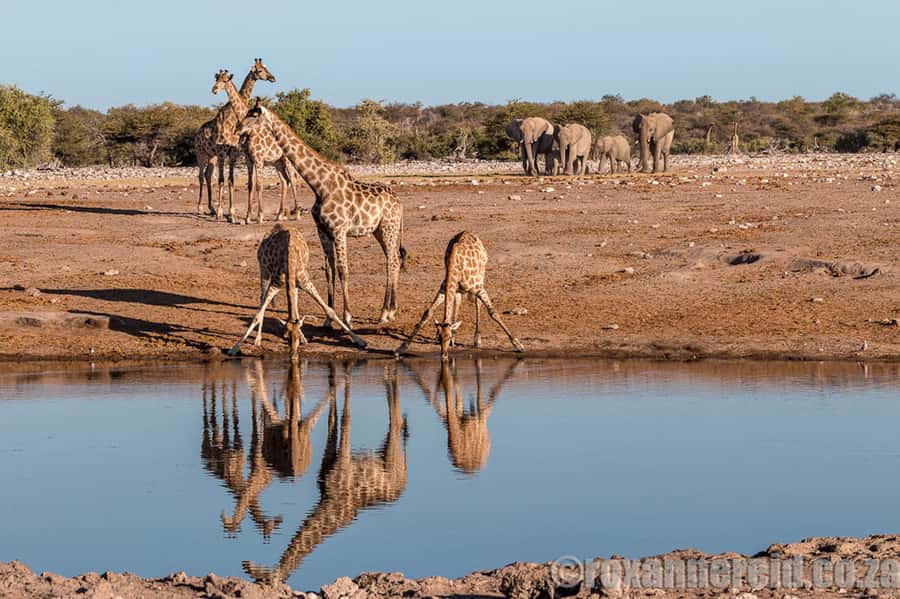
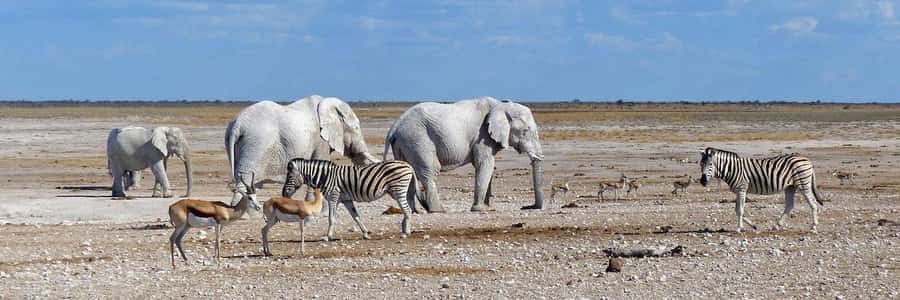
The morning section begins soon after entry through Anderson Gate. The exact route depends on current information, but you can expect a broad search for Etosha’s well-known animals, including elephants, lions, giraffes, zebras, rhinos, springboks, oryx, and other antelope.
This is when your guide’s eyesight and driving style matter most. Several accounts praise careful positioning, smooth driving, and long stops that allow time for photographs. The vehicle may move on when the sighting is quiet, then slow down again when an animal approaches a waterhole or crosses the road.
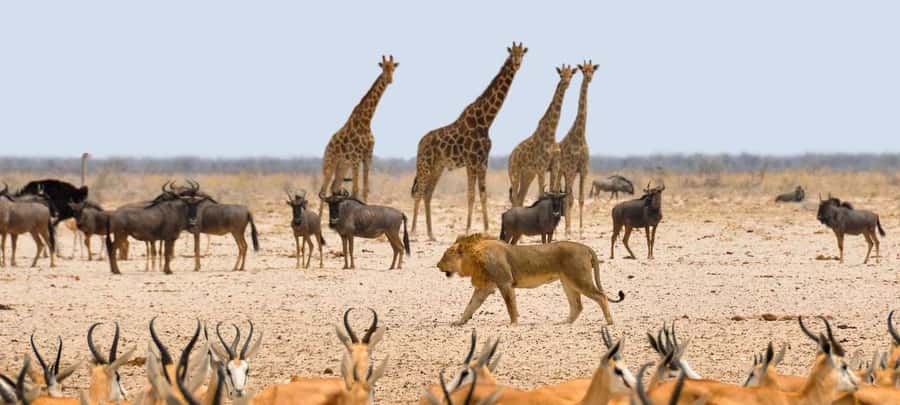
The safari can also bring variety beyond the large mammals. Ostriches, birds, wildebeest, warthogs, impala, and different antelope species have been seen on these drives. Some groups have also found cheetahs, and leopards are possible, though you should treat both as fortunate sightings rather than expected stops.
The guide also explains animal behavior, the park’s ecology, and aspects of Namibia’s natural history. That turns the drive into more than a search for a checklist. You learn why the animals are gathered in one place, what signs to watch for, and how the dry surroundings shape the day.
More Half-Day Trips in the world:
- East Coast National Park: Half-Day Caves Jeep Safari
★ 4.6 · 1,090 reviews - Canyonlands National Park Half-Day Tour from Moab
★ 5.0 · 1,074 reviews - Nairobi National Park Half-Day Tour; Free Wi-Fi connection
★ 5.0 · 878 reviews - Half-day Everglades National Park Tour and 1-Hour Air Boat Ride
★ 5.0 · 811 reviews
Etosha’s waterholes are where patience pays off
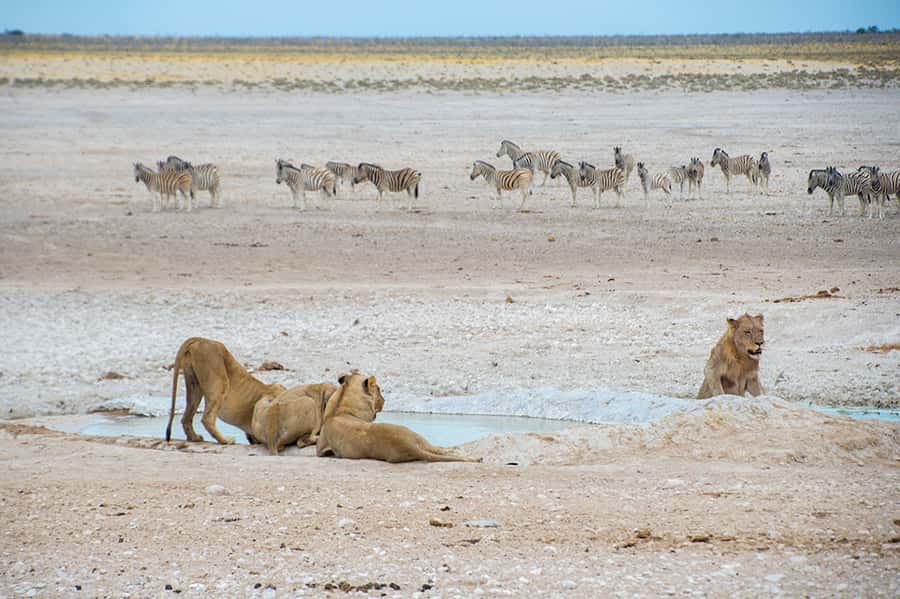
Waterholes can become the focus of a morning stop. They give you a chance to watch animals arrive, drink, move away, and interact without the constant motion of a road search.
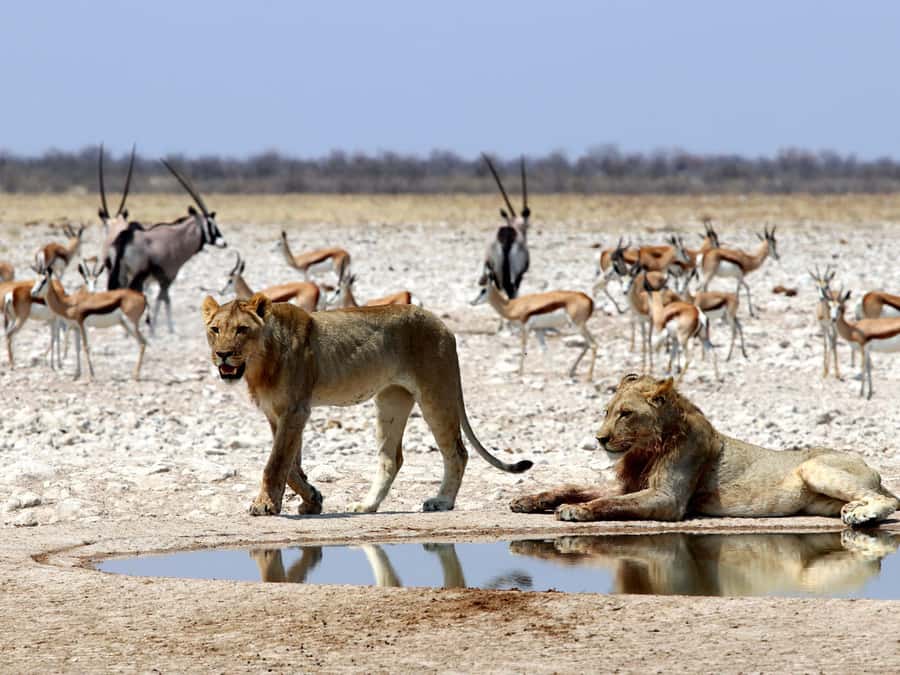
One particularly memorable report describes elephants bathing while the group watched nearby. Other outings found lions, including a family group, and one early morning encounter with lions was singled out as a highlight. These moments depend on timing, but the open vehicle and patient stops give you a good setting for them.
I would bring a small notebook or use your phone to record names and behavior if that interests you. A full day can bring many species together, and details blur by the afternoon. Binoculars help with distant animals, while the guide’s explanations help you distinguish similar antelope.
Remember that animals may remain far away. Etosha is not a zoo, and the guide cannot move off the marked route or force a close encounter. The fair expectation is a well-run search with good local instincts, not a guaranteed list of every famous species.
The one-hour midday break inside the park
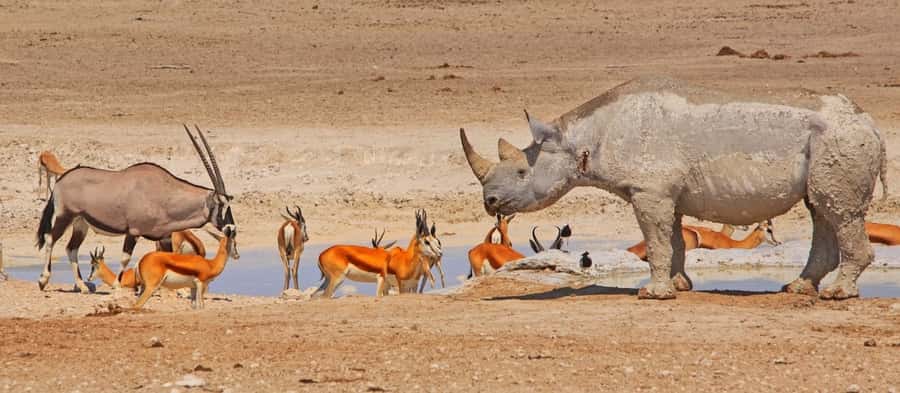
A one-hour lunch break is planned at a restaurant inside Etosha. You can buy a meal there or bring your own food. Lunch is not included, and drinking water is also not included, so pack both if you want to control your costs and timing.
This break is useful for more than eating. A full day in an open vehicle can be tiring, and the pause gives you a chance to stretch, use facilities, warm up or cool down, and organize photographs. It also divides the day into two manageable wildlife sessions.
The tradeoff is simple: a restaurant stop is less atmospheric than eating a packed lunch at a chosen viewpoint, but it is more comfortable and predictable. If food costs matter, bring your own lunch and water. Do not arrive at the gate expecting refreshments to be supplied.
The full-day duration can reach 10 hours, so lunch planning is not a minor detail. A hungry passenger will enjoy the afternoon less, especially after a cold early start and several hours of careful animal watching.
The afternoon drive adds time when conditions change
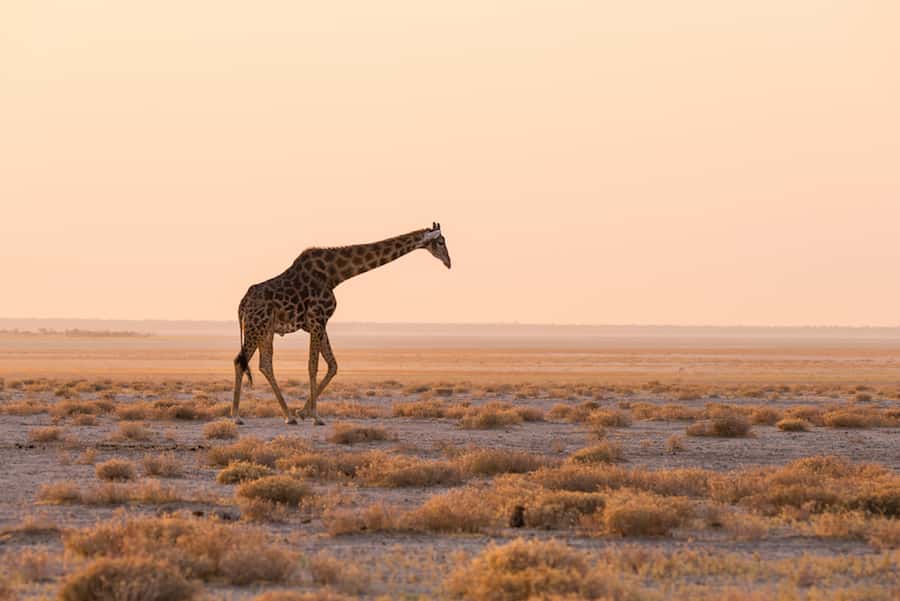
After lunch, the safari continues through the afternoon. This second half gives the guide another chance to follow new reports, revisit productive areas, or search for animals that were not active in the morning.
The longer schedule is the main reason I see value in the full-day option. You get two different periods of light and animal activity, rather than putting all your hopes into a short outing. You also have more time to wait at a waterhole or stay with an interesting sighting without feeling that every minute is being lost.
The full day is not automatically best for everyone. Young children, people who dislike long vehicle rides, or anyone with limited time may prefer the half-day version. The half-day still uses the open 4×4 and local guide, but pickup is not available and the meeting point remains Anderson Gate.
The safari returns in the late afternoon to Anderson Gate, or to your lodge if this has been arranged in advance. Confirm the return plan before departure, especially if your accommodation is inside the park or you have an evening transfer to catch.
What the $123 price really covers
At $123 per person, this is not the cheapest way to see Etosha. The price is easier to justify if you value an experienced local guide, an open safari vehicle, fuel, route flexibility, and a long day spent searching rather than driving yourself without interpretation.
You are also paying for the guide’s ability to notice animals and react to fresh information. Accounts of Ben’s driving and communication with other guides repeatedly point to the practical value of that service. A guide who stops at the right place and gives you time to watch can make a major difference to the quality of your photographs and memories.
The total cost is higher than $123 once you add the park entrance fee of NAD 150 per person, paid in cash on site. Lunch and water are extra unless you bring them yourself. Departures from Halali require at least 48 hours notice and add a NAD 1,500 surcharge paid directly to the guide. Namutoni departures also require 48 hours notice and add NAD 3,000.
For most people staying near Anderson Gate, meeting there is the sensible value choice. You avoid the extra gate surcharges and can use your own vehicle to reach the start. If you need a pickup, check that your accommodation falls within the available area and that the arrangement is confirmed clearly.
The guides are the heart of the experience
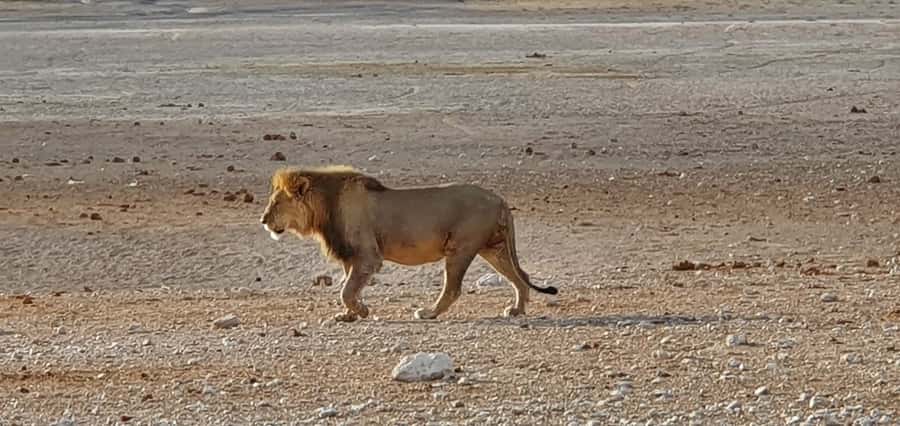
The strongest part of this safari is the human side. Ben receives the most repeated praise for his humor, patience, animal knowledge, safe driving, and ability to spot wildlife. He has also been praised for giving people time to photograph animals instead of rushing from one sighting to the next.
Amone and Matias are also named as capable guides. The important point is not to assume that every booking will have one particular person. Ask who is scheduled if a specific guide matters to you, and remember that guide assignments can change.
The operator describes its guides as local, with the lead guide born and raised near Etosha. That local connection matters because the guide can explain the area from lived experience rather than relying only on a printed script.
Communication is worth checking carefully. One otherwise positive experience had a pickup-location misunderstanding that delayed the start. Use the operator’s direct contact details to confirm the gate, pickup point, departure time, and return plan before the day.
Who should book this Etosha game drive
I would choose this safari if you want an informed introduction to Etosha without managing every sighting and route yourself. It suits first-time visitors, photographers who want a vehicle positioned for better views, and people who prefer a long day with a local guide.
The full-day version is the stronger choice for anyone hoping to see a broad range of species. It gives you more time for elephants, lions, rhinos, giraffes, antelope, birds, and the occasional cheetah or leopard. It also gives you more time to recover from a slow start in an area where animals are not guaranteed.
The half-day option makes sense if you have a tight schedule or are unsure about spending most of a day in an open vehicle. Just remember that you must reach Anderson Gate yourself, and the shorter outing still requires you to plan for cold, water, and the park fee.
This may not suit you if you expect lunch, bottled water, or a guaranteed big-cat sighting to be included. It may also disappoint if you dislike early starts, cold wind, or a flexible route that changes according to nature rather than a fixed timetable.
Should you book the Etosha safari?
I would book the full-day drive if Etosha is a major part of your Namibia trip and you are staying near Anderson Gate. The combination of an early start, open 4×4, local guiding, radio contact, and a second afternoon search gives you a fair chance to see a wide range of animals.
Bring warm layers, water, lunch money or a packed meal, cash for the NAD 150 entrance fee, and patience. Confirm pickup details and the assigned guide before the morning. If you do those simple things, the $123 price represents solid value for a long, well-supported day in one of Namibia’s best wildlife areas.
FAQ
Where does the Etosha game drive start?
The main meeting point is Anderson Gate, near Okaukuejo. Free parking is available at the gate.
How long does the safari last?
The activity lasts between 5 and 10 hours, depending on whether you book a half-day or full-day option and the available starting time.
Is pickup included?
Pickup is available for some accommodation within about 30 minutes of Anderson Gate on full-day bookings. Pickup is not available for half-day bookings.
Can I be picked up inside Etosha National Park?
Guests staying at Okaukuejo Lodge or Okaukuejo Camp may need to meet at Anderson Gate if no other clients are entering the park that day. Confirm the arrangement in advance.
What does the safari cost?
The listed price is $123 per person. The Etosha entrance fee is separate and costs NAD 150 per person, payable in cash on site.
Is lunch included?
No. You can bring your own lunch or eat at the restaurant inside the park during the planned one-hour midday break.
Is drinking water provided?
Drinking water is not included, so you should bring your own.
What languages does the guide speak?
Guiding is available in English and Afrikaans.
What should I wear?
Bring warm clothing and a windbreaker. Mornings in the open vehicle can be very cold, especially from May through August. A warm fleece poncho is available on board.
Can I use a drone during the safari?
No. Drones are not allowed.
Are park entrance fees included?
No. The entrance fee must be paid separately in cash at the park.
Can I cancel the booking?
You can cancel up to 24 hours in advance for a full refund. The reserve-now, pay-later option lets you hold a place without paying immediately.
Do departures from Halali or Namutoni cost extra?
Yes. Halali departures require at least 48 hours advance booking and a NAD 1,500 surcharge paid directly to the guide. Namutoni departures also require 48 hours notice and a NAD 3,000 surcharge.
Newest park tours we have reviewed in the world
- Nairobi National Park –Adventure at City’s Edge Free PickUp★ 4.9 · 8 reviews
- 3D2N Mai Chau – Pu Luong from rice valley to nature reserve★ 4.5 · 11 reviews
- From Banff: Snowshoeing Tour in Kootenay National Park★ 4.9 · 37 reviews
- 5Hrs Nairobi National Park MorningEvening Gamedrive 4×4 Van★ 4.2 · 6 reviews
- 3-Hour Shared Game Drive in Pilanesberg National Park★ 4.7 · 38 reviews
- 3 Nights 4 Days Chitwan National Park with Tower Night Stay★ 5.0 · 4 reviews
- 3 Days Victoria Falls and Full day Chobe National Park★ 3.2 · 3 reviews
- 3-days safari from Dar-es-Salaam to Mikumi National Park★ 5.0 · 8 reviews
National Park Safaris, compared.
East Coast National Park: Half-Day Caves Jeep Safari
Read our review →
Addo Elephant National Park All Inclusive Full-Day Safari
Read our review →
Yala National Park Safari Tours: Morning/Evening/Full Day
Read our review →
Full Day Ultimate Pilanesberg National Park Safari from Johannesburg or Pretoria
Read our review →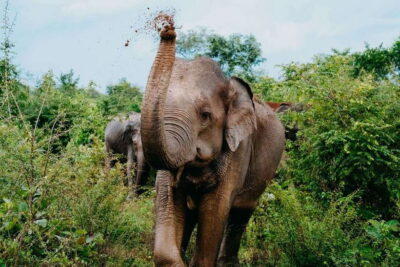
Udawalawe National Park: Elephant Safari with Expert Guide
Read our review →Lists this park day appears in