
Reviewed · SPAIN NATIONAL PARK TOURS
Donana National Park and El Rocío: Guided Tour from Seville
Doñana is not a quick photo stop. It is a full day of marshes, rice fields, pine woods, shifting dunes, beach, and long drives through southern Spain’s great wildlife country. The best moments come when a guide such as José or Sergio spots a lynx, flamingo, spoonbill, or red deer that you would have missed on your own.
I like the variety: you see the rice-growing country near the Guadalquivir, the sandy streets of El Rocío, the La Rocina stream, the Atlantic shore, and Doñana’s forests in one outing. I also like the small-group format, capped at 15 people, and the chance to learn about plants, animal tracks, and birdlife from guides such as Ramón and Luismi.
The main caution is transport. Some departures use a 4×4 that feels cramped in the rear, while others use a minivan. English explanations have also been uneven when Spanish-speaking participants are present. You should book this for nature, scenery, and a broad introduction to Doñana, not as a guaranteed Iberian lynx safari.
Key points to know before you book
- The day covers several ecosystems: Rice fields, marshes, pine forest, dunes, beach, and pasture all appear on the route.
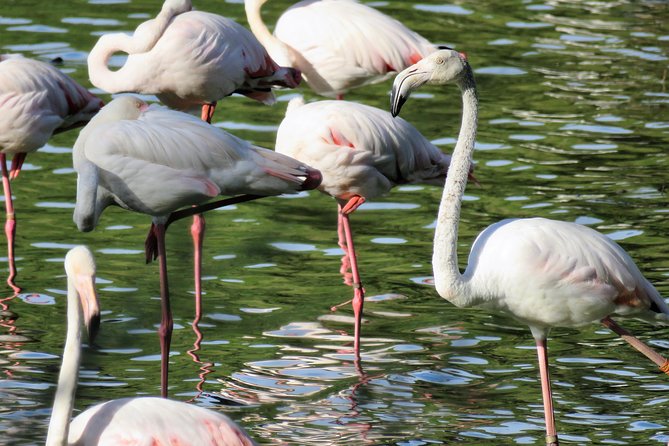
- Wildlife sightings depend on nature: You might see flamingos, storks, deer, wild horses, rabbits, wild boar, or a lynx, but no sighting is promised.
- El Rocío gives the day a cultural twist: Its sandy streets, horses, and famous hermitage feel far removed from Seville.
- The ride can be long: Expect about 10 hours overall, with roughly two hours on the return through Doñana.
- English service needs attention: Guides are supposed to work in English, but bilingual commentary can favor Spanish.
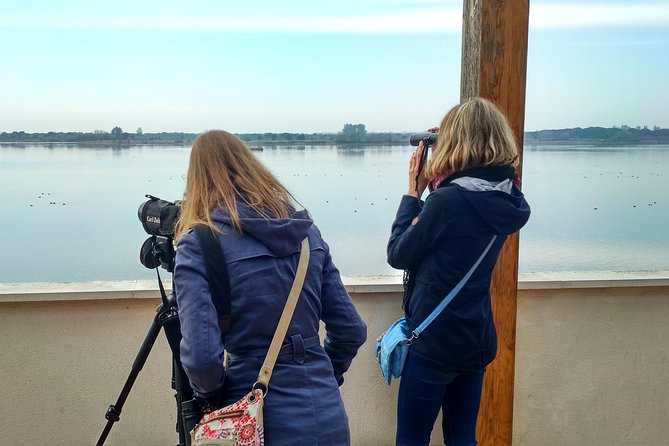
- Pack for changing conditions: Bring water, sun protection, binoculars if you have them, and a swimsuit in warm weather.
Why Doñana makes a worthwhile day from Seville
Doñana protects one of Europe’s great wetland areas at the mouth of the Guadalquivir River. Its mix of shallow water, rice fields, open pasture, pine forest, and coastal dunes gives birds and mammals many different places to feed and breed.
That variety is the reason this outing works better than a simple park drive. You are not looking at the same view all day. One hour might be spent watching white storks near cultivated fields. Later, you are walking beside the La Rocina stream, standing among coastal dunes, or scanning the trees for signs of larger mammals.
The birdlife is the strongest part of the experience. Around 300 species have been recorded in the marshes, woods, and pastures in this part of Doñana. The rice fields near La Puebla del Río are especially useful because they retain water through much of the year. That makes them a dependable feeding area when other parts of the park are dry.
If you enjoy identifying birds, guides such as Luismi and José can add real value. They have been praised for spotting and explaining flamingos, spoonbills, grebes, geese, ducks, larks, swallows, stonechats, and storks with chicks. Bring binoculars if possible. Your phone camera may not capture a bird clearly at distance.
More Guided Trips in Spain:
- Tenerife: Teide National Park Guided Buggy Tour
★ 4.7 · 609 reviews - Donana National Park: Guided Day Tour from Seville
★ 4.5 · 372 reviews - Teide National Park: Guided Large Telescope Stargazing Tour
★ 4.9 · 319 reviews
The early pickup and ride out of Seville
The day begins early. Pickup is arranged at the closest available meeting point to your accommodation, with listed points at Calle Trajano, Hotel Don Paco on Plaza Padre Jerónimo de Córdoba, and Calle Rastro 12A.
The wording about hotel pickup deserves care. Downtown pickup service is advertised, but the vehicle may collect you at a central meeting point rather than directly outside your hotel. One pickup point can be a 20-minute walk from some hotels. Check the exact location and arrive early, since the company may call if you are not already waiting.
From Seville, the route heads toward Coria del Río and La Puebla del Río. This first stretch is not wasted time. The Guadalquivir marshes and nearby rice fields explain why Doñana supports so many birds, and the guide can point out how farming and wetlands meet here.
The vehicle matters more than you might expect. A six-person 4×4 can be tight, especially in the far rear seats, where small windows may limit both comfort and photography. Some departures have used a minivan rather than the jeep-style vehicle suggested in the description. If the group is full, ask the guide early about rotating front seats so nobody spends the whole day at the back.
Rice fields and the white stork colony
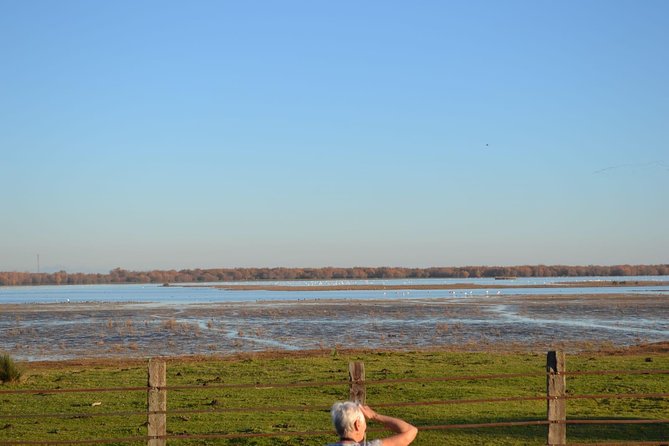
The stop around La Puebla del Río lasts about 40 minutes. You are looking at a working agricultural area, not a manicured park. Rice fields fill with water during the growing season, creating feeding grounds for large numbers of birds.
The nearby Dehesa de Abajo adds ancient olive trees and oaks to the scene. This is one of the most rewarding early stops for birdwatching, particularly if you want to see white storks. The area is known for Europe’s largest white stork colony, and the nests can be an impressive sight even before you start counting other species.
This is also where a strong guide earns the price of the tour. A casual visitor may see white shapes in the distance. A good naturalist can explain which birds are feeding, which are nesting, and what the wet fields mean for the wider park. José, Ramón, and Sergio have all been singled out for making the natural details understandable and finding wildlife that was easy to miss.
Do not expect a zoo-like procession of animals. The marshes are open and wild. One departure may produce flamingos, spoonbills, deer, and dozens of bird species. Another may be quieter, particularly in a dry period or outside the best migration seasons.
El Rocío, horses, and the chapel
After the marshes, you reach El Rocío, one of Spain’s most unusual villages. Its streets are sandy rather than paved in the usual town-center style, and horses are part of the local scene. The village has a deliberately old-fashioned feel, especially around the famous hermitage of the Virgin of El Rocío.
You get about an hour here. That gives you time to see the chapel and absorb the setting, though it may feel short if you want a slow visit or a proper meal later. The village is often the cultural highlight of the day because it breaks up the nature viewing with a place that has its own customs and strong religious identity.
Timing can affect what you see. Close to the end of the El Rocío pilgrimage, the village and surrounding roads may show signs of the returning rocieros. Horses, sandy tracks, and pilgrims make a memorable contrast with the quiet marshes.
I would not treat El Rocío as filler. It gives context to the region. Doñana is not an empty wilderness separated from human life. People farm around it, worship near it, ride horses through it, and depend on its water and soil.
More National Park Tours in Spain:
- Tenerife: Teide National Park Sunset & Stargazing Tour
★ 4.2 · 3,812 reviews - Tenerife: Sunset and Stargazing at Teide National Park
★ 4.7 · 2,826 reviews - Teide National Park Sunset & Stargazing with Dinner (Star Safari)
★ 5.0 · 2,601 reviews - Teide National Park: Sunset & Stargazing Safari with Dinner
★ 4.6 · 2,115 reviews
La Rocina and Palacio del Acebrón
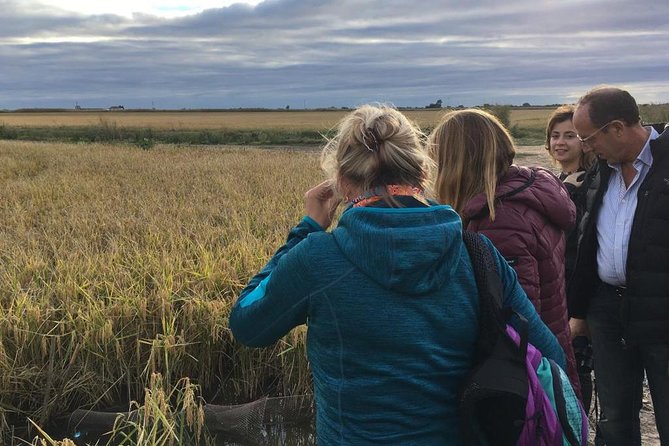
The next section moves toward the Arroyo de la Rocina and Palacio del Acebrón. The palace provides a short architectural stop, while the nearby stream leads you back into the natural side of the trip.
At La Rocina, you walk a circular route and learn to read animal tracks and native plants. This is a useful change of pace after several vehicle-based stops. You are not simply being driven past trees. The guide can show you how to notice signs of animals, understand the plant life, and read the ground.
The walk is listed at about an hour, followed by a lunch break. Lunch is not included in the price, and the chosen restaurant has been a weak point for some people. Food and service can be ordinary, and vegetarian choices may be limited. I would keep expectations modest and carry a snack in case the meal does not suit you.
This is a full-day outing, so a small supply of water and food is sensible even when lunch is planned. You may also want a hat and sturdy shoes. The tour is described as suitable for most people, but you should be comfortable walking on natural trails and getting in and out of a vehicle several times.
Matalascañas and Doñana’s great dunes
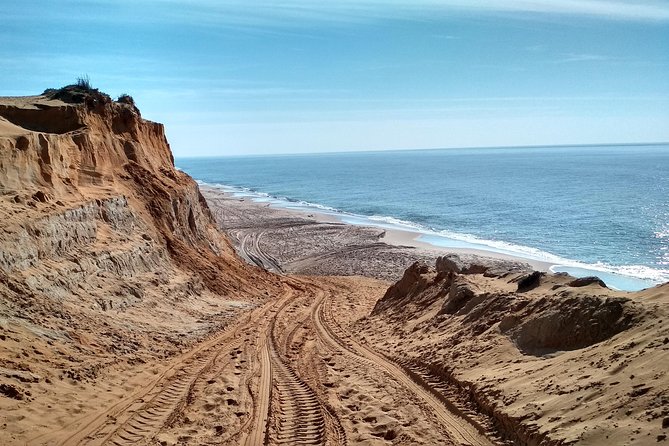
After lunch, the route reaches Playa de Matalascañas. Here the focus changes from wetlands and forest to the coast. You see the sandy shore and the dune system that makes Doñana different from an inland nature reserve.
The dunes are constantly reshaped by wind and weather. They form one of Spain’s largest dune systems, and the guide explains how this moving sand affects plants, animals, and access along the coast.
You usually get about an hour at the beach. In warm weather, pack swimwear if you would like a quick dip. One useful tip is to bring a light layer as well, since a seaside stop can feel cooler or windier than Seville.
Some people would prefer to spend this hour deeper inside the park. That is a fair criticism. If your only goal is wildlife, the beach may feel like time taken away from animal viewing. If you enjoy a varied day and want to see the Atlantic before returning inland, it gives the tour a welcome change.
The 4×4 return and the chance of a lynx
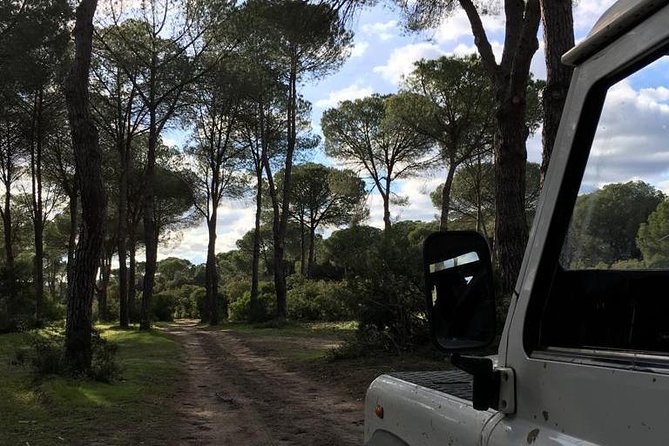
The final major section returns toward Seville through forested Doñana in a 4×4. This part is scheduled for about two hours and is the closest thing to a wildlife drive.
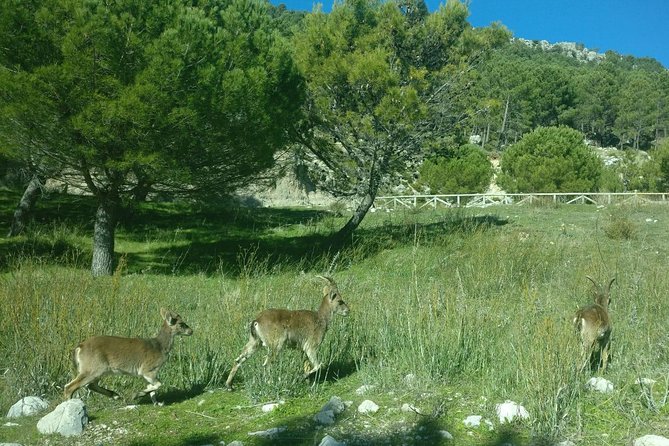
The route can be exciting when conditions are right. Guides have found red deer, wild boar, wild horses, rabbits, and many birds. One particularly lucky departure saw an Iberian lynx cub. That is a remarkable sight, but you should treat it as a bonus, not the product you are buying.
The lynx is elusive, and wildlife moves on its own timetable. Even the deer and wild horses may be far away. A guide can know where to look, but cannot produce an animal on command.
Weather and park access can also change the route. Sections may close for safety after poor weather, and the 4×4 portion may then use peripheral roads or a shorter route than expected. This is important if the phrase 4×4 park crossing is the main reason you are booking.
The drive back can end around sunset in the Asperillo pine forest. That late light is one of the day’s best scenic moments, especially when the sky changes over the trees and sand. The return also makes for a long day, so do not schedule a demanding evening activity in Seville.
Guides, language, and group size
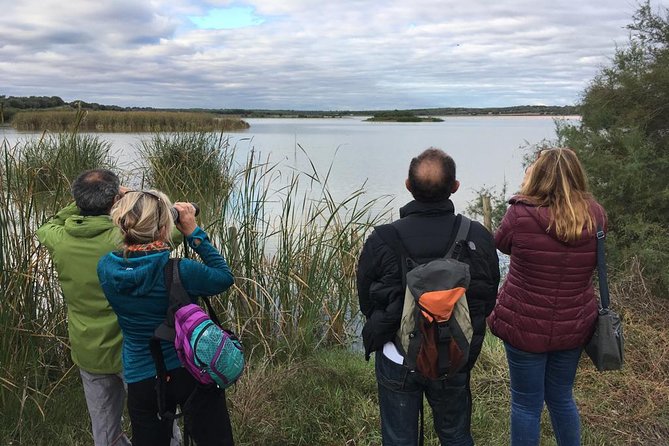
The best part of this outing is the guide. José is especially strong on birds and wider natural subjects. Sergio has been praised for his care, clear explanations, and ability to find larger animals. Ramón is another popular guide, while Luismi is particularly focused on bird identification.
The catch is that the group can include Spanish-speaking and English-speaking participants. In that situation, the guide may give longer explanations in Spanish and only a shorter version in English. A few people have found this frustrating, including during wildlife presentations.
If English is essential, tell the guide at the start that you need the full explanation in English. It may help to sit near the guide and ask questions directly. A private tour would offer more control, but this is a shared small-group outing and its price reflects that.
At up to 15 people, the group is much more personal than a large coach tour. In practice, some departures are smaller, with only a few participants. That makes it easier to ask questions and share sightings, but the vehicle can still feel cramped if every seat is taken.
Is the $107.68 price fair?
At $107.68 per person, the price is reasonable if you want an organized full-day outing from Seville. It includes round-trip shared transport, a professional driver-guide, 4×4 transport, and pickup service in central Seville. You also avoid arranging a car, finding park access, and planning a route across several separate areas.
The value is strongest for visitors without a car who want a broad first look at Doñana. You get marshes, bird colonies, El Rocío, a guided walk, beach, dunes, and forest in one day.
The value is weaker if you want a dedicated photography or lynx expedition. The rear seats can restrict views, the schedule gives limited time at some stops, lunch costs extra, and the route may change with weather or access rules.
I would also compare the price with your interests. A birdwatcher who enjoys several habitats and expert commentary may find it well spent. Someone looking mainly for a relaxed beach day or a long hike may prefer a different excursion.
Who should book this Doñana day trip?
You should consider it if you:
- Want to see Doñana without renting a car
- Enjoy birds, plants, animal tracks, and changing habitats
- Like mixing nature with a distinctive village visit
- Can manage a long day with repeated vehicle stops
- Accept that wildlife sightings are never guaranteed
- Are comfortable speaking up if you need more English explanation
I would hesitate if you dislike long drives, need a spacious vehicle, or want every minute spent inside the national park. The route is broad rather than deep. It introduces you to the region’s main faces instead of focusing on one trail or one wildlife target.
FAQ
How long does the Doñana and El Rocío tour last?
The experience lasts about 10 hours, including the journey from Seville, several stops, walking time, lunch, and the return drive.
What is included in the price?
The tour includes a professional driver-guide, shared round-trip transport, 4×4 transport, pickup and drop-off service in most downtown Seville hotels, and a small-group guided day trip.
Is lunch included?
No. Food and drinks are not included, so you pay for lunch yourself.
Where does the tour begin?
The listed starting point is C. Rastro, 12A, 41004 Sevilla, Spain. Other pickup points include Calle Trajano and Hotel Don Paco on Plaza Padre Jerónimo de Córdoba. Confirm the exact pickup point for your accommodation.
Is the tour conducted in English?
The experience is offered in English. However, bilingual groups may receive longer explanations in Spanish, so ask the guide directly for the full English explanation when needed.
Can I see an Iberian lynx?
You might see one, but a sighting is not guaranteed. The route passes through areas where Iberian lynx live, and some departures have spotted a lynx, along with deer, wild horses, wild boar, rabbits, and many birds.
What happens if bad weather cancels the tour?
If poor weather causes cancellation, you are offered another date or a full refund. You can also cancel for a full refund up to 24 hours before the experience begins.
Should you book it?
Book this tour if you want a practical, wide-ranging introduction to Doñana and El Rocío from Seville. The strongest reasons are the changing habitats, the expert bird spotting, the small-group setting, and the chance of seeing wildlife that would be difficult to find alone.
Go in with realistic expectations. This is not a guaranteed lynx trip, and the vehicle, bilingual commentary, lunch stop, or weather may reduce the pleasure on a particular day. For nature lovers who value variety and local insight, the outing offers good value. For serious wildlife photographers, a private or more specialized safari may be the better choice.
Newest park tours we have reviewed in Spain
- Tenerife: Teide National Park and Volcano Buggy Tour★ 4.0 · 39 reviews
- Quad Tour Volcano Teide By Day in Teide National Park★ 4.0 · 80 reviews
- Timanfaya National Park: Evening Tour with Volcano Dinner★ 4.4 · 129 reviews
- Teide National Park Exclusive and private Tour★ 5.0 · 115 reviews
- Get to know the Teide National Park and the north of Tenerife on a private tour★ 5.0 · 63 reviews
- Teide National Park: Landscapes and Viewpoints Private Tour★ 4.7 · 52 reviews
- Private excursion to Teide National Park★ 5.0 · 129 reviews
- PRIVATE TOUR Teide National Park: Hiking and Stargazing★ 5.0 · 38 reviews
Spain National Park Tours, compared.
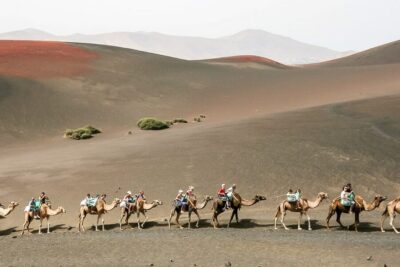
Timanfaya National Park Volcanic Craters Tour
Read our review →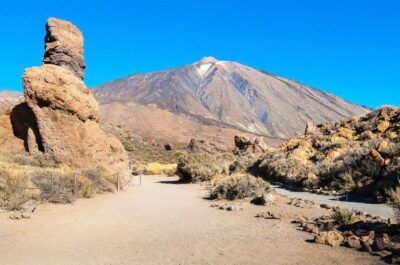
Teide National Park Full-Day Tour with Pickup
Read our review →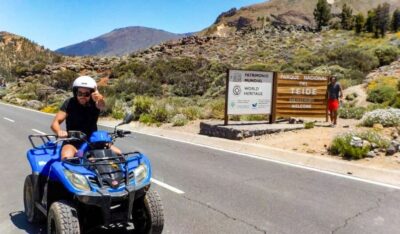
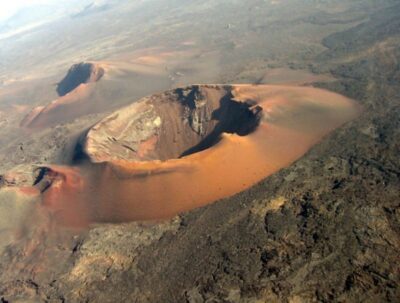
Arrecife/Playa Blanca: Timanfaya National Park Area Day Tour
Read our review →

Jávea: Cala Tango and San Antonio Nature Reserve Kayak Tour
Read our review →Lists this park day appears in