
Reviewed · AUSTRALIA NATIONAL PARK TOURS
Uluru: National Park Astronomy Tour with Telescope and Photo
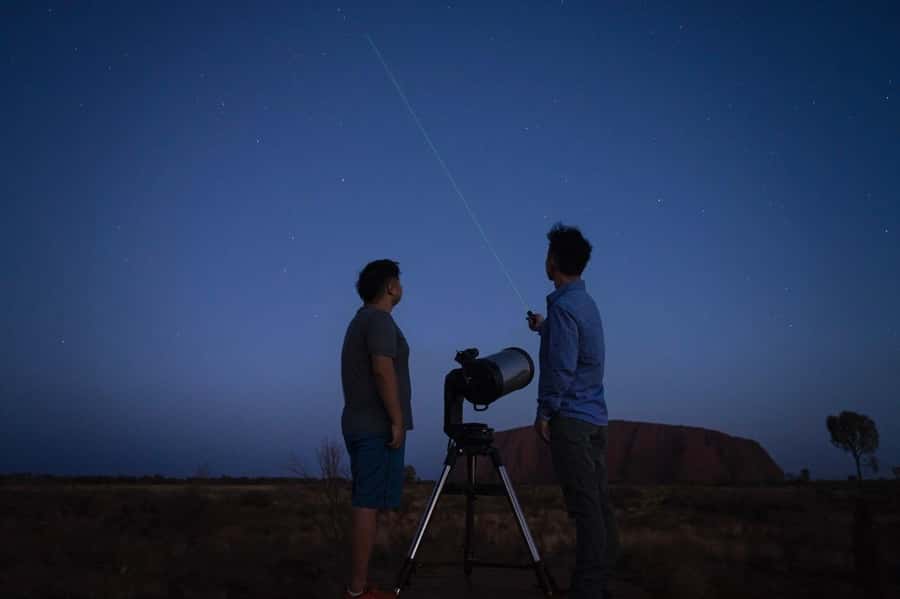
Uluru looks powerful by day, but after sunset the southern sky takes over. This 150-minute evening tour carries you away from resort lights into the national park, where the Milky Way, planets, constellations, and distant objects become the main event.
I like the mix of clear astronomy and Indigenous sky stories, plus the chance to see Saturn, nebulae, star clusters, or even Pluto through telescopes. I also like that hotel pickup, blankets, stools, telescope use, and a digital photograph are included.
The main drawback is group size. Two full buses and only three telescopes can mean queues, and the portrait session may take 45 to 60 minutes when everyone wants a photo. Moonlight and cloud can also reduce what you see.
Key points before you book
- Dark-sky setting: The bus takes you away from resort lighting into a much better spot for seeing the Milky Way.
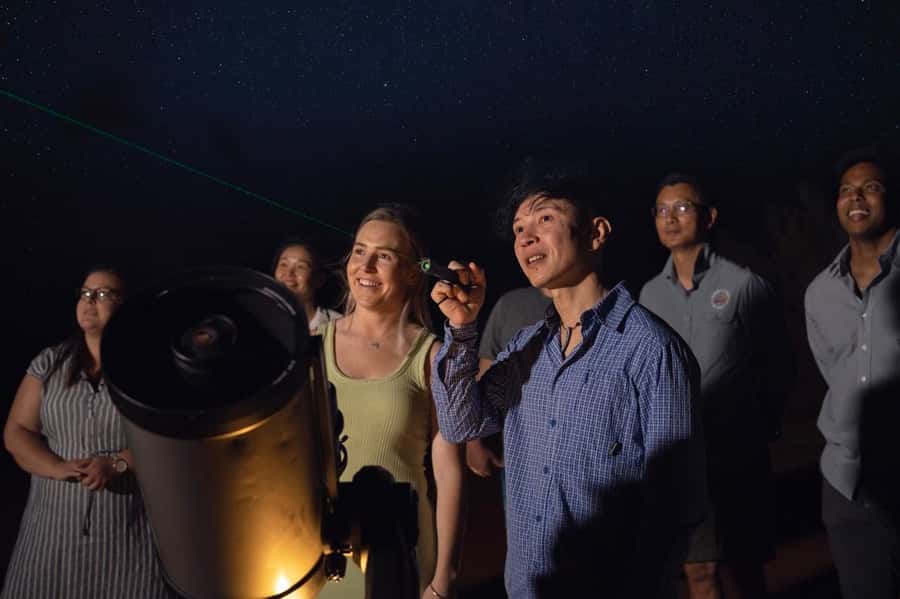
- Telescopes and binoculars: You may view planets, nebulae, clusters, the Moon, Saturn, or other distant objects more clearly.
- Guides with different strengths: Neil, Lucy, Zack, Olina, Ollie, and other guides have been praised for clear explanations, humor, and help with questions.
- Indigenous astronomy: The evening includes stories and practical uses of the sky in Aboriginal culture, alongside modern astronomy.
- Portrait included: You receive a professional digital photograph with Uluru and the night sky behind you.
- Bring serious warmth: Desert temperatures can fall sharply after dark, especially from April through September.
Why Uluru is so good after dark
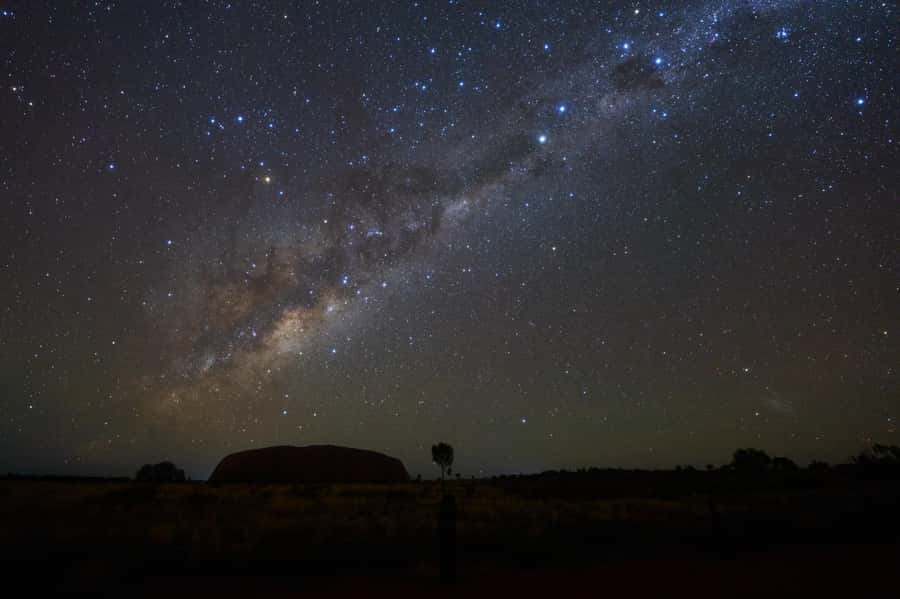
You come to Uluru for the red rock, but the outback offers another great show once the sun is gone. Far from city lights, the sky can look almost crowded with stars. The Milky Way becomes easier to trace, and familiar constellations appear in a setting very different from the Northern Hemisphere.
That southern-sky view is the heart of the tour. You are not simply standing outside your hotel and looking upward. You are driven to a darker location in or near Uluru and Kata Tjuta National Park, with Uluru available as a dramatic backdrop for the photography part of the evening.
The darkness matters. Artificial light washes out faint stars and distant objects, while an open desert setting lets your eyes adjust properly. On a clear night, you might see shooting stars, the Milky Way, planets, star clusters, and nebulae. One particularly lucky group saw a bright meteor cross the sky for about six seconds.
The sky is never fully guaranteed, of course. Clouds can appear, and a bright Moon can hide many faint stars. A first-quarter or full Moon may still look beautiful, but it reduces the contrast of the Milky Way. If astronomy is your priority, ask about the moon phase when planning your Uluru stay.
More National Park Tours in Australia:
- Litchfield National Park and Jumping Crocodile Cruise
★ 5.0 · 2,119 reviews - Grampians National Park Small-Group Eco Tour from Melbourne
★ 5.0 · 761 reviews - From Port Arthur: Tasman Island Wilderness Cruise
★ 4.9 · 704 reviews
The ride from your accommodation to the stars
Pickup is included from your Uluru accommodation. Look for the bus marked Atrip, and watch for the confirmed pickup time sent by the operator on the day of your tour. The drive to the viewing site is part of the practical appeal: you do not need to arrange a taxi, drive in the dark, or work out where to find a suitable stargazing spot.
The outing lasts 150 minutes, including transportation and the time at the viewing site. That gives you roughly two and a half hours for the full evening, though the exact balance between driving, astronomy, telescope viewing, and portraits can vary.
The transport has generally been described as comfortable. The operator brings the equipment and sets it up before the main viewing begins, so you can get started without carrying a telescope or tripod through the desert.
The group size is worth considering. Larger departures can create a friendly, energetic mood, but they also mean more people around each telescope and a longer wait for the portrait. If you prefer quiet, uninterrupted sky watching, this may feel busier than the setting suggests.
A guided tour of the southern sky
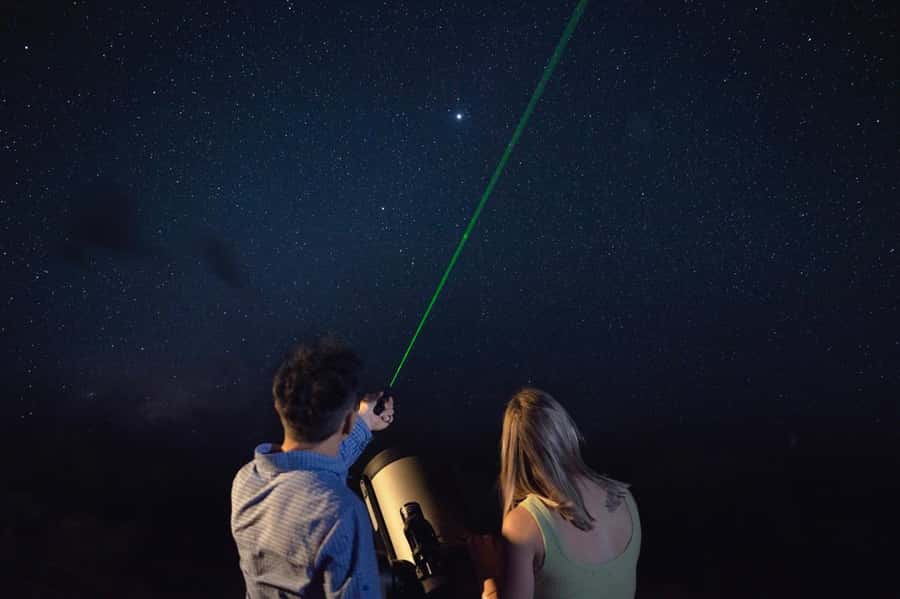
Once you reach the site, the guides use lasers to point out stars and constellations. This is useful because the sky can seem too full at first. A laser pointer gives you a clear starting point, then the guide builds a story around what you are seeing.
The teaching is aimed at beginners, but you do not need to know nothing about astronomy to enjoy it. Guides explain planets, stars, constellations, galaxies, and other objects in plain language, then answer questions. Names such as Neil and Lucy have been associated with especially clear explanations, while Zack, Olina, and Ollie have also been praised for their friendly help and practical advice.
The best part is the balance between science and storytelling. You may hear about the modern understanding of stars and the universe, followed by Indigenous stories connected with the same night sky. Aboriginal astronomy is not treated as a decorative extra. It helps show how the sky has long been used for stories, knowledge, seasonal understanding, and daily life.
That cultural material adds a human scale to the science. You are not only learning what a star is or how far away a planet might be. You are also considering how people read the sky before modern telescopes and how different cultures give meaning to the same points of light.
One weakness is sound. With a large group, people chatting at the back may make it hard to hear every word. One useful suggestion from the experience is a small microphone for the guide. Try to stand close to the speaker if you want to catch the cultural stories and scientific details.
What you can see through the telescopes
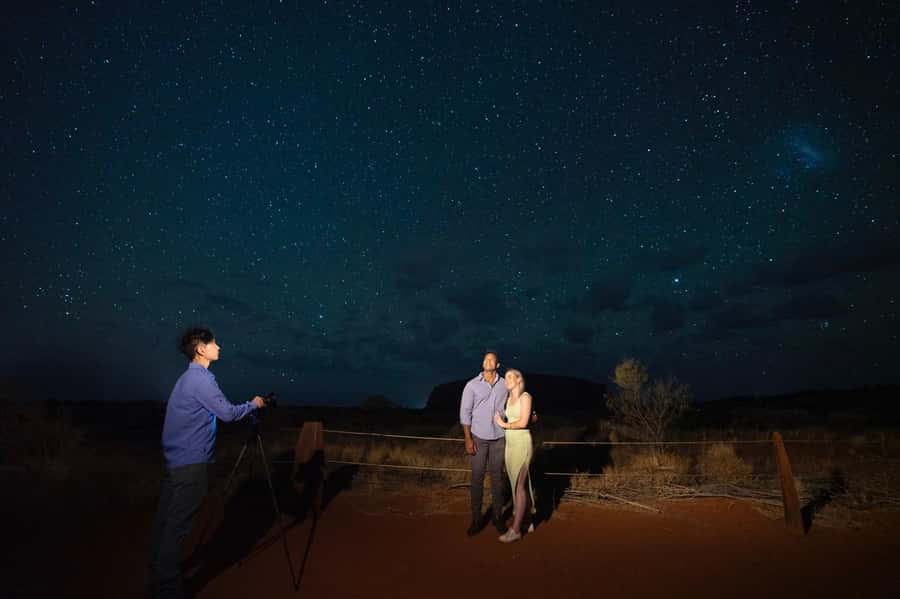
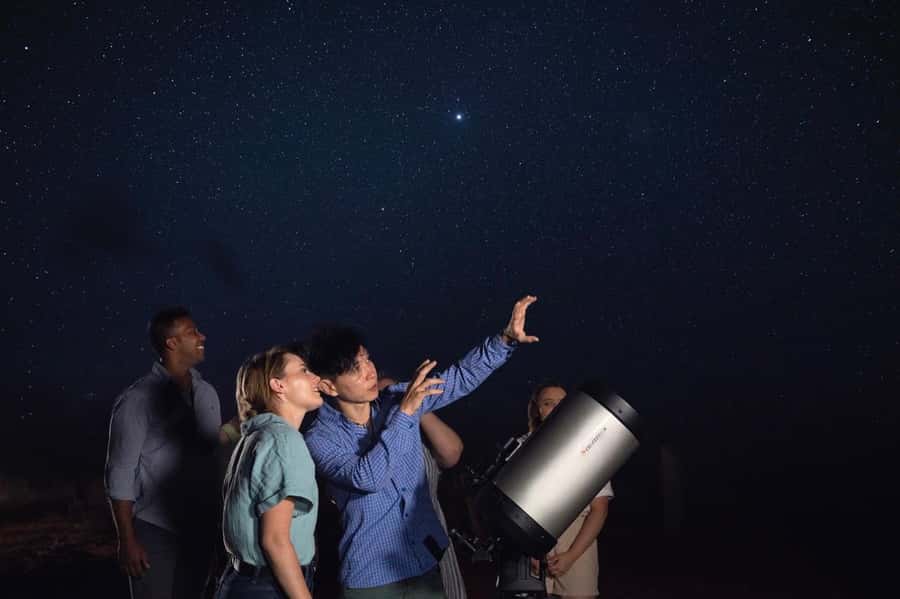
The naked eye gives you the grand view. The telescopes provide the close-up. You may look at planets, nebulae, clusters, the Moon, and other distant objects that are too faint or too small to see clearly without equipment.
Saturn is a major highlight when it is visible. Seeing its rings through a telescope gives the planet a real shape instead of leaving it as a bright point. Other reported sights include the Seven Sisters, Alpha Centauri, Pluto, the Moon, and several nebulae or clusters. The exact list changes with the season, weather, and position of the planets.
This is not a private observatory session. The telescopes are shared, and the number of instruments may not always match the number of people waiting. A smaller departure would give you more viewing time. Some departures have had only three telescopes for two full buses, creating a queue.
You can make the wait work for you. While others use the scopes, look up with your own eyes, listen to the guide, or try photographing the sky. The experience is not wasted if you are not at the eyepiece every minute.
The tour also supplies binoculars. They do not replace a telescope, but they can offer a more immediate way to scan the sky while you wait. If you have never used a telescope, the guide’s explanation helps you understand what you are seeing rather than simply taking a quick glance and moving on.
Same region, a different park day:
- Sydney: Blue Mountains National Park Tour with River Cruise
★ 4.6 · 701 reviews - From Hobart/Adventure Bay: Bruny Island Wilderness Cruise
★ 4.8 · 601 reviews - Port Arthur Full-day Guided Tour with Harbour Cruise and Tasman National Park
★ 4.5 · 585 reviews - Grampians National Park Small-Group Eco Day Tour
★ 4.8 · 577 reviews
Blankets, stools, and the surprising desert cold
Bring warm clothes even if the afternoon felt hot. Desert temperatures can fall quickly after sunset. One April visitor compared the conditions to about 10 degrees Celsius, and several people appreciated the blankets provided at the site.
Wear closed-toe shoes. You will be outside in a dark, open area, and sensible footwear is more useful than sandals. A reusable water bottle is also recommended.
The operator supplies folding stools and blankets, which makes a real difference during a long period of looking upward. You are not expected to stand the whole time. Still, bring layers rather than relying only on the supplied blankets, especially in winter.
Summer has its own tradeoff. Evenings may remain warm, so you might not need heavy clothing. One December visitor found the night still fairly warm and advised not carrying too many clothes. The safest plan is a light layer that you can remove, with an extra warm layer for cooler months.
There may be limited lighting between the coach and the viewing area. Walk carefully and follow the guide. The darkness is the reason the stars look so good, but it also means you need to watch your footing.
Photographing Uluru under the stars
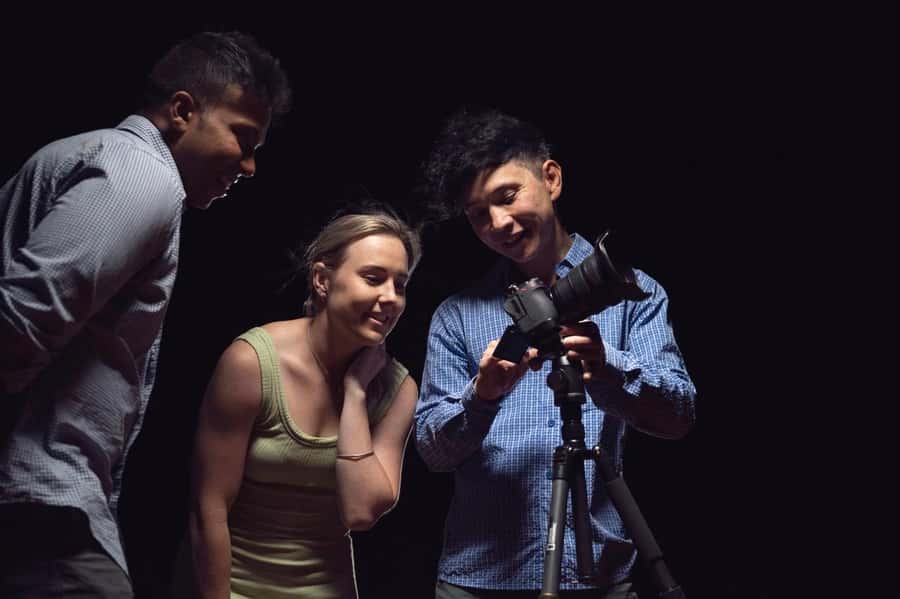
The included digital photograph is more than a quick phone snapshot. The staff use a long-exposure setup to capture you with Uluru and the star-filled sky behind you. This can be one of the most valuable extras because night portraits are difficult to make well without a tripod, careful timing, and the right camera settings.
The portrait is taken one person at a time, and you receive a digital image to download later. You can pose alone or arrange to be photographed with family or friends, but planning matters. Large groups may take a while to decide who will stand together, and the line can reach 45 to 60 minutes.
The wait is the clearest practical drawback of the photo service. If you want your portrait but do not want to lose stargazing time, listen for the instructions and decide your group arrangement before your turn.
Bring your own camera and tripod if you enjoy night-sky photography. The guides can help with phone settings, and several people have managed better mobile photographs after receiving advice on exposure and focus. Do not expect a phone to reproduce the included professional image, but you can still take memorable pictures of the sky.
Keep your expectations realistic. Your own photos depend on your phone or camera, the Moon, cloud cover, and your familiarity with night photography. The included portrait gives you a reliable keepsake, while your own equipment lets you experiment.
Is $91 good value?
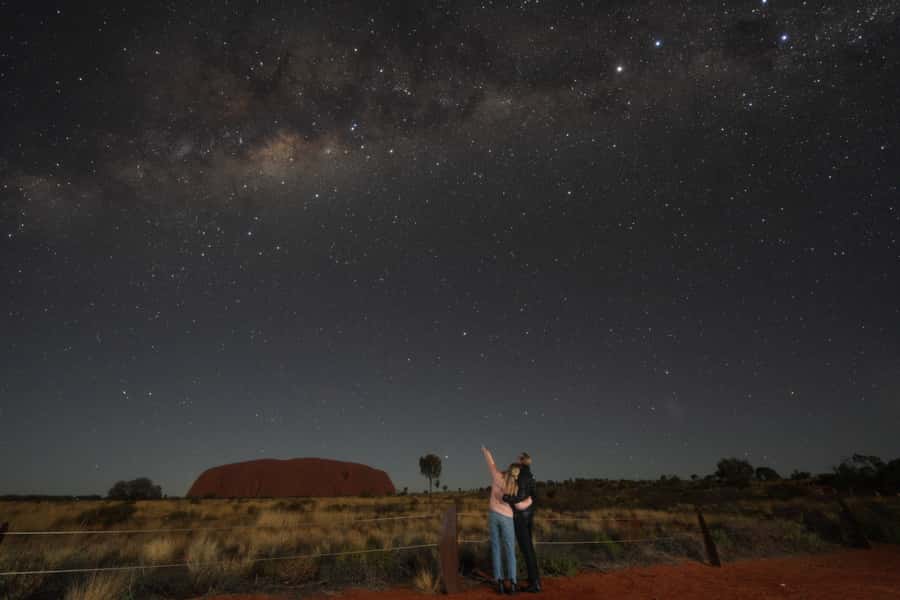
At $91 per person, this is not the cheapest way to look at the stars. You could simply step outside your accommodation for free. The difference is the location, transport, equipment, interpretation, and professional photograph.
I think the price makes sense if you want more than a quick look upward. The bus takes you to a darker site, the guides explain what you are seeing, and the telescopes reveal objects that your eyes cannot pick out on their own. The included portrait adds lasting value, especially for a once-in-a-lifetime Uluru trip.
The value is less clear if you are an experienced astronomer with your own telescope and dark-sky photography equipment. You may find the shared telescopes and larger group limiting. Even then, the setting and Indigenous astronomy content may justify the cost.
The rating of 4.4 from 357 reviews suggests a strong overall experience, but the lower scores point to the same practical issues: large groups, long waits, bright moonlight, and occasional limits on how many stars are visible. That is a fair picture of the tour. The best nights can be extraordinary, but no astronomy operator controls the Moon or clouds.
Who will enjoy this evening most
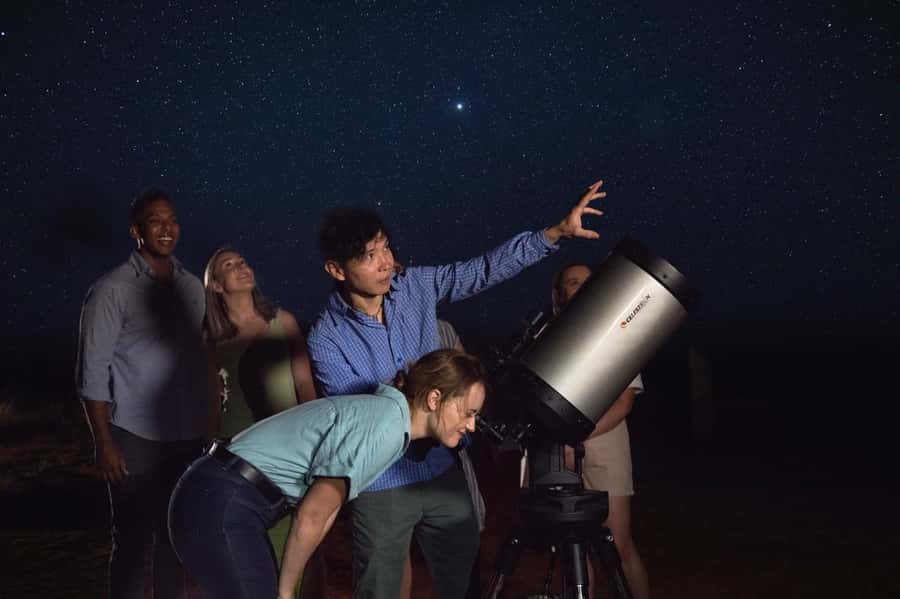
This tour suits first-time stargazers, families, couples, and anyone who wants a structured introduction to the southern sky. Children and teenagers can enjoy the visual side, especially the telescopes and the chance to see planets. One family with a 10-year-old described the evening as a highlight of the trip.
You do not need technical knowledge. The guides explain basic ideas clearly, and beginners can ask questions without feeling out of place. More experienced astronomy fans may still enjoy the stories and the location, but should be ready to share the equipment.
It also suits photographers who want a portrait they would struggle to create alone. Bring your own tripod if you want to work on personal night-sky images, but keep the long portrait queue in mind.
I would be cautious about booking it as your only major activity if your schedule is tight and you dislike group tours. The 150-minute duration is manageable, but the evening can feel longer if you spend a lot of time waiting for a telescope or photograph.
Booking advice for a clearer night
Try to choose a night with less moonlight if the Milky Way is your main goal. A bright Moon can be beautiful through a telescope, and it may improve views of the lunar surface, but it makes faint stars harder to see.
Pack warmer clothes than the forecast seems to require. Closed-toe shoes, water, and a tripod if you want personal photographs are the sensible basics.
Keep the pickup message handy and look for the Atrip bus. English and Chinese tours are available. Cancellation is free up to 24 hours in advance, and you can reserve now and pay later, which helps if your Uluru plans are still moving around.
Should you book the Uluru astronomy tour?
I would book this tour if you want an easy, well-organized introduction to the outback night sky, especially if you have never seen the Milky Way clearly. The guides, dark location, telescopes, Indigenous astronomy, and included portrait give it more substance than simple hotel-based stargazing.
I would hesitate only if you need a small, quiet group or want long uninterrupted telescope time. In that case, ask about group size before booking, and choose a darker, less moonlit night when possible.
For most first-time visitors to Uluru, this is a strong evening choice. The red rock may be the daytime star, but the sky can be the memory you carry home.
FAQ
How long does the Uluru astronomy tour last?
The activity lasts 150 minutes, including the evening stargazing program and transportation.
What is included in the $91 price?
The price includes the tour, a live guide, pickup and drop-off, use of telescopes, and one digital professional photograph.
Is hotel pickup included?
Yes. Pickup and drop-off at your accommodation are included. Look for the bus with Atrip written on it, and check your email for the confirmed pickup schedule.
Which languages are available?
The tour is offered with live guides in English and Chinese.
Do I need to bring a National Park Pass?
No. You do not need to bring your own National Park Pass for this tour.
What should I wear?
Bring warm clothing and closed-toe shoes. Temperatures can drop sharply after sunset, particularly during the cooler months. Blankets are provided, but extra layers are still sensible.
Can I bring my own camera and tripod?
Yes. You can bring a camera and tripod for your own night-sky photographs. Guides may also help you adjust your phone settings for better results.
What will I see through the telescopes?
Depending on the season, weather, and moon phase, you may see planets, nebulae, star clusters, the Moon, Saturn, the Seven Sisters, Alpha Centauri, Pluto, and other distant objects.
What happens if I need to cancel?
You can cancel up to 24 hours before the activity for a full refund. You can also reserve your place and pay later.
Newest park tours we have reviewed in Australia
- Grampians National Park with MacKenzie Falls and Kangaroos★ 4.5 · 121 reviews
- Barron Gorge and Kuranda National Park Half Day Rainforest and Waterfall 4WD Tour from Cairns★ 5.0 · 73 reviews
- Kakadu National Park Wildlife & Ubirr Rock Art Tour from Darwin★ 4.5 · 101 reviews
- PRIVATE Blue Mountains Wilderness & Wildlife Late Start Tour★ 5.0 · 46 reviews
- Private Guided Tour from Sydney to Blue Mountains National Park★ 5.0 · 41 reviews
- Wilderness, Waterfalls, Three Sisters BLUE MOUNTAINS PRIVATE TOUR★ 5.0 · 61 reviews
- Royal National Park Private Tour★ 5.0 · 55 reviews
- From Darwin: Litchfield National Park Small-Group Day Trip★ 4.7 · 131 reviews
Australia National Park Tours, compared.
Litchfield National Park and Jumping Crocodile Cruise
Read our review →
Grampians National Park Small-Group Eco Tour from Melbourne
Read our review →
From Port Arthur: Tasman Island Wilderness Cruise
Read our review →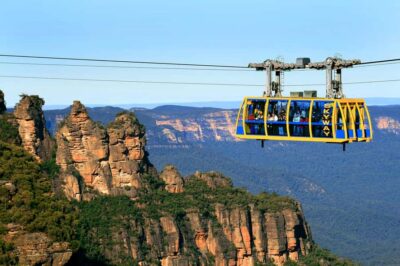
Sydney: Blue Mountains National Park Tour with River Cruise
Read our review →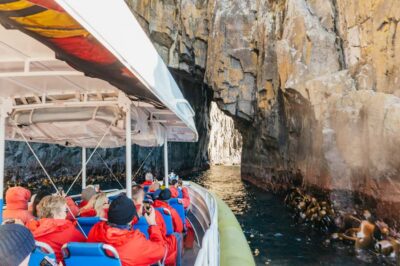
From Hobart/Adventure Bay: Bruny Island Wilderness Cruise
Read our review →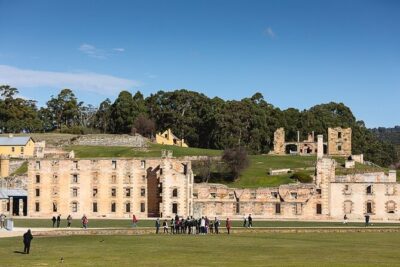
Port Arthur Full-day Guided Tour with Harbour Cruise and Tasman National Park
Read our review →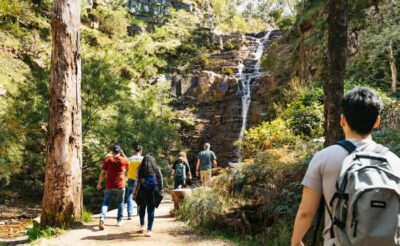
Grampians National Park Small-Group Eco Day Tour
Read our review →
Hobart: Bruny Island Wilderness Coast Eco Cruise with Lunch
Read our review →Lists this park day appears in