
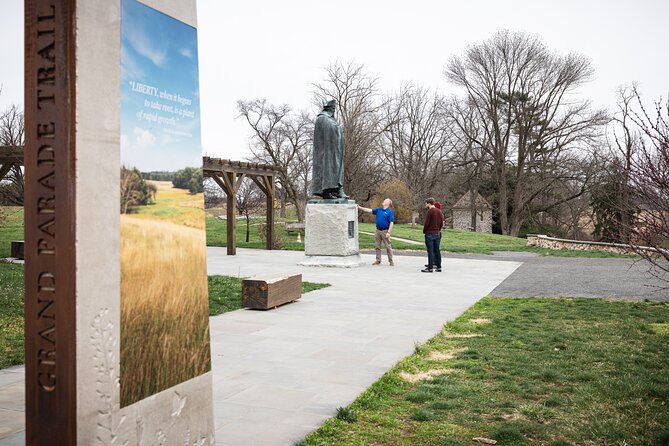
Reviewed · USA NATIONAL PARK TOURS
Driving Tour of Valley Forge National Park from Philadelphia
Valley Forge is not simply a stop on the Revolutionary War map. It is the place where Washington’s tired, poorly supplied army spent the winter of 1777 to 1778, then emerged better trained and more disciplined. This half-day driving tour gives you the useful overview that can be hard to build on your own.
I like the round-trip ride from Center City and the way the guide fills the drive with Philadelphia and Revolutionary War background. I also like the small-group format, with the tour described as capped at 12 and the additional booking information listing a maximum of 6. The one drawback is that four and a half hours gives you a survey of the park, not a slow, full-day visit.
Key points to know
- Washington’s headquarters gives the encampment a personal focus, with the chance to see the restored home if it is open.
- The Muhlenberg Brigade huts show how ordinary soldiers lived through the harsh winter.
- Von Steuben’s statue explains how training turned an exhausted army into a more effective fighting force.
- Philadelphia pickup and return remove the need to plan a rental car or public transit connection.
- Guides including Tom, Adam, James, Rick, Laura, Dale, and Marty have been praised for clear storytelling, humor, patience, and flexibility.
- Bring water, since you will make several stops and walk around outdoor sites.
Why Valley Forge matters beyond the famous winter story
Many people arrive knowing only that Washington’s army suffered at Valley Forge. The better story is what happened next. The winter tested the army’s food supply, clothing, shelter, health, and discipline. It also became a training period that changed the Continental Army’s effectiveness.
Your guide supplies the connections. You will hear about Washington, General Henry Knox, Baron Friedrich von Steuben, and the soldiers who built their own shelters under hard conditions. That background matters because the park’s open fields and reconstructed huts can otherwise feel quiet and abstract.
The tour also gives you context on the road between Philadelphia and the park. Guides such as Rick, Laura, and Dale have used the drive to discuss Philadelphia history and nearby places, so the transport is more than a transfer in a vehicle. Ask questions as you go. The strongest part of this experience is the human explanation attached to each site.
More Self-Guided Driving and Audio Tours in the USA:
- Joshua Tree National Park Self-Guided Driving Audio Tour
★ 4.5 · 762 reviews - Ultimate Acadia National Park Self-Guided Driving Audio Tour
★ 4.0 · 521 reviews - From Moab: Half-Day Arches National Park 4×4 Driving Tour
★ 4.8 · 440 reviews
The 9:00 a.m. pickup from Center City
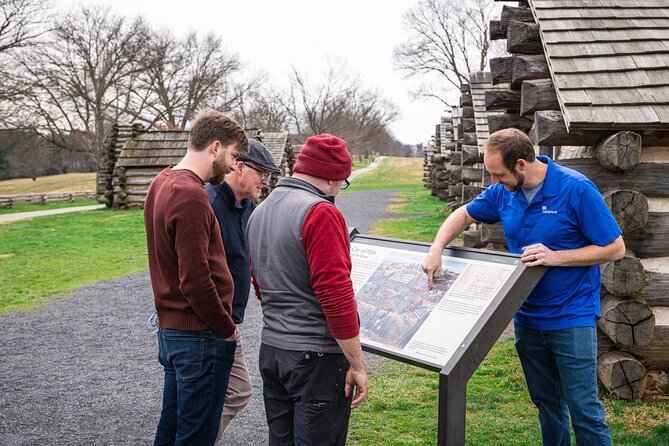
The tour begins at 1200 Arch Street in Philadelphia at 9:00 a.m. and returns to the same meeting point. Round-trip transportation is included, along with an English-speaking local guide and a donation to Valley Forge National Historical Park.
This arrangement is especially useful if you are staying in Center City and do not want to rent a car for one suburban outing. It also keeps the morning simple: arrive at one central meeting point, ride to the park, follow a planned route, and return to Philadelphia.
The exact vehicle details are not provided, so do not book this expecting a particular type of coach or luxury transport. The main benefit is practical. You can focus on the park instead of driving, navigating, or working out where to park at each stop.
The tour is advertised as a small-group experience. One part of the information gives a cap of 12, while the additional details list a maximum of 6. Since that affects the feel of the outing, confirm the current group limit when booking. Either way, the format is intended to be personal rather than a large bus tour.
Visitor Center: begin with the big picture
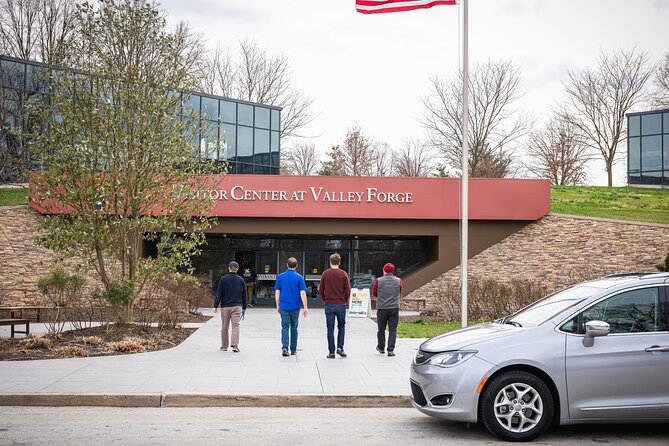
The revitalized Visitor Center is the natural opening stop. You have about 15 minutes here, with admission included, to use the self-guided exhibit and watch a documentary about the winter encampment.
This is a short visit, so treat it as an introduction rather than a museum session. The exhibit and film help you understand what the army faced and how Washington developed as a leader during the crisis. Once you have that frame, the outdoor stops make more sense.
One practical warning: access can change during government closures or other operating disruptions. On one occasion, a guide replaced the closed Visitor Center with another interesting stop. That flexibility is useful, but you should not assume every indoor feature will be available on your date.
Muhlenberg Brigade huts: the soldiers’ winter quarters
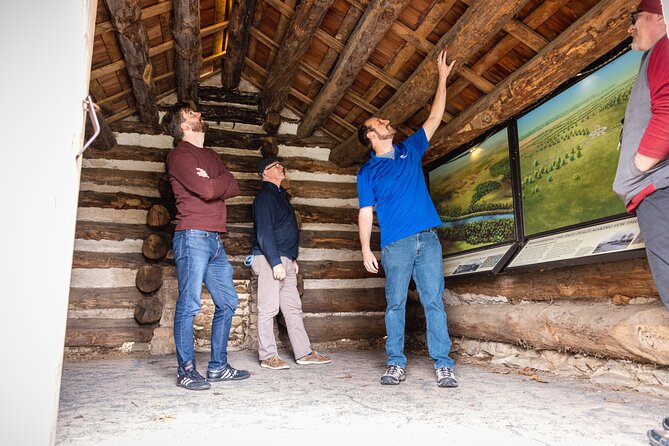
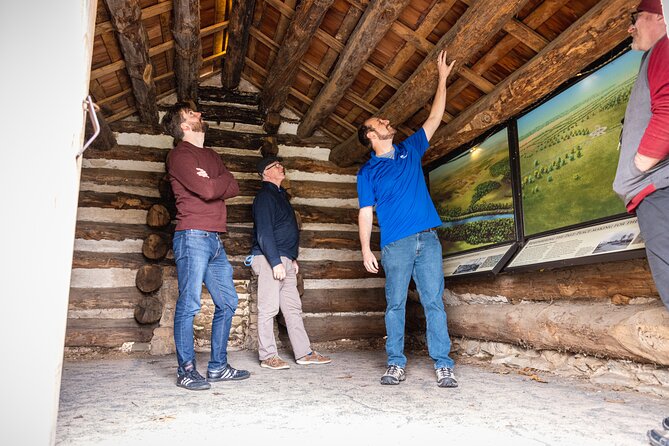
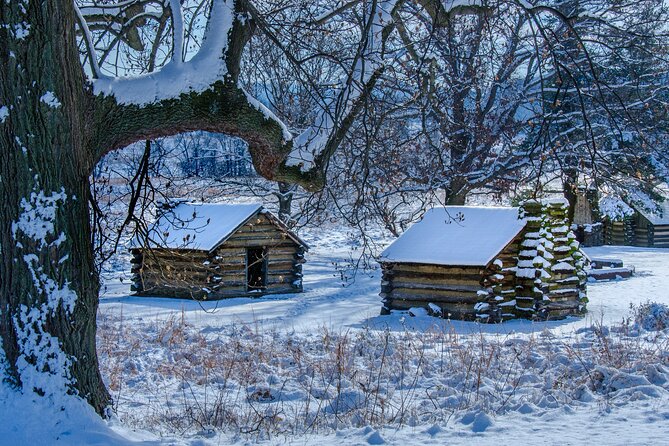
The reconstructed Muhlenberg Brigade huts are one of the most effective stops because they bring the story down to daily life. You have about 20 minutes to examine the structures and consider how soldiers lived during the winter of 1777 to 1778.
These huts served as winter quarters for General Peter Muhlenberg’s brigade. Soldiers constructed them while dealing with severe conditions, and the simple buildings help explain the limits of army life at Valley Forge. This is not just a military command story. It is also a story of shelter, endurance, and routine.
The stop is outdoors, so wear comfortable shoes and dress for the weather. You will have time to look around, but not enough time for a long independent walk through every part of the site. Families may find this section especially useful because the physical buildings give younger visitors something concrete to see.
More National Park Tours in the USA:
- Miami: Everglades National Park Airboat Tour & Wildlife Show
★ 4.5 · 7,296 reviews - Clear Kayak Tour of Shell Key Preserve and Tampa Bay Area
★ 5.0 · 5,800 reviews - Discover Rocky Mountain National Park
★ 5.0 · 3,419 reviews - Mt. Rainier National Park Highlights Tour
★ 5.0 · 3,156 reviews
National Memorial Arch and the cost of the encampment
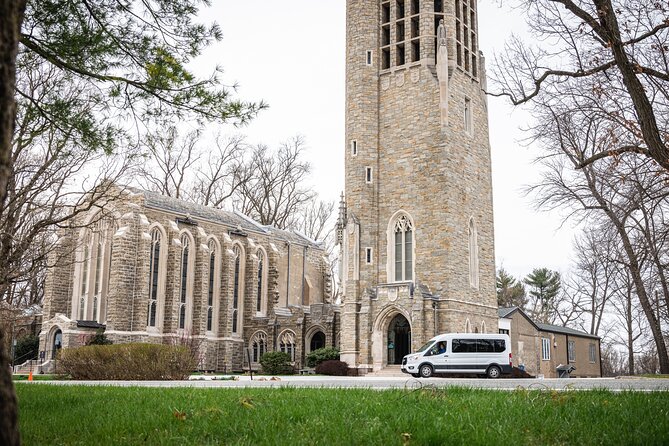
The National Memorial Arch is a brief stop of about 15 minutes. Its purpose is to honor Washington and the soldiers who endured the encampment.
The arch works best after the huts because you have just seen the kind of shelter the army used. It turns the broad story of sacrifice into a place for reflection. The visit is short, but the guide’s explanation can add meaning that the monument alone may not provide.
Do not expect a long ceremony or extensive time at every monument. This is a moving stop within a brisk route, not a dedicated memorial tour.
Washington’s headquarters at 1400 North Outer Line Drive
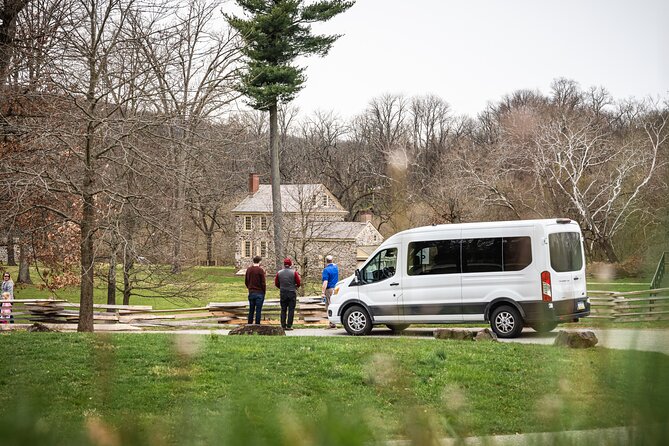
Washington’s headquarters is one of the tour’s most valuable stops. You have about 20 minutes to walk around the restored stone home, and if the building is open that day, you may see all three floors inside.
This is where the story shifts from the army as a group to Washington as a commander. The house helps you picture the decisions, correspondence, and planning behind the encampment. It also gives you a break from the open fields and reconstructed military shelters.
The important qualification is the phrase if open. Interior access is not guaranteed, so plan to appreciate the building from outside as well. Several parts of the tour are weather and operating-hours dependent, and this is one of them.
Von Steuben’s statue and the Grand Parade
The statue of Baron Friedrich von Steuben overlooks the grounds associated with the Grand Parade. You have about 10 minutes here, but the subject deserves more than a quick glance.
Von Steuben was the Prussian military officer Washington trusted to reorganize and train the exhausted Continental soldiers. The training carried out at Valley Forge helped make the army more disciplined and effective. The open view from the statue gives the guide a natural place to explain how instruction changed the force.
This stop is a good reminder that Valley Forge was not only about suffering. It was also about organization and preparation. The men did not simply wait out the winter. They trained, learned military procedures, and worked toward becoming a stronger army.
A particularly memorable possibility is seeing the area used for a citizenship ceremony. One group encountered people taking the oath of citizenship near the von Steuben statue. That is not a scheduled part of the tour, but it shows how the site can connect the founding era with American life today.
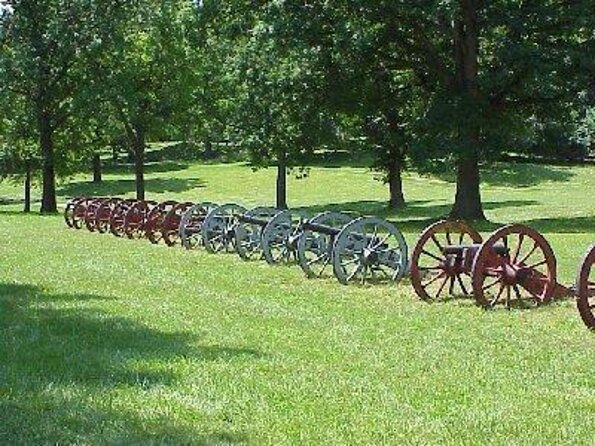
Artillery Park and the work behind the battles
Artillery Park adds an important military angle. The area includes reconstructed artillery pieces and exhibits about the training, maintenance, and use of artillery during the war.
Visitors often focus on infantry huts and famous commanders, but artillery required its own equipment, skill, and supply system. This stop helps explain the practical work behind battlefield operations. You can look at the pieces while the guide connects them to the wider task of keeping an army equipped.
The available schedule does not give an exact time for this stop, so the amount of independent exploration may vary. Think of it as part of the driving route rather than a long museum visit.
The chapel and the Schuylkill River
The active Gothic Revival-style chapel is a memorial dedicated to George Washington. It offers a quieter pause in the route and gives the park a different tone from the military exhibits and open parade grounds.
The Schuylkill River adds the natural setting that shaped the encampment. During the Revolutionary War, it served as a waterway for transportation and communication for both American and British forces. Today, the river also provides a scenic element during the drive through the park.
These stops help prevent the tour from becoming a string of military monuments. You get architecture, water, open views, and places for reflection alongside the historical interpretation.
What the guides add to the experience
The guide can make or break a history tour, and this experience has a strong record in that area. Tom, Adam, James, Rick, Laura, Dale, and Marty are among the guides praised for clear explanations, humor, safe driving, and a friendly manner.
The most useful quality is not simply knowing dates. It is the ability to connect the huts, headquarters, training grounds, and artillery to one story. Tom, for example, has been praised for making the subject understandable for children, while Adam has been described as covering both Valley Forge and the wider Revolutionary War. Marty has been noted for patience and for adjusting the pace to suit a family group.
You may also get practical Philadelphia advice. Guides have suggested restaurants and other local places, and one guide immediately checked with a Park Service ranger when unsure about an answer. That kind of honesty is preferable to a confident guess.
The experience can work for solo visitors, couples, and families. It has also worked well as a private-feeling outing when only one person booked. If you prefer to wander alone for hours, the guided schedule may feel too structured. If you want the story explained as you move, it is a good fit.
Is $149 a fair price?
At $149 per person, this is not the cheapest way to reach Valley Forge. You are paying for roughly four and a half hours, round-trip transportation from Philadelphia, a local English-speaking guide, the planned route, and the park donation.
The value depends on your starting point and priorities. For someone without a car, the price can be reasonable because it removes a separate transportation problem and gives you a guide for the full outing. For a visitor already staying near Valley Forge, the included ride from Philadelphia may add little value.
The tour also saves planning time. You do not need to build a route between the Visitor Center, huts, headquarters, arch, artillery area, chapel, and river. You do give up the freedom to linger at one favorite site, so independent visitors with plenty of time may prefer a self-guided visit.
Admission at the listed stops is free, but food, drinks, souvenirs, and guide gratuities are not included. Bring water, and plan to tip if the guide provides the kind of service you value.
Who should book this half-day tour?
I would choose this experience if you are staying in Philadelphia, want a clear introduction to Valley Forge, and prefer not to drive. It is especially suitable for history fans, families, solo visitors, and anyone who wants an English-speaking guide to explain the people behind the monuments.
It also suits visitors with limited time. The route covers the park’s major historical points in one morning and gets you back to Philadelphia the same day.
I would hesitate if you want a full day of hiking, long museum visits, or extended time inside Washington’s headquarters. The schedule is purposeful and fairly tight. Indoor access can also change, and the group-size information should be confirmed because both 12 and 6 appear in the booking details.
The tour has a 5 out of 5 rating from 297 reviews, with 99 percent recommending it. More useful than the numbers is the consistent pattern: praise centers on punctual pickup, strong historical explanation, personable guides, safe driving, flexibility, and a good balance of facts and humor.
Should you book it?
Book this tour if Valley Forge is important to you but you have only half a day in Philadelphia. The ride, route, and guide solve the main problems of visiting on your own, and the best stops give you both the soldiers’ experience and the commanders’ decisions.
Skip it if you already have a car, want to explore at your own pace, or can devote a full day to the park. For most Philadelphia visitors, though, the $149 price buys a well-organized introduction to a place that deserves more than a quick photograph.
FAQ
How long is the Valley Forge tour?
The tour lasts approximately 4 hours and 30 minutes.
Where does the tour begin?
It begins at 1200 Arch Street, Philadelphia, Pennsylvania 19107.
What time does the tour start?
The scheduled start time is 9:00 a.m.
Does the tour return to Philadelphia?
Yes. The activity ends back at the Philadelphia meeting point.
Is transportation included?
Yes. Transportation to and from Philadelphia and Valley Forge is included.
Is the tour conducted in English?
Yes. A local English-speaking guide leads the experience.
How large is the tour group?
The information lists a small-group cap of 12 and also gives a maximum of 6 travelers. Confirm the current group limit when booking.
Is food included?
No. Additional food and drinks are not included.
What is the cancellation policy?
You can cancel at least 24 hours before the start time for a full refund. Cancellations or changes made less than 24 hours before the start time are not accepted for a refund.
Newest park tours we have reviewed in the USA
- Fort Pierce: Prehistoric Preserve Kayak Tour★ 5.0 · 2 reviews
- Full-Day Audio Driving Tour of Arches National Park★ 4.5 · 27 reviews
- Canyonlands National Park Self-Guided Driving Audio Tour★ 4.5 · 54 reviews
- SLC:Grand Teton and Yellowstone National Park Multi-Day Tour★ 3.7 · 7 reviews
- Grand Teton,Yellowstone National Park 3-Day Tour from SLC★ 3.3 · 13 reviews
- 4-Day Salt Lake City, Grand Teton, Yellowstone National Park Tour★ 4.0 · 6 reviews
- Utah Mighty 5 National Parks: Small Group 7-Day Tour★ 4.5 · 7 reviews
- Small Group One Day Tour Death Valley National Park and Rhyolite Ghost Town★ 4.5 · 74 reviews
USA National Park Tours, compared.

Everglades National Park Airboat Tour & Wildlife Show
Read our review →
Clear Kayak Tour of Shell Key Preserve and Tampa Bay Area
Read our review →
Yosemite Highlights & Giant Sequoias Day Tour from San Francisco
Read our review →
Grand Canyon National Park South Rim Bus Tour from Las Vegas
Read our review →
Wilderness, Wildlife, Glacier Experience from Anchorage
Read our review →
Bryce Canyon & Zion National Park from Las Vegas with Lunch, WiFi
Read our review →
Grand Canyon National Park South from Las Vegas with Lunch, WiFi
Read our review →Lists this park day appears in