
Reviewed · USA NATIONAL PARK TOURS
Big Bend National Park Self-Guided Driving Audio Tour
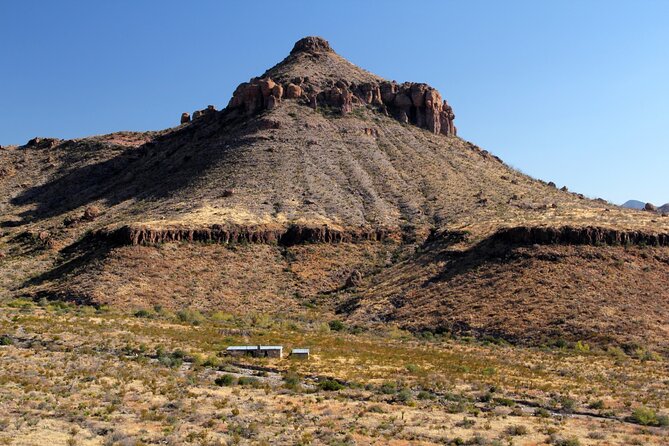
Big Bend’s great strength is its scale. This self-guided drive carries you from the Chihuahuan Desert into the forested Chisos Mountains, past old ranches and volcanic rock, then toward the Rio Grande and Santa Elena Canyon. The narration gives meaning to views that can otherwise blur together after many miles of road.
I like the 90-plus audio stories, which keep the drive lively without forcing you to stop at every pullout. I also like the low group price: $16.99 covers up to four people, so it can cost less than a single guided activity. The main drawback is setup. You must download the app and tour content before reaching the park, and one user needed extra help finding the correct starting instructions.
Key points at a glance
- More than 72 miles of driving: The route links major sights from the entrance area to Santa Elena Canyon.
- 90-plus English stories: Audio begins automatically as you approach each point on the route.
- Fossils and geology: Hear about Cretaceous rocks, more than 1,200 fossil finds, chert tools, volcanic dikes, and canyon formation.
- Human stories with the scenery: Old ranches, Castolon, Terlingua, and the mysterious Marfa Lights add a strong historical thread.
- One-hour detour option: You can extend the outing toward a historic village near the Rio Grande and a hot springs trail.
- Offline and flexible: Download once over strong Wi-Fi or cellular service, then start, pause, skip, or repeat the tour at your own pace.
What this Big Bend audio drive actually offers
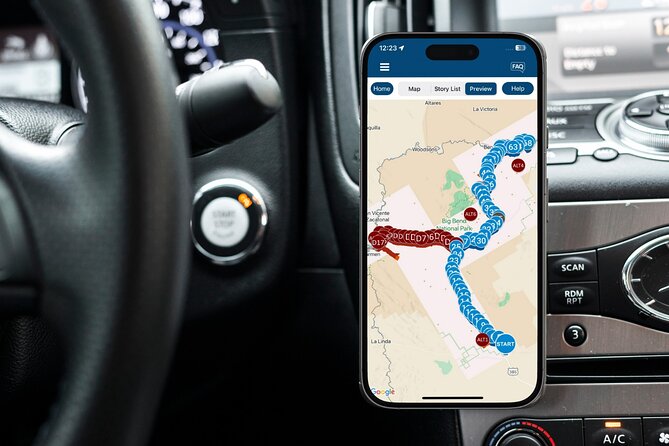
This is a private driving tour for your own group, not a bus ride and not a scheduled walk with a guide waiting at the entrance. You meet no one at the starting point. Instead, you download Action’s Tour Guide app, enter the password sent by email and text, drive to the first point near the Big Bend National Park sign, and let the app guide you from there.
The route takes about two to three hours if you keep moving. That timing matters because Big Bend is huge, and the park itself can easily reward a full day or several days. This experience is best understood as a narrated scenic route, not a complete visit to every corner of the park.
The app includes offline maps and location-based playback. As you reach each story point, the narration should begin without you tapping your phone. You can connect your phone to the car stereo through Bluetooth, USB, or AUX. Apple CarPlay is supported for audio playback, while Android Auto support is still coming.
Use an iPhone with iOS 15 or later, an Android device with version 9 or later, or an iPad or tablet with GPS and cellular capability. Download the tour while you have a strong connection. Reception can be limited in a remote park, and arriving without the audio files is an avoidable nuisance.
More Self-Guided Driving and Audio Tours in the USA:
- Joshua Tree National Park Self-Guided Driving Audio Tour
★ 4.5 · 762 reviews - Ultimate Acadia National Park Self-Guided Driving Audio Tour
★ 4.0 · 521 reviews - From Moab: Half-Day Arches National Park 4×4 Driving Tour
★ 4.8 · 440 reviews
From the entrance station into the Chihuahuan Desert
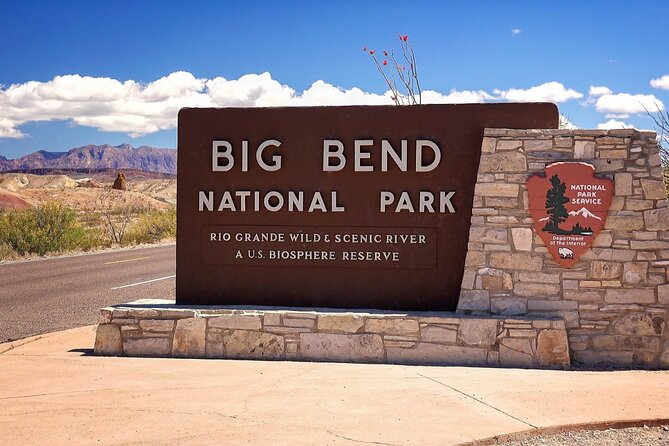
The first part of the drive sets up the scale of the park. At the entrance station, you get the practical transition from ordinary road travel to Big Bend’s broad desert country. The entrance itself is modest, with a rustic design and a sign marking the park.
The narration then introduces the Chihuahuan Desert, which spreads across parts of Texas, New Mexico, and Mexico. The comparison to France fitting inside this desert gives you a useful sense of size. You also get the simple origin of the name Chihuahua, tied to the Mexican state and, in turn, to the dog breed.
I like this early context because it helps you read the scenery. The desert is not just empty ground between attractions. It is a large ecological region with its own plants, rock, weather, and wildlife patterns. The short audio segments also help the miles pass without turning every stop into a formal lesson.
The route points out the Sierra del Carmen across the Rio Grande on the Mexican side. With no rivers, roads, or towns running through that area, it is described as one of the most remote regions on earth. That story adds a sense of distance that photographs cannot quite convey.
Chisos Mountains and the fossil story
The Chisos Mountains provide one of the route’s clearest changes in scenery. Most of Big Bend is dry desert, yet the Chisos rise as a forested island above it. The tour explains the idea of a sky island, a high mountain environment separated from the surrounding lowlands.
You will want to watch for the contrast between the brown desert floor and the greener mountain slopes. The Chisos section is especially useful for first-time visitors who wonder why a forest appears in such an arid part of Texas. The narration also addresses the mountain name and its connection to the Chisos tribe.
The Fossil Discovery Exhibit adds a different kind of surprise. Opened in 2017, it features replicas of notable fossils found in the park. Paleontologists have excavated more than 1,200 fossils here, including material from the Cretaceous period.
Admission to the fossil exhibit is not included, so check the current access arrangements before building your timing around it. The audio gives you the story while driving, but it cannot replace seeing an exhibit in person. If you enjoy prehistoric animals and geology, this is one of the stops worth allowing extra time for.
Avery Canyon and the changing human story
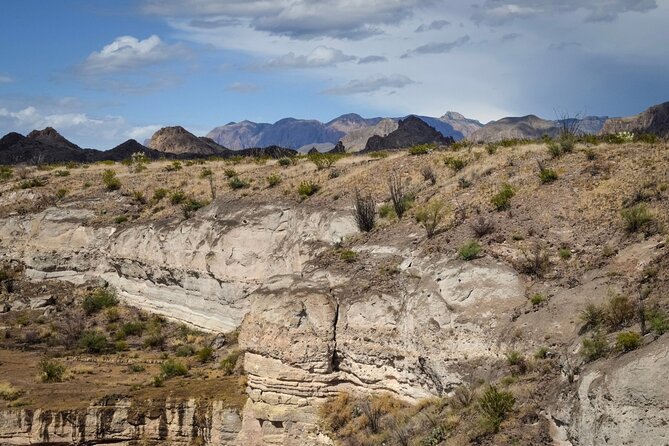
At Avery Canyon, the narration turns from ancient rock to more recent settlement. The canyon takes its name from J.C. Avery, who ranched in the area around the beginning of the 20th century.
The story connects local settlement to the railroad reaching nearby Marathon in the 1880s. The arrival of thousands of miles of track helped bring more people into Brewster County and changed the pace of development. It is a useful reminder that the remote country you see today was not always cut off from the rest of Texas.
One route description also includes a second Chisos Mountains segment, focused on the peaks, wildlife habitat, deep canyons, and distant Rio Grande views. The repeated mountain references are not wasted. The Chisos appear from several angles, and their shape changes as the road bends and the miles pass.
More Guided Trips in the USA:
- 2-Hour Gettysburg Battlefield Guided History Bus Tour with a National Park Guide
★ 4.5 · 2,201 reviews - Bryce: Guided Sightseeing Tour of Bryce Canyon National Park
★ 4.9 · 805 reviews - Jackson: Grand Teton National Park Guided Wildlife Tour
★ 4.8 · 676 reviews - Las Vegas: Grand Canyon National Park South Rim Guided Tour
★ 4.4 · 531 reviews
Ross Maxwell Scenic Drive and Marfa Lights
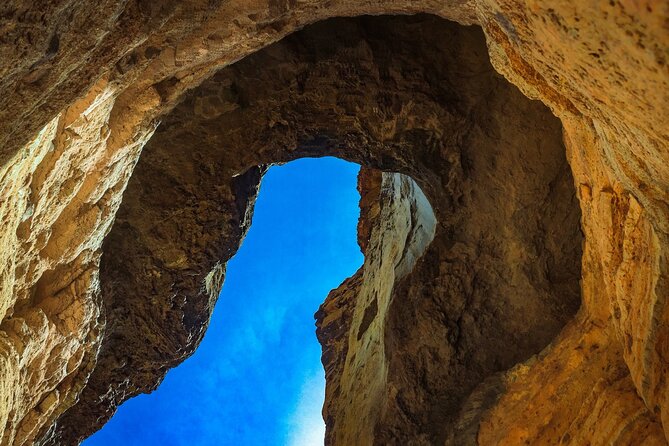
Ross Maxwell Scenic Drive is the scenic core of the experience. The road passes through desert views, rugged canyons, and broad outlooks toward the Chisos Mountains, Santa Elena Canyon, and the Chihuahuan Desert. Pullouts give you reasons to stop for photographs, but you should not let the audio rush you past them.
The app is designed to play while you drive, yet you control the pace. Pause the story when you pull over, take photographs, or stop for a snack. The route works best when you treat the stated two to three hours as a guide, not a deadline.
The Marfa Lights story adds a touch of mystery. It begins with a young cowhand who reported a brief, intense light in the distance in 1883. Other settlers had seen the same unexplained lights. The audio does not need to settle the question for you. It gives the evening sky and distant desert a memorable human story.
The viewing area is free, but the tour does not promise that you will see lights. Timing, conditions, and chance matter. Think of this as a stop with a story, not a guaranteed nighttime show.
Sam Nail Ranch and Lower Burro Mesa
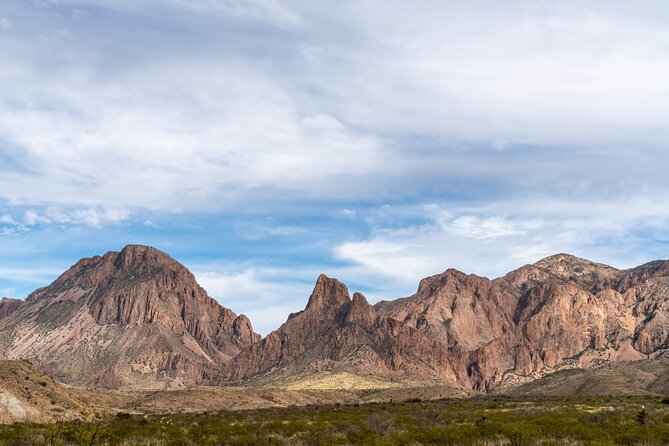
Sam Nail Ranch gives the route another dose of local history. The 15,000-acre ranch operated for almost 40 years. Two brothers came to Brewster County in 1916 during a period when ranching and homesteading were expanding.
The story connects the ranch to national events, including government encouragement for people to grow food and conserve resources during World War I. That broader context makes the ruins feel less isolated. You begin to see how national policy, rail travel, military service, and family decisions all shaped this remote corner of Texas.
Lower Burro Mesa Pour-off Trail shifts attention back to prehistoric life. Around 13,000 years ago, hunter-gatherers used local chert, a colorful sedimentary rock, to make tools such as spear points.
This is the kind of detail I value in an audio route. You are not only looking at a dry wash or red rock formation. You are being told how people used the place long before ranchers, miners, or park boundaries existed. Admission is listed as free, though hiking conditions and trail access can change, so allow only the time you actually have.
Homer Wilson Ranch, Sotol Vista, and Mule Ears
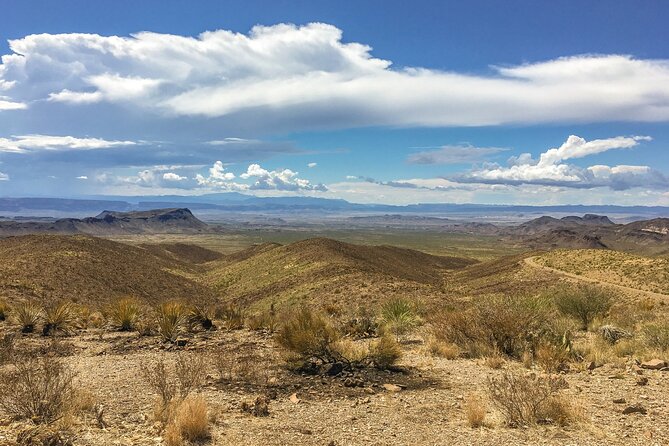
Homer Wilson Ranch brings you to Blue Creek Valley, a view that likely attracted Wilson when he settled there in 1929. A World War I veteran, he returned to Texas and sought a quiet place to build a home for his family.
The stop works because it joins a wide view with a personal decision. You can look across the valley and imagine why someone might choose such a remote setting, even while remembering how hard daily life would have been there.
Sotol Vista offers one of the broadest viewpoints on the route. The Chisos Mountains form a strong silhouette, while the Chihuahuan Desert stretches toward the Rio Grande and distant canyons. This is a good place to pause the audio and give your eyes time to adjust to the scale.
Mule Ears Spring Trail introduces volcanic geology. The twin formation consists of rhyolite, and the unusual shape comes from geological dikes. Magma forced its way into cracks in older rock, then cooled and hardened.
That explanation makes the formation easier to understand than a quick photograph does. You do not need a geology background to follow it, and the stop gives you a clear reason to look closely at the rock rather than simply admire its outline.
Terlingua, Tuff Canyon, and Cerro Castellan
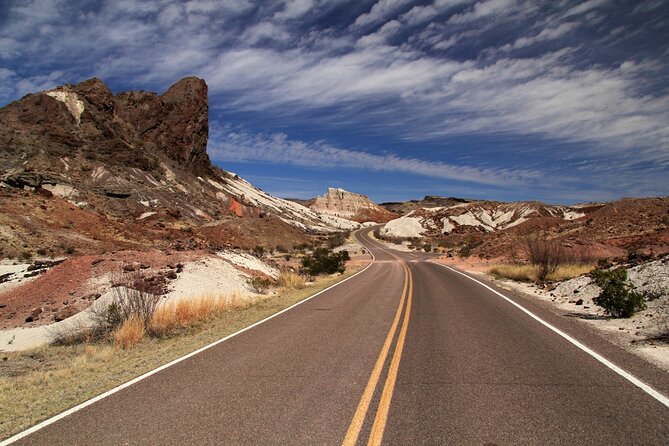
Terlingua is one of the route’s most characterful stops. Once a mining district, it later became a ghost town on the edge of Big Bend. The name is tied to tres lenguas, or three languages, referring to English, Spanish, and Lipan Apache.
The town’s story helps break up the natural scenery with evidence of work, migration, and cultural contact. It also gives you a better sense of how mining communities grew near the Rio Grande and later faded.
At Tuff Canyon Overlook, the road reaches a deep cut through red and tan rock. The rock records Big Bend’s volcanic past. The colors and layers make this a strong photo stop, but the audio is what explains why the canyon looks the way it does.
Cerro Castellan is another dramatic volcanic formation. The narration raises the practical questions you are likely to have while looking at it: how did the mountain form, and what created its red-orange surface? This is a good example of the tour’s approach. Instead of naming a formation and moving on, it gives you a reason to inspect it.
Castolon and the Rio Grande
Castolon Historic District preserves a few of the remaining buildings from the area’s pre-park days. At first glance, the site may look quiet or sparse. That is part of its value. The surviving structures show how much has disappeared since people lived and worked here before the national park was created.
The tour does not turn Castolon into a grand museum stop. Instead, it provides a short historical explanation while you pass through. If old buildings, military history, and settlement stories interest you, stop and take your time. If your priority is scenery, you can listen while continuing along the route.
The next major change comes at the Santa Elena Canyon River Access point. Here you can get close to the Rio Grande and spend time along the river’s edge. The experience does not include admission, equipment, or a reserved activity, so your visit is simply a chance to reach the river and explore within the time and conditions available.
The one-hour optional detour is another reason not to plan too tightly. It leads toward the remains of a historic village near the Rio Grande and a hot springs hiking trail. The app gives you advance notice as you approach the turnoff, allowing you to decide if the extra time fits your day.
Santa Elena Canyon as the final payoff
Santa Elena Canyon is the route’s big finish. The limestone cliffs rise sharply above the Rio Grande, creating one of Big Bend’s most recognizable views. The narration explains how the river helped shape such a dramatic cut through the rock.
The listed audio stop describes the river far below the cliffs, but your exact view and access will depend on where you stop and current conditions. Treat the route as a guide to the area, not a promise that every viewpoint will be open or that every trail will take the same amount of time.
This is where the self-guided format makes the most sense. You can finish the driving narration, then pause the app and give Santa Elena Canyon your own time. You do not need to keep pace with a group, and you can skip stories that do not interest you or replay the geology when you want a clearer explanation.
The published end point is Santa Elena Canyon Trail near Terlingua. The route begins near the Big Bend National Park sign in the Alpine area and finishes well inside the park region, so plan your day around where you need to go next.
Is $16.99 good value?
For up to four people, $16.99 is a strong price if you already plan to drive this route. A group of four pays about $4.25 each, and even two people pay less than the cost of many scheduled guided activities.
The value comes from repeat use as much as the first drive. The tour has lifetime access with no expiry, so you can pause it over several days, reuse it on another trip, or share the experience with the same group on future visits. You still pay separately for park admission and any attraction entry.
A traditional guide offers live conversation and can adjust to your questions. This app cannot do that. In return, you get privacy, no fixed departure time, and the ability to stop for photographs, food, trails, or quiet time whenever you wish.
The tour is sold per car, not per person. That makes it particularly useful for families, couples, and small groups sharing one vehicle. It is less useful if you want a long guided hike, a naturalist who can answer questions, or a route built around extended trail time.
Practical tips before you set out
Download the Action app and the tour files before you reach Big Bend. Search your email and text messages for audio tour to find the setup instructions and password. One person needed extra help with the start, so do not wait until you are at the entrance station to sort this out.
Start the app at the first story point. If more than one version appears, choose the one matching your starting point and direction. Keep to the recommended route and speed limit so the location-based audio has time to play in the right order.
The tour is offered in English only. Bring your own park entrance pass because admission is not included. The experience operates daily from 8:00 AM to 4:00 PM during the stated operating period, from May 16, 2024 through February 24, 2027.
Most people can take part, and the activity is private to your group. Free cancellation is available if you cancel at least 24 hours before the start time. Inside that window, the payment is not refunded and changes are not accepted.
Who should book this Big Bend tour?
I would choose this audio drive if you want a clear route, useful background, and freedom to stop without paying for a private guide. It suits a first visit, a couple sharing a car, or a family that wants the children to hear something more engaging than a list of place names.
It is also a good fit if you enjoy geology, fossils, ranch history, and wide desert views. The strongest material comes from the way those subjects connect: Cretaceous fossils, ancient chert tools, volcanic rock, ranch ruins, and the Rio Grande all appear along one long drive.
I would think twice if your main goal is hiking. The route points you toward trails and overlooks, but the stated duration assumes a driving tour with short stops. You will need to add your own time for walks, the hot springs detour, the Santa Elena area, and the fossil exhibit.
Should you book it?
Book this tour if you want an affordable audio companion for a scenic Big Bend drive and you are willing to prepare the app before arrival. The narration, especially the fossil, geology, ranch, and desert sections, gives structure to a very large park without trapping you in a group.
Skip it if you expect a live guide, detailed hiking directions, or park admission to be included. For most independent drivers, though, $16.99 for a private carload, 90-plus stories, offline use, and lifetime access is a sensible buy. Just download it early, allow more than two or three hours if you plan to stop often, and leave room for Santa Elena Canyon to be more than a quick final stop.
FAQ
How long does the Big Bend audio tour take?
The main driving route takes about two to three hours. It covers more than 72 miles and includes more than 90 audio stories. You can pause the tour, take breaks, or extend the outing with an optional detour.
What is included in the $16.99 price?
The price includes one self-guided English audio tour for a group of up to four people, offline maps, automatic location-based playback, and lifetime access with no expiry.
Is Big Bend National Park admission included?
No. You must purchase a separate entrance pass for Big Bend National Park. Attraction tickets and reservations are also not included.
How do I start the tour?
After booking, you receive setup instructions and a password by email and text. Download Action’s separate tour app and the tour content while you have strong Wi-Fi or cellular service. At the park, go to the first story point near the Big Bend National Park sign and open the app.
Does the tour work without cell service?
Yes. You must download the tour while connected to strong Wi-Fi or cellular service. Afterward, the offline maps and audio are designed to work without a phone signal.
Can I stop or reuse the tour?
Yes. You can start, pause, skip stories, take side trips, and continue later. The tour has lifetime access with no expiry, so you can use it on another trip as well.
Newest park tours we have reviewed in the USA
- Mt Rushmore Yellowstone & Arches National Parks 7-day Tour★ 4.5 · 6 reviews
- Private Tour of the Rocky Mountain National Park From Denver★ 5.0 · 15 reviews
- Private Rocky Mountain National Park Tour from Denver★ 5.0 · 6 reviews
- Private Day Tour From Denver to Estes Park and Rocky Mountain National Park★ 5.0 · 6 reviews
- Rocky Mountain National Park – Private Hiking Tour★ 5.0 · 17 reviews
- Rocky Mountain National Park – Private Sightseeing Tour★ 5.0 · 98 reviews
- Private Hike Emerald Lake In Rocky Mountain National Park★ 5.0 · 5 reviews
- Private Birding Hike in Rocky Mountain National Park★ 5.0 · 58 reviews
USA National Park Tours, compared.

Everglades National Park Airboat Tour & Wildlife Show
Read our review →
Clear Kayak Tour of Shell Key Preserve and Tampa Bay Area
Read our review →
Yosemite Highlights & Giant Sequoias Day Tour from San Francisco
Read our review →
Grand Canyon National Park South Rim Bus Tour from Las Vegas
Read our review →
Wilderness, Wildlife, Glacier Experience from Anchorage
Read our review →
Bryce Canyon & Zion National Park from Las Vegas with Lunch, WiFi
Read our review →
Grand Canyon National Park South from Las Vegas with Lunch, WiFi
Read our review →Lists this park day appears in