
Reviewed · AUSTRALIA NATIONAL PARK TOURS
From Port Arthur: Tasman Island Wilderness Cruise
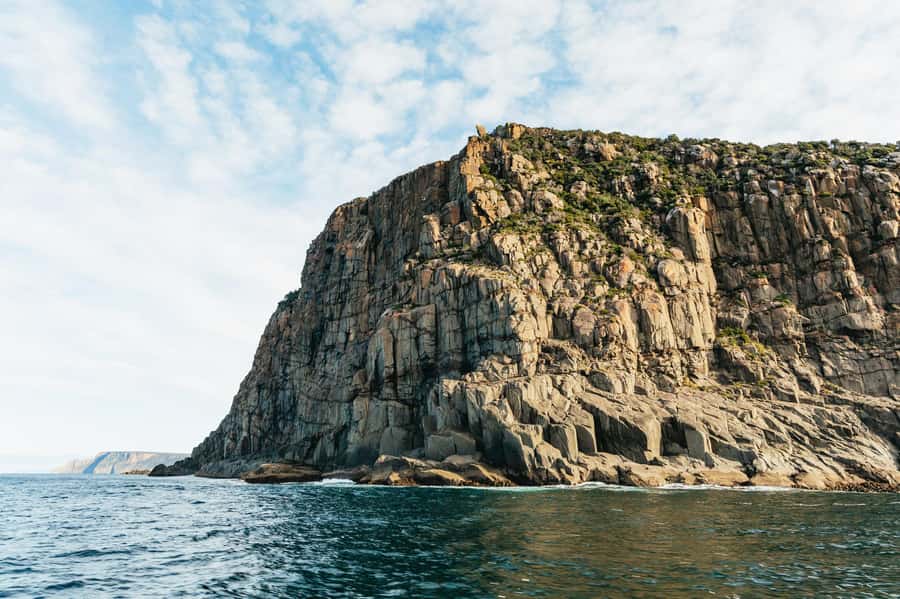
Beneath Cape Pillar, Tasmania’s cliffs rise straight from the Southern Ocean, and this three-hour wilderness cruise takes you right up against them. The boat threads past rock pillars, waterfalls, archways, blowholes, and sea caves along the Tasman National Park coast. On a good day, seals, dolphins, albatross, whales, and thousands of seabirds share the view.
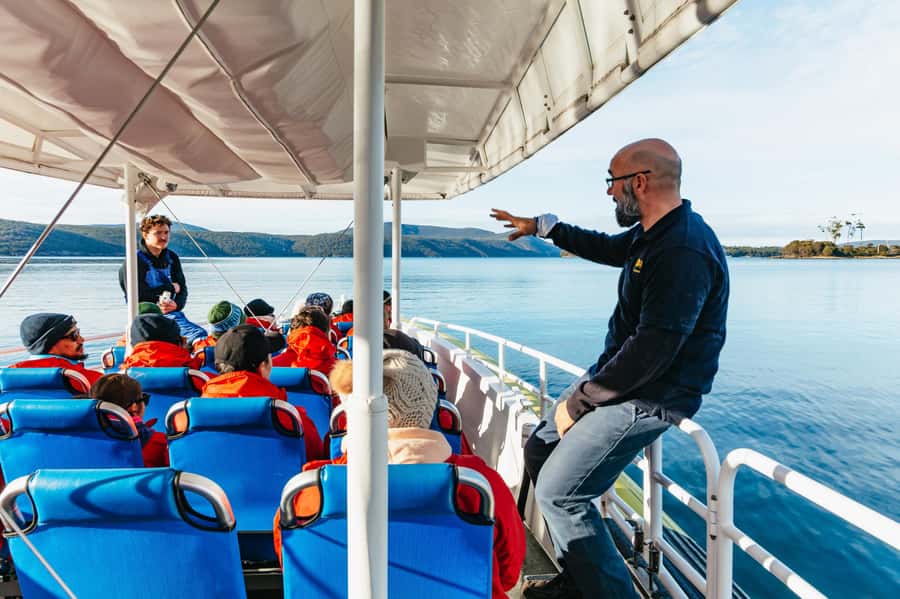
I like the combination of wildlife and geology. You are not simply looking for animals across a wide bay, you are also moving close to the cliff faces and into the edges of caves and arches. I also like the open-air, tiered seating, which gives you a clear view and a stronger sense of the wind, spray, and ocean.
The main drawback is the weather. Even on a sunny summer day, the boat can feel icy once it gathers speed, and rough water can make the ride bouncy. Commentary may also be hard to hear from some seats, so dress warmly and consider motion-sickness medication if you need it.
Key points to know before you go
- Cape Pillar’s giant cliffs: The route passes beneath the highest vertical sea cliffs in the Southern Hemisphere.
- Wildlife changes with the day: You may see seals, dolphins, whales, albatross, sea eagles, cormorants, gannets, and other seabirds.
- This is an active boat ride: The vessel can skim quickly over swells, with spray and plenty of movement.
- Warm clothing matters in every season: Bring layers, thermal clothing, gloves, and a beanie. A hooded waterproof coat is provided.
- The guides add real value: Skippers and crew such as Tim, Damo, Andrew, Hamish, Kane, and Jo combine local information with safety checks and light humor.
- At $127, it is a major outing, not a casual harbor cruise: The three-hour route covers a lot of coast and offers close views that are difficult to get from land.
Why this Port Arthur cruise is so memorable
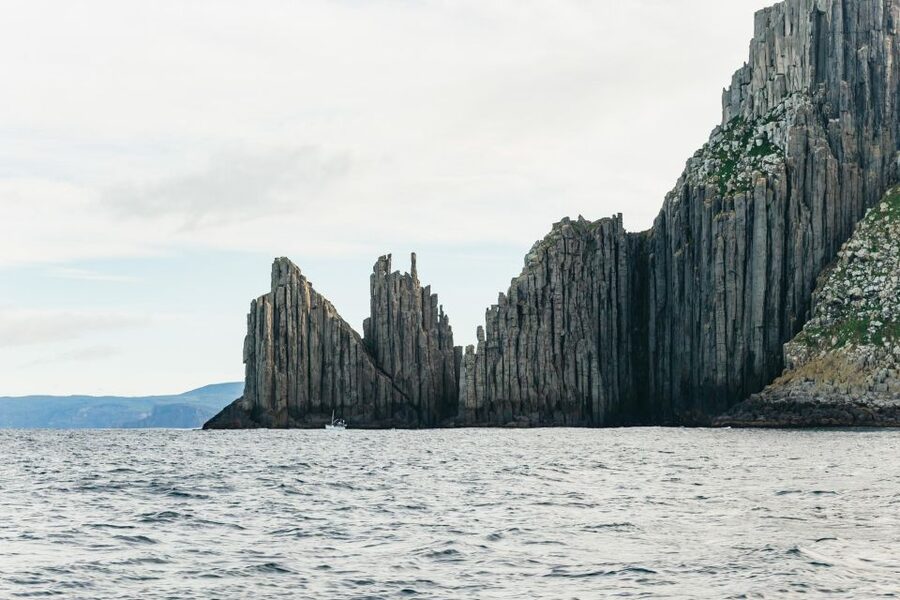
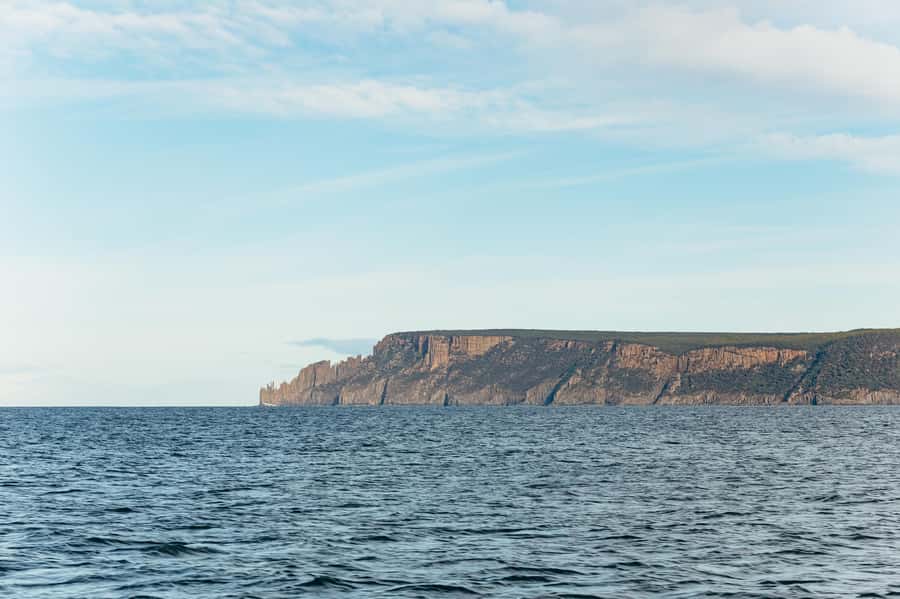
The Tasman Peninsula is best understood from the water. From shore, you can admire parts of the coastline, but the scale of the cliffs becomes clearer when the boat moves beneath them. Cape Pillar towers above the vessel, with dark rock faces, ledges, and weather-worn formations dropping into the sea.
The route follows coastline within Tasman National Park. That matters because the scenery remains raw and largely untouched. There are no waterfront cafes, roads, or houses interrupting the view. Instead, you get cliffs, ocean, rock shelves, nesting birds, and the sound of water striking the coast.
The boat’s design helps. Covered, tiered outdoor seating gives you a good all-round view rather than confining you inside a cabin. You can watch the bow, turn toward the cliffs, or scan the water for wildlife. The cover is useful in Tasmania’s changeable weather, but it does not make the trip warm. Wind still reaches you, and spray can reach the lower seats.
More National Park Tours in Australia:
- Litchfield National Park and Jumping Crocodile Cruise
★ 5.0 · 2,119 reviews - Grampians National Park Small-Group Eco Tour from Melbourne
★ 5.0 · 761 reviews - Sydney: Blue Mountains National Park Tour with River Cruise
★ 4.6 · 701 reviews
What happens from check-in to open water
You meet at the Tasman Island Cruises office. The operation is run by Pennicott Wilderness Journeys, and the activity is offered daily, with departure times depending on availability.
Some departures include a short bus transfer of about 20 minutes from the office to the boat. This is easy to handle, but allow for it when planning your day around Port Arthur. One useful detail is that the launch point may vary with conditions. A departure from Pirates Bay can be used when the Port Arthur side is less protected from wind, and this can sometimes mean a longer or different stretch of coastline.
Before boarding, the crew gives a briefing. Staff may also offer sea-sickness tablets before heading into rougher water. You receive a full-body hooded raincoat, which helps against spray and wind, but it is not a replacement for warm clothing underneath.
The crew usually divides duties between driving, commentary, and checking on passengers. Names that have been praised for strong guiding include Tim, Damo, Andrew, Tom, Hamish, Kane, Jo, Lily, Anna, and Benny. The exact team varies, but the pattern is consistent: an active skipper at the helm and another crew member keeping an eye on comfort and safety.
Along the cliffs from Port Arthur to Cape Pillar
Once the boat reaches the open coast, the ride changes character. It is not a quiet sightseeing launch. At times, the boat moves quickly across swells, then slows near a cliff face or rock formation so you can take in the details.
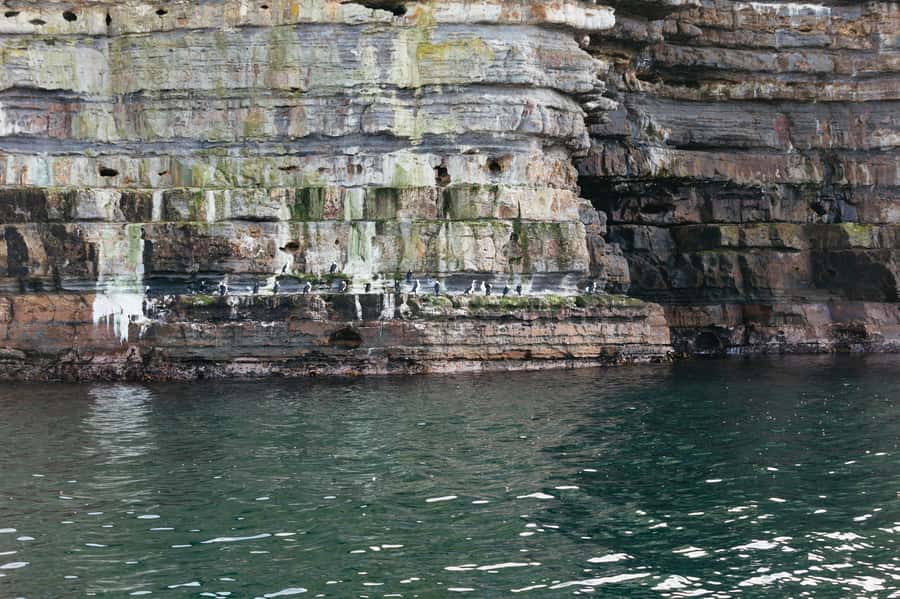
Cape Pillar is the headline sight. The cliffs are tall enough to make the boat seem very small, and the best perspective comes from looking upward from the water. Their height is impressive, but the close distance also lets you see cracks, shelves, stains from runoff, and the rough edges shaped by the sea.
The boat works along the coastline rather than stopping at one single viewpoint. That gives you a series of changing angles. One section may show a clean vertical wall, another a narrow cleft or tall pillar, and another a broad arch where waves roll through.
The route can include waterfalls dropping down the rock, blowholes sending water or spray upward, and deep sea caves. Conditions determine how close the boat can safely go and which sections are practical. You may not see every feature on every departure, and the sea state can alter the route.
That flexibility is a strength, not a flaw. The crew can adjust the trip to the weather and swell instead of forcing a fixed path. The tradeoff is that two trips may feel different, even in the same season.
Caves, arches, and the force of the Southern Ocean
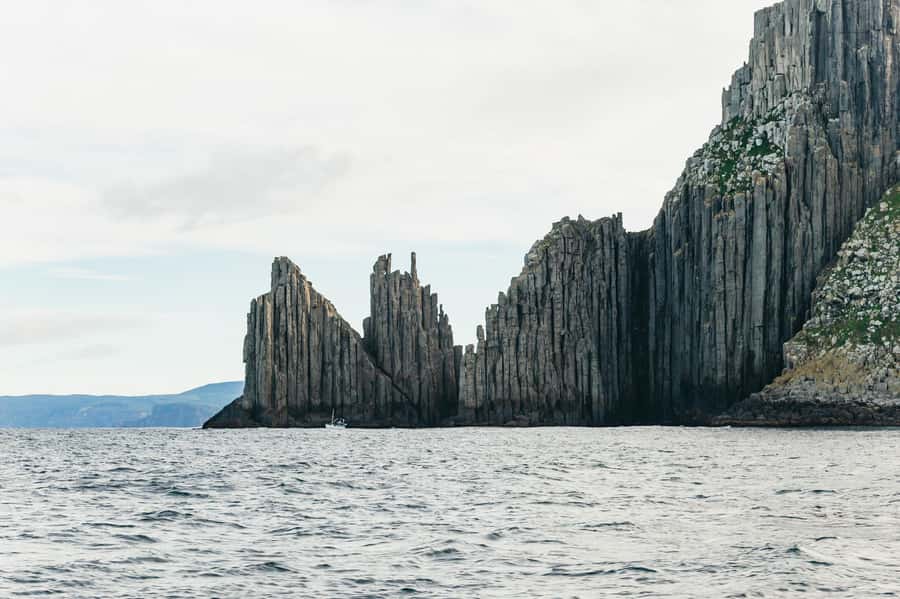
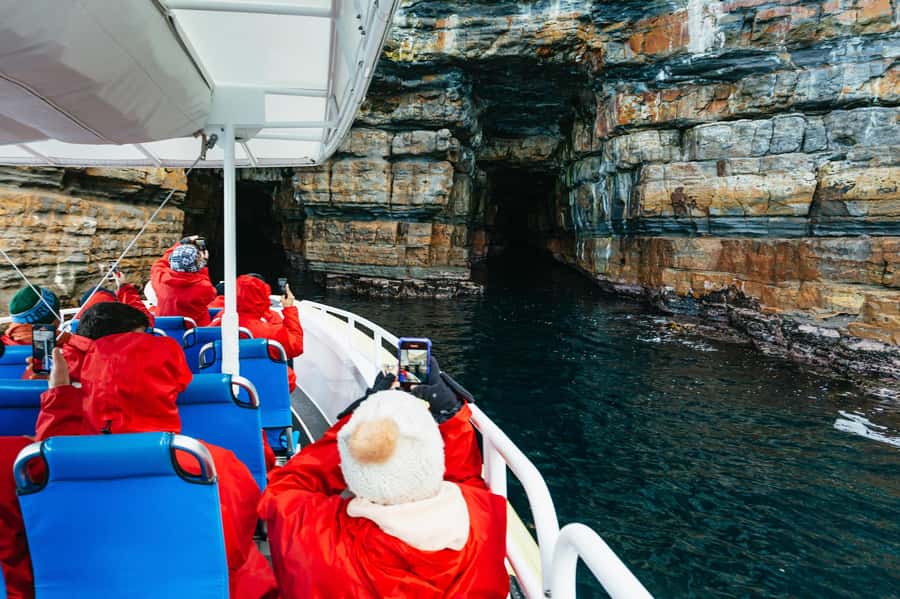
Entering the mouth of a sea cave is one of the more dramatic parts of the trip. The light drops, the sound of water echoes off the rock, and the boat’s closeness makes the cave feel much larger than it looked from outside.
The boat may also pass through or near archways and narrow rock formations. This is where the driving skill matters. The crew takes the boat close enough for a clear view while allowing for swell and changing conditions. At times, the ride through the water feels more like a controlled jet-boat trip than a gentle cruise.
You should not expect a calm, polished sightseeing experience. Spray, wind, and movement are part of the appeal, but they can tire you out. If you want a smooth ride with little motion, this is probably the wrong excursion. If you like a lively trip that puts you close to the elements, the movement adds to the fun.
Same region, a different park day:
- From Hobart/Adventure Bay: Bruny Island Wilderness Cruise
★ 4.8 · 601 reviews - Port Arthur Full-day Guided Tour with Harbour Cruise and Tasman National Park
★ 4.5 · 585 reviews - Grampians National Park Small-Group Eco Day Tour
★ 4.8 · 577 reviews - Hobart: Bruny Island Wilderness Coast Eco Cruise with Lunch
★ 4.8 · 498 reviews
Wildlife: seals, dolphins, birds, and migrating whales
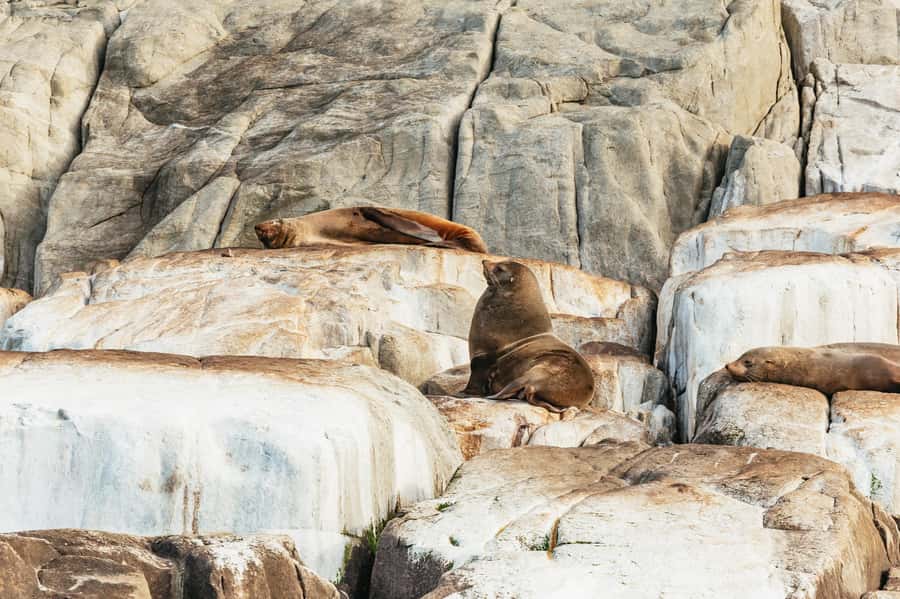
Wildlife is never guaranteed, but the coast supports a broad range of animals. Seals are among the most regular sightings, with groups resting on rocks or moving in the water. You may also see young seals, depending on the season and location.
Dolphins can appear near the boat, sometimes riding the bow wave or gathering in a feeding group. When a pod is active, the boat may turn or slow to give people on different sides a view. This is one reason the open seating is useful: you can shift your attention quickly from the cliffs to the water.
Birdlife is a major part of the trip. Look for albatross riding the wind, gannets plunging toward fish, sea eagles circling above, and cormorants nesting on the cliffs. Short-tailed shearwaters, gulls, sooty oystercatchers, and peregrine falcons may also appear.
You may see hundreds of seals and thousands of seabirds, but the exact mix depends on season, food, weather, and luck. Migrating whales are an added possibility, with sightings especially exciting when the boat finds them near the route. One day may bring whales and dolphins, another may offer close albatross views and large groups of seals.
The important thing is to treat wildlife as an extra rather than a promise. The cliffs and rock formations make the cruise worthwhile even when animals stay out of sight.
The guides, commentary, and onboard atmosphere
A strong skipper makes a real difference here. The crew needs to handle a fast, responsive boat while reading the water near cliffs and rock outcrops. At the same time, they point out birds, explain the coast, and answer questions.
The guiding style is friendly and often funny. Guides including Tim, Damo, Andrew, Hamish, Kane, and Jo have been singled out for clear information, good humor, and a serious approach to safety. Crew members also check on passengers during the ride, which is welcome when the sea becomes rough.
There is one small weakness: commentary can be difficult to hear from the front or at the back when the engine and wind are loud. Some passengers have wished for a microphone. I would treat the spoken information as helpful but not the sole reason to book. The cliffs, birds, and ocean remain the main event.
Cold, spray, and the practical side of the ride
The most common mistake is underdressing. Tasmania’s sun can make the day feel mild at the office, but the temperature drops quickly once the boat is moving. Even summer departures can feel wintry on the water.
Wear several layers, with thermal clothing if you have it. Add comfortable shoes, gloves, and a beanie. The supplied raincoat helps keep off spray, but you will be much happier with fleece or wool underneath.
Avoid bringing a large bag. Space is limited, and loose items are awkward on a moving boat. Keep anything essential secure and easy to reach.
The ride can be bouncy, especially in open water. If you are prone to motion sickness, take suitable medication before departure and choose a position toward the back if that advice suits you. The trip is safe and professionally operated, but safe does not mean still. You should be comfortable with a fast boat and changing sea conditions.
There is no minimum age listed for the cruise, making it suitable for families in principle. Still, each person should be ready for cold, spray, noise, and movement. Young children may enjoy the wildlife and speed, but the experience is not a quiet boat ride.
Is $127 good value for three hours?
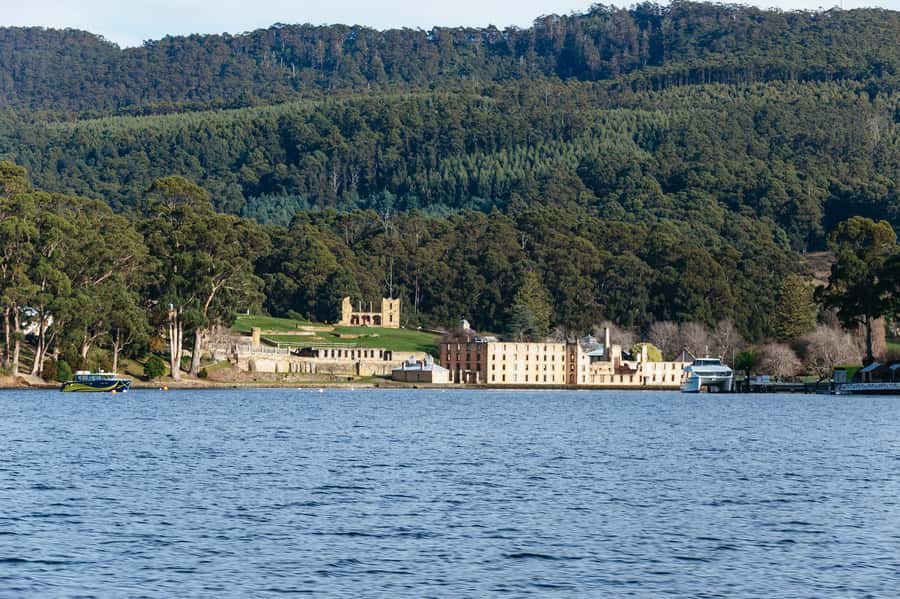
At $127 per person, this is not a budget add-on. The value comes from the amount of coastline covered and the boat access to places you cannot reach by road or ordinary walking trails.
You are paying for three hours on the water, a skilled boat crew, protective outerwear, guided interpretation, and the chance to see several types of wildlife in one outing. A lucky day with dolphins, whales, seals, and albatross can feel like excellent value. On a quieter day, the cliffs, caves, arches, and waterfalls still provide a strong reason to go.
I would compare it with the cost of separate sightseeing stops. Land-based viewpoints show only one angle at a time. This cruise lets you see the coast continuously, from below the cliffs and close to the waterline. That perspective is the real product.
The price is easiest to justify if you already plan to visit Port Arthur or the Tasman Peninsula. It fits well into a day focused on the coast and does not require a full extra day. If you are trying to keep costs low or dislike rough water, it may feel expensive.
Who should book this experience?
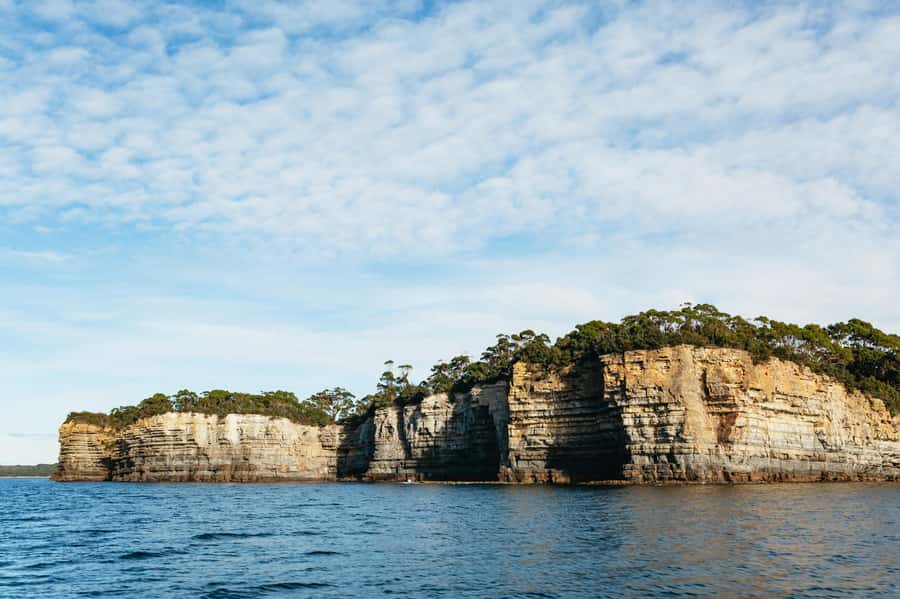
I would choose this cruise if you want active sightseeing, dramatic geology, and wildlife in the same outing. It suits people who prefer a real sense of place over a polished indoor attraction.
It is also a good choice for photographers, though you should protect cameras from spray and keep expectations flexible. Wildlife moves quickly, and the boat can turn without warning. The best photographs may come from simply watching rather than constantly adjusting equipment.
I would think twice if you need quiet commentary, dislike cold air, or become uncomfortable on a moving boat. The boat can be exciting, but it is not gentle. Sitting near the back may help with motion, while a forward seat can feel more exposed to spray and give you a stronger sense of speed.
Should you book the Tasman Island Wilderness Cruise?
Yes, if the Tasman Peninsula is part of your Tasmania plans and you want to experience the coast from its most revealing angle. The cliffs, caves, arches, and birdlife are enough to carry the trip, while dolphins, seals, and whales can turn it into a day you will remember for years.
Book it with realistic expectations. You may get clouds, cold, rough water, or fewer animals than hoped for. Wear serious warm layers, accept that the route may change with conditions, and think of the cruise as a wilderness outing rather than a protected sightseeing ride. With that mindset, the $127 price is fair for a fast, close look at one of Tasmania’s wildest shores.
FAQ
How long is the Tasman Island Wilderness Cruise?
The cruise lasts three hours.
Where do I meet for the cruise?
You meet at the Tasman Island Cruises office.
What wildlife might I see?
Possible sightings include seals, dolphins, migrating whales, albatross, gannets, sea eagles, cormorants, peregrine falcons, short-tailed shearwaters, sooty oystercatchers, gulls, and other seabirds.
Will the cruise visit sea caves and archways?
The route can include deep sea caves, archways, waterfalls, blowholes, and other rock formations. The exact route depends on weather and sea conditions.
What should I wear?
Bring comfortable shoes, warm clothing, gloves, and thermal layers. A beanie is also a wise choice. The company provides a full-body hooded raincoat for protection from spray.
Is there a minimum age?
There is no minimum age for this tour.
Can I cancel or pay later?
You can cancel up to 24 hours before departure for a full refund. A reserve-now, pay-later option is also available.
Newest park tours we have reviewed in Australia
- Kakadu National Park Wildlife & Ubirr Rock Art Tour from Darwin★ 4.5 · 101 reviews
- Grampians National Park with MacKenzie Falls and Kangaroos★ 4.5 · 121 reviews
- Barron Gorge and Kuranda National Park Half Day Rainforest and Waterfall 4WD Tour from Cairns★ 5.0 · 73 reviews
- PRIVATE Blue Mountains Wilderness & Wildlife Late Start Tour★ 5.0 · 46 reviews
- Private Guided Tour from Sydney to Blue Mountains National Park★ 5.0 · 41 reviews
- Wilderness, Waterfalls, Three Sisters BLUE MOUNTAINS PRIVATE TOUR★ 5.0 · 61 reviews
- Royal National Park Private Tour★ 5.0 · 55 reviews
- From Darwin: Litchfield National Park Small-Group Day Trip★ 4.7 · 131 reviews
Australia National Park Tours, compared.
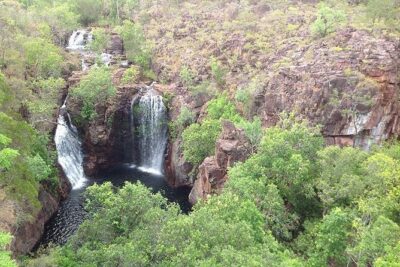
Litchfield National Park and Jumping Crocodile Cruise
Read our review →
Grampians National Park Small-Group Eco Tour from Melbourne
Read our review →
Sydney: Blue Mountains National Park Tour with River Cruise
Read our review →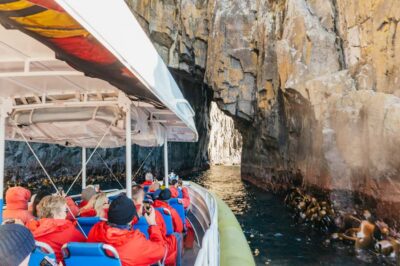
From Hobart/Adventure Bay: Bruny Island Wilderness Cruise
Read our review →
Port Arthur Full-day Guided Tour with Harbour Cruise and Tasman National Park
Read our review →
Grampians National Park Small-Group Eco Day Tour
Read our review →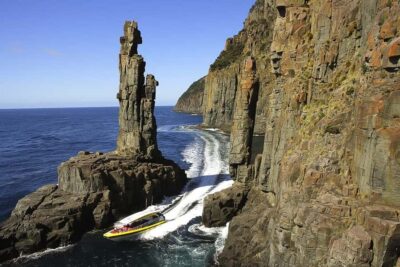
Hobart: Bruny Island Wilderness Coast Eco Cruise with Lunch
Read our review →
Wilsons Promontory Wilderness Cruise from Tidal River
Read our review →Lists this park day appears in