
Reviewed · MARSEILLE NATIONAL PARK TOURS
From Marseille: Calanques National Park E-Mountain Bike Tour
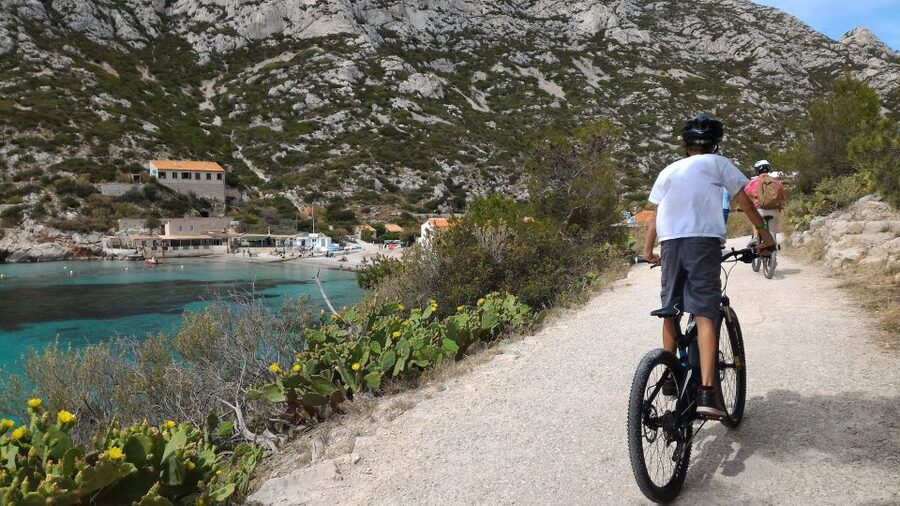
The best part of this four-hour ride is how quickly Marseille gives way to the rugged Calanques. You pedal from the city toward Château Pastré, climb rough tracks above the coast, and reach viewpoints that would take far more effort on a regular bicycle. The electric motor helps, but this is still a real mountain-bike outing.
I like the route’s mix of city edges, park paths, rocky hills, and sea views. I also like the small groups, with no more than 10 people, and guides such as Iris, Martin, and Cyril who explain local nature and history while keeping an eye on the group.
The catch is simple: this is not a gentle sightseeing cycle. You need to feel reasonably confident on a bike, and the steep, dusty, uneven trails can be demanding in hot weather. The return toward Marseille also includes traffic, so closed shoes and sensible riding clothes matter.
Key points to know before you ride
- A proper off-road route: You ride rocky, hilly paths, not just paved roads beside the sea.
- The electric bike helps on climbs: Pedal assistance makes steep sections manageable, but it does not remove the physical effort.
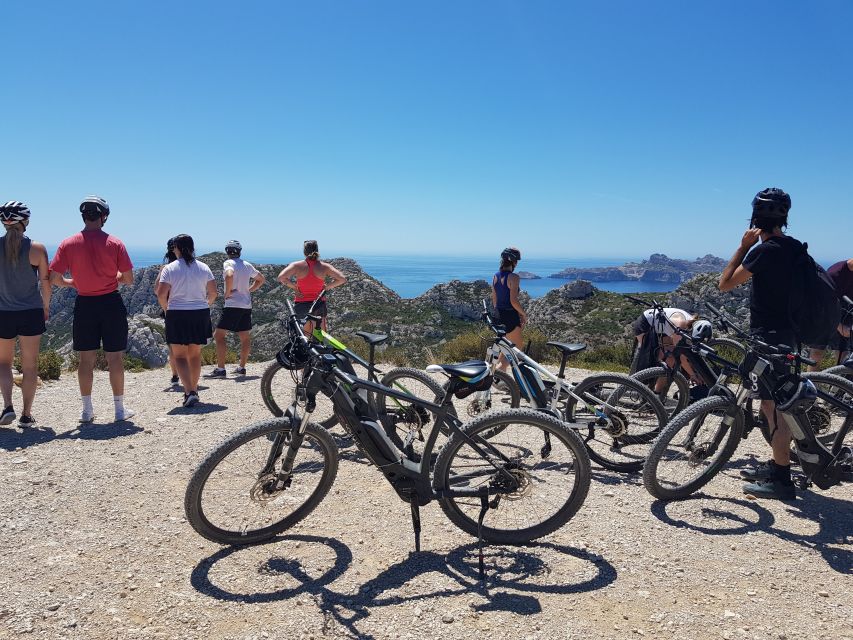
- Sormiou is the visual high point: The view from Col de Cortiou gives you a memorable look across one of the Calanques.
- Château Pastré starts the adventure: The ride leaves Marseille through a park before reaching more rugged ground.
- Small groups make a difference: Groups are limited to 10, with guides speaking English, French, or Spanish.
- Pack for sun and sweat: Bring sunglasses, sunscreen, a hat, comfortable shoes, and water. A swimsuit and snack may also be useful if your route includes the beach stop.
Why this Marseille bike tour feels different
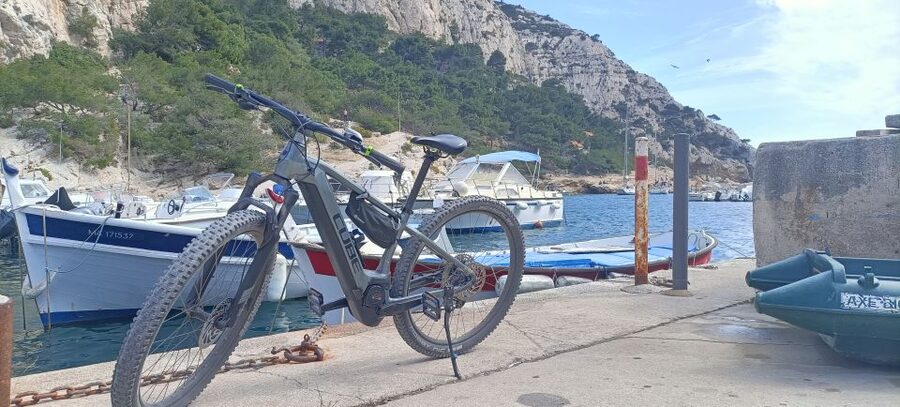
Many Marseille excursions show you the Calanques from a boat or a road. This one takes you into the hills under your own power. That changes the pace and the view. You notice the rough track beneath the tires, the effort of each climb, and the sudden opening of the sea beyond the scrub and stone.
The route is also unusual because it links several sides of southern Marseille. You begin near Pointe Rouge, pass through Château Pastré, ride toward Montagne de l’Aigle, reach Parc de la Fontaine d’Ivoire, and continue through Roy d’Espagne before returning to the harbor area. It is not just a ride in one isolated park section.
At $84 per person, the price is fair if you want an active half-day with equipment and a guide included. You are paying for the electric mountain bike, helmet, gloves, route planning, and local guidance. The value is strongest if you would not feel comfortable finding and riding these trails alone.
It is less attractive if you only want an easy cycle beside the water. The tour lasts four hours, and the route includes steep climbs and technical ground. You should think of it as a guided outdoor activity with sightseeing, not as a relaxed bicycle rental.
More National Park Tours in France:
- Ajaccio/Porticcio: Scandola Nature Reserve Guided Boat Tour
★ 4.3 · 1,375 reviews - From Ota: Scandola Nature Reserve Eco-Friendly Boat Tour
★ 4.5 · 932 reviews - Marseille: Calanques National Park Guided Hike with Picnic
★ 4.9 · 516 reviews
Getting started at Pointe Rouge
The meeting point is at 3 Avenue d’Odessa, in front of the Avia gas station and across from the restaurant Le Carré. The shop is inside the Résidence le Grand Large garage, with a street sign to help you find it. This is a practical location near Pointe Rouge, though the wording of the directions is worth reading carefully because the shop is inside the garage rather than in a prominent street-front storefront.
There are no toilets at the shop. Free public toilets are about 50 meters beyond the gas station near the bus stop, so use them before the group leaves. One beach stop may offer another chance later, but facilities are limited and one toilet stop was described as less than pleasant.
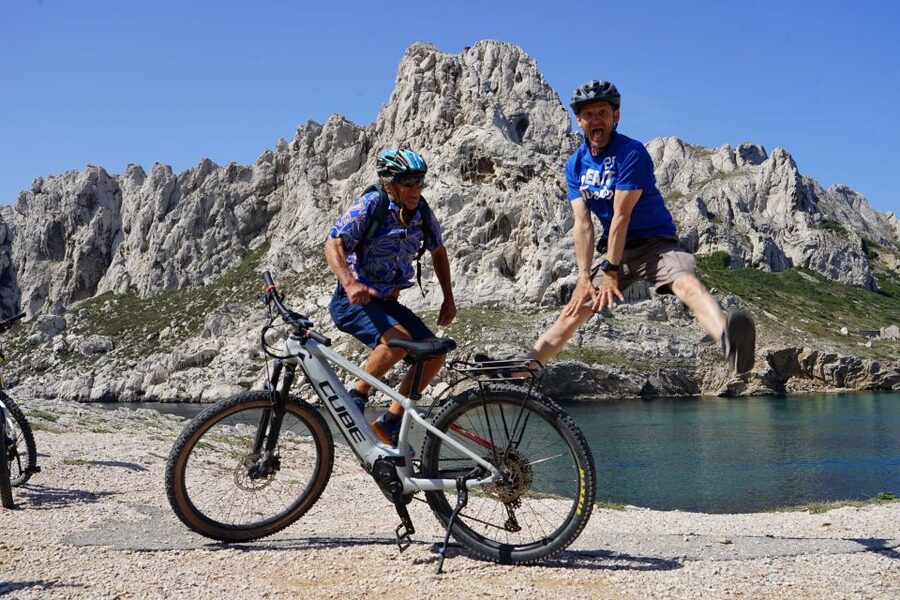
You receive an electric mountain bike, helmet, and gloves. The guide gives you time to get familiar with the bike before setting off. This matters, especially if you have never used pedal assistance or have limited experience with mountain-bike controls.
Your height must be provided when booking, allowing the operator to prepare the correct bike size. The maximum booking size is 10 people, which keeps the group small enough for the guide to watch riders on rough sections and adjust the pace.
Through Château Pastré and toward the hills
The first major section passes through Château Pastré park. This gives you a softer introduction to the ride, with a change from Marseille’s built-up streets to a more open park setting. It is a good place to settle into the bike before the more demanding tracks begin.
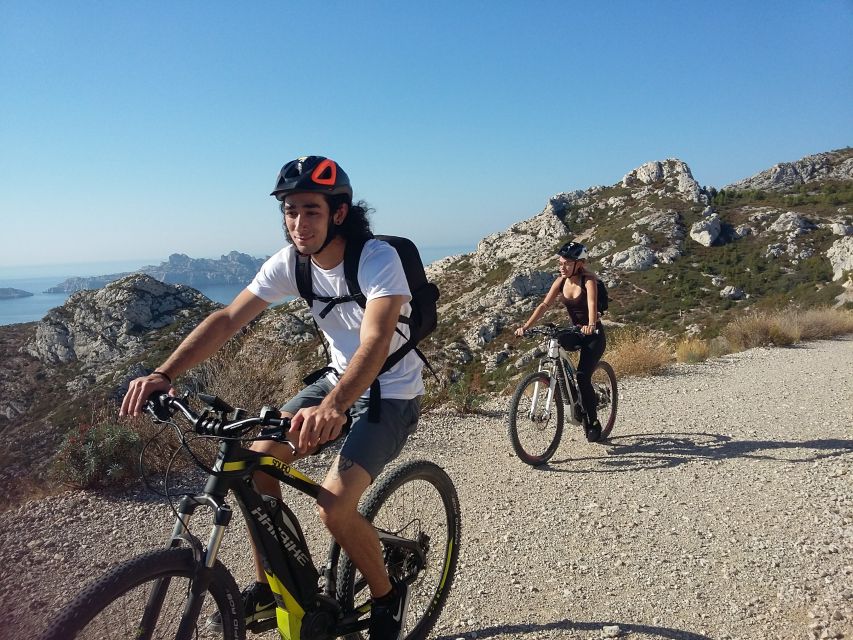
From there, the route heads toward Montagne de l’Aigle. The name suggests the change in character: you are moving into hill country, with climbs, uneven surfaces, and wider views. The motor is useful here, but you still need to steer carefully and keep a steady rhythm.
Electric assistance does not turn a mountain bike into a scooter. You still pedal, balance, brake, and choose your line over rocks and loose ground. If you regularly ride bicycles but have little experience on trails, the handling may take some getting used to. Dust, sand, and rough downhill sections can feel quite different from an ordinary city cycle lane.
The guide’s role is especially useful on this part of the route. Cyril, Iris, and Martin have each been praised for explaining the ride clearly, helping with bike adjustments, and paying attention to the group’s different speeds. That personal guidance adds real value when the path becomes less obvious or more technical.
Parc de la Fontaine d’Ivoire and the Calanques views
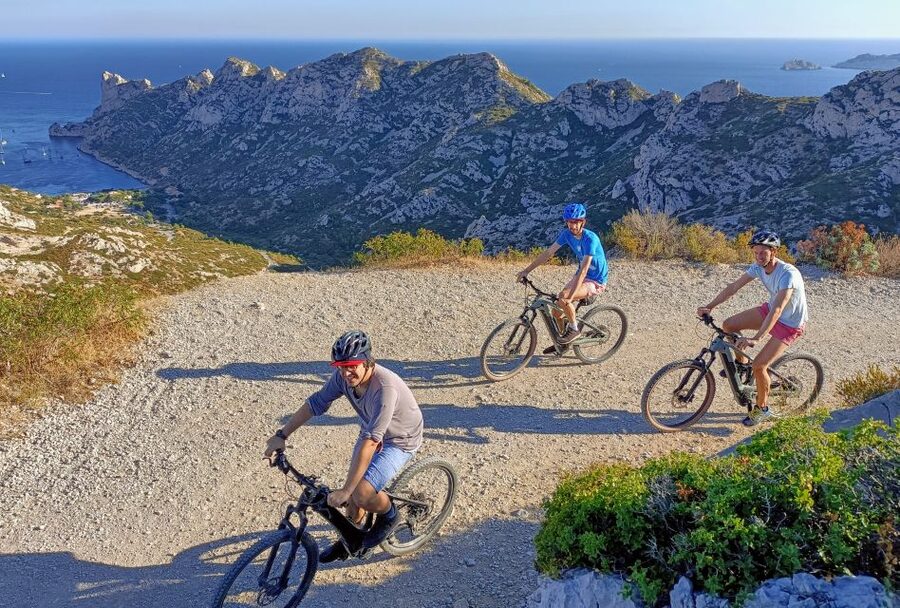
The ride reaches Parc de la Fontaine d’Ivoire, where the terrain opens into a series of climbs and descents. This is where the tour earns its place as a sightseeing experience rather than simply a fitness session.
You will see the scenery from several angles as the bike rises and drops over the hills. The route gives you repeated viewpoints instead of one quick photo stop. That makes the effort worthwhile, but it also means you should expect to keep moving rather than spend long periods at every overlook.
The major view comes at Col de Cortiou. From this mountain pass, you look toward Calanque de Sormiou, one of the most memorable coastal sections in the area. The combination of pale rock, steep slopes, and blue water is the visual reward for the climb.
Bring a phone or camera only if you can carry it safely. The ride involves uneven ground, and stopping to take pictures should not interfere with the group or your balance. Sunglasses are useful not only for bright sun but also for dust on exposed tracks.
This part of the route can be hot. Marseille’s strong sun makes a hat, sunscreen, and water essential. The supplied advice calls for comfortable shoes and loose clothing, and that is sensible. Open-toed shoes, sandals, flip-flops, high heels, and platforms are not suitable.
Same region, a different park day:
- From Marseille: Calanques National Park Guided Hike
★ 4.8 · 489 reviews - Marseille: Calanques National Park Sailing Cruise with Lunch
★ 4.7 · 228 reviews - Hiking in the Calanques National park from Marseille
★ 4.5 · 211 reviews - Marseille: Calanques National Park Boat Trip with Swimming
★ 4.7 · 147 reviews
Steep climbs, electric assistance, and the beach stop
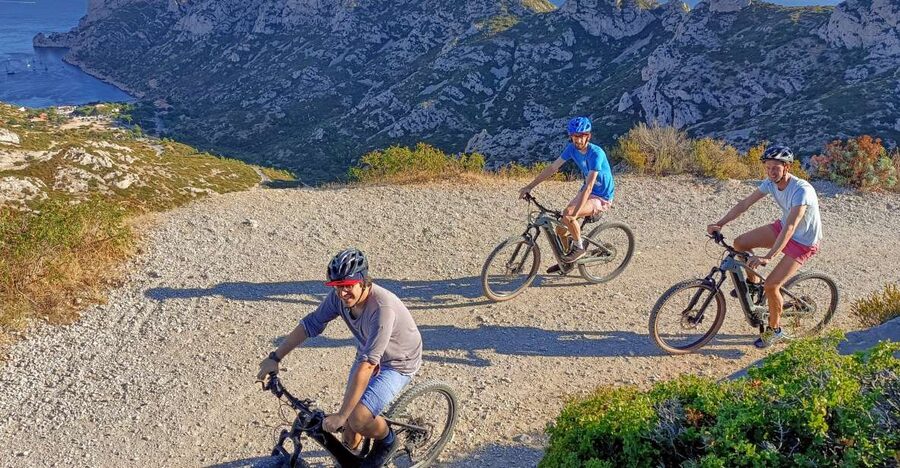
After the Sormiou viewpoint, you face a steep road. This is the section where the electric bike earns its keep. The motor gives you extra power as you pedal upward, and riders who were initially worried about the climb found the assistance effective.
Still, the activity is recommended for athletic participants. That warning should not be ignored. You do not need to be in peak condition, but you should be comfortable exercising for several hours and riding uphill in warm weather. One rider described the outing as not overly difficult, while another called it a higher-intensity, sweaty activity. Both descriptions can be true depending on your fitness, temperature, and trail experience.
A beach stop may form part of the outing, with about an hour available to cool off in the water. This is a useful break after the climbs, and it changes the rhythm of the tour from continuous riding to a more relaxed coastal pause.
Pack a swimsuit and snack if you would like to use that time well. The beach stop is not presented as a guaranteed central feature in every description, so I would treat it as a likely possibility rather than build your entire plan around it. If you are hoping to swim, bring a small bag that will not get in the way while riding.
Crête des Escampons and the return to Marseille
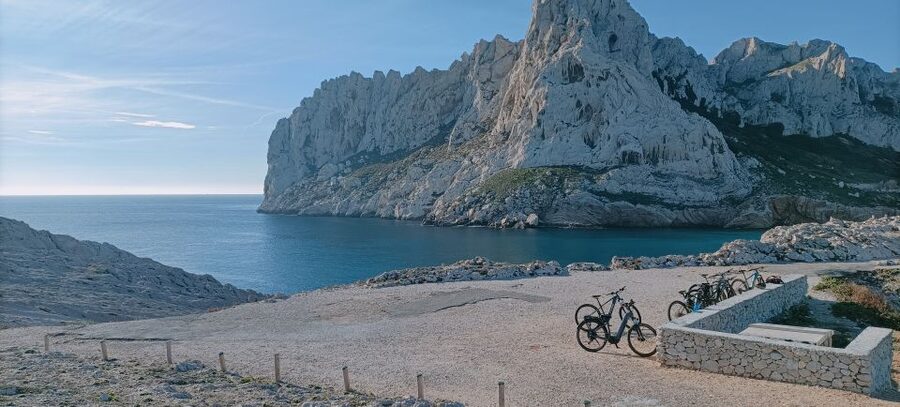
The route continues along Crête des Escampons, between Marseille and the Massif des Calanques. This ridge section helps you understand the setting of the park. You are close to the city, yet the hills and open views make Marseille feel distant.
The return passes through Roy d’Espagne, a southern suburb. This part gives the ride a useful sense of place. You are not simply dropped into a wilderness loop and then driven away. You see how the Calanques connect with the neighborhoods at Marseille’s southern edge.
The final approach to Pointe Rouge is less peaceful than the park trails. One rider found the traffic coming back toward the bike hub chaotic when unfamiliar with French road rules. Keep your attention up, follow the guide’s instructions, and remember that the ride combines off-road paths with ordinary streets.
That blend is both a strength and a limitation. It lets you cover more ground and see how the city meets the park, but the street sections are not as scenic or carefree as the hill trails. If you are nervous around traffic, this is worth considering before booking.
What the guides add
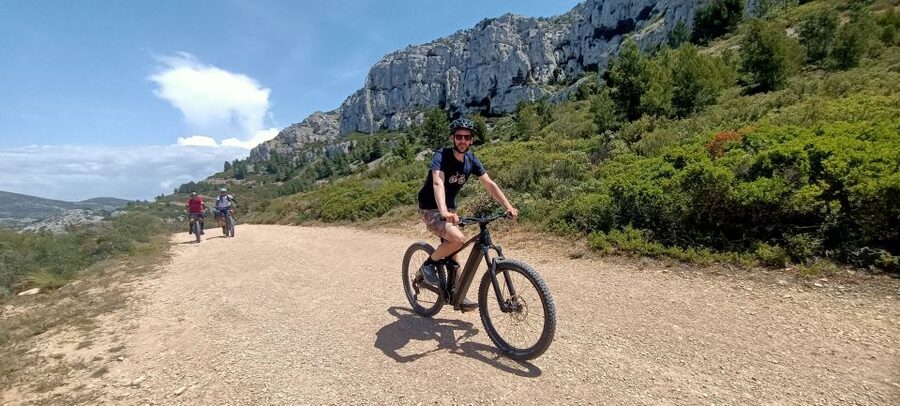
The guide is more than a person leading the way. Along the route, you receive explanations about the area’s natural setting, history, and local anecdotes. That gives meaning to the viewpoints and helps you understand why the Calanques look so stark and dramatic.
Iris has been described as attentive and well informed, while Martin was praised for his handling of the group and the route. Cyril brought a friendly, relaxed tone and helped the group feel connected. The available languages are English, French, and Spanish, though one tour may be led by a multilingual guide.
The small-group format is important here. A maximum of 10 people makes it easier to ask questions and easier for the guide to notice if someone is struggling on a climb. It also allows the group to pause for bike adjustments or to wait for slower riders without becoming a large procession.
Pacing can never be identical for everyone. Riders with regular mountain-bike experience may find some stretches straightforward, while first-time trail riders may need more time on rocks and descents. The guides have shown flexibility with different speeds, but you should still arrive ready to participate rather than expect a private lesson.
Who should book this four-hour ride?
I would recommend it to active visitors who want to see the Calanques from inland paths and viewpoints rather than only from a boat or road. It suits confident cyclists, people comfortable with moderate physical effort, and anyone curious about electric mountain bikes.
It is also a good choice if you have only half a day available. Four hours gives you time to reach meaningful viewpoints without committing to a full-day excursion. The route includes enough variety to feel like a real outing, with parkland, hills, coastal views, a possible swim, and city streets.
I would be cautious about booking if you rarely ride a bicycle, dislike loose surfaces, or want a slow and easy experience. The bikes reduce the work on climbs, but they do not remove the need to control the bike on rocky descents. High temperatures can also make the ride feel harder than the distance suggests.
You must be at least 15 years old. Closed-toe shoes are required, and loose, comfortable clothing is best. The tour depends on favorable weather. If poor conditions cause a cancellation, you can choose another date or receive a full refund.
Is the e-mountain-bike tour good value?
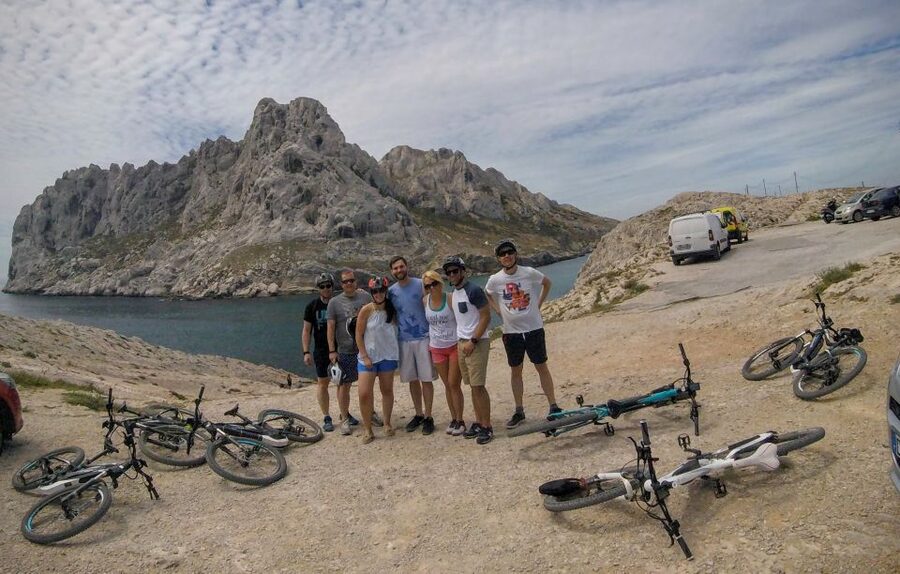
At $84, this is a reasonable price for a guided four-hour route with an electric mountain bike, helmet, and gloves. You avoid arranging a bike rental, finding the correct trails, and working out how to connect Marseille with the Calanques on your own.
The value also comes from access to viewpoints reached by effort rather than by a standard city ride. You get local explanations, route supervision, and the confidence of having someone nearby if the terrain becomes confusing or challenging.
The main thing not included is hotel pickup and drop-off. You need to reach the meeting point at Pointe Rouge yourself. That is a small cost and planning task, but it means the tour works best when you are already comfortable getting around Marseille.
Free cancellation up to 24 hours before the start and the option to reserve now and pay later add useful flexibility. They do not change the physical demands of the experience, but they make it easier to fit into a trip when weather and plans are uncertain.
Should you book it?
Book this tour if you want big Calanques views with genuine trail riding, and you are happy to work for them. The electric bike makes the steep sections more approachable, while the guide, small group, and well-equipped bicycles remove much of the stress of going alone.
Skip it if your idea of a day outdoors means a flat ride, long café stops, or effortless sightseeing. For everyone else, this is a strong way to see Marseille’s southern edge from a different angle. Wear proper shoes, carry sun protection, prepare to sweat, and you will get far more from the $84 price than from a standard bicycle ride.
FAQ
How long is the Calanques e-mountain-bike tour?
The tour lasts four hours. Starting times vary, so you should check availability when booking.
Where does the tour meet?
The meeting point is at 3 Avenue d’Odessa, in front of the Avia gas station, across from the restaurant Le Carré. The shop is inside the Résidence le Grand Large garage.
What is included in the tour?
The tour includes a guide, an electric mountain bike, a helmet, and gloves. Hotel pickup and drop-off are not included.
Which languages are available?
The tour is available in English, French, and Spanish. A multilingual guide may lead the activity.
Do I need mountain-bike experience?
You should be reasonably confident on a bicycle. The route includes steep climbs, rocky trails, dusty tracks, and downhill sections, so it is recommended for athletic participants even though the electric bike provides pedaling assistance.
What should I bring and wear?
Bring comfortable closed-toe shoes, sunglasses, a sun hat, and sunscreen. Wear loose clothing that allows easy movement. A swimsuit and snack may be useful if your route includes the beach stop.
Newest park tours we have reviewed in France
- Cassis National Park E-Mountain Bike Experience with Virtual Guide★ 5.0 · 52 reviews
- Kayak guided tour with a Local, Cassis Calanques National park★ 4.0 · 11 reviews
- Cassis: Stand UP paddle in the creeks national park★ 4.5 · 21 reviews
- Calanques National Park Snorkel and Scuba Dive★ 4.8 · 27 reviews
- Scandola: Visit the Nature Reserve from Porto (France)★ 4.8 · 115 reviews
- Porto: Scandola Nature Reserve and Creeks of Piana Boat Tour★ 4.7 · 129 reviews
- Marseille: Half-Day Boat Tour to the Calanques National Park★ 4.8 · 88 reviews
- Marseille: Guided Hiking Calanques National Park from Luminy★ 4.8 · 100 reviews
Marseille National Park Tours, compared.
Marseille: Calanques National Park Guided Hike with Picnic
Read our review →
From Marseille: Calanques National Park Guided Hike
Read our review →
Hiking in the Calanques National park from Marseille
Read our review →
Marseille: Calanques National Park Boat Trip with Swimming
Read our review →
From Marseille: Calanques National Park Eco Boat Cruise
Read our review →
Marseille: Guided Hiking Calanques National Park from Luminy
Read our review →
Lists this park day appears in