
Reviewed · WEST GLACIER NATIONAL PARK TOURS
Montana: Glacier National Park Whitewater Rafting Trip
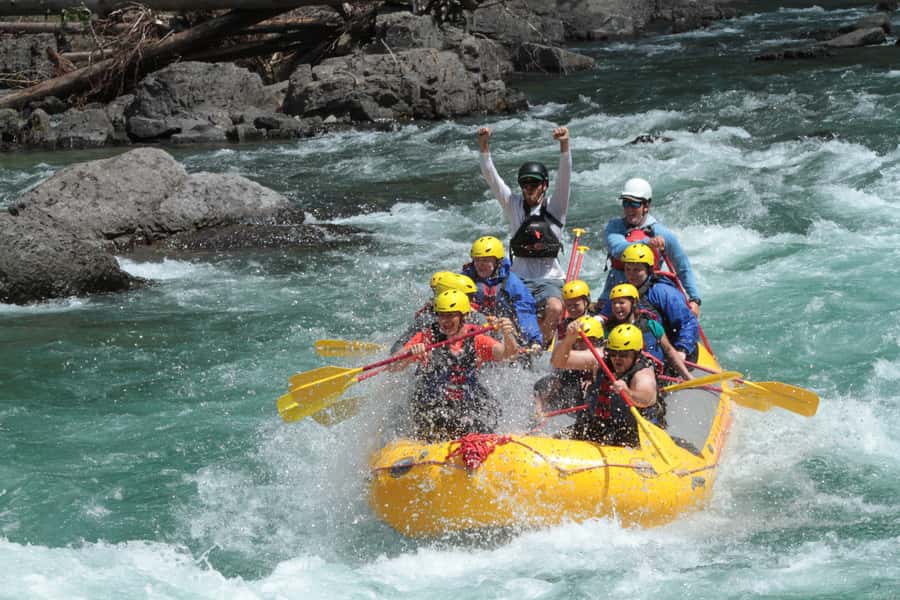
The best part of this trip is the change of pace. You start on a quiet four-mile stretch of the Middle Fork Flathead River, learn the paddle calls, then reach nine Class II and III rapids as the canyon tightens around you. The river gives you both scenery and action, not just a quick amusement-park ride.
I like the short bus transfer and the warm-up section, which makes this a good first rafting trip. I also like the guides’ mix of river skills and natural-history talk. Guides such as Maddie, Paige, Alex, and Hannah have been praised for making families feel safe while still keeping the boat lively. The main catch is water level: late-season trips can become more scenic float than whitewater run.
Key points to know before you paddle
- Eight miles through John F. Stevens Canyon: The route combines a calm opening with a more active second half.
- Nine rapids at Class II and III: These are splashy and exciting, but generally suited to first-timers and families.
- A guide-led learning experience: Expect paddle commands, safety instruction, and explanations of river ecology, geology, plants, animals, and environmental concerns.
- Flow changes the ride: June and early July usually bring a shorter trip with more moving water, while late summer can mean lower rapids and a longer float.
- Cold gear is available: Helmets, life jackets, fleece, splash jackets, and cold-weather gear are provided when needed.
- $90 buys more than boat time: The price includes a professional guide, river transport, safety equipment, and the full scenic route.
Why this stretch of the Flathead River works so well
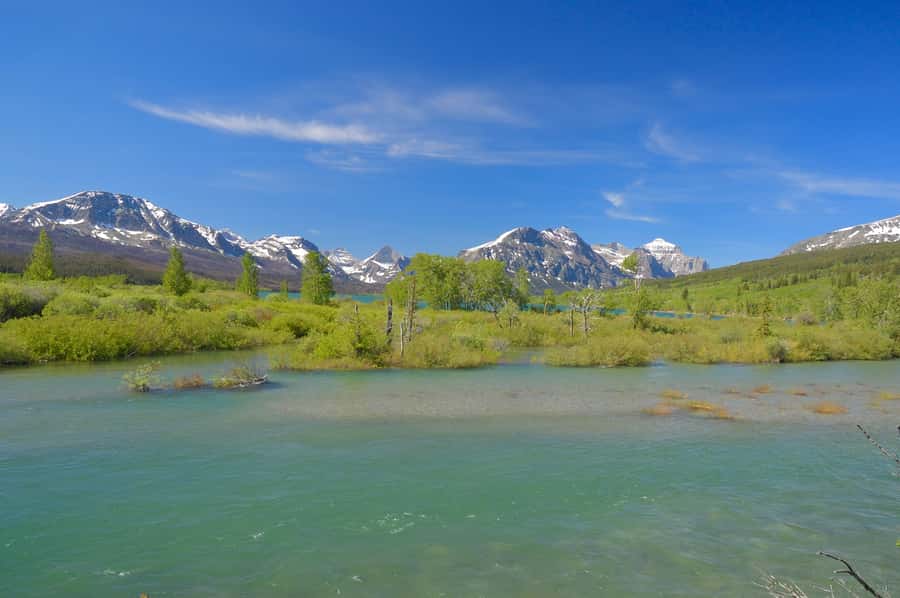
This trip runs on the middle fork of the Flathead River near West Glacier, just outside Glacier National Park. You are not rafting inside the park itself, but the route gives you a fine water-level view of the park area and the surrounding mountain country.
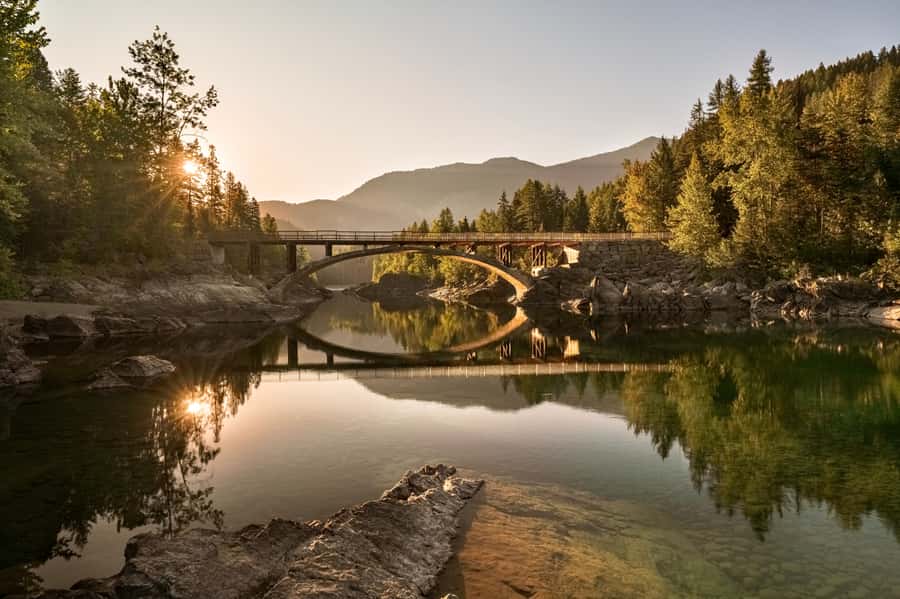
The river winds for about eight miles through John F. Stevens Canyon. The setting does much of the work here: clear water, exposed rock, forested slopes, and broad views in several directions. One especially memorable point comes near the end, when you float under the historic Belton Bridge.
I like that the rafting is not nonstop pounding. The first four miles are relatively mellow. Your guide uses this time to teach simple paddle commands and get everyone comfortable in the boat. That matters if this is your first whitewater trip, or if you are bringing children who need a few minutes to settle in.
The second four miles bring the rapids. You will work as a team, listening for calls such as forward paddling or stopping, then putting those instructions into practice. The result is active without being an all-day endurance test.
More National Park Tours in the USA:
- Miami: Everglades National Park Airboat Tour & Wildlife Show
★ 4.5 · 7,296 reviews - Clear Kayak Tour of Shell Key Preserve and Tampa Bay Area
★ 5.0 · 5,800 reviews - Discover Rocky Mountain National Park
★ 5.0 · 3,419 reviews
What happens at Glacier Raft Company in West Glacier
Plan to arrive 30 minutes before departure. Check in at Glacier Raft Company, located in the village of West Glacier between the gas station and the Alberta Visitor Center.
This is a practical meeting point if you are spending the day near Glacier National Park. One past rider liked the location because it made it easy to connect the rafting trip with other activities near the park entrance. You can leave your belongings in your car, and the staff keeps your car keys at the front desk.
Do not bring items you would hate to lose or soak. A raft is a wet place, even on a warm day. Bring a towel, dry clothes, sunscreen, drinking water, cash, and closed-toe shoes that can get dirty.
The company takes you to the river by bus. The ride lasts about 10 minutes, so there is no long shuttle ordeal before the fun begins. Your guide handles the launch, gives the safety briefing, and explains how to sit, paddle, and respond to commands.
The calm first four miles teach you the basics
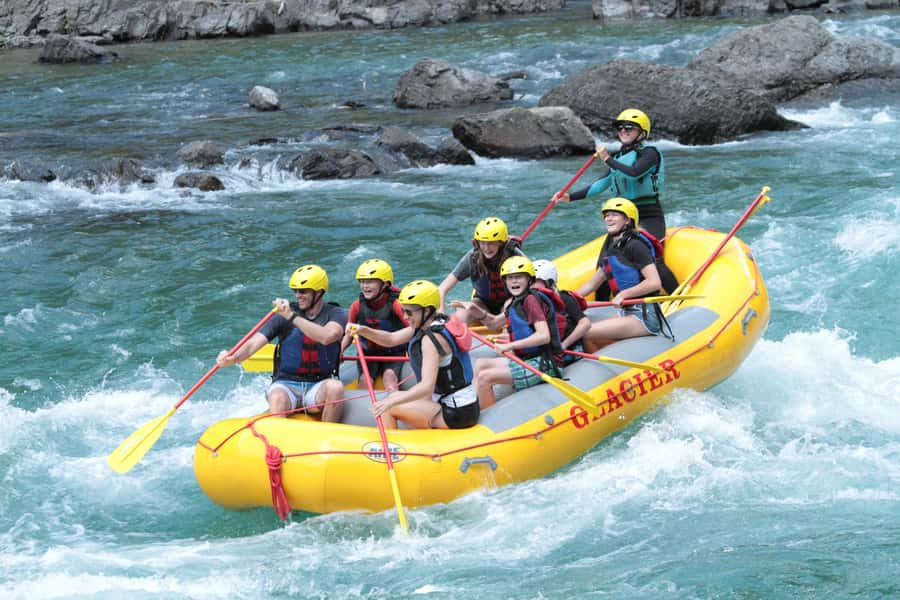
The opening section is one of the smartest features of the trip. Instead of placing first-timers directly into rapids, the guide starts on a calmer part of the river.
You can learn how the paddle feels, how the raft responds, and how your group works together. Guides are trained in river rescue and first aid, and helmets and life jackets are mandatory. That safety structure is reassuring, especially for parents or anyone who has never rafted before.
This is also when the trip feels most like a nature outing. Your guide may explain river ecology, local plants, animals, geology, and environmental concerns. Guides such as Eva, Matt, Jake, and Reid have been praised for adding useful information about the river and the park without turning the ride into a lecture.
The quieter water gives you time to look around. Keep an eye on the shore, though wildlife sightings are never promised. A black bear has been seen from the river on some outings, which shows how close the route can feel to the surrounding wild country.
The second four miles bring nine family-friendly rapids
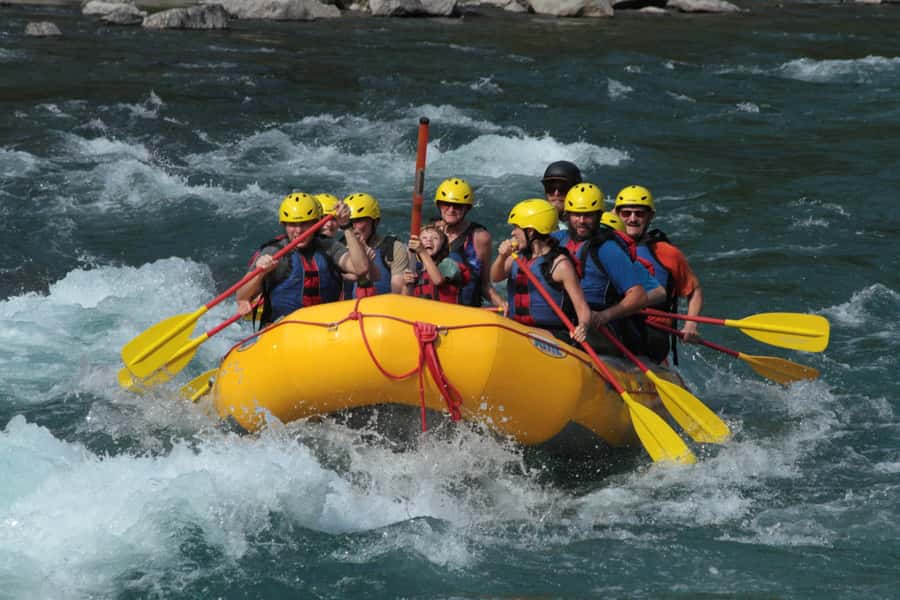
After the warm-up, the character of the trip changes. The river becomes more active, and your boat begins working through nine rapids rated Class II and III.
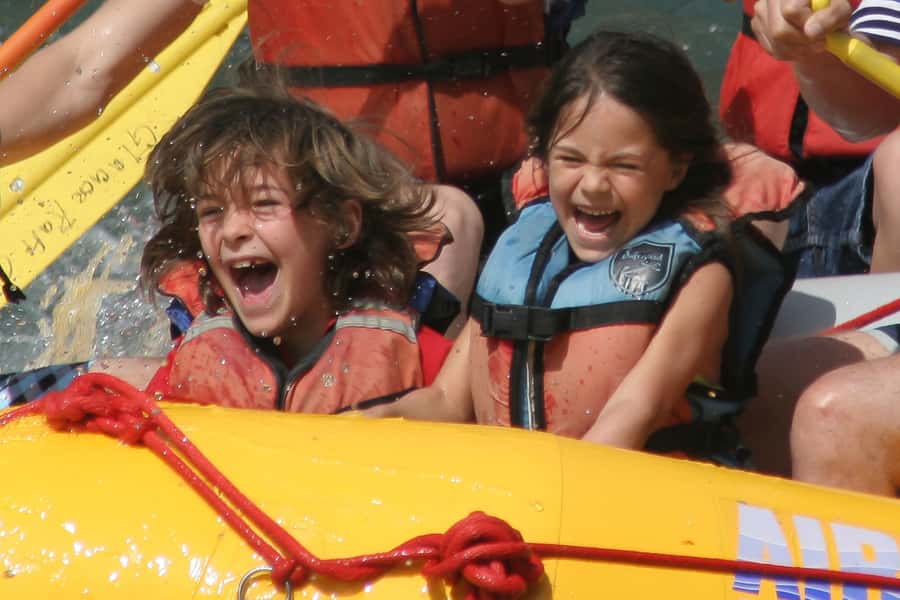
In practical terms, expect splash, quick instructions, and some teamwork. The rapids are strong enough to make the ride exciting, but the route is presented as a family-friendly outing rather than an expert-only challenge.
The exact feel depends heavily on river flow. Higher water can make the ride faster and more exciting. One July trip was described as especially lively because the river was running higher. In August and September, lower water can soften the rapids. Some late-season departures have felt more like scenic floats, with Class I to III features rather than a full-throttle whitewater run.
That variation is not a flaw in the company’s control. It is simply how rivers work. If you want the best chance of stronger rapids, early season and early summer generally offer more water. If you prefer a gentler ride with warmer weather and more time to look around, late summer may suit you better.
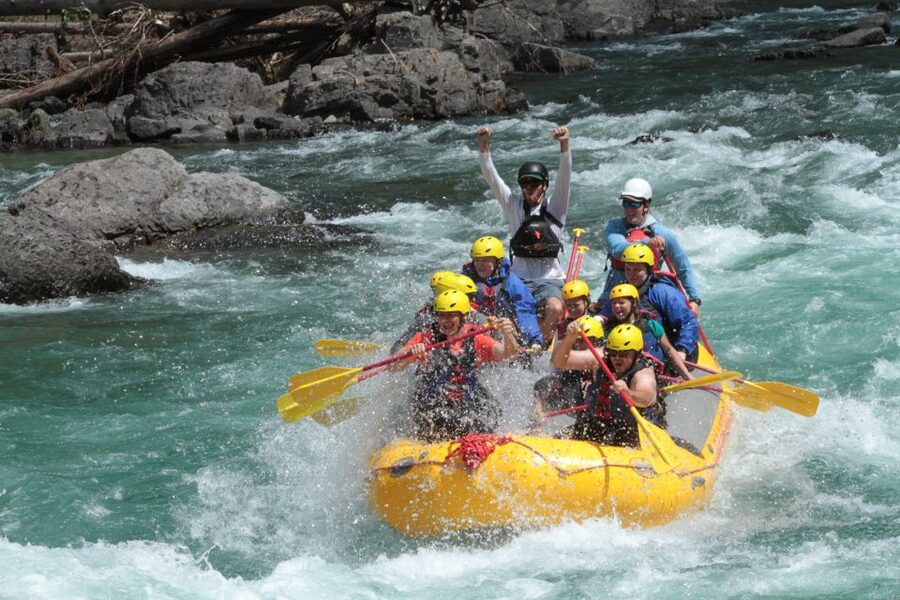
The company takes photos of each boat at Bonecrusher, one of the named rapids. The photo stop is useful if you want a record of the trip, but remember that photography is not the main event. Bring only items that can stay behind safely, and ask about available photo arrangements at check-in.
Same region, a different park day:
- Yosemite Highlights & Giant Sequoias Day Tour from San Francisco
★ 4.5 · 3,455 reviews - Mt. Rainier National Park Highlights Tour
★ 5.0 · 3,156 reviews - Grand Canyon National Park South Rim Bus Tour from Las Vegas
★ 4.5 · 3,071 reviews - Wilderness, Wildlife, Glacier Experience from Anchorage
★ 5.0 · 3,004 reviews
A glacial-water swim is optional
At several points, the raft may stop so you can jump in for a swim. The water comes from a glacial river, so cold is the word to remember.
You do not have to get in. This is a choice, not a required part of the trip. If you do take the plunge, it is a quick, refreshing break from the boat and a memorable way to feel the river rather than simply watch it pass.
Cold-weather gear is available when temperatures are under 70 degrees. Depending on conditions, that can include wetsuits, fleece, splash jackets, river shoes, or other protective gear. Booties cost $7 once wetsuits are no longer required, and water shoes are also available to rent for $7.
Wear a swimsuit or quick-drying clothing under your layers. Even if you skip the swim, paddling through rapids can leave you wet. Closed-toe shoes are required, and bare feet are not allowed.
Belton Bridge gives the trip a strong finish
Near the end, the raft passes under historic Belton Bridge. This adds a bit of human history to a trip that is otherwise centered on water, rock, forest, and wildlife.
After leaving the river, you walk about 10 minutes back to the Glacier Raft Company office in West Glacier. There is no long return bus ride to endure. You can collect your keys, change into dry clothes, and continue with your Glacier-area plans.
The timing varies with river flow. In June through early July, the trip usually lasts about two and a half hours. From mid-July through early August, expect roughly three hours. From mid-August to the end of the season, it can take about three and a half hours.
That may seem backward at first, but lower water slows the raft. Build extra time into your day, especially during the later season. The advertised duration is 150 minutes, but the actual river time can stretch beyond that.
Guides make the difference between a good ride and a great one
The strongest part of this operation is the guide service. A raft trip needs someone who can read the river, give clear commands, manage nerves, and keep conversation moving during the quiet stretches.
The guide names attached to especially strong outings include Maddie, Paige, Jakob, Aaron, Alex, Hannah, Cierra, Eva, Jackson, and Eric. Their strengths vary, but the pattern is consistent: clear instruction, a calm manner, useful facts, and a willingness to keep the group involved.
For families, this matters. Eric was praised for helping an 11-year-old feel comfortable. Hannah was singled out for making children learn the paddling skills in a fun way. Another family enjoyed 360-degree spins and plenty of spray after Hannah had taught the commands.
First-timers also have good reason to feel at ease. Several outings were described as safe, clean, well organized, and easy to follow. Guides return year after year, which helps build local river experience and a steady operating rhythm.
Is $90 a fair price?
At $90 per person, this is a solid value for a half-day outdoor activity near Glacier National Park. The fee includes the professional river guide, bus transportation to the launch, helmets, life jackets, fleece and splash jackets, and cold-weather gear when needed.
You are paying for more than a raft and a paddle. The guide provides rescue training, safety management, instruction, natural-history information, and control of the boat through the rapids. The short transfer also saves you from arranging your own river transport.
The extra costs are limited but worth noting. Food and drinks are not included. Water shoes or booties may cost $7, depending on conditions and the point in the season. If you already have suitable closed-toe shoes, you may not need to rent anything.
For a family or couple wanting one active half-day outside the park, I think the price is reasonable. The value is strongest when water levels produce a good mix of rapids and scenery. If you are paying mainly for intense whitewater, check the seasonal conditions before booking.
Who should book this rafting trip?
I would choose this trip for first-time rafters, families with older children, couples who want a half-day adventure, and anyone looking for a different view of the Glacier area.
Children must be at least five years old and weigh at least 50 pounds. The trip is not suitable for pregnant women or people with mobility impairments. You should also be comfortable getting wet, sitting in a raft, following paddle commands, and walking about 10 minutes after the river portion.
This is not the right choice if you want a luxury scenic cruise, a dry outing, or advanced whitewater. The river can be mild in late season, and the scenery may take center stage. That is good news for some people, but a possible disappointment if you expect hard-charging rapids every time.
Rain does not automatically cancel the trip. It operates rain or shine, so pack layers and accept that weather is part of the outing.
Practical packing advice for a smoother day
Keep your packing simple. Bring:
- A towel and a full change of clothes
- Sunscreen and drinking water
- Closed-toe shoes that can get wet and dirty
- Clothing suitable for changing weather
- Cash for possible shoe rental or other small expenses
Do not bring alcohol, drugs, glass objects, coolers, or alcoholic drinks in the vehicle. Crutches are not allowed, and bare feet are prohibited.
I would wear a swimsuit or quick-drying base layer, then add fleece or other warm clothing as needed. The river can feel windy, even during a warm month. One August outing was specifically described as windy, so do not assume summer means shorts and sandals.
My call: book it for a balanced Glacier-area adventure
I recommend the Glacier National Park whitewater rafting trip if you want a safe introduction to rafting with real scenery, a few good splashes, and a guide who adds local nature and river context.
Book earlier in the summer if stronger water and more active rapids are your priority. Choose late summer if you prefer a longer, gentler outing and do not mind that the river may feel more scenic than wild.
At $90, the combination of transport, equipment, instruction, and an eight-mile route is fair. Just set the right expectation: this is family-friendly Class II and III rafting, not an extreme expedition. For many people, that balance is exactly the point.
FAQ
Where does the rafting trip meet?
Meet at Glacier Raft Company in West Glacier, between the gas station and the Alberta Visitor Center.
How early should I arrive?
Arrive 30 minutes before departure to check in and prepare for the safety briefing.
How long does the trip take?
The listed duration is 150 minutes. Actual trip length varies with river flow, from about two and a half hours in June and early July to about three and a half hours from mid-August through the end of the season.
How far do you raft?
The route covers about eight miles on the middle fork section of the Flathead River.
How many rapids are included?
The route includes nine rapids rated Class II and III, although lower water can make some sections feel gentler.
Is this rafting trip suitable for beginners?
Yes. The first four miles are mellow and give you time to learn paddle commands before reaching the more active rapids.
What equipment is provided?
Helmets and life jackets are provided. Fleece, splash jackets, and cold-weather gear are available when conditions require them.
Do I need to bring water shoes?
You need closed-toe shoes, but water shoes are not required if you have suitable footwear. Water shoes or booties can be rented for $7 when available.
Can I swim in the river?
The raft may stop so you can jump in and experience the glacial water, but swimming is optional.
What is the minimum age and weight?
Children under five cannot participate, and every participant must weigh at least 50 pounds.
Can I cancel my booking?
You can cancel up to 24 hours in advance for a full refund. You can also reserve now and pay later.
Newest park tours we have reviewed in the USA
- Fort Pierce: Prehistoric Preserve Kayak Tour★ 5.0 · 2 reviews
- Full-Day Audio Driving Tour of Arches National Park★ 4.5 · 27 reviews
- Canyonlands National Park Self-Guided Driving Audio Tour★ 4.5 · 54 reviews
- SLC:Grand Teton and Yellowstone National Park Multi-Day Tour★ 3.7 · 7 reviews
- Grand Teton,Yellowstone National Park 3-Day Tour from SLC★ 3.3 · 13 reviews
- 4-Day Salt Lake City, Grand Teton, Yellowstone National Park Tour★ 4.0 · 6 reviews
- Utah Mighty 5 National Parks: Small Group 7-Day Tour★ 4.5 · 7 reviews
- Small Group One Day Tour Death Valley National Park and Rhyolite Ghost Town★ 4.5 · 74 reviews
West Glacier National Park Tours, compared.
Half-Day Glacier National Park Whitewater Rafting Adventure
Read our review →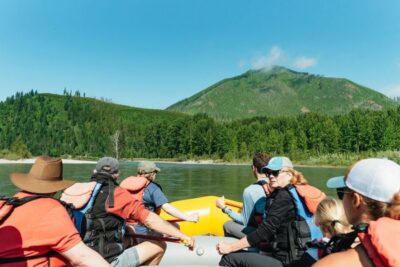
West Glacier: Glacier National Park Scenic Raft Trip
Read our review →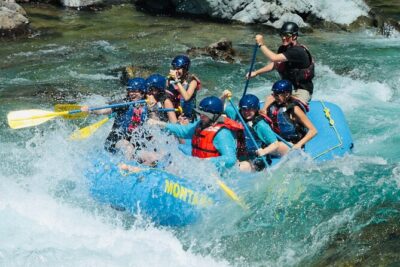
Full Day Glacier National Park Whitewater Rafting Adventure – With Lunch!
Read our review →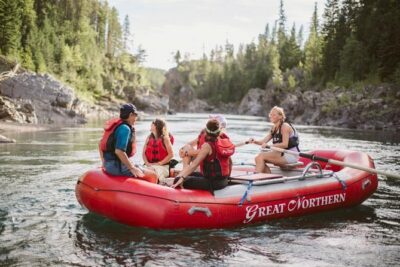
Lists this park day appears in