
Reviewed · CHOBE NATIONAL PARK SAFARIS
11Day WILDERNESS TRAIL:Okavango,Moremi&Chobe -WildCamping Safari +Victoria Falls
Botswana does not ease you into the wild. You sleep in unfenced camps, paddle through the Okavango by mokoro, and listen to the bush after dark. No fence separates you from the natural world, which is the great appeal of this 11-day route from Maun to Victoria Falls. I like the mix of quiet water travel and serious game drives, plus the small maximum group of nine. The tradeoff is that this is real bush camping, not a polished lodge circuit, and long drives, dust, weather, and basic conditions are part of the deal.
I especially like two things here: local Okavango polers who grew up in the delta, and a route that keeps changing character. You move from waterways to floodplains, from Moremi’s green bush to Savute’s open savanna, then finish with a Chobe boat safari and Victoria Falls. One point deserves plain talk: a past trip included a vehicle breakdown near a lion pride and concerns about communications, so I would ask about vehicle checks, emergency plans, and satellite communication before paying.
Key details that shape the experience
- Mokoro travel in the Okavango: Glide through narrow channels in a traditional dugout canoe with a local poler.
- Unfenced mobile camping: Sleep in the bush with a support crew, bush chef, camp showers, and fireside dinners.
- A small group of up to nine: This keeps the 4×4 and camp experience more personal than a large coach tour.
- Three very different safari areas: Okavango waterways, Moremi floodplains, and Savute’s dry savanna each offer a different kind of wildlife viewing.
- Chobe and Victoria Falls finish: Trade the bush camp for a lodge chalet, a Chobe River cruise, a Zimbabwe waterfall walk, and a Zambezi sunset cruise.
- A demanding but well-supported trip: Days can run 6 to 15 hours, with early starts, long drives, dust, heat, and simple camping.
Why this Botswana route feels different
The strongest feature is not a single animal sighting. It is the way the trip places you inside several forms of African wilderness without turning the whole journey into a hotel-to-hotel transfer.
The Okavango is quiet and watery. Moremi adds floodplains and game drives. Savute feels drier and more open. Chobe brings a final change of pace on the river. Victoria Falls then gives you a more familiar visitor experience, with a guided rainforest walk and a sunset cruise.
I like this progression because it prevents safari fatigue. You are not repeating the same drive every day. You may spend one morning drifting through reeds, the next tracking predators in an open-sided 4×4, and later watching elephants and river life from a boat.
The camping is the heart of the trip. There are no fences around the bush camps, so your connection with the setting is unusually direct. That also means you follow camp safety instructions carefully and do not wander away on your own. The support team handles camp duties, meals, and showers, but you still need to be comfortable with an outdoor routine.
More Chobe National Park Safaris in the world:
- Victoria Falls: Chobe National Park Day Trip with Lunch
★ 4.7 · 518 reviews - Chobe National Park: Day Trip, Safari drive & River Cruise
★ 4.7 · 100 reviews - From Victoria Falls: Chobe National Park Small Group Tour
★ 4.5 · 68 reviews
Day 1 in Maun: a soft landing before the bush
The first day is simple. You are met at Maun Airport and taken to your accommodation, where you can rest and prepare for the safari.
That overnight matters. The following morning begins early, and this is not a trip where you want to arrive in Botswana late, rush through immigration, and immediately start a long day in the delta. Use the first evening to organize your bags, charge devices, and get used to the fact that the next few nights will be in mobile camp.
The accommodation details are not specified, so do not assume a particular hotel standard. Ask what is included for the first night if that matters to your plans.
Days 2 to 4: the Okavango by speedboat, mokoro, and foot
The safari proper starts around 7:30 in the morning, with pickup from your Maun hotel, lodge, or the airport. The first transfer is usually a one-hour speedboat ride to the buffalo fence. In dry conditions or when circumstances require it, the operator may use a 4×4 instead.
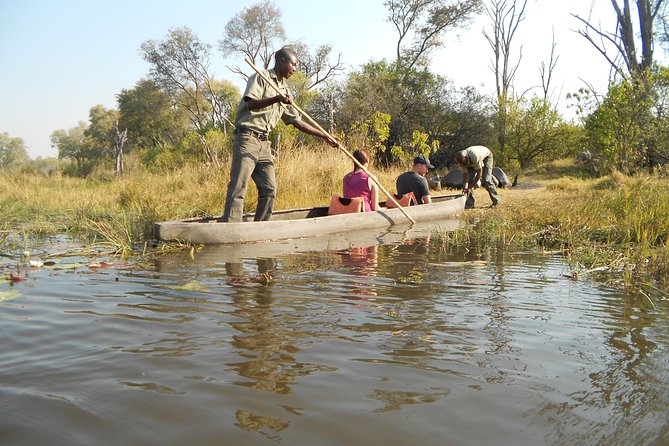
At the buffalo fence, you meet the local poler who takes you into the delta by mokoro. The polers were born and raised in the Okavango, and that local connection is a major strength of this part of the trip. They are not simply steering a canoe. They are showing you the waterways where they grew up.
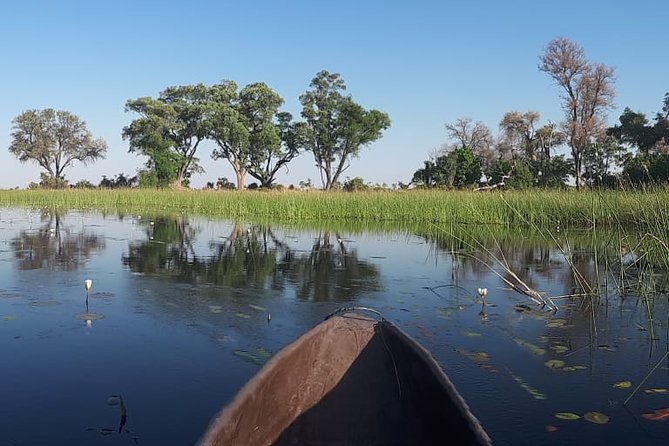
A mokoro is a dugout canoe, usually propelled by a long pole. It is slow, low to the water, and wonderfully quiet. You should not expect the same animal sightings as from a safari vehicle. The reward is a close look at channels, islands, birds, plants, and the small movements of the delta. The silence is part of the experience.
You camp on an island and spend the next day in the heart of the Okavango. A typical routine starts with a warm greeting, coffee or tea, and a light breakfast. Your first activity may be a nature walk or another canoe outing. After returning to camp, you can shower and eat brunch before heading out again in the afternoon.
This rhythm makes the camp feel more comfortable than the phrase wild camping might suggest. You still sleep in the bush, but the crew provides meals, a shower, and a regular daily structure. Food is cooked over the bush fire by the bush chef, and dinner is followed by time around the campfire.
The walking is important. In a vehicle, you scan the distance. On foot, you slow down and pay attention to tracks, plants, birds, and sounds. The supplied details do not promise particular species, and wildlife sightings can never be guaranteed. The setting itself is the attraction, with animals encountered on their terms.
Day 4 brings one last canoe trip and bush walk before you return toward Maun. Lunch is taken beside the river, and you should be back in town before sunset.
The drawback is the length of the day. The first and fourth days are listed at roughly 14 to 15 hours, although that includes transfers and activities. You will want stamina, sun protection, and patience with changes caused by water levels or weather.
Days 5 and 6: Moremi’s floodplains by open 4×4
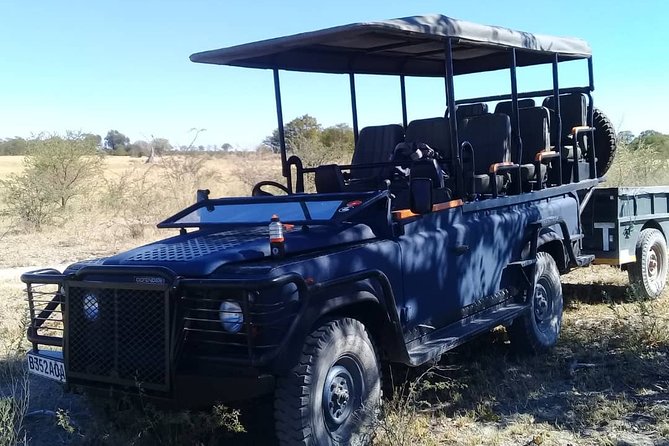
The next early start takes you from Maun into Moremi Wildlife Reserve. Here the experience changes from mokoro travel to game drives in an open-sided 4×4.
Moremi includes wet floodplains, lagoons, pools, pans, grasslands, and areas of riparian and mopane forest. The route can feel very different depending on the season. Water levels, road conditions, and animal movement shape each day, so you should expect a flexible schedule rather than a fixed list of sightings.
Both black and white rhinos have been reintroduced to Moremi, giving the reserve Big Five status. That label may catch your eye, but I would not treat it as a guarantee of seeing every major species. The value is the variety of habitat and the chance to spend full days looking for wildlife with an experienced guide.
Day 5 is a long one, listed at about 15 hours. You drive into the reserve and spend the day on game drives, with camp life continuing inside the bush. The open vehicle gives you broad views and makes it easier to hear the guide and the surrounding sounds.
Day 6 follows the classic safari pattern. You wake early, eat a fast breakfast, and head out while predators are more active. Later, you return to camp for a bush shower and brunch. The afternoon drive begins after the strongest midday heat, when animals become active again.
I like this timing because it works with the climate and animal behavior. You are not burning hours on a game drive during the hottest part of the day, and the pause gives the crew time to prepare food and maintain camp.
The evening is deliberately low-tech: dinner, stories, and a fire. There is no suggestion of a lodge bar, formal entertainment, or a constant phone signal. If you want a polished room and a private bathroom every night, this is the wrong safari style. If you enjoy hearing the bush settle around camp, it is a strong match.
More Waterfall and Lakes Park Tours in the world:
- From Split: Plitvice Lakes National Park Guided Tour
★ 5.0 · 3,002 reviews - From Split: Plitvice Lakes National Park Guided Tour
★ 5.0 · 2,355 reviews - Plitvice Lakes National Park Guided Day Tour from Split
★ 5.0 · 1,948 reviews - Doi Inthanon Waterfall and Royal Project Chiang Mai
★ 5.0 · 1,735 reviews
Day 7: the long move from Moremi to Savute
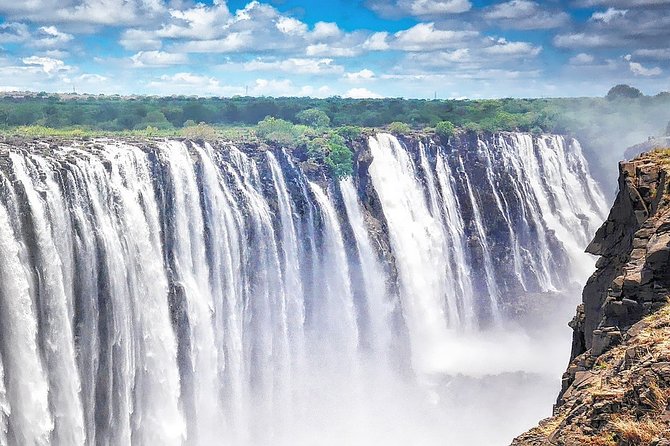
Day 7 is a transfer day, but it is not a dull one. The crew takes down camp while you have a light breakfast, then you begin a cross-park game drive toward Savute.
The listed driving time is about six to seven hours, and stops are made for animals along the way. You also get a clear change in scenery, moving from greener bush toward more open savanna. A picnic lunch is taken on the route.
This is where you need to reset your expectations. You are not simply being transported from one camp to another on a smooth highway. The vehicle covers sandy roads and game areas, and the day can feel dusty, bumpy, and long. The upside is that the transfer itself can produce sightings and gives you a sense of how widely spread these protected areas are.
At Savute, the crew rebuilds camp while you shower and wash off the dust. Dinner and a campfire bring the day to a close. There is something satisfying about seeing a full camp appear, disappear, and reappear somewhere else, but it also shows how much work goes on behind the scenes.
Days 8 and 9: Savute wildlife, then the Chobe River
Savute gives you another full day of early and late game drives. The routine is familiar by now: a quick breakfast, a morning outing, a return for brunch and a shower, then an afternoon drive after the heat eases.
That repeated pattern is useful rather than monotonous. Safari success often depends on being out at the right hours, not on rushing from one activity to another. You also get time to rest, which matters after several long days in an open vehicle.
On Day 9, you take another early drive before moving toward the Chobe Riverfront. Lunch is a picnic in the bush, and you arrive in Kasane around midday.
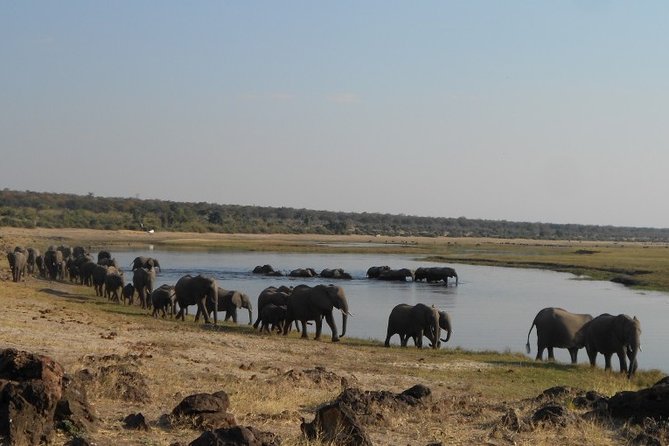
This is a welcome comfort break. You leave mobile camp and check into double or twin chalets at a lodge. After a short chance to refresh, you take a three-hour boating safari on the Chobe River.
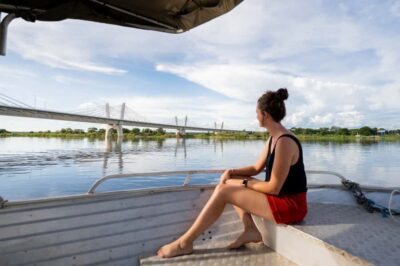
The boat gives you a different angle on wildlife. Instead of following tracks along roads, you watch the riverbanks and the water. The slower pace is a good counterpoint to the 4×4 drives, and it lets you rest while still seeing the area.
Days 10 and 11: Victoria Falls and a proper finish
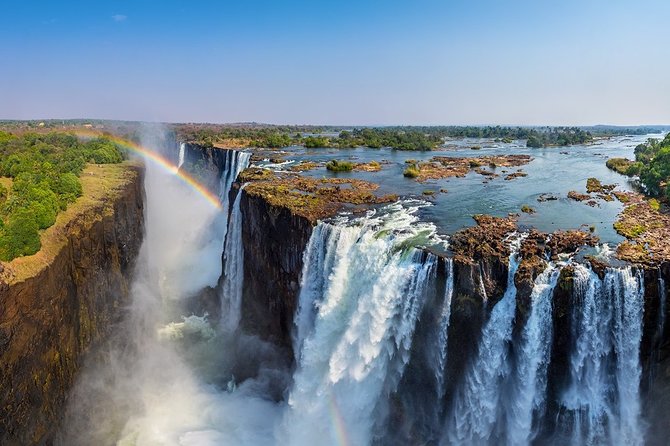
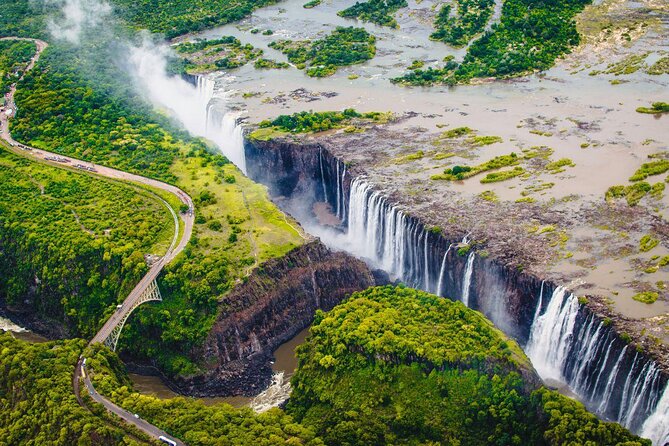
After breakfast on Day 10, you transfer to Victoria Falls in Zimbabwe. The drive takes about one and a half to two hours if the border crossing does not cause delays.
Border timing is the important phrase here. Do not schedule a tight onward flight immediately after the transfer. You need your passport and the correct entry documents, and you should allow room for a slow crossing.
In Victoria Falls, a guide takes you through the rainforest around the falls. The waterfall visit is not included in the listed admission, so budget for that separately. The day ends with a sunset cruise on the Zambezi River, and other activities can be arranged for an additional charge.
Day 11 is an airport transfer after breakfast. The route therefore works best if you want a complete Botswana and Victoria Falls trip rather than a short safari based in one camp.
What the $4,897 price represents
At $4,897 per person, this is a major purchase. Its value comes from the amount of movement and support packed into 11 days.
You receive airport pickup in Maun, transport through the Okavango, Moremi, Savute, Chobe, and Victoria Falls, guided activities, mobile camp support, bush meals, showers in camp, a lodge stay in Kasane, the Chobe boat safari, the Victoria Falls rainforest walk, and the Zambezi sunset cruise. The exact list of included fees should be confirmed before booking, especially park fees, Victoria Falls admission, drinks, and extra activities.
The small group limit of nine improves the value. A smaller vehicle is easier for conversation and wildlife viewing, and the camp crew can give more direct attention. Group discounts may also be available.
Still, price alone does not tell you if this is good value. You are paying for access, logistics, staff, and a difficult route, not for luxury rooms. The lack of fences and the mobile camp setup are central to the experience. If that sounds exciting, the price may make sense. If you mainly want comfort, a fixed lodge safari may suit you better.
Safety, comfort, and practical concerns
You should be fit enough for long days, early starts, walking, canoe travel, and extended time in a 4×4. The listing says most people can participate, but it does not provide detailed mobility guidance.
Pack for heat, dust, sun, and changing conditions. A hat, sunscreen, closed shoes, light layers, and a small bag for daily drives will help. Keep luggage manageable because the camp moves from Moremi to Savute.
The safety question deserves direct attention. One past account described a vehicle breakdown during a lion sighting, concerns about servicing, and no satellite phone. The operator responded that the problem was a loose battery and described it as a minor vehicle issue. You do not need to assume the worst, but you should ask clear questions before booking:
- What communication equipment travels with the group?
- How are vehicles inspected before departure?
- What happens if a vehicle fails in a remote area?
- How are changes handled when water levels, weather, or roads affect the route?
The operator has a strong overall rating of 4.7 from 12 submitted ratings, with 92 percent recommending the experience. Positive feedback repeatedly centers on the safari team, camp crew, food, guide service, and the chance to see wildlife at close range. Maria and Chris are associated with the trip coordination, and several accounts describe the team as efficient, kind, and helpful.
The cancellation terms are strict. The experience is non-refundable and cannot be changed for any reason. If poor weather cancels the trip, you are offered another date or a full refund. The same applies if the minimum group size is not reached. Get answers to your practical questions before committing.
Who should book this safari?
I would choose this trip if you want a broad Southern Africa route and accept that the best moments come with some discomfort. It suits people who enjoy early mornings, simple camps, open vehicles, local guiding, and the chance to sleep close to wildlife.
It is also a good choice if you want variety. The Okavango is peaceful and water-based. Moremi and Savute focus on game drives. Chobe adds a river cruise. Victoria Falls gives you a strong final landmark and a more conventional sightseeing day.
I would hesitate if you need guaranteed schedules, luxury accommodation, short driving days, or a private bathroom every night. I would also ask more questions if you are uneasy about remote travel or vehicle communications.
Should you book it?
Book this tour if unfenced camping, mokoro travel, and varied wildlife viewing matter more to you than polish. The route is ambitious, the group is small, and the staff support lets you experience remote Botswana without arranging every transfer yourself.
Before paying, confirm the included fees, camp setup, emergency communications, vehicle maintenance procedures, and border timing. If those answers satisfy you, this is a strong choice for an adventurous first safari that combines the Okavango, Moremi, Savute, Chobe, and Victoria Falls in one carefully packed journey.
FAQ
Where does the safari start?
The experience starts in Maun, Botswana. You are collected at Maun Airport or your Maun hotel or lodge, depending on the day.
Where does the safari finish?
The trip finishes with a transfer to Victoria Falls Airport after breakfast on Day 11.
How many people can join the tour?
The maximum group size is nine people.
Is the safari suitable for most people?
The tour information says most people can participate. You should still be comfortable with early mornings, long days, walking, canoe travel, game drives, and unfenced camping.
Do I sleep in a fenced camp?
No. The experience is described as wild camping in the bush without fences or other boundaries.
What is the Okavango Delta transport?
The route includes a speedboat transfer, unless conditions require a 4×4, followed by travel in a mokoro, the traditional dugout canoe. You also take guided walks and game walks.
Is Victoria Falls admission included?
No. The Victoria Falls rainforest walk is listed without admission included. Other activities can be arranged for an additional charge.
What happens if weather cancels the trip?
You are offered a different date or a full refund if poor weather causes cancellation. The same option applies if the minimum number of participants is not reached.
More National Park Safaris in the world
- Teide National Park Sunset & Stargazing with Dinner (Star Safari)
★ 5.0 · 2,601 reviews - Teide National Park: Sunset & Stargazing Safari with Dinner
★ 4.6 · 2,115 reviews - From Johannesburg: Pilanesberg Nature Reserve Game Safari
★ 4.8 · 1,327 reviews - East Coast National Park: Half-Day Caves Jeep Safari
★ 4.6 · 1,090 reviews
Newest park tours we have reviewed in the world
- Nairobi National Park –Adventure at City’s Edge Free PickUp★ 4.9 · 8 reviews
- 3D2N Mai Chau – Pu Luong from rice valley to nature reserve★ 4.5 · 11 reviews
- From Banff: Snowshoeing Tour in Kootenay National Park★ 4.9 · 37 reviews
- 5Hrs Nairobi National Park MorningEvening Gamedrive 4×4 Van★ 4.2 · 6 reviews
- 3-Hour Shared Game Drive in Pilanesberg National Park★ 4.7 · 38 reviews
- 3 Nights 4 Days Chitwan National Park with Tower Night Stay★ 5.0 · 4 reviews
- 3 Days Victoria Falls and Full day Chobe National Park★ 3.2 · 3 reviews
- 3-days safari from Dar-es-Salaam to Mikumi National Park★ 5.0 · 8 reviews
Chobe National Park Safaris, compared.
Chobe National Park: Day Trip, Safari drive & River Cruise
Read our review →
2-Day Camping Safari in Chobe National Park from Victoria Falls
Read our review →
Full Day Tour to Chobe National Park and Botswana
Read our review →Lists this park day appears in